
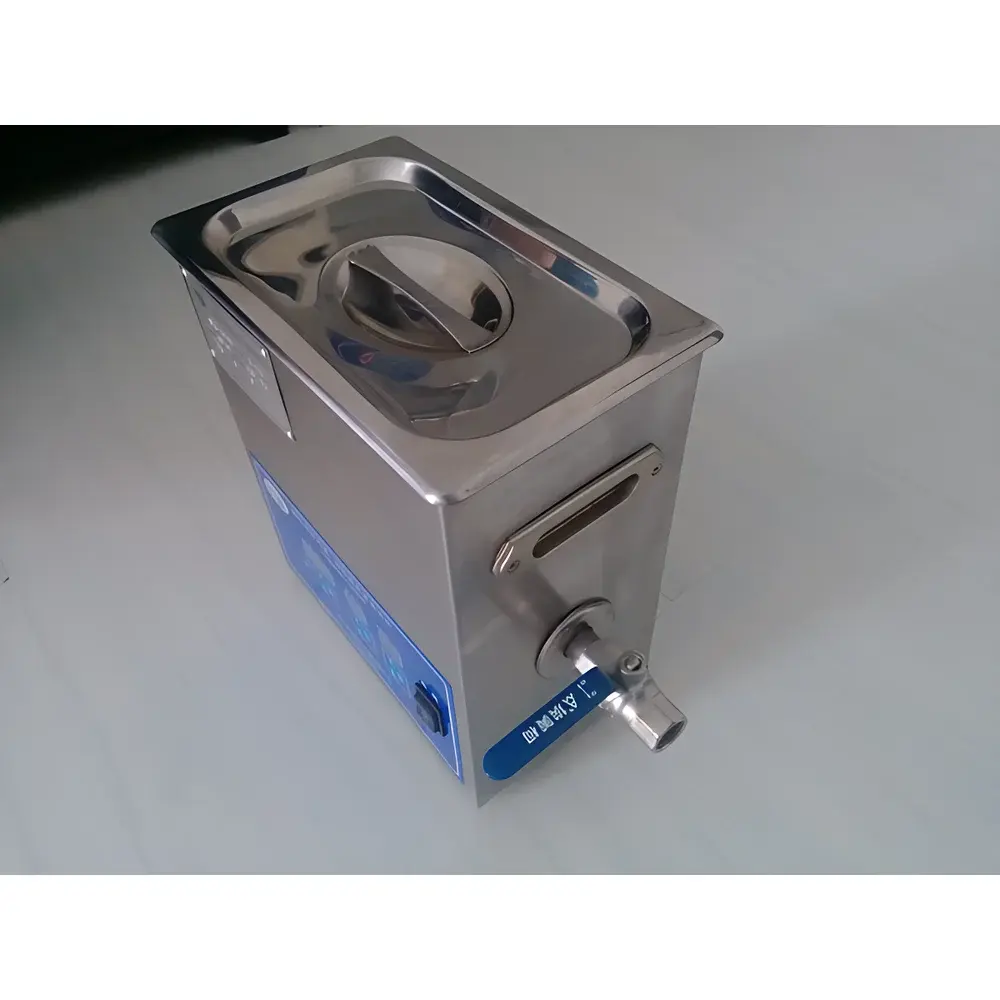
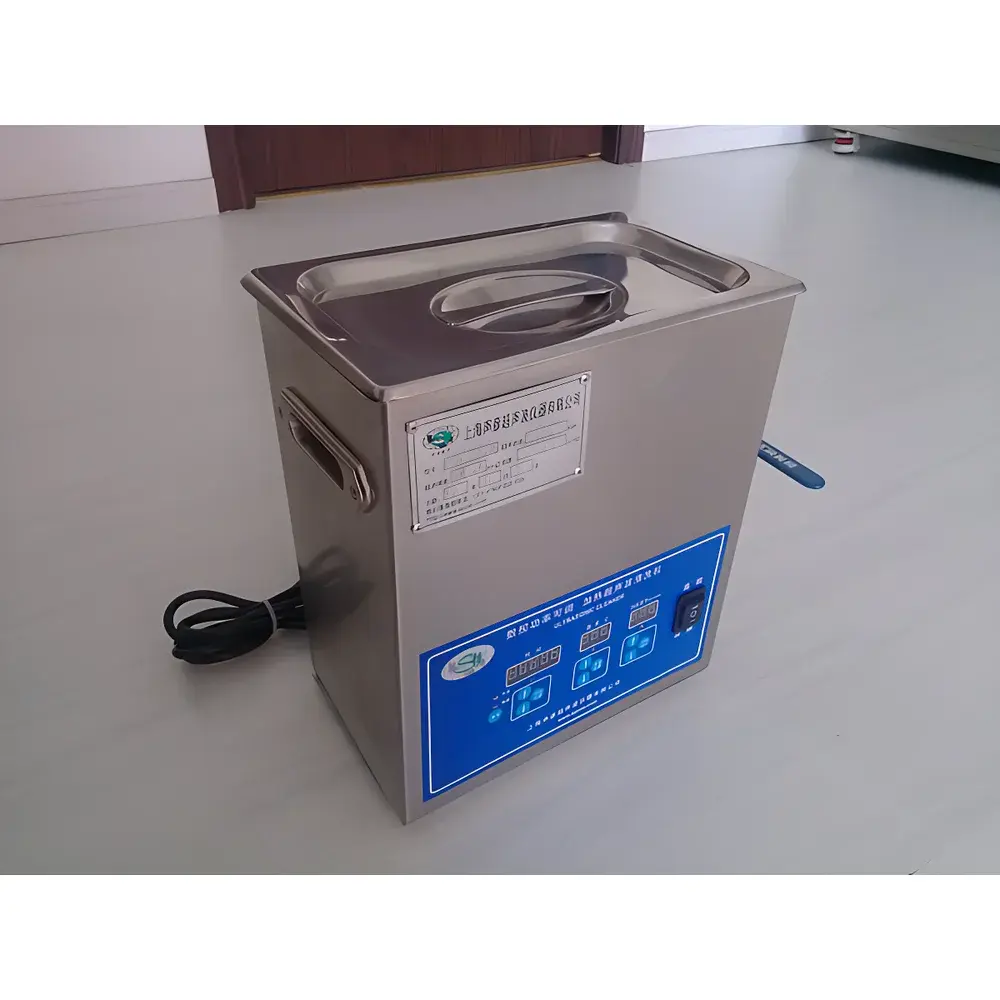
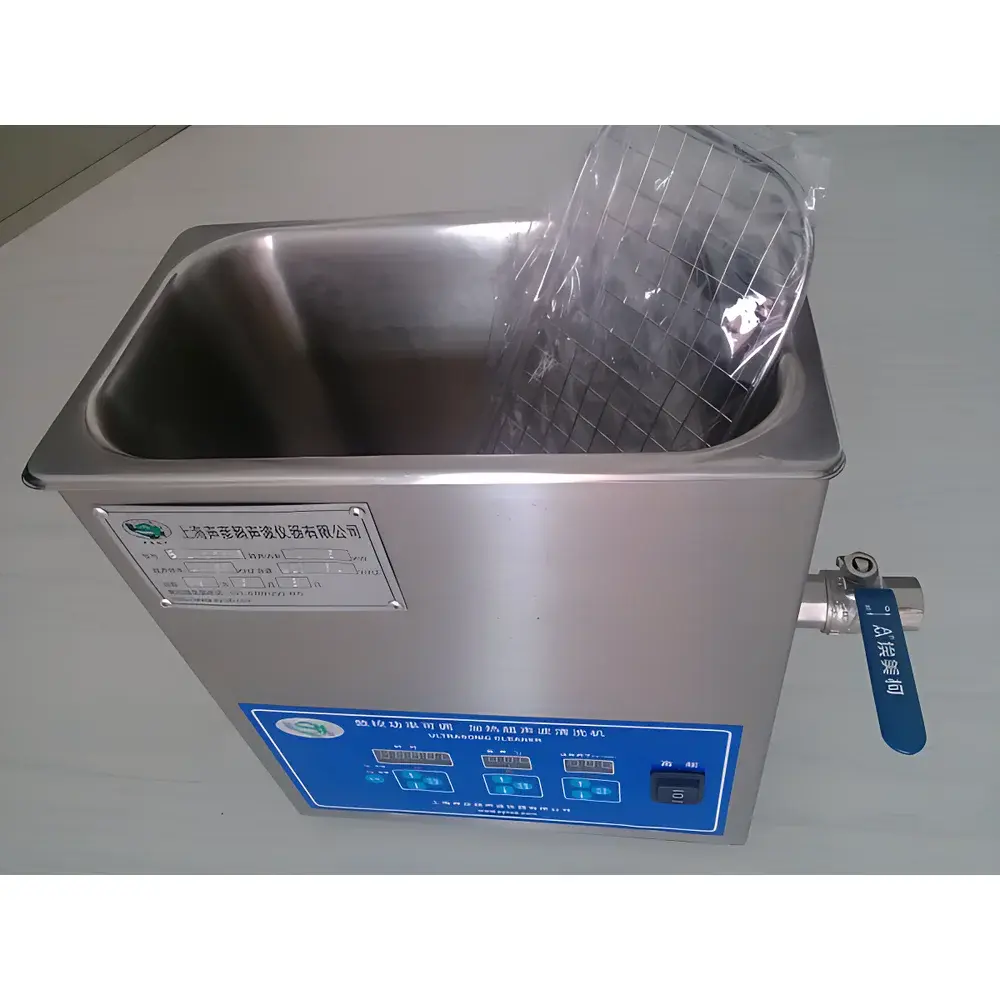
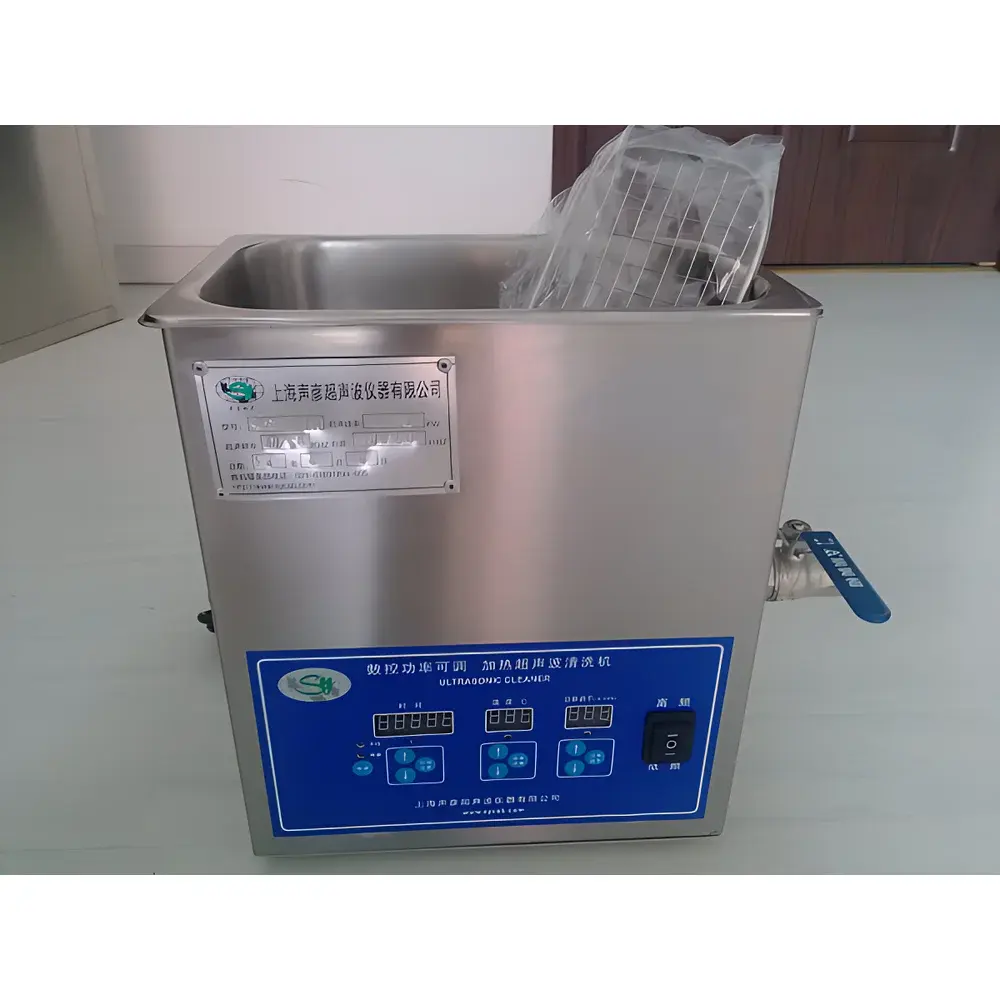
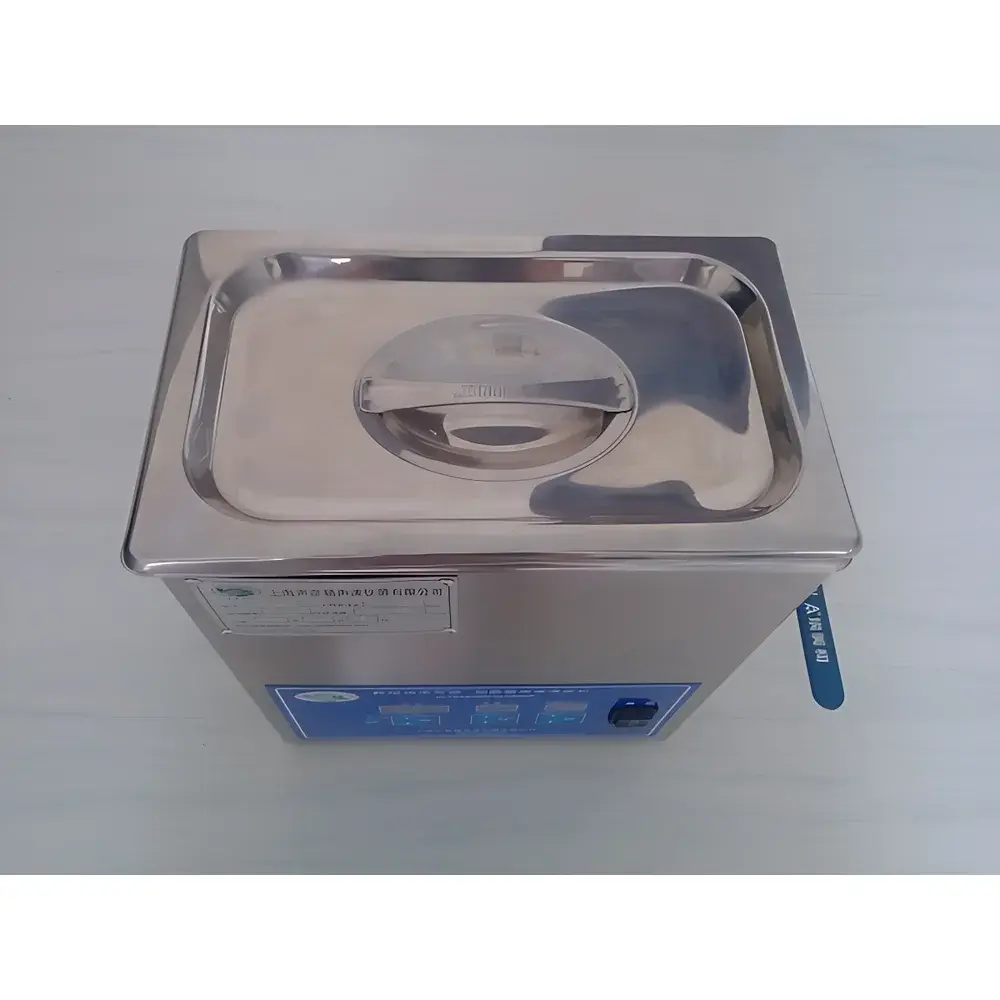
SYC Sycs SCQ-2211D Dual-Frequency Ultrasonic Cleaner
| Brand | SYC Sycs |
|---|---|
| Origin | Shanghai, China |
| Model | SCQ-2211D |
| Capacity | 4 L |
| Ultrasonic Frequencies | Selectable dual-frequency pairs (25/40 kHz, 28/40 kHz, 28/63 kHz, etc.) |
| Ultrasonic Power | 150 W |
| Power Adjustment | Not adjustable |
| Temperature Control | Not available |
| Timer Range | 1–60 min |
| Sound-Dampening Lid | Included |
| Drainage | Manual valve |
| Tank Dimensions | 230 × 140 × 150 mm |
| Construction Material | SUS304 stainless steel tank and basket |
| Safety Features | Overload and overheat protection |
| Compliance | Designed for GLP-aligned laboratory workflows |
Overview
The SYC Sycs SCQ-2211D is a benchtop dual-frequency ultrasonic cleaner engineered for reproducible, high-efficiency cavitation-based cleaning in regulated laboratory and light industrial environments. It operates on the principle of acoustic cavitation—where controlled ultrasonic energy generates transient microbubbles in liquid media that collapse violently upon implosion, producing localized shockwaves and microstreaming effects capable of dislodging particulate contaminants, organic residues, oxides, and biofilms from complex geometries. Unlike single-frequency units, the SCQ-2211D enables user-selectable dual-frequency pairing (e.g., 28/40 kHz or 28/63 kHz), allowing optimization across diverse sample types: lower frequencies (25–28 kHz) deliver higher energy per cycle for robust removal of heavy oils and rust; higher frequencies (40–100 kHz) generate denser bubble populations for gentle yet thorough cleaning of delicate optics, semiconductor wafers, and microfluidic components. Its 4 L capacity and compact footprint (230 × 140 × 150 mm internal tank) make it suitable for routine QC/QA tasks, pre-analytical sample preparation, and small-batch instrument maintenance without compromising structural integrity or acoustic uniformity.
Key Features
- Dual-frequency transducer architecture with factory-preset combinations (25/40, 28/40, 28/63 kHz) to match substrate sensitivity and soil type.
- SUS304 stainless steel tank and mesh basket—corrosion-resistant, non-reactive, and compliant with USP extractables testing requirements for pharmaceutical applications.
- Integrated sound-dampening lid reducing ambient noise to ≤55 dB(A) at 1 m distance—critical for shared lab spaces and ISO 14644-1 Class 7+ cleanroom-adjacent use.
- Microprocessor-controlled digital timer (1–60 min) with auto-shutoff and audible end-of-cycle alert.
- Thermal cut-off and current-limiting circuitry provide overload and overheat protection—no external cooling required during extended operation.
- Manual drain valve located at tank base enables full fluid evacuation without tilting or disassembly.
- Fixed 150 W nominal ultrasonic output ensures consistent power density (~37.5 W/L), eliminating variability associated with analog power adjustment.
Sample Compatibility & Compliance
The SCQ-2211D accommodates a broad range of substrates including glassware (vials, cuvettes, pipettes), metal components (calibration standards, surgical tools, watch parts), optical elements (lenses, prisms, fiber connectors), and polymeric surfaces (microtiter plates, filtration membranes). Its absence of heating and variable power control aligns with protocols requiring strictly isothermal cleaning—such as residue analysis per ICH Q5C or cleaning validation per FDA Guidance for Industry: Process Validation. The unit meets electromagnetic compatibility (EMC) requirements per CISPR 11 Group 1, Class B and is constructed to support audit readiness under GLP (OECD Principles) and GMP (Annex 15) frameworks. While not certified for sterile processing, its ability to disrupt microbial adhesion—validated per ASTM E2871 for biofilm removal efficacy—supports ancillary disinfection workflows when used with approved aqueous enzymatic or alkaline solutions.
Software & Data Management
The SCQ-2211D is a standalone hardware platform with no embedded firmware update capability or USB/Ethernet connectivity. All operational parameters are set via front-panel membrane switches and retained in non-volatile memory. For traceability in regulated environments, users may document run logs manually or integrate the device into electronic lab notebook (ELN) systems using time-stamped operator entries. Its deterministic behavior—fixed frequency pair selection, fixed power delivery, and precise timer resolution—ensures repeatable process parameters essential for SOP-driven operations. When deployed in multi-user labs, the unit’s physical labeling area supports barcoded asset tagging for CMMS integration and preventive maintenance scheduling.
Applications
- Pre-analytical cleaning of HPLC vials, GC autosampler inserts, and ICP-MS sample introduction components to minimize spectral interferences.
- Removal of polishing compounds and surface oxides from metrology-grade gauge blocks and optical flats prior to interferometric inspection.
- Decontamination of reusable surgical instruments in research animal facilities, adhering to AVMA guidelines for non-sterile reprocessing.
- Cleaning of MEMS devices and photomasks where particle counts must remain below ISO Class 5 thresholds.
- Deposition residue removal from sputtering targets and evaporation boats in thin-film R&D laboratories.
- Routine de-greasing of precision-engineered fixtures used in coordinate measuring machine (CMM) calibration workflows.
- Restoration of vintage laboratory glassware contaminated with polymerized solvents or mineral scale.
FAQ
Does the SCQ-2211D support temperature regulation or heating?
No. This model is designed for ambient-temperature ultrasonic cleaning only. External water baths or thermostated tanks must be used if elevated temperature protocols are required.
Can frequency pairs be customized beyond the factory presets?
No. Frequency selection is limited to the six preconfigured dual-band options (e.g., 25/40 kHz, 28/63 kHz) programmed at manufacture. No field modification or firmware upgrade path is available.
Is the unit suitable for cleaning delicate biological samples such as tissue sections or cultured cells?
No. It is not intended for direct biological sample exposure. Its application is restricted to cleaning inert carriers (e.g., slides, coverslips, Petri dishes) prior to use in cell culture or histology workflows.
What maintenance is required to sustain acoustic performance?
Monthly inspection of transducer mounting integrity and quarterly cleaning of the tank interior with mild citric acid solution to prevent mineral buildup. Transducers are sealed and non-serviceable; replacement requires factory recalibration.
Does the SCQ-2211D comply with FDA 21 CFR Part 11 for electronic records?
No. As a non-networked, non-auditable device, it does not generate electronic records. Full Part 11 compliance requires integration with validated data acquisition software and access-controlled ELN systems.



