
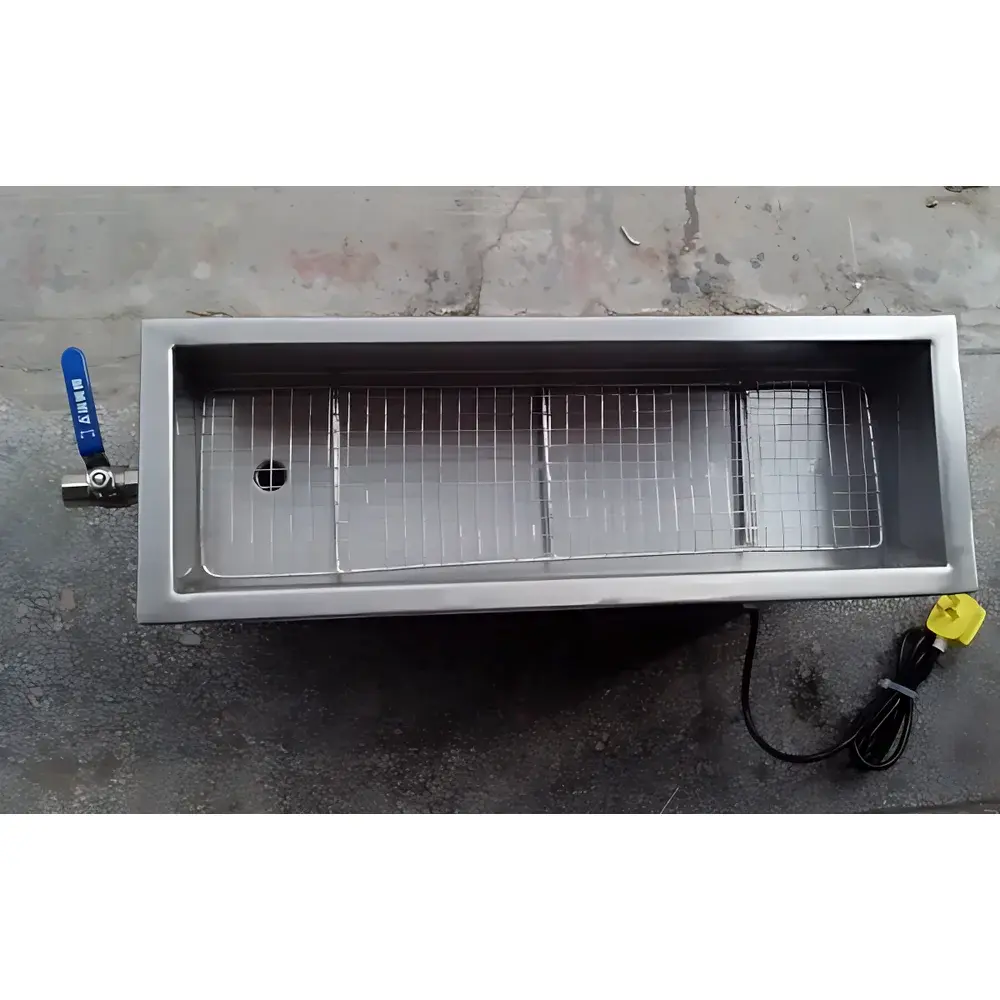
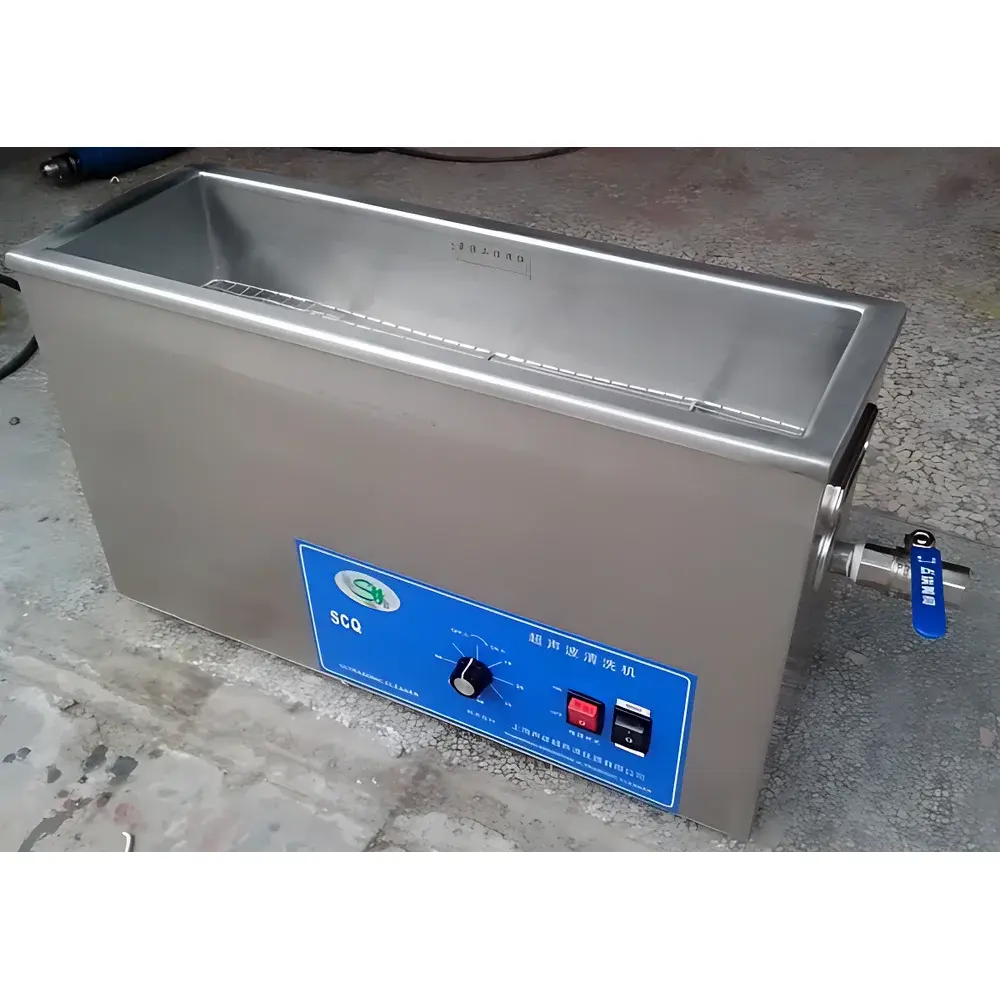
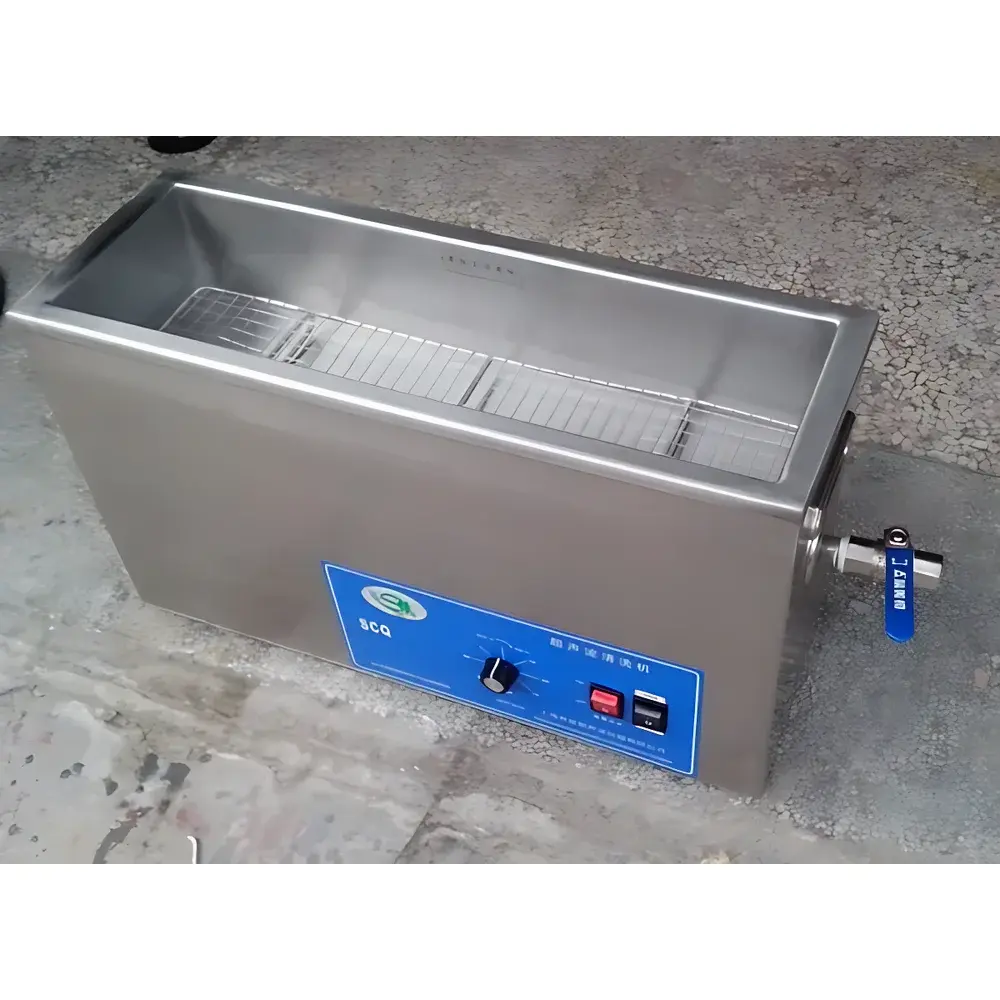
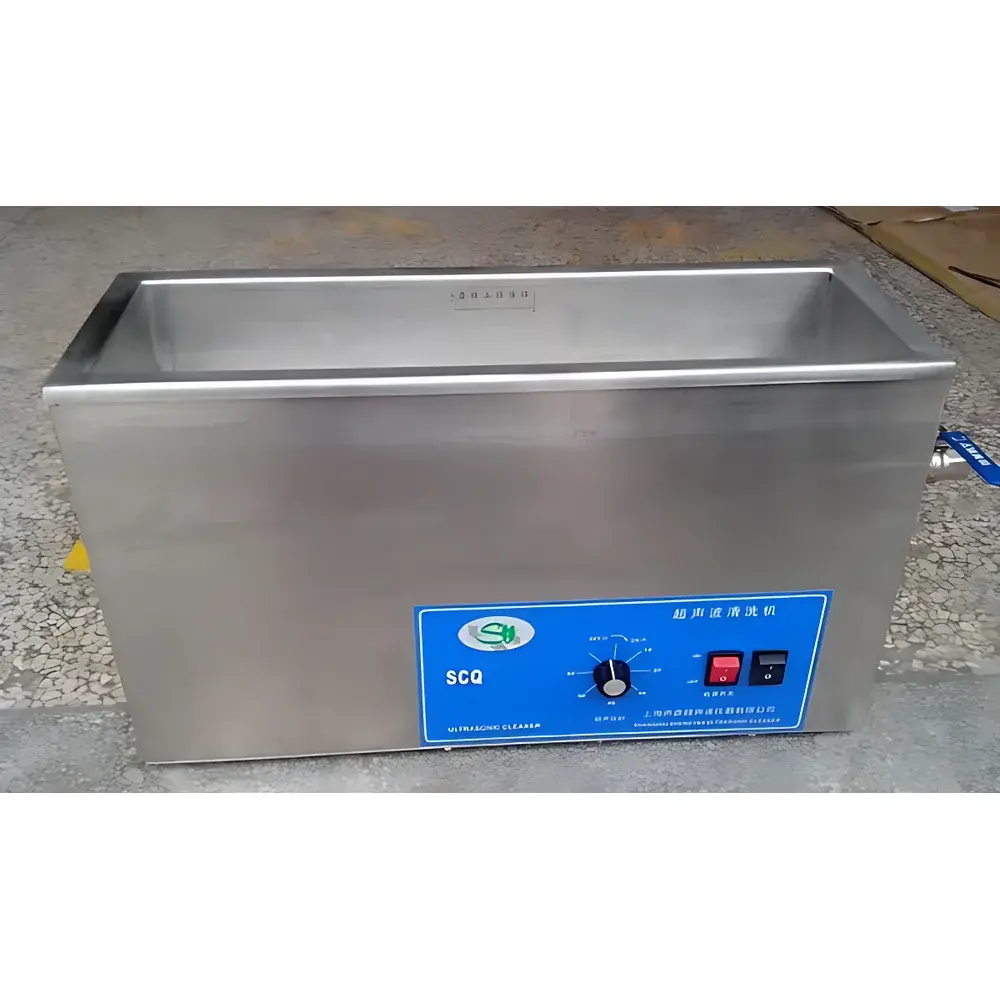
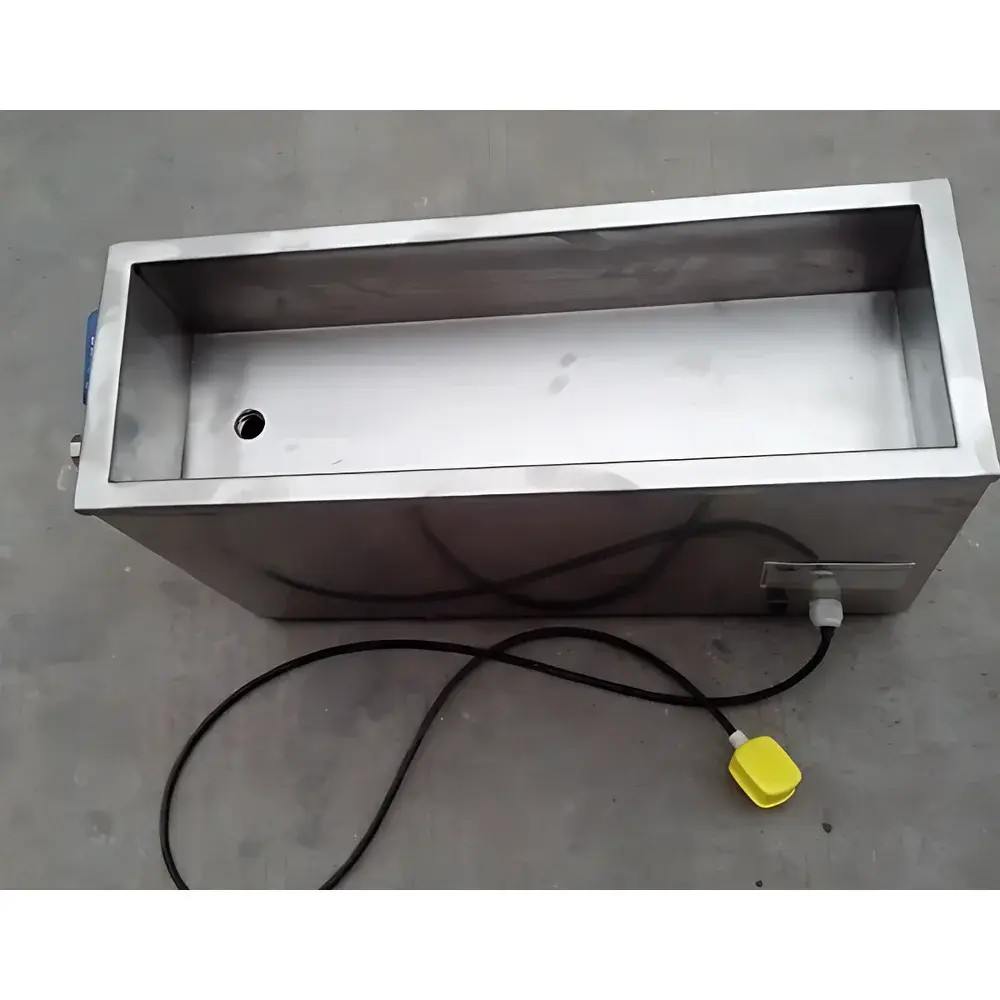
SYC Sycs SCQ-4201D Dual-Frequency Ultrasonic Cleaner (8L Capacity)
| Brand | SYC Sycs |
|---|---|
| Origin | Shanghai, China |
| Model | SCQ-4201D |
| Tank Capacity | 8 L |
| Internal Tank Dimensions | 500 × 135 × 100 mm |
| Selectable Ultrasonic Frequencies | 25 / 28 / 40 / 60 / 80 kHz |
| Ultrasonic Power Output | 250 W |
| Power Adjustment | Fixed |
| Temperature Control | Not equipped |
| Timer Range | 1–60 min |
| Acoustic Lid | Included |
| Drain Valve | Manual |
| Construction | Full 304 stainless steel tank and housing |
| Safety Protections | Overload and overtemperature protection |
| Compliance | Designed for GLP-aligned laboratory environments |
Overview
The SYC Sycs SCQ-4201D is a benchtop dual-frequency ultrasonic cleaner engineered for precision cleaning of delicate and complex components in research laboratories, quality control facilities, and small-scale production environments. It operates on the principle of cavitation—generating high-frequency acoustic pressure waves in liquid media to produce microscopic bubbles that collapse with localized energy release, effectively dislodging particulate contaminants, organic residues, oils, and biofilms from surfaces without mechanical abrasion. Unlike single-frequency units, the SCQ-4201D offers selectable frequencies (25, 28, 40, 60, or 80 kHz), enabling users to optimize cleaning efficacy based on substrate geometry, material hardness, and contaminant type. Lower frequencies (e.g., 25–28 kHz) deliver higher cavitation intensity suitable for robust metal parts with heavy soils; higher frequencies (e.g., 60–80 kHz) provide gentler yet more uniform energy distribution ideal for fragile optics, microfluidic devices, or semiconductor wafers. The unit’s 8-liter capacity and compact footprint (500 × 135 × 100 mm internal tank) support batch processing of multiple samples while maintaining ergonomic accessibility and integration within standard lab cabinetry.
Key Features
- Dual-frequency operation with five discrete frequency options (25, 28, 40, 60, 80 kHz) for application-specific optimization
- 250 W nominal ultrasonic power output delivered via proprietary transducers with U.S.-sourced piezoelectric chips, ensuring stable output and extended service life
- Full 304 stainless steel construction—including tank, lid, and external housing—for corrosion resistance, chemical compatibility, and long-term structural integrity
- Integrated acoustic lid with secure latch mechanism to suppress airborne noise and minimize solvent evaporation during operation
- Digitally controlled timer (1–60 minutes) with automatic shutdown for repeatable process execution and operator safety
- Overload and overtemperature protection circuits compliant with IEC 61000-6-3 electromagnetic compatibility standards
- Manual drain valve located at tank base for efficient solution exchange and residue removal
- Stainless steel mesh basket included as standard, fabricated from SUS304 grade to resist pitting and chloride-induced degradation
Sample Compatibility & Compliance
The SCQ-4201D accommodates a broad range of sample types including glassware (vials, cuvettes, pipettes), metallic components (calibration standards, surgical instruments), optical elements (lenses, prisms), printed circuit boards, and ceramic substrates. Its non-heating, fixed-power architecture ensures thermal stability critical for temperature-sensitive materials such as polymers, biological specimens, or coated surfaces. While not certified to ISO 13485 or FDA 21 CFR Part 11 out-of-the-box, the device supports GLP-compliant workflows when integrated into validated cleaning SOPs. Its all-stainless design meets ASTM A240 requirements for austenitic chromium-nickel stainless steel sheet and plate, and its electrical safety conforms to IEC 61010-1:2010 for laboratory equipment. No water-level sensing or auto-shutoff is implemented; users must verify fill level prior to activation per manufacturer guidelines.
Software & Data Management
The SCQ-4201D is a standalone hardware platform with no embedded software, network interface, or data logging capability. All operational parameters are set manually via front-panel controls, eliminating firmware dependencies and cybersecurity vulnerabilities associated with connected instrumentation. This analog-digital hybrid architecture enhances reliability in regulated environments where audit trails and change control are managed externally—e.g., via laboratory information management systems (LIMS) or electronic lab notebooks (ELN). For traceability, users are advised to record frequency selection, timer setting, bath composition, and cycle count in procedural documentation aligned with ISO/IEC 17025 or GMP Annex 11 expectations. Firmware updates are not applicable; hardware revisions follow documented engineering change order (ECO) protocols maintained by SYC Sycs.
Applications
This ultrasonic cleaner serves cross-disciplinary applications requiring high-fidelity surface decontamination without compromising dimensional accuracy or surface finish. In analytical chemistry labs, it removes residual solvents and precipitates from HPLC vials and autosampler trays. In biomedical research, it cleans microcentrifuge tubes and electrophoresis combs prior to nucleic acid handling. Quality assurance teams deploy it for pre-inspection cleaning of machined calibration artifacts and gauge blocks. Semiconductor fabrication support labs use it for wafer carrier cleaning prior to photolithography steps. Optics manufacturers rely on its 60–80 kHz modes to eliminate submicron dust from lens assemblies without inducing microscratches. Additionally, it supports ISO 14644-1 Class 5 cleanroom maintenance protocols when operated with ultra-pure water or low-particulate solvents.
FAQ
Does the SCQ-4201D include heating functionality?
No. This model is a non-heated ultrasonic cleaner. Temperature-sensitive applications requiring thermal activation of cleaning agents should consider alternative models with integrated heaters.
Can frequency be changed during an active cleaning cycle?
No. Frequency selection must be made prior to initiating the timer. Changing frequency mid-cycle requires manual interruption and reset.
Is the unit compatible with flammable solvents?
Not recommended. The absence of explosion-proof certification and ventilation interlocks prohibits use with volatile organic compounds unless deployed inside certified fume hoods with appropriate airflow monitoring.
What is the expected service life of the transducers?
Under normal operating conditions and proper degassing practices, transducers maintain >95% nominal output efficiency for ≥5,000 hours, consistent with industry benchmarks for industrial-grade piezoceramic assemblies.
How often should the cleaning solution be replaced?
Solution replacement frequency depends on soil load and bath volume. As a general guideline, replace after every 8–10 cycles or when visible turbidity or residue accumulation occurs.



