Vmux Virtual Data Transmission Software by Dantsin
| Brand | Dantsin |
|---|---|
| Origin | Switzerland |
| Model | Vmux |
| Interface Support | Up to 32 concurrent devices (max 16 Bluetooth + 16 USB) |
| Connectivity | Requires external USB Bluetooth adapter |
| Protocol | SPC-compatible serial data transmission via virtual COM ports |
| Compliance | Designed for industrial metrology data acquisition in ISO/IEC 17025-aligned environments |
Overview
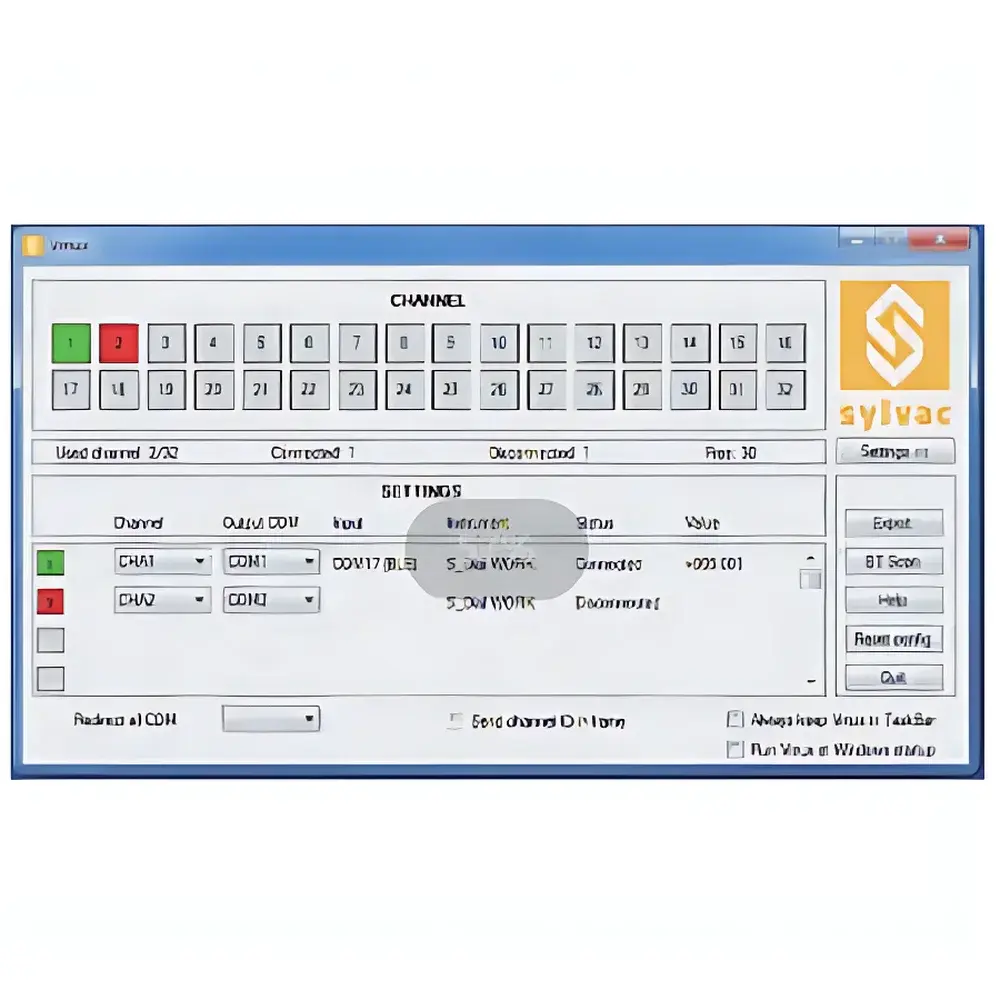
Vmux is a purpose-built virtual COM port management software developed by Dantsin, a Swiss manufacturer specializing in precision metrology interfaces and industrial data acquisition solutions. Engineered for robust integration within quality control laboratories and production-floor measurement workflows, Vmux establishes deterministic, low-latency serial communication channels between host PCs and SYLVAC-series intelligent measuring instruments—including digital calipers, height gauges, micrometers, and indicators equipped with Bluetooth Smart (BLE) or USB interfaces. The software operates on the principle of virtual serial port emulation, converting native USB HID or BLE packet streams into standardized RS-232–compatible COM port abstractions. This architecture enables legacy and modern Statistical Process Control (SPC) platforms—regardless of vendor—to ingest real-time dimensional data without requiring instrument-specific drivers or custom API development. Vmux does not perform signal conditioning or calibration; it serves exclusively as a transparent, protocol-agnostic transport layer compliant with ANSI X3.27–1989 and TIA/EIA-232-F standards for serial data framing.
Key Features
- Simultaneous support for up to 32 connected SYLVAC devices—configurable as any combination of up to 16 Bluetooth-enabled instruments and 16 USB-connected units
- Dynamic virtual COM port assignment with persistent device-to-port binding, ensuring stable session continuity across system reboots and instrument re-pairing events
- Native compatibility with industry-standard SPC software suites (e.g., Minitab, InfinityQS, WinSPC, Q-DAS) via standard Windows COM port enumeration
- Integrated Bluetooth stack management requiring only a certified USB Bluetooth 4.0+ adapter (Class 1 or Class 2); no proprietary dongle required
- Low-overhead background service architecture minimizing CPU utilization (<2% average under full 32-device load)
- Configurable data formatting options including prefix/suffix strings, delimiter selection (TAB, CR/LF, semicolon), and unit-aware output scaling (mm/inch/mm²)
- Comprehensive event logging with timestamped connection/disconnection records and I/O error diagnostics for GLP/GMP traceability
Sample Compatibility & Compliance
Vmux is validated exclusively for use with SYLVAC-branded Bluetooth and USB-enabled handheld and benchtop metrology instruments manufactured after 2018. It supports SYLVAC’s proprietary BLE GATT profiles (Service UUID: 0x181A, Characteristic UUIDs aligned with ISO/IEC 11801 Annex E for dimensional sensor data encoding) and standard USB CDC ACM class descriptors. The software conforms to EU RoHS Directive 2011/65/EU and CE marking requirements for industrial IT equipment. While Vmux itself is not FDA 21 CFR Part 11 certified, its audit log functionality—including immutable timestamps, user-defined session IDs, and exportable CSV-formatted logs—supports compliance with ISO 9001:2015 Clause 7.5.3 (Control of documented information) and ISO/IEC 17025:2017 Clause 7.7 (Ensuring validity of results) when deployed in accredited calibration labs.
Software & Data Management
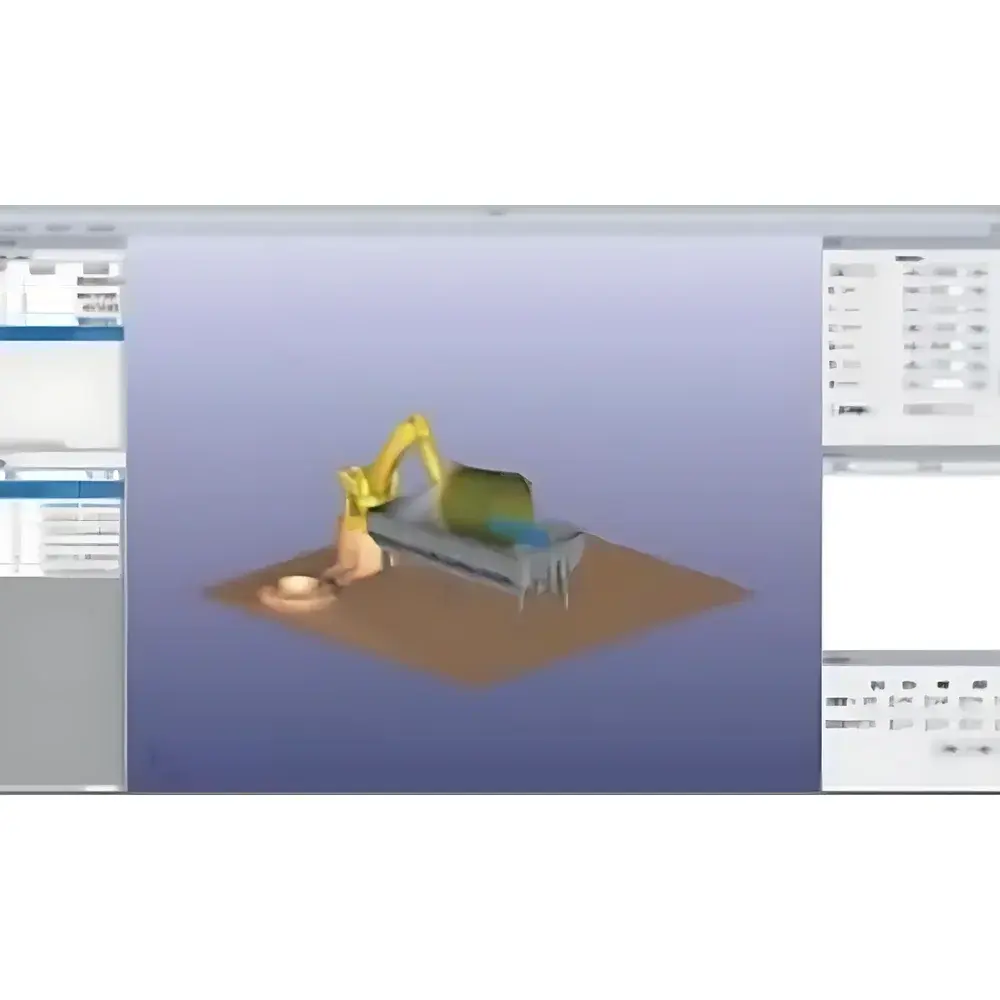
Vmux installs as a Windows Service (Windows 10/11, 64-bit only) and exposes a lightweight GUI for configuration, monitoring, and diagnostic review. All device mappings, port assignments, and formatting rules are stored in encrypted XML configuration files adhering to NIST SP 800-171 security guidelines for controlled unclassified information. Data transmission occurs in raw ASCII or UTF-8 encoded frames; no internal data transformation or statistical computation is performed. Exported logs include SHA-256 checksums for integrity verification. Vmux integrates with enterprise Active Directory for role-based access control (RBAC), restricting port configuration changes to authorized QC supervisors while permitting read-only monitoring for operators. Audit trails record all configuration modifications with Windows Event Log correlation IDs, satisfying requirements for FDA 21 CFR Part 11 Subpart B §11.10(a) regarding electronic record generation.
Applications
- Automated gage R&R studies where synchronized multi-instrument data capture is required across coordinate measuring machines (CMMs), optical comparators, and manual gauges
- Real-time SPC charting in automotive Tier-1 supplier production lines using SYLVAC height gauges and bore gauges interfaced to Minitab Workspace
- Calibration lab data aggregation from distributed SYLVAC digital micrometers feeding into LIMS systems via COM-port–driven middleware
- Toolroom metrology workflows requiring concurrent monitoring of thread pitch, surface roughness, and geometric tolerances from heterogeneous SYLVAC sensor fleets
- Education and training labs deploying standardized measurement protocols across student workstations with mixed USB/BLE instrumentation
FAQ
Does Vmux require SYLVAC hardware firmware updates to operate?
Yes. Devices must run SYLVAC firmware version 4.2.0 or later to ensure BLE GATT descriptor alignment and USB CDC enumeration stability.
Can Vmux forward data to cloud-based MES or ERP platforms?
Indirectly—via third-party COM-to-REST bridges or OPC UA servers configured to poll designated virtual COM ports; Vmux provides no native HTTP or MQTT endpoints.
Is Linux or macOS support available?
No. Vmux is developed exclusively for Microsoft Windows operating systems due to deep integration with Windows Driver Kit (WDK)–based COM port virtualization APIs.
What happens if a Bluetooth device disconnects during data acquisition?
Vmux maintains the assigned virtual COM port and enters a retry loop with exponential backoff (1–30 sec); logged disconnection events include RSSI and connection interval metrics for root-cause analysis.
How is licensing enforced?
License activation requires offline-bound hardware fingerprinting of the host PC’s motherboard and TPM chip; no internet call-home mechanism is implemented.