
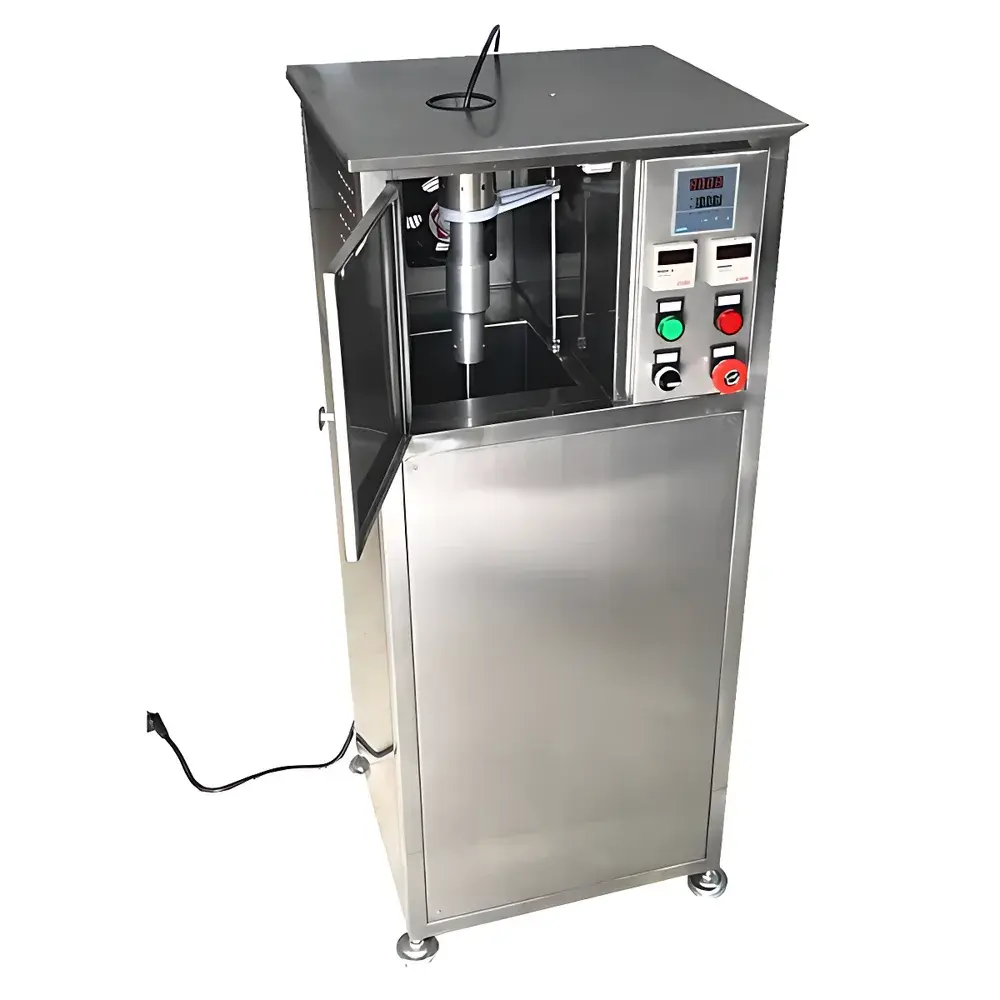
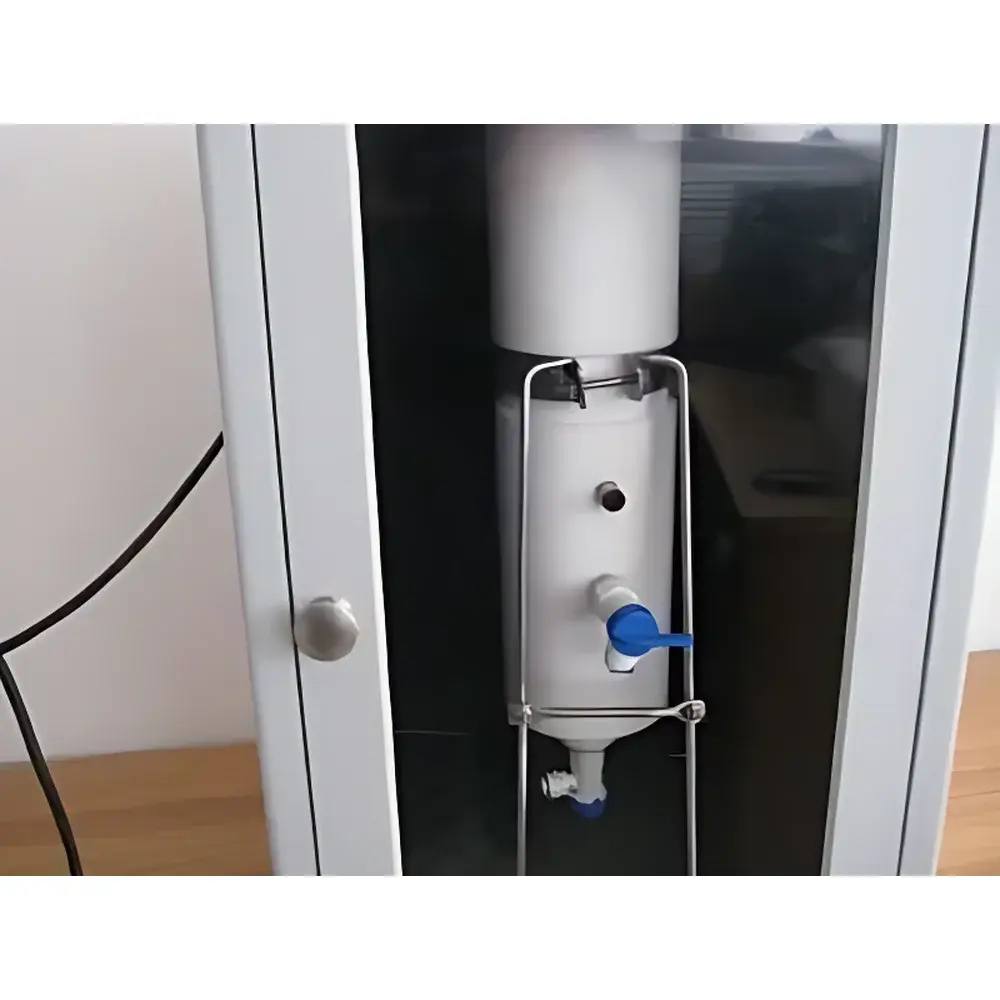
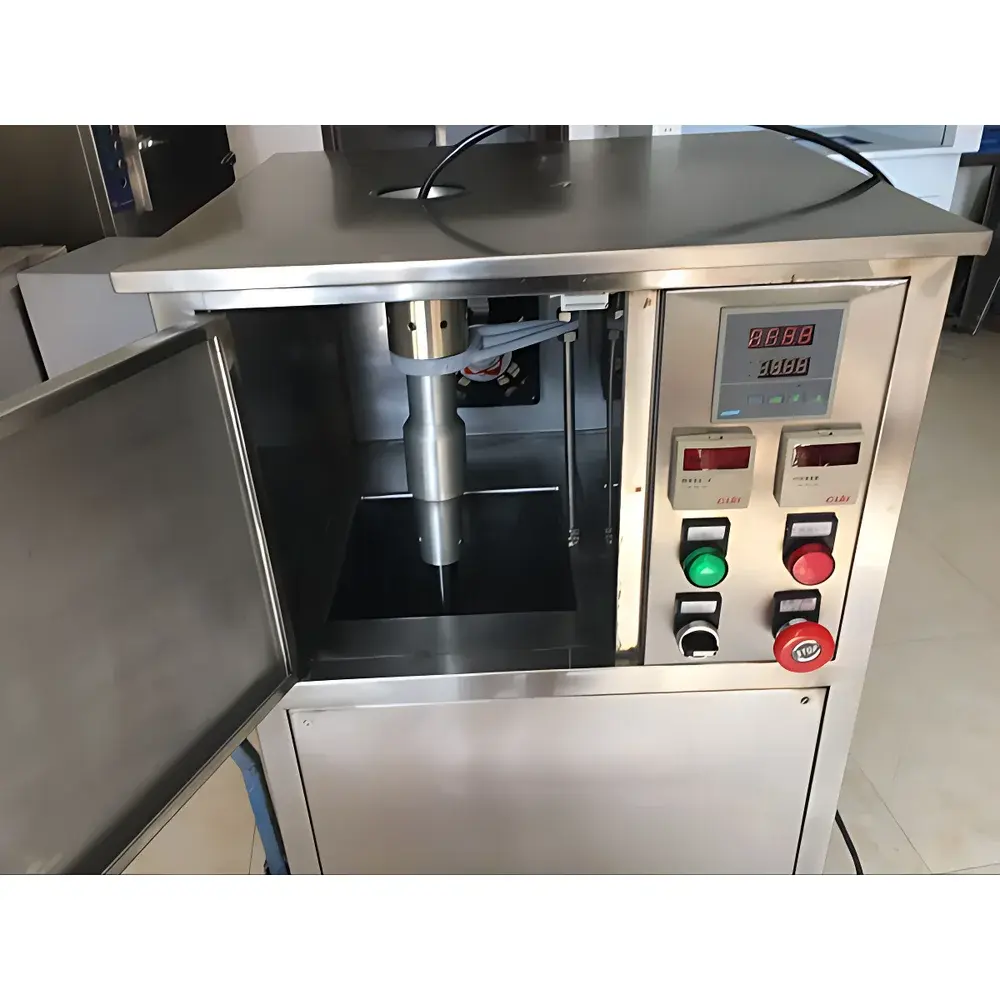
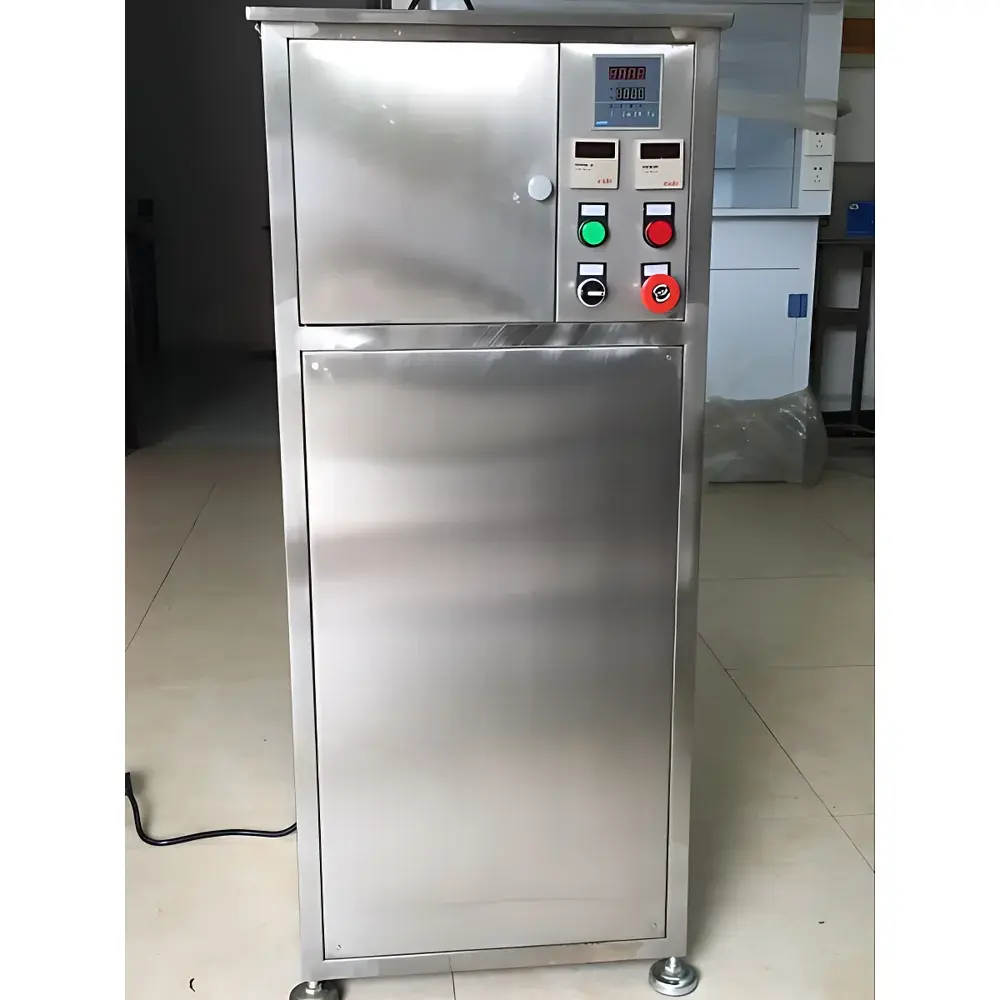
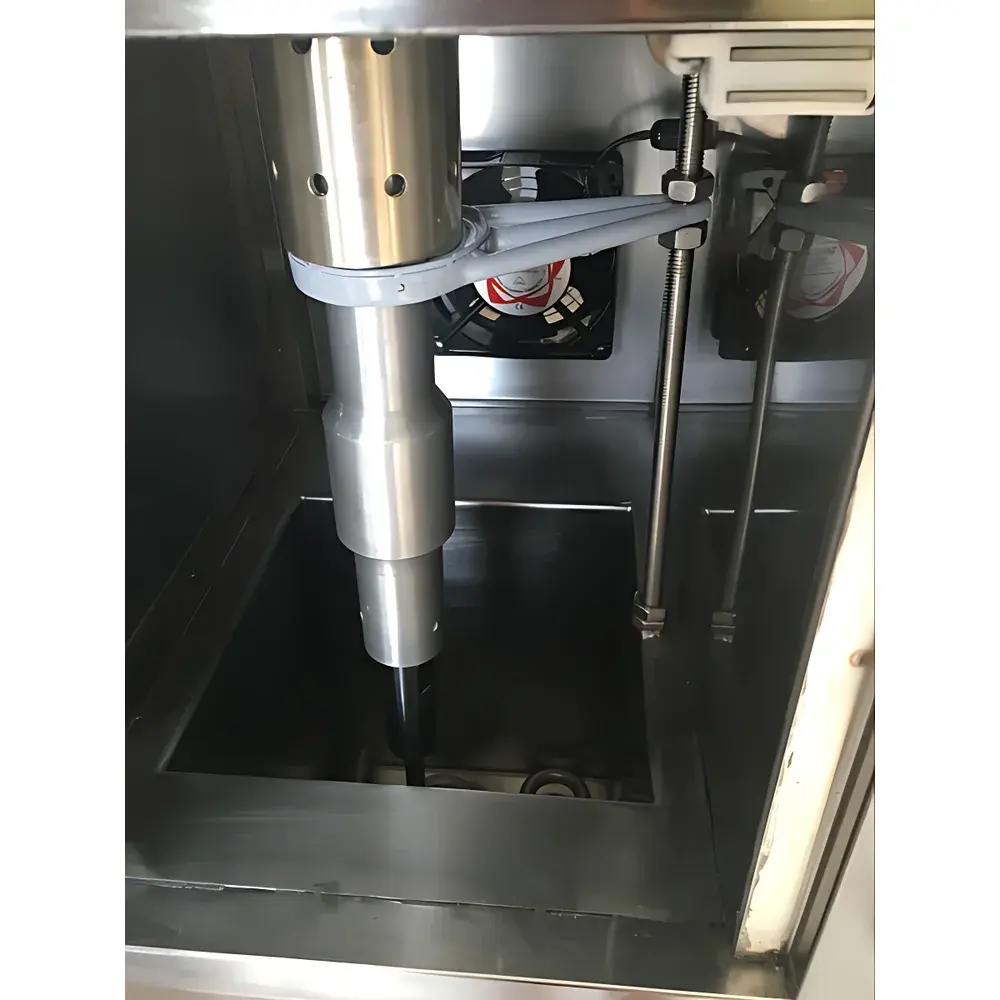
SYC Sycs SCQ-3000F High-Power Ultrasonic Cell Disruptor
| Brand | SYC Sycs |
|---|---|
| Origin | Shanghai, China |
| Model | SCQ-3000F |
| Ultrasonic Power | 3000 W |
| Operating Frequency | 20 / 25 kHz (switchable) |
| Sample Volume Range | 0.5–3000 mL |
| Horn Tip Diameters Available | 5, 8, 10, 15, 20, 25, 30 mm |
| Timer Range | 1 s – 9 h 59 min 59 s |
| Temperature Control | Optional heating module (600 W, ambient to 60 °C) |
| Compliance | Designed for GLP-compliant laboratories |
Overview
The SYC Sycs SCQ-3000F is a high-power benchtop ultrasonic cell disruptor engineered for reproducible, scalable lysis and homogenization across diverse biological and material science applications. It operates on the principle of acoustic cavitation—generating intense localized pressure differentials in liquid media via high-frequency mechanical oscillations (20 or 25 kHz), resulting in microjet formation, shockwave propagation, and shear-induced disruption of cellular membranes, organelles, and aggregated particles. Unlike rotor-stator or bead-beating methods, this system delivers non-thermal, contact-free energy transfer ideal for preserving labile biomolecules (e.g., native proteins, nucleic acids, extracellular vesicles) while achieving uniform dispersion in suspensions, emulsions, and nanomaterial formulations. Its modular horn design enables precise energy delivery across volumes from microliter-scale samples (0.5 mL) to large-batch processing (up to 3000 mL), supporting both R&D and pilot-scale preparation workflows in regulated environments.
Key Features
- 3000 W continuous ultrasonic output with digital power regulation (0–100% in 1% increments), ensuring consistent amplitude control independent of load impedance or temperature drift.
- Dual-frequency operation (20 kHz / 25 kHz) selectable via front-panel interface—20 kHz optimized for high-intensity cavitation in viscous or particulate-laden media; 25 kHz preferred for finer particle size reduction and reduced sample heating in sensitive biochemical preparations.
- Interchangeable titanium alloy horns with standardized tip diameters (5–30 mm), each calibrated for optimal acoustic coupling and energy density distribution—validated per ISO 17025 traceable protocols.
- Precision timer with 1-second resolution and extended range (1 s to 9 h 59 min 59 s), programmable for single-cycle or multi-step protocols including pulse-on/pulse-off sequences to minimize thermal accumulation.
- Optional integrated heating module (600 W, 0–60 °C range) with PT100 sensor feedback, enabling temperature-controlled sonication for thermo-sensitive extraction (e.g., plant secondary metabolites, lipid nanoparticles).
- Rugged stainless-steel housing with IP54-rated electronics enclosure, CE-marked power supply, and built-in safety interlocks (horn detection, overtemperature cutoff, emergency stop).
Sample Compatibility & Compliance
The SCQ-3000F accommodates a broad spectrum of sample types—including mammalian and insect cell cultures, bacterial pellets (Gram-positive and Gram-negative), yeast, plant tissues, spores, biofilms, and synthetic colloids—without requiring chemical lysis reagents or consumables. Its performance meets critical requirements for ISO/IEC 17025-accredited testing labs and aligns with method validation frameworks referenced in USP , ASTM E2894-13 (ultrasonic cleaning verification), and CLSI EP17-A2 (limit of detection studies). When configured with optional data-logging firmware, the instrument supports 21 CFR Part 11 compliance through user authentication, electronic signatures, and immutable audit trails of all operational parameters (power, time, frequency, temperature, date/time stamp).
Software & Data Management
While the SCQ-3000F operates via intuitive standalone controls, it features an RS-232 and USB-B interface for external command integration and real-time parameter streaming. Optional PC-based software (SYC-Ultrasonics Suite v3.2) enables protocol library management, remote execution, automated calibration reporting, and CSV-exportable logs compatible with LIMS and ELN platforms. All firmware updates are digitally signed and validated against SHA-256 checksums. System diagnostics—including transducer impedance monitoring, thermal load profiling, and horn resonance tracking—are accessible via service mode for predictive maintenance scheduling.
Applications
- Cell lysis and subcellular fractionation for proteomics, transcriptomics, and metabolomics workflows.
- Extraction of intracellular enzymes, polysaccharides, alkaloids, and polyphenols from botanical matrices under controlled thermal conditions.
- Nanoparticle synthesis and stabilization—e.g., liposome formation, metal oxide dispersion, graphene exfoliation.
- Emulsification of immiscible liquids (e.g., oil-in-water systems for pharmaceutical formulations) with droplet size distributions verified by dynamic light scattering (DLS).
- Accelerated solvent extraction (ASE) and sonochemical reaction initiation (e.g., Fenton-like oxidation, polymer grafting).
- Preparation of transmission electron microscopy (TEM) and cryo-EM specimens requiring minimal structural perturbation.
FAQ
What is the maximum recommended volume for efficient cavitation at 3000 W?
For optimal energy transfer and uniform cavitation, volumes ≥1000 mL require immersion of the horn tip to a minimum depth of 50 mm and use of ≥20 mm diameter horns. Volumes >2500 mL benefit from dual-horn configurations (available as OEM option).
Can the SCQ-3000F be used in sterile environments?
Yes—titanium horns are autoclavable (121 °C, 20 min); all wetted surfaces are electropolished 316L stainless steel. Optional laminar flow hood mounting kits and sterile-seal horn adapters are available.
Does the instrument support pulse-mode operation for heat-sensitive samples?
Yes—user-defined duty cycles (e.g., 5 s ON / 5 s OFF) are programmable with independent control of burst duration and interval timing.
How is amplitude calibrated and verified?
Each horn undergoes laser interferometric calibration at the manufacturer’s ISO 17025-certified metrology lab. Amplitude values (micrometers peak-to-peak) are engraved on the horn body and cross-referenced in the device’s internal lookup table.
Is third-party validation documentation provided?
Upon request, SYC supplies IQ/OQ documentation packages, including factory acceptance test (FAT) reports, traceable calibration certificates, and installation checklists compliant with GMP Annex 15 guidelines.




