
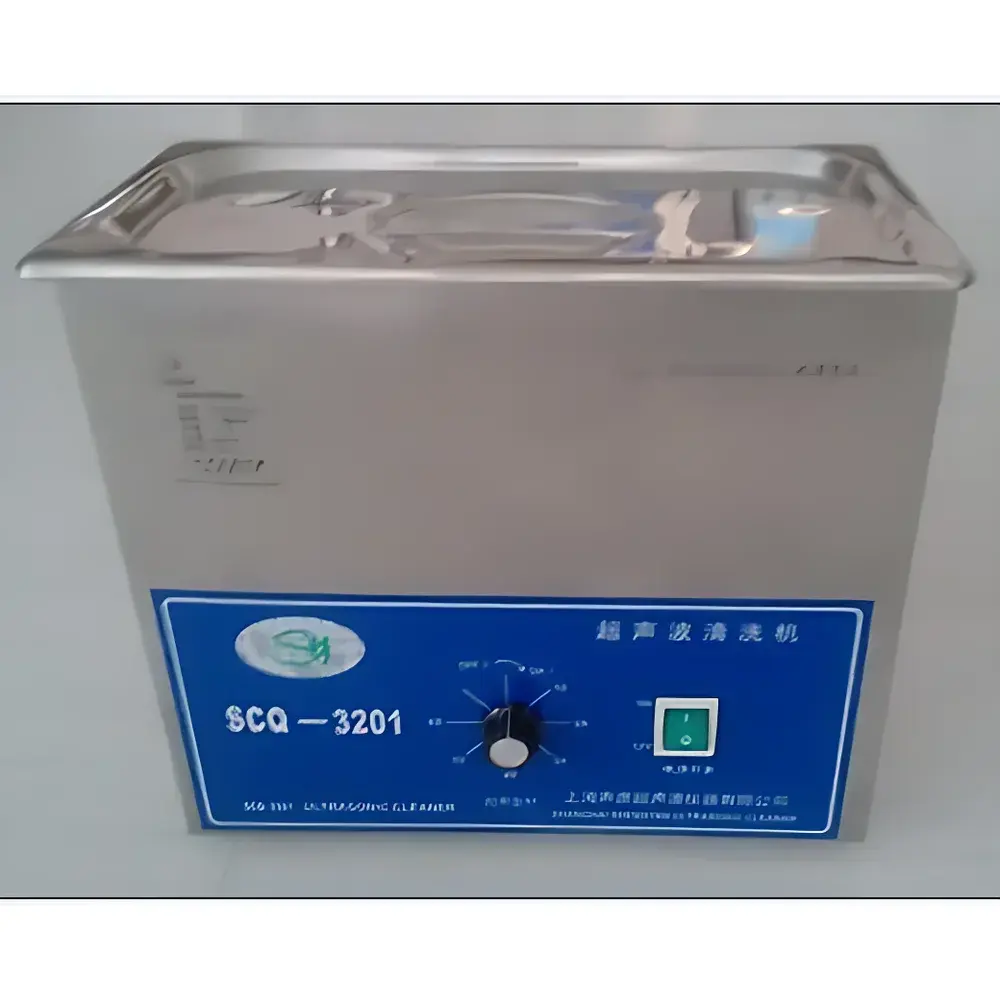
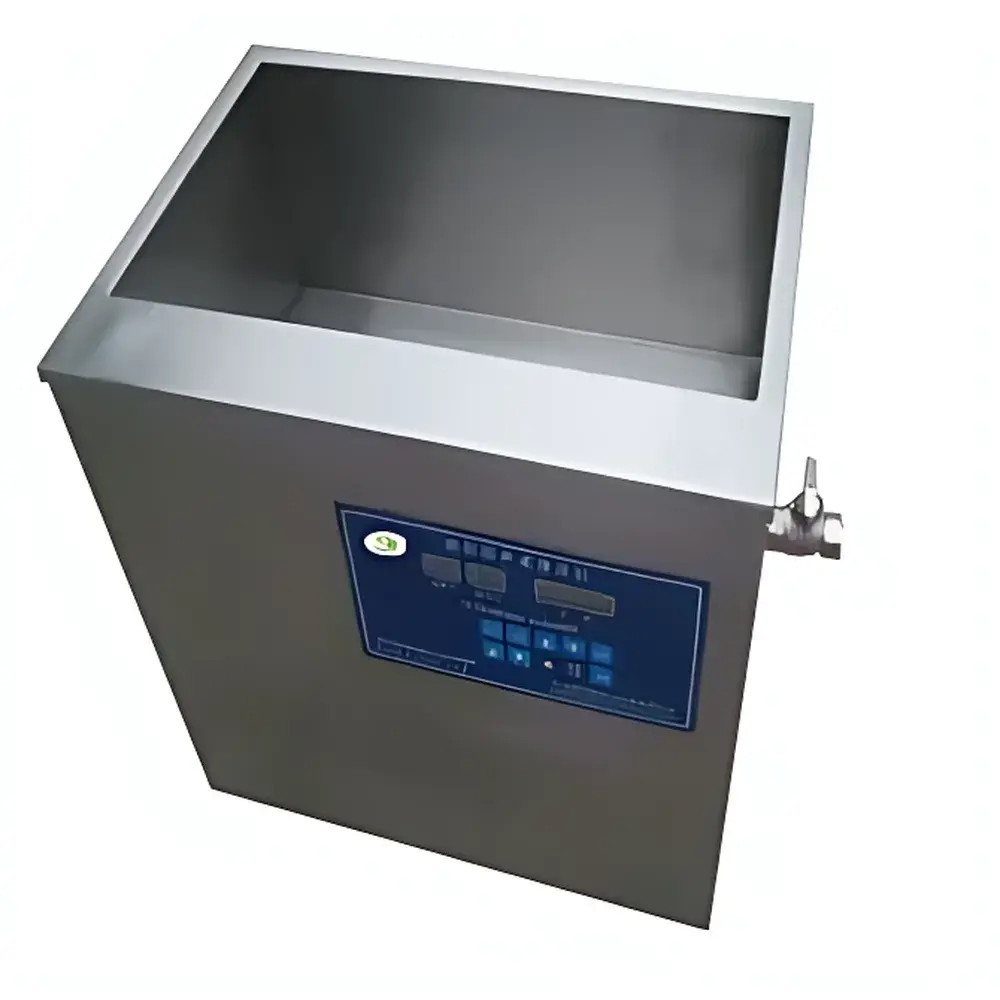
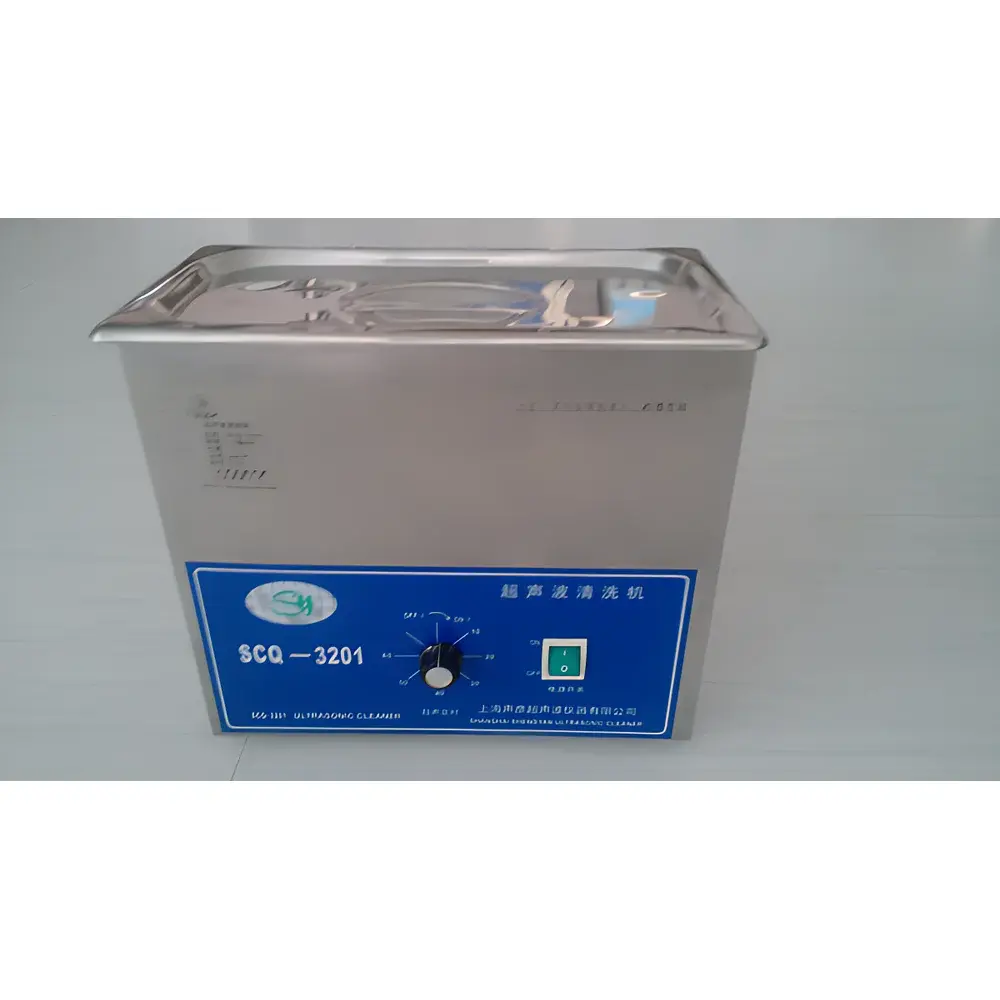
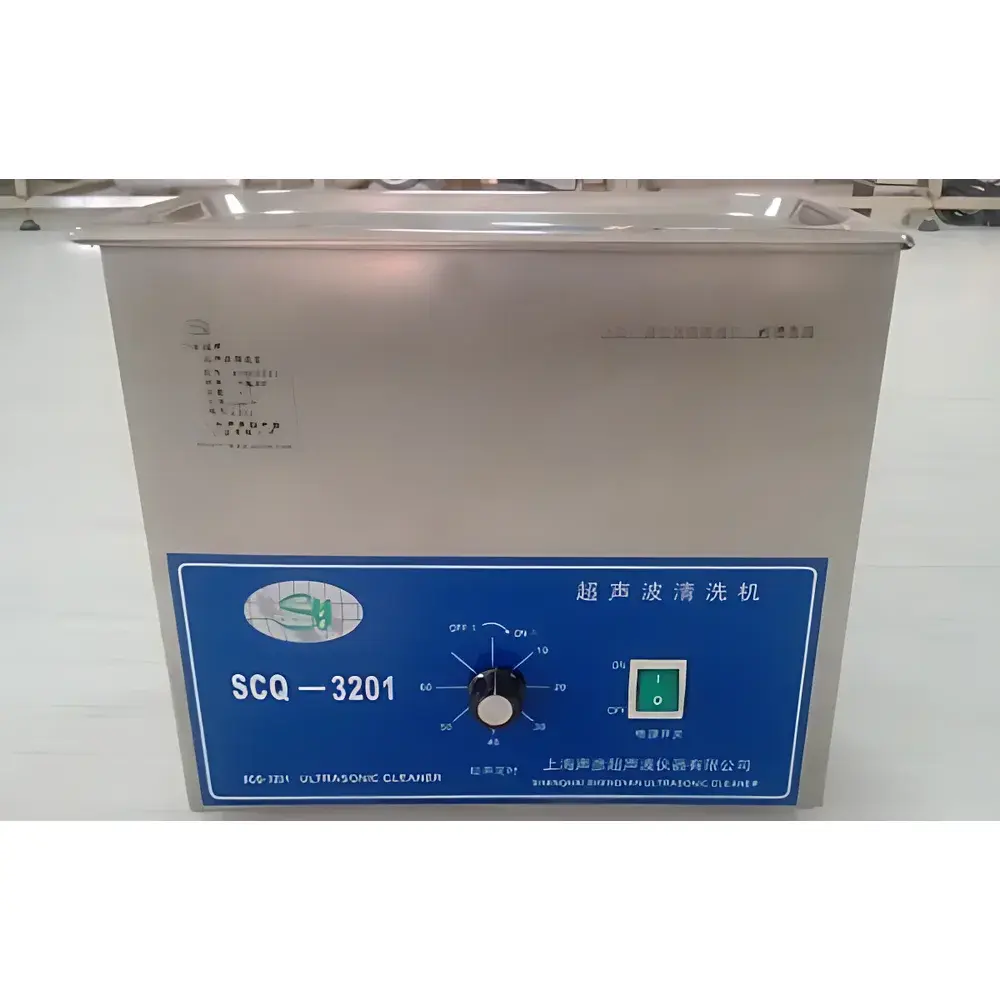
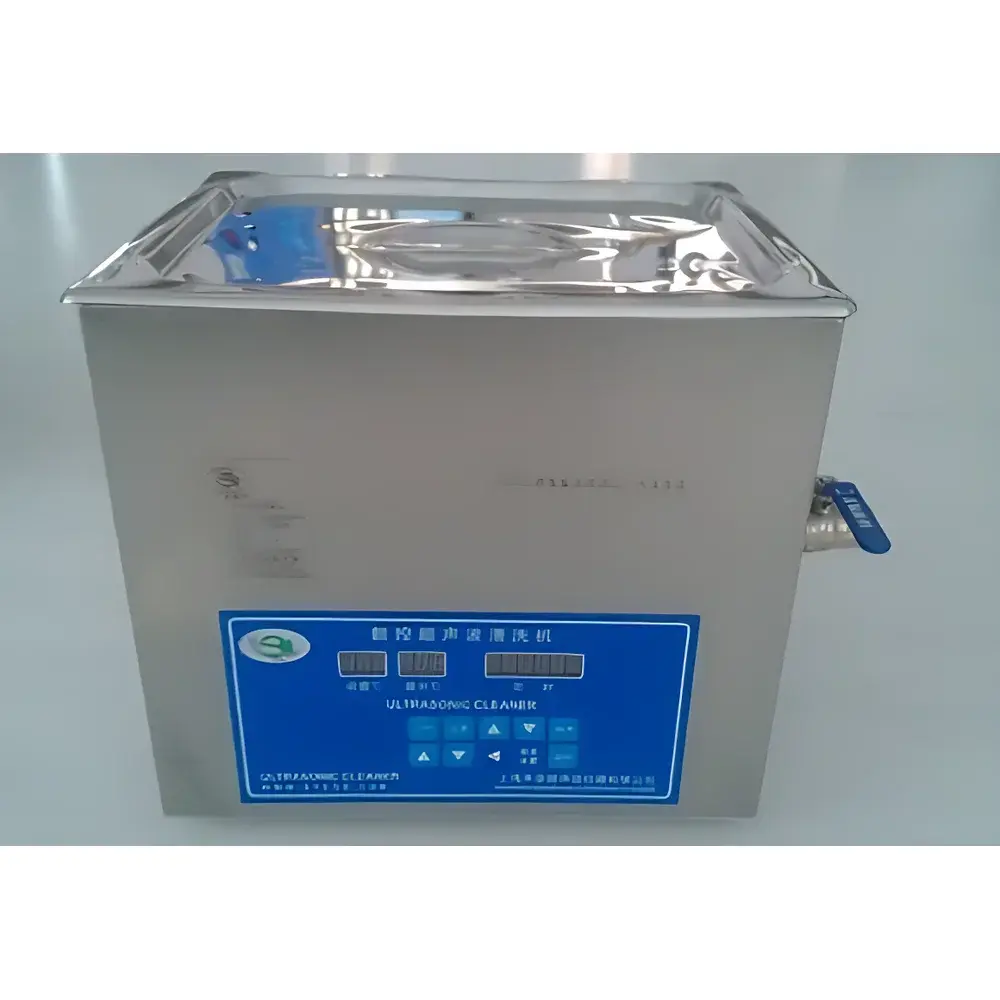
SYC Sycs SCQ-2201A Benchtop Ultrasonic Cleaner (3L Capacity, 40 kHz, 120 W)
| Brand | SYC Sycs |
|---|---|
| Origin | Shanghai, China |
| Manufacturer Type | Authorized Distributor |
| Product Category | Domestic |
| Model | SCQ-2201A |
| Instrument Type | General-Purpose Ultrasonic Cleaner |
| Tank Capacity | 3 L |
| Ultrasonic Frequency | 40 kHz |
| Ultrasonic Power Output | 120 W |
| Power Adjustment | Not Available |
| Temperature Control | Not Available |
| Timer Range | 1–600 min (Digital Programmable) |
| Sound-Dampening Lid | Included |
| Drain Port | Manual Valve |
| Tank Dimensions (L×W×H) | 230 × 135 × 100 mm |
| Standard Accessories | Stainless Steel Mesh Basket & Lid |
Overview
The SYC Sycs SCQ-2201A is a compact, benchtop ultrasonic cleaner engineered for precision cleaning of delicate components in laboratory, R&D, and quality control environments. It operates on the principle of acoustic cavitation: high-frequency sound waves (40 kHz) generate microscopic bubbles in the cleaning solution that implode with localized energy, dislodging particulate contaminants, oils, flux residues, and biofilms from surfaces without mechanical abrasion. Designed for reproducible, non-destructive cleaning of small to medium-sized parts—including optical lenses, microfluidic chips, surgical instruments, PCBs, watch components, and analytical sample vials—the SCQ-2201A delivers consistent performance across academic, pharmaceutical, and industrial laboratories where trace contamination control is critical.
Key Features
- Benchtop form factor with corrosion-resistant stainless steel tank (230 × 135 × 100 mm internal dimensions) and seamless welded construction for long-term chemical compatibility and structural integrity.
- Digital microprocessor-controlled timer (1–600 minutes), enabling precise exposure duration calibration for method validation and SOP compliance.
- Integrated sound-dampening lid reduces ambient noise to ≤55 dB(A) during operation—essential for shared lab spaces and ISO 17025-accredited facilities requiring low-noise instrumentation.
- Stainless steel mesh basket included for secure part placement and uniform ultrasonic energy distribution; basket dimensions match tank geometry to prevent shadowing or uneven cleaning.
- No heating or power modulation circuitry—optimized for room-temperature aqueous or mild solvent-based cleaning protocols where thermal degradation or variable intensity must be avoided.
- Manual drain valve located at tank base allows controlled, spill-free solution exchange—compatible with waste containment protocols per local environmental regulations (e.g., EPA 40 CFR Part 261).
Sample Compatibility & Compliance
The SCQ-2201A accommodates a broad range of sample geometries and materials, including glassware (vials, cuvettes, pipette tips), metal components (stainless steel, aluminum, brass), silicon wafers, ceramic substrates, and polymer-based microdevices. Its 40 kHz frequency provides an optimal balance between cleaning efficacy and surface safety for fragile substrates—higher frequencies (e.g., 80–130 kHz) are typically reserved for sub-micron particle removal on ultra-smooth surfaces, while lower frequencies (25–35 kHz) are used for heavy-duty industrial degreasing. The unit meets CE electromagnetic compatibility (EMC) directives (2014/30/EU) and conforms to IEC 61000-6-3 for residential/commercial emission limits. While not certified to UL 61010-1 or IEC 61010-1 out-of-the-box, it is routinely deployed in GLP-compliant labs under documented risk assessment and operational SOPs covering solvent compatibility, solution change intervals, and periodic verification of timer accuracy.
Software & Data Management
This model features a dedicated digital timer interface with LED display and tactile push-button controls—designed for reliability, minimal maintenance, and immunity to software-related failure modes common in embedded touchscreen systems. No proprietary software, drivers, or network connectivity are required, eliminating cybersecurity vulnerabilities and reducing validation burden under FDA 21 CFR Part 11 or EU Annex 11. Timer settings are retained after power cycling; no battery-backed memory or audit trail is provided, aligning with its role as a standalone utility instrument rather than a regulated data-generating device. For laboratories requiring full electronic records, integration with external time-stamped logging systems (e.g., LabVantage, STARLIMS) via manual entry or barcode-scanned run logs is recommended and widely practiced.
Applications
- Pre-analytical sample preparation: cleaning HPLC vials, GC autosampler trays, and ICP-MS nebulizer components to minimize carryover and spectral interference.
- Electronics manufacturing: removal of rosin flux, solder paste residue, and particulate debris from SMT assemblies and MEMS devices prior to inspection or coating.
- Medical device reprocessing: adjunct cleaning of reusable laparoscopic instruments, dental handpieces, and endoscope accessories before steam sterilization (per AAMI ST91 and ISO 15883).
- Academic research: surface decontamination of AFM cantilevers, TEM grids, and microfluidic PDMS molds to ensure baseline signal fidelity.
- Jewelry and precision optics: gentle removal of polishing compounds and fingerprint oils from gold-plated contacts and coated lenses without scratching anti-reflective layers.
FAQ
Is the SCQ-2201A suitable for cleaning glass volumetric flasks and burettes?
Yes—its 40 kHz frequency and 120 W power output effectively remove dried titrant residues and organic films without compromising Class A calibration accuracy. Use deionized water or 1–2% laboratory-grade detergent; avoid strong alkalis or hydrofluoric acid solutions.
Can this unit be operated continuously for extended durations?
The unit supports uninterrupted operation up to 600 minutes per cycle. For multi-hour cleaning protocols, allow ≥15-minute cooldown intervals between cycles to maintain transducer longevity and thermal stability.
Does the tank have overflow protection or level sensors?
No. Fill level must be manually maintained between minimum (covering transducers) and maximum (≤10 mm below rim) marks to ensure cavitation efficiency and prevent premature transducer overheating.
What cleaning solutions are compatible with the stainless steel tank?
Aqueous detergents (e.g., Alconox®, Liquinox®), ethanol, isopropanol, and acetone are commonly used. Avoid halogenated solvents (e.g., chloroform, methylene chloride) and strong oxidizers (e.g., concentrated nitric acid) unless validated for material compatibility per ASTM G128.
Is calibration or preventive maintenance required?
No formal calibration is specified by the manufacturer. However, biannual verification of timer accuracy (±1% tolerance) and visual inspection of tank welds and lid seal integrity are recommended per ISO/IEC 17025 Clause 6.4.1 for accredited laboratories.



