
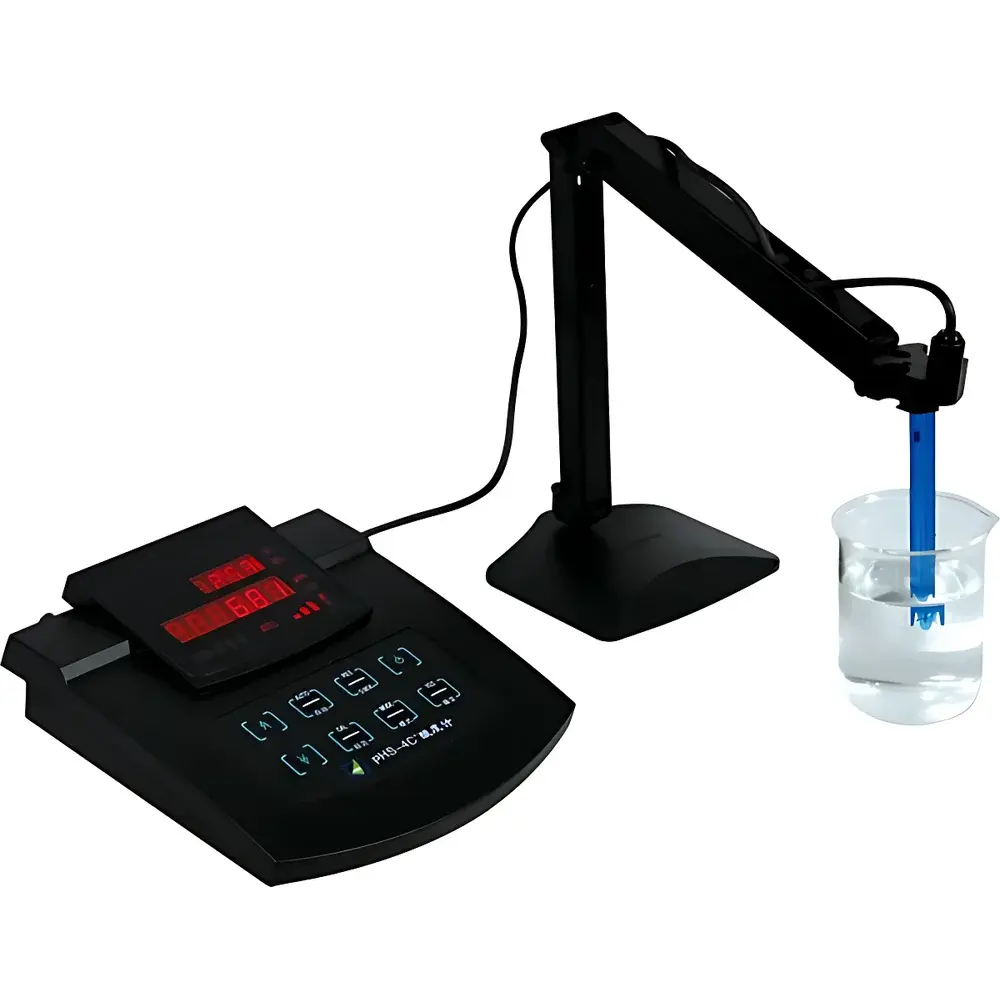
FangZhou PHS-4C+ Benchtop pH Meter
| Brand | FangZhou |
|---|---|
| Origin | Sichuan, China |
| Model | PHS-4C+ |
| Instrument Type | Benchtop |
| Parameter Types | Multi-parameter (pH, mV, ORP, Temperature) |
| Measurement Accuracy | ±0.002 pH |
| pH Range | 0.000–14.000 pH |
| Resolution | 0.001/0.01/0.1 pH (adjustable) |
| mV/ORP Range | −1999.9 to +1999.9 mV |
| mV Resolution | 0.1/1 mV (adjustable) |
| Temp Range | −5.0 to 105.0 °C |
| Temp Resolution | 0.1 °C |
| Temp Accuracy | ±0.3 °C ±1 digit |
| Input Impedance | ≥3 × 10¹² Ω |
| Calibration | 1–3 point auto-recognized NIST-traceable buffers (e.g., pH 4.00, 6.86, 9.18 at 25 °C) |
| Temperature Compensation | Automatic (ATC) or manual, −5.0 to 105.0 °C |
| Interface | BNC electrode port, Pt1000 or thermistor temperature input, RS232 serial output |
| Power | DC 9 V, 300 mA (center-positive) |
Overview
The FangZhou PHS-4C+ is a high-precision benchtop pH meter engineered for routine and quality-critical electrochemical measurements in laboratories, environmental monitoring stations, food safety testing facilities, and pharmaceutical QC environments. It operates on the fundamental principle of potentiometric measurement—detecting the potential difference between a pH-sensitive glass electrode and a stable reference electrode in aqueous solution—converted into pH units via the Nernst equation. With a certified accuracy of ±0.002 pH and selectable resolution down to 0.001 pH, the PHS-4C+ meets the performance requirements of ISO 8655-5 (volumetric apparatus calibration), ASTM D1293 (pH of water), and USP (pH measurement in pharmaceutical preparations). Its microprocessor-controlled architecture ensures stable signal acquisition, real-time drift compensation, and robust rejection of electrical noise—critical when measuring low-conductivity samples or high-ionic-strength matrices.
Key Features
- Triple-mode operation: simultaneous pH, mV (redox potential), and ORP measurement with user-selectable resolution (0.001/0.01/0.1 pH; 0.1/1 mV)
- Intelligent Auto-Temperature Compensation (ATC): supports Pt1000 and thermistor sensors; automatic recognition of temperature probe type and seamless integration into Nernst slope correction
- Smart calibration protocol: 1-, 2-, or 3-point calibration with automatic buffer recognition (NIST-traceable standards: pH 4.00, 6.86, 9.18 at 25 °C); auto-endpoint detection minimizes operator variability
- Electrode health diagnostics: real-time impedance monitoring and status indicator display to alert users to aging, clogged junctions, or depleted electrolyte
- Dual data retention: non-volatile memory preserves up to 500 calibration records and 200 measurement logs—even after power loss
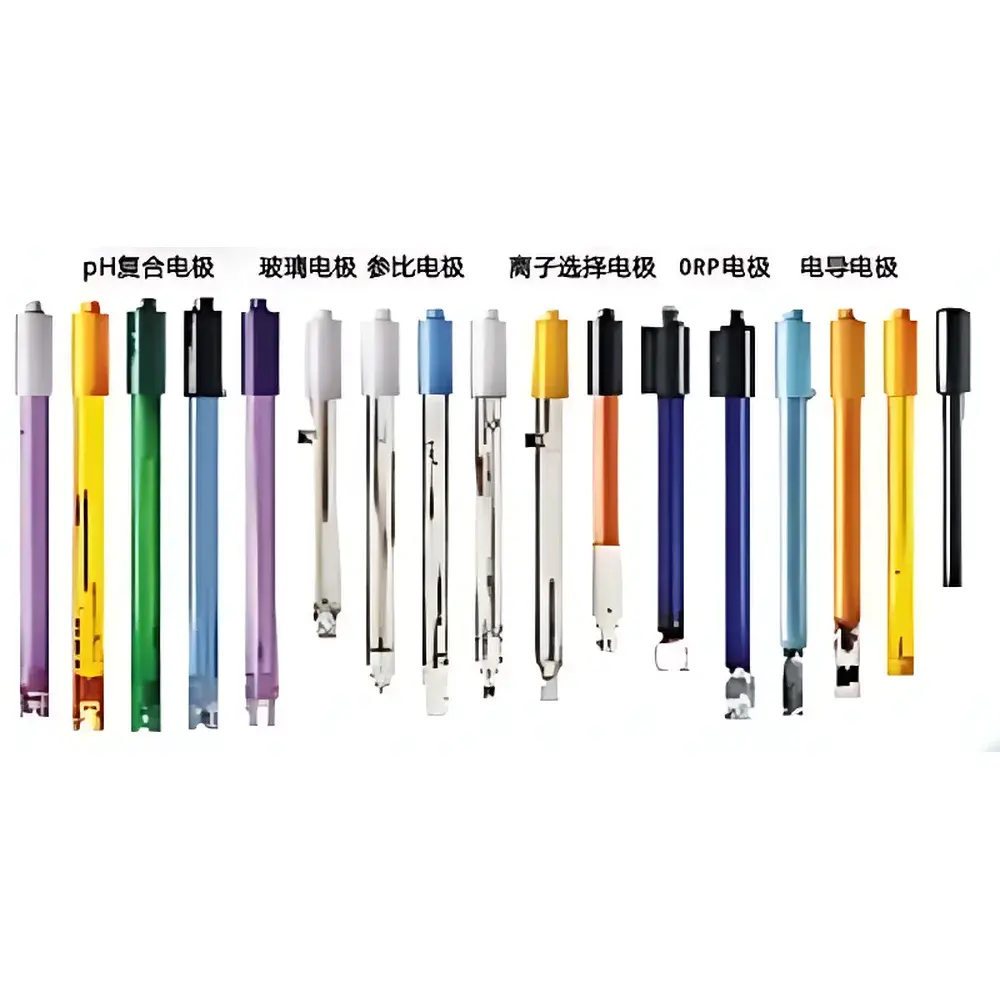
- Universal electrode compatibility: integrated BNC interface with optional adapter module for DIN, T-type, and mini-pH connectors; supports standard combination electrodes and ion-selective electrodes (ISEs) for direct concentration analysis (e.g., F⁻, Cl⁻, NO₃⁻)
- Rugged industrial enclosure: IP65-rated front panel with chemical-resistant coating; designed for continuous operation in humid, corrosive, or splash-prone lab environments
Sample Compatibility & Compliance
The PHS-4C+ is validated for use with aqueous solutions across wide ionic strength ranges (10⁻⁵ to 1 M), including buffered standards, process water, wastewater effluents, fermentation broths, and food extracts. It complies with ISO/IEC 17025 documentation requirements for calibration traceability and supports GLP/GMP workflows through audit-ready calibration logs and timestamped measurement records. All firmware operations adhere to IEC 61000-4 electromagnetic compatibility standards. While not FDA 21 CFR Part 11–certified out-of-the-box, its RS232 interface enables secure, encrypted data export to LIMS systems compliant with electronic record regulations when paired with validated third-party software.
Software & Data Management
Raw measurement and calibration data are accessible via RS232 serial interface using standard ASCII protocols (9600 baud, no parity, 8 data bits, 1 stop bit). The instrument supports direct export to CSV or TXT files compatible with Excel, LabChart, or custom Python/Matlab scripts. Optional PC software (sold separately) provides automated report generation—including calibration certificates with uncertainty budgets per GUM (JCGM 100)—and trend analysis across multiple batches. All stored data include metadata: date/time stamp, operator ID (user-defined), electrode serial number, ambient temperature, and buffer lot numbers—enabling full analytical traceability.
Applications
- Environmental labs: compliance monitoring of surface water, groundwater, and leachate per EPA Method 9040C and ISO 10523
- Pharmaceutical manufacturing: in-process control of buffer preparation, cleaning validation rinse water, and stability study samples
- Food & beverage QA: titratable acidity verification, fermentation pH profiling, and shelf-life modeling
- Academic research: kinetic studies of acid-base reactions, enzyme activity assays under controlled pH, and membrane transport experiments
- Industrial process support: boiler feedwater conditioning, electroplating bath control, and bioreactor pH feedback loops
FAQ
What calibration standards are supported?
The PHS-4C+ recognizes NIST-traceable pH buffers (4.00, 6.86, 9.18 at 25 °C) and allows custom buffer entry for non-standard or temperature-adjusted values.
Can it measure ion concentration directly?
Yes—when used with certified ion-selective electrodes (ISEs) and enabled via the ISE mode, it calculates concentration (mol/L or ppm) using the slope-based calibration method per ISO 17034.
Is temperature compensation mandatory during pH measurement?
No—temperature compensation is configurable as automatic (ATC) or manual; however, omission may introduce systematic error exceeding ±0.01 pH per 5 °C deviation from calibration temperature.
How is electrode performance monitored?
The instrument continuously evaluates asymmetry potential and junction resistance; deviations beyond ±30 mV or >2 MΩ trigger a visual “Electrode Check” warning.
Does it meet international metrological requirements for calibration validity?
Yes—the 0.001-class designation conforms to JJG 119-2018 (China) and aligns with EN 14902:2005 metrological equivalence for laboratory pH meters.
Related Products





