
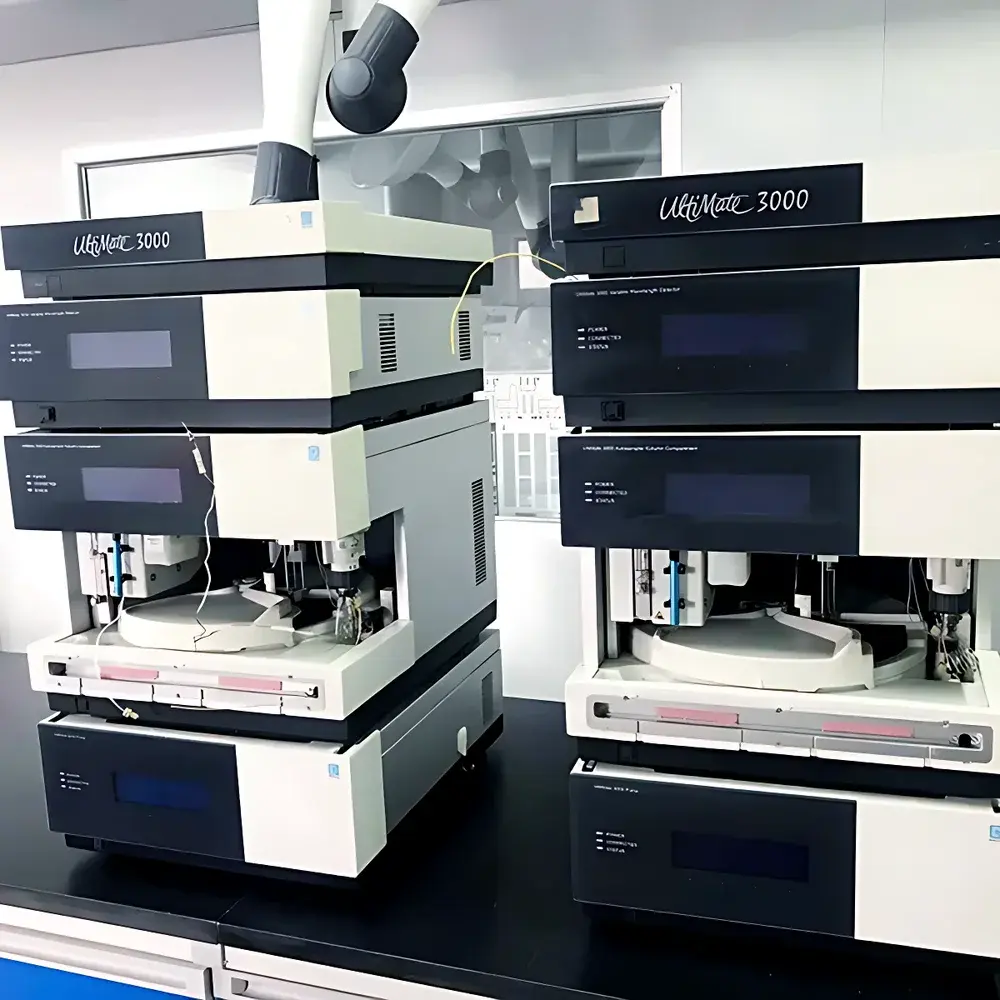
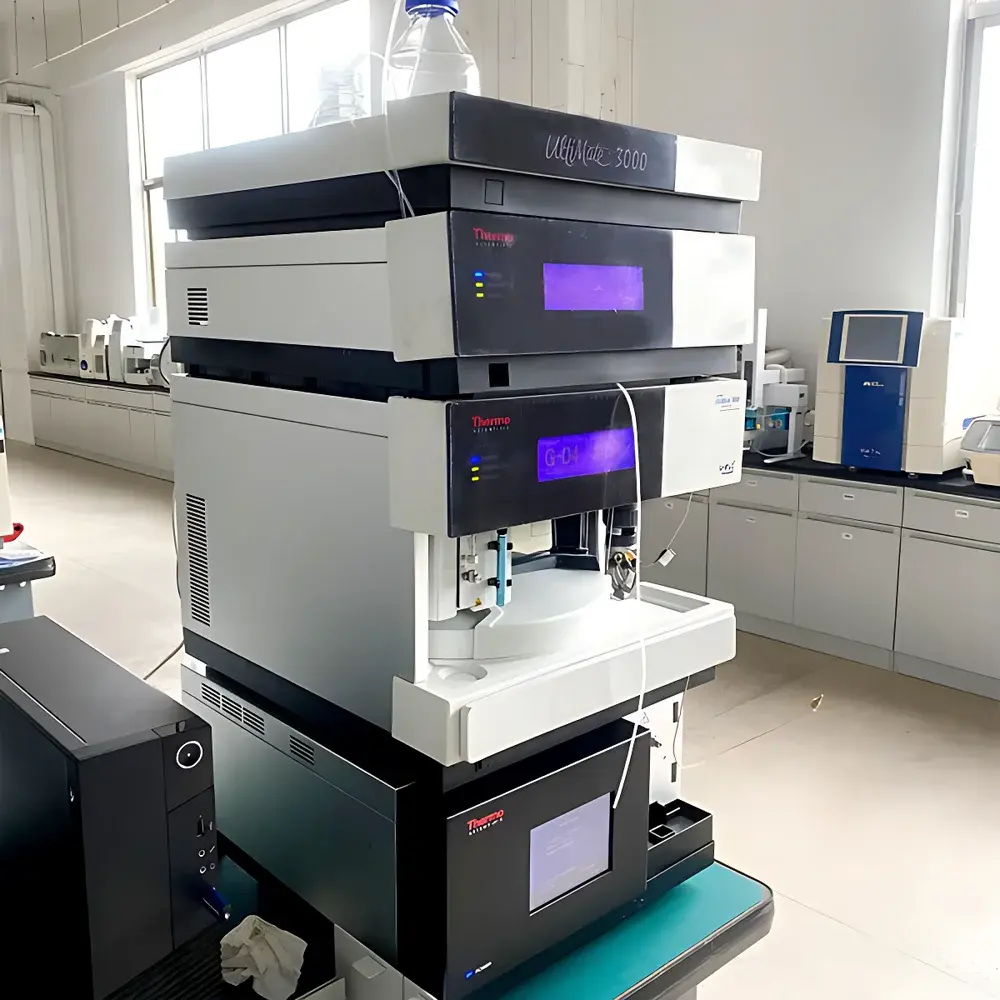
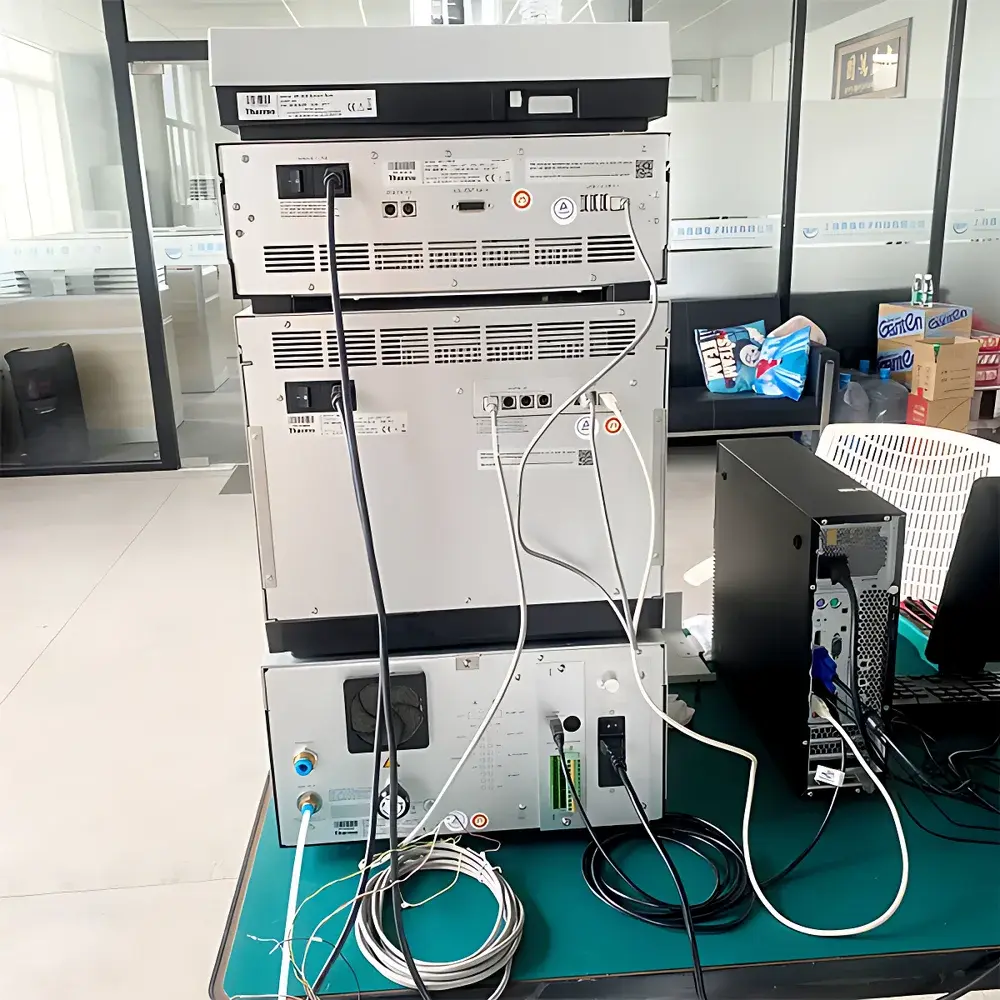
Thermo Fisher UltiMate 3000 Rapid Separation Quaternary System
| Brand | Thermo Fisher |
|---|---|
| Origin | USA |
| Manufacturer Type | Authorized Distributor |
| Origin Category | Imported |
| Model | UltiMate 3000 RS (LPG-3400RS, WPS-3000TSL, TCC-3000RS) |
| Instrument Type | Conventional & UHPLC-Compatible Quaternary HPLC System |
| Flow Rate Range | 0.001–8.0 mL/min |
| Maximum Pressure | 100 MPa (15,000 psi / 1000 bar) |
| Flow Accuracy | ≤0.1% RSD |
| Injection Volume Range | 0.1–100 µL |
| Sample Capacity | Up to 100 positions (2 mL vials) |
| Column Temperature Range | 5–110 °C |
| UV/VIS Wavelength Range | 190–900 nm (DAD), or 220 nm fixed (VWD) |
| Data Acquisition Rate | Up to 100 Hz |
Overview
The Thermo Fisher UltiMate 3000 Rapid Separation Quaternary System is a high-performance, modular liquid chromatography platform engineered for laboratories requiring method continuity across legacy and next-generation LC workflows. Based on proven quaternary gradient architecture, it delivers full compatibility with established isocratic and gradient methods developed on conventional HPLC systems—while simultaneously supporting ultra-high-resolution separations using sub-2 µm particles and narrow-bore columns (2.1 mm i.d. to 10 mm i.d.). Its dual-capability design bridges the operational gap between traditional 3–5 µm particle-based assays and modern UHPLC protocols, enabling seamless method transfer without revalidation in regulated environments. The system operates on the principle of high-precision solvent blending via low-dead-volume quaternary pumping (LPG-3400RS), coupled with SmartFlow™ active flow control and SpinFlow™ dynamic gradient delay compensation—ensuring retention time stability, peak shape fidelity, and reproducible elution profiles across variable column dimensions and mobile phase compositions.
Key Features
- Quaternary low-pressure gradient pump (LPG-3400RS) with integrated 4-channel degasser, delivering flow rates from 0.001 to 8.0 mL/min at pressures up to 100 MPa
- Thermo Scientific™ Dionex™ Viper™ fingertight fitting system—minimizing system dead volume and maximizing peak symmetry across all flow regimes
- Temperature-controlled autosampler (WPS-3000TSL) with <0.01% carryover performance, featuring permanent in-line needle and loop design for ultra-low cross-contamination
- Column compartment (TCC-3000RS) with precise 5–110 °C temperature control, optional pre-heater and post-column cooler, and support for up to two field-upgradable column switching valves
- Dionex™ SmartFlow™ technology for real-time flow rate monitoring and closed-loop pressure-compensated flow correction—achieving ≤0.1% RSD flow precision
- Dionex™ SpinFlow™ adjustable gradient delay volume optimization—enabling accurate method translation between systems with differing dwell volumes
- Full hardware interoperability with Thermo Scientific detectors including DAD, MWD, VWD, FLD, CAD, RID, and MS interfaces (e.g., Orbitrap, TSQ series)
Sample Compatibility & Compliance
The UltiMate 3000 RS accommodates a broad range of sample matrices—including small molecules, peptides, oligonucleotides, polymers, and natural product extracts—across analytical, semi-preparative, and QC applications. Its robust fluidic architecture supports columns packed with particle sizes from 1.7 µm to 10 µm and internal diameters from 2.1 mm to 10 mm. The system meets key regulatory requirements for pharmaceutical and clinical laboratories: full audit trail, electronic signature, and instrument qualification support per FDA 21 CFR Part 11 when used with Chromeleon CDS v7.2 or later. It aligns with ISO/IEC 17025 method validation principles and supports GLP/GMP-compliant operation through configurable user roles, secure data archiving, and automated system suitability testing (SST) reporting.
Software & Data Management
Controlled exclusively via Thermo Scientific™ Dionex™ Chromeleon™ Chromatography Data System (CDS) versions 6.x and 7.x, the UltiMate 3000 RS enables centralized instrument management, remote monitoring, and eWorkflow-driven method execution. Chromeleon 7.2 provides integrated IQ/OQ/PQ documentation templates, automated system startup/shutdown sequences, and scheduled maintenance alerts. Advanced features include real-time detector signal overlay, multi-dimensional peak tracking, and customizable report generation compliant with ALM (Analytical Laboratory Management) frameworks. Data integrity is enforced through role-based access control, immutable raw data storage (in .cdf or .u3d format), and full traceability of all acquisition, processing, and reporting events—including timestamps, operator IDs, and parameter modifications.
Applications
- Pharmaceutical development: Stability-indicating assays, impurity profiling, dissolution testing, and forced degradation studies
- Academic research: Metabolomics, natural product isolation, polymer characterization, and synthetic reaction monitoring
- Quality control laboratories: Release testing of APIs and finished dosage forms per USP/EP monographs
- Chemical manufacturing: Purity assessment, catalyst screening, and batch-to-batch consistency verification
- MS-coupled workflows: High-sensitivity LC-MS/MS method development for bioanalysis and proteomics
- Method transfer & validation: Direct deployment of legacy 3–5 µm methods alongside new sub-2 µm UHPLC protocols
FAQ
Can the UltiMate 3000 RS run both conventional HPLC and UHPLC methods on the same platform?
Yes—the system’s pressure rating (100 MPa), flow accuracy (<0.1% RSD), and low dwell volume (<100 µL) enable full compatibility with columns ranging from 3–5 µm (analytical HPLC) to 1.7 µm (UHPLC), without hardware modification.
Is method transfer between different UltiMate 3000 configurations supported?
Yes—identical system delay volumes across RS and standard quaternary models ensure consistent gradient timing; SpinFlow™ further compensates for minor dwell differences during method porting.
What level of temperature control does the column compartment provide?
The TCC-3000RS offers ±0.1 °C stability from 5 to 110 °C, with optional pre-heater and post-column cooler modules to manage viscosity-induced backpressure and optimize resolution.
How is data integrity ensured in regulated environments?
Chromeleon CDS v7.2 enforces 21 CFR Part 11 compliance via electronic signatures, audit trails, permission-based workflows, and encrypted raw data storage with checksum verification.
Which detectors are natively supported?
All Thermo Scientific detectors—including Vanquish DAD, Q Exactive HF-X, TSQ Altis, and Accela PDA—are fully integrated via native drivers; third-party detectors may be connected via analog/digital I/O or Ethernet.






