
ESEN ADR-60 Recirculating Valve Bottle-top Dispenser
| Brand | ESEN |
|---|---|
| Origin | Zhejiang, China |
| Model | ADR-60 |
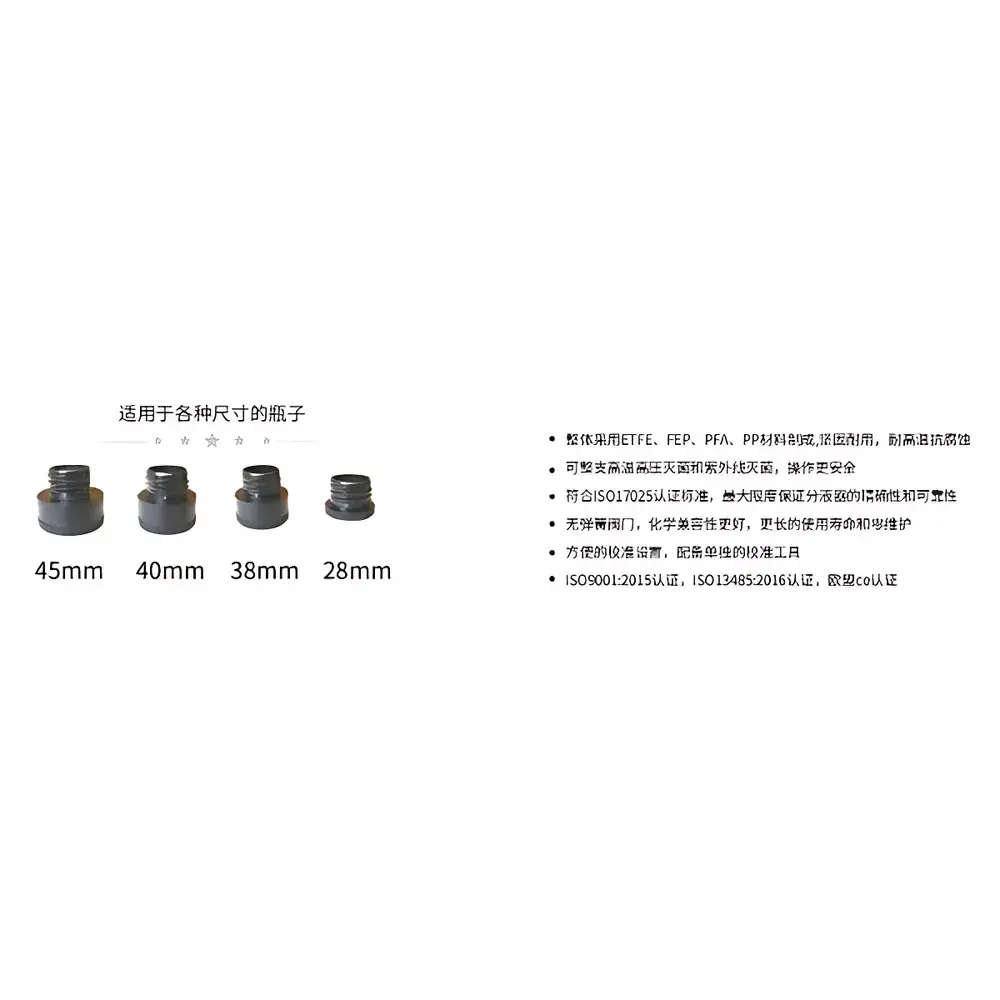
| Material | ETFE/FEP/PFA/PP |
| Sterilization | Autoclavable (121°C, 20 min) & UV-compatible |
| Certifications | ISO 9001:2015, ISO 13485:2016, CE, ISO/IEC 17025 compliant |
| Valve Type | Spring-free recirculating valve |
| Dispensing Range | Adjustable via dual-scale graduated cylinder (precise volume setting) |
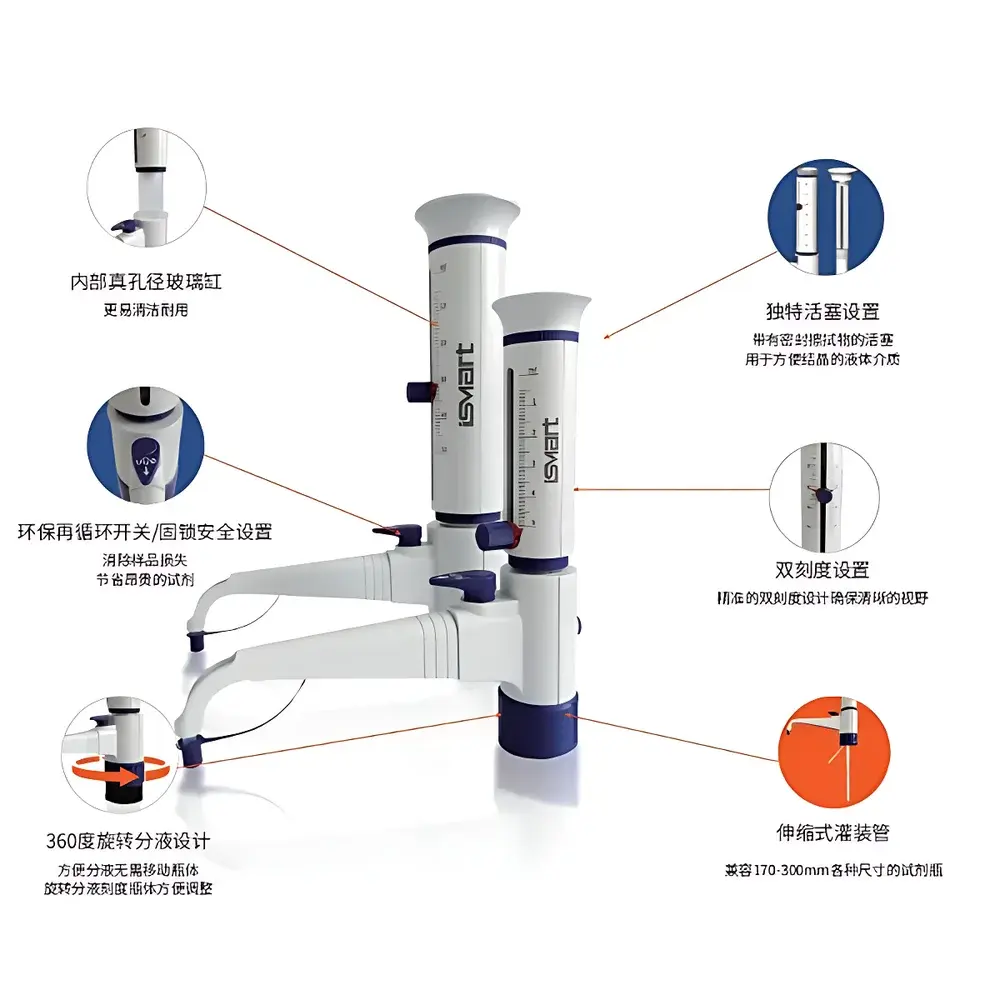
| Rotational Design | 360° swivel nozzle |
| Filling Tube | Telescopic (170–300 mm), chemically resistant |
| Sealing System | Wiper-sealed piston with integrated cleaning interface |
| Safety Feature | Lockable recirculation switch to prevent sample loss and reagent waste |
Overview
The ESEN ADR-60 Recirculating Valve Bottle-top Dispenser is an engineered solution for precise, repeatable, and contamination-controlled liquid handling in analytical, quality control, and research laboratories. Designed around a spring-free recirculating valve mechanism, it eliminates mechanical fatigue and chemical degradation associated with traditional spring-loaded systems—ensuring long-term volumetric accuracy and extended service life without scheduled maintenance. Its core operating principle relies on positive displacement via a high-integrity piston sealed with a chemically inert wiping interface, enabling consistent delivery across viscous, crystallizing, or volatile media. The recirculation function redirects excess liquid back into the reservoir during dispensing initiation and termination, minimizing dead volume, preventing air entrapment, and conserving costly reagents—a critical advantage in GMP-compliant environments where reagent economy and process traceability are tightly regulated.
Key Features
- Spring-free recirculating valve architecture for superior chemical compatibility with aggressive solvents (e.g., DMSO, chloroform, concentrated acids/bases) and extended operational lifetime
- Wiper-sealed piston system with integrated cleaning interface—facilitates rapid decontamination between samples and prevents crystalline residue buildup
- 360° rotatable dispensing nozzle enables ergonomic, bottle-stationary operation—reducing repetitive motion injury risk and improving workflow efficiency
- Dual-scale graduated cylinder with high-contrast etching ensures unambiguous volume reading under standard lab lighting and supports both coarse and fine adjustments
- Telescopic filling tube (170–300 mm range) accommodates diverse bottle heights—from narrow-neck HDPE reagent bottles to wide-mouth glass carboys—without adapter changes
- Full-body construction from fluoropolymer composites (ETFE, FEP, PFA) and polypropylene provides exceptional resistance to thermal stress (autoclavable at 121°C for 20 minutes), UV exposure, and chemical corrosion
- Lockable recirculation switch prevents accidental activation and ensures zero-loss dispensing integrity during critical transfers
Sample Compatibility & Compliance
The ADR-60 is validated for use with aqueous buffers, organic solvents, viscous glycerol solutions, saturated salt media, and low-volatility reagents prone to crystallization. Its fluoropolymer-wetted path meets USP Class VI biocompatibility requirements and exhibits no measurable leachables per ICH Q5A guidelines. Regulatory alignment includes full conformance with ISO/IEC 17025:2017 for testing and calibration laboratories, supporting metrological traceability of dispensed volumes. The absence of metallic springs or elastomeric seals eliminates extractable risks—making it suitable for ISO 13485:2016-certified medical device manufacturing and FDA-regulated pharmaceutical QC workflows. CE marking confirms compliance with EU Directive 2014/30/EU (EMC) and 2014/35/EU (LVD), while the autoclave-ready design satisfies GLP/GMP sterilization protocols requiring documented cycle validation.
Software & Data Management
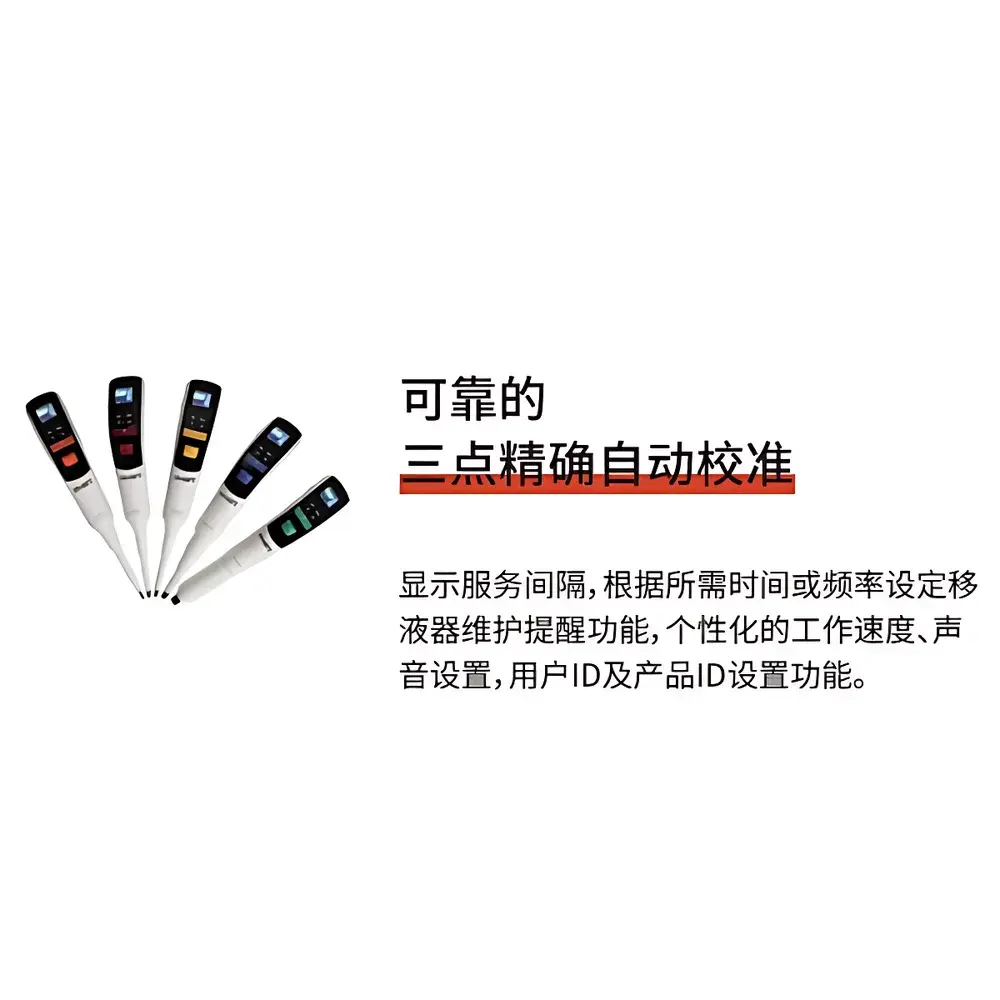
While the ADR-60 operates as a fully manual, non-electronic dispensing device, its design integrates seamlessly into digitally governed laboratory environments. Each unit ships with a dedicated calibration tool and NIST-traceable calibration certificate (optional upon request), enabling integration into electronic lab notebook (ELN) systems such as LabArchives or Benchling via manual entry or barcode-scanned documentation. Volume settings are physically indexed and reproducible—supporting audit-ready records required under 21 CFR Part 11 when paired with secure user access logs and change-control procedures. Calibration verification intervals align with ISO 8655-3 recommendations for piston-type dispensers, and the absence of firmware or embedded electronics eliminates cybersecurity vulnerabilities common in motorized dispensers.
Applications
- High-precision reagent dispensing in HPLC mobile phase preparation and titrant standardization
- Controlled transfer of cytotoxic or radio-labeled compounds in biosafety level 2 (BSL-2) containment hoods
- Reproducible filling of assay plates and vials during ELISA, PCR master mix preparation, and cell culture media formulation
- Handling of hygroscopic or oxidation-sensitive reagents (e.g., lithium aluminum hydride suspensions, sodium borohydride solutions)
- Environmental testing labs performing EPA Method 3510C (separation funnel extraction) and ASTM D7042 (dynamic viscosity measurement sample prep)
- Academic teaching labs requiring robust, low-maintenance equipment for undergraduate analytical chemistry instruction
FAQ
Is the ADR-60 compatible with hydrofluoric acid (HF) solutions?
Yes—the wetted path contains no silica-based components or metal parts; ETFE and PFA exhibit outstanding resistance to HF up to 48% concentration at room temperature.
Can the dispenser be calibrated in-house without external service?
Yes—each unit includes a certified calibration tool and step-by-step SOP aligned with ISO 8655-6; users may perform gravimetric verification using Class S1 analytical balances and certified weights.
Does the recirculation function affect accuracy at low volumes (e.g., <1 mL)?
No—recirculation occurs only during valve actuation transients; the positive-displacement piston ensures linear volumetric output across the full 0.5–60 mL range, verified per ISO 8655-2 Annex C.
What is the maximum operating temperature for continuous use?
The body remains dimensionally stable up to 135°C; however, continuous dispensing above 60°C requires pre-equilibration of reagent and dispenser to avoid vapor lock.
How often should the wiper seal be replaced?
Under normal use (≤500 cycles/week), the PTFE-impregnated wiper maintains sealing integrity for ≥24 months; replacement kits are available with lot-specific certification.



