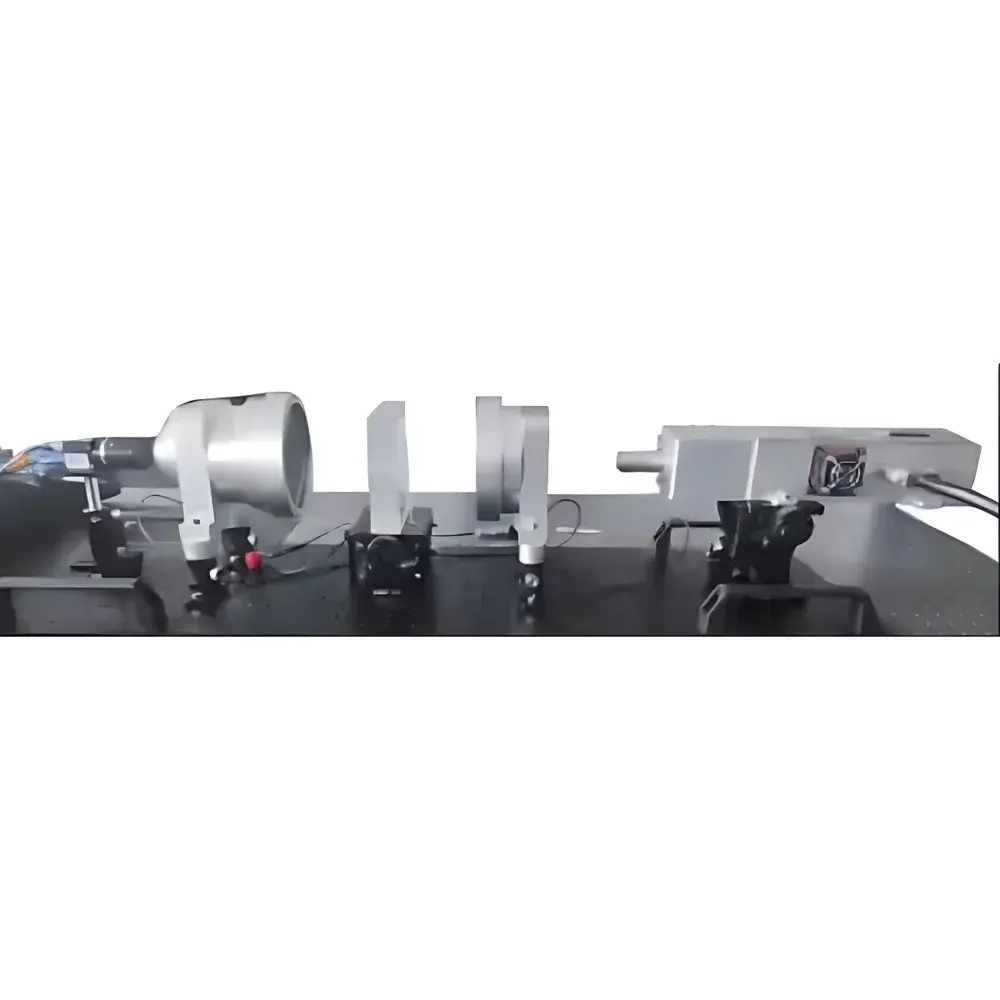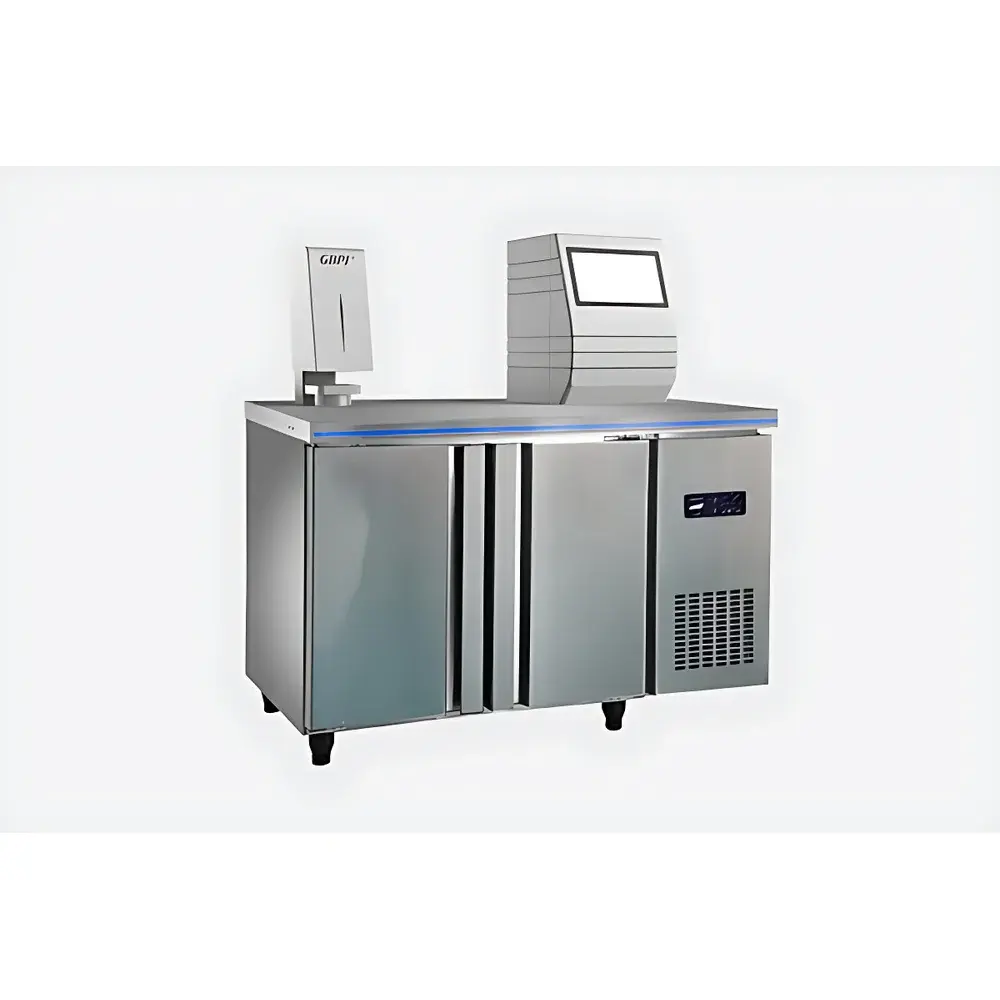
GBPI YQ-300 Medical Mask Particle Filtration Efficiency Tester
| Brand | GBPI |
|---|---|
| Origin | Guangdong, China |
| Manufacturer Type | Direct Manufacturer |
| Product Origin | Domestic (China) |
| Model | YQ-300 |
| Price | Upon Request |
| Filtration Efficiency Range | 0–99.999% |
| Flow Rate Range | 10–100 L/min (Accuracy Class 2.5) |
| Sampling Frequency | 1–9999 times/min (adjustable) |
| Aerosol Concentration | 20–30 mg/m³ |
| Count Median Diameter (CMD) | NaCl aerosol (0.075 ± 0.02) µm |
| Geometric Standard Deviation (GSD) | NaCl ≤ 1.86 |
| Dynamic Detection Range | 0.001–100 mg/m³ (Accuracy: ±1%) |
| Differential Pressure Sensor Range | 0–500 Pa |
| Dimensions | 460 mm × 525 mm × 1430 mm |
| Power Supply | AC 220 V, 50 Hz |
| Environmental Requirements | 25 °C ± 5 °C, 30 %RH ± 10 %RH |
Overview
The GBPI YQ-300 Medical Mask Particle Filtration Efficiency Tester is a fully integrated, benchtop aerosol-based instrumentation system engineered for precise quantification of particulate filtration efficiency (PFE) and airflow resistance of medical masks, surgical masks, respirators, and protective textiles. It operates on the principle of controlled aerosol challenge—generating monodisperse or polydisperse test aerosols (NaCl and oil-based) under standardized flow conditions—and measuring upstream and downstream particle concentrations via laser-based optical detection. The system complies with internationally referenced regulatory and performance standards including GB/T 32610–2016 (Daily Protective Masks), GB 2626–2006 (Respiratory Protection—Non-powered Air-purifying Particulate Respirators), GB 19082–2009 (Medical Protective Gowns), GB 19083–2010 (Medical Protective Masks), GB 24539–2009 (Chemical Protective Clothing), and YY 0469–2011 (Surgical Masks). Its design supports both static and dynamic filtration assessment, enabling traceable, repeatable evaluation of filter media performance under defined environmental and operational parameters.
Key Features
- Cold-generation dual aerosol system: Independent, calibrated NaCl and oil aerosol generators produce stable, reproducible challenge particles meeting CMD and GSD specifications per GB and ISO aerosol generation protocols.
- High-fidelity real-time concentration monitoring: Integrated PM2.5-grade optical particle sensor (laser scattering principle) with ±1% full-scale accuracy across 0.001–100 mg/m³ dynamic range.
- Electrostatic neutralization module: Built-in bipolar ionizer ensures charge equilibration of test aerosols prior to filter challenge—critical for eliminating electrostatic enhancement artifacts in filtration efficiency measurement.
- Leak-tight aerosol containment architecture: All aerosol pathways are sealed with fluorosilicone gaskets and pressure-tested to prevent operator exposure; conforms to ISO 15797 and OSHA laboratory safety guidelines for aerosol handling.
- Automated differential pressure measurement: High-stability 0–500 Pa differential pressure transducer enables simultaneous airflow resistance (ΔP) determination at constant flow rates (10–100 L/min, Class 2.5 accuracy).
- Environmental condition monitoring: Onboard temperature and humidity sensors continuously log ambient conditions (25 °C ± 5 °C, 30 %RH ± 10 %RH), with data synchronized to each test record for audit-ready traceability.
- Pneumatic clamping fixture with mechanical interlock: Ensures consistent mask mounting pressure and prevents accidental disengagement during pressurized testing.
- Integrated hardware suite: Includes glass rotameter, vacuum pump, laser particle counter, and aerosol dilution stage—all factory-aligned and NIST-traceable where applicable.
Sample Compatibility & Compliance
The YQ-300 accommodates flat-sheet filter media (e.g., melt-blown nonwovens), cut mask panels, and fully assembled medical/surgical masks up to 200 mm × 150 mm. Sample holders are designed to minimize edge leakage and ensure uniform face velocity distribution. The instrument meets mechanical and metrological requirements outlined in GB/T 32610–2016 Annex B, GB 2626–2006 Clause 6.3, and YY 0469–2011 Section 5.3. All electronic subsystems—including data acquisition, control logic, and report generation—support GLP-compliant operation: user authentication, electronic signatures, and audit trail logging aligned with FDA 21 CFR Part 11 principles. Calibration certificates for flow meters, pressure sensors, and aerosol generators are provided with initial delivery and recommended annually per ISO/IEC 17025 maintenance schedules.
Software & Data Management
The YQ-300 is operated via dedicated Windows-based software (v3.2+) that implements a role-based access control (RBAC) interface. Test protocols are preconfigured per standard method (e.g., “GB 2626 Salt Aerosol Mode”, “YY 0469 Oil Aerosol Mode”) and support parameter locking to prevent unauthorized deviation. Software performs real-time calculation of filtration efficiency (%) using the equation: FE = [1 − (Cdown/Cup)] × 100, where Cup and Cdown are time-synchronized mass concentration readings. Raw and processed data—including timestamps, environmental logs, flow stability metrics, and aerosol CMD/GSD validation reports—are stored in encrypted SQLite databases with configurable auto-backup to network drives. Export formats include CSV, PDF test reports (with digital signature fields), and XML for LIMS integration. All data modifications are recorded with user ID, timestamp, and reason code.
Applications
- Regulatory conformance testing for Class I/II medical masks seeking NMPA registration or CE marking under MDR Annex II.
- R&D screening of novel electret, nanofiber, or multi-layer composite filter media.
- Batch release testing in GMP-certified mask manufacturing facilities.
- Comparative evaluation of aging effects (e.g., humidity exposure, UV degradation) on filtration performance.
- Validation of fit-test correlation between PFE and total inward leakage (TIL) measurements.
- Third-party certification testing at national institutes (e.g., CNAS-accredited labs, CDC-affiliated centers, pharmacopoeial laboratories).
FAQ
What aerosol types does the YQ-300 support for filtration testing?
The system supports both sodium chloride (NaCl) and paraffin oil aerosols, each generated via dedicated cold-generation nebulizers meeting specified CMD and GSD tolerances per GB and ISO standards.
Is the software compliant with FDA 21 CFR Part 11 requirements?
Yes—the software includes electronic signatures, audit trail functionality, role-based permissions, and data integrity safeguards aligned with Part 11 Annex A guidance for laboratory instruments.
Can the YQ-300 be used for quantitative fit testing?
No—it is designed exclusively for filter media evaluation under controlled flow and aerosol challenge conditions; it does not simulate human breathing profiles or facial seal leakage.
What calibration documentation is supplied with the instrument?
Factory calibration certificates for the differential pressure sensor, mass flow controller, aerosol concentration sensor, and environmental sensors are included; annual recalibration is recommended per ISO/IEC 17025.
Does the system require external compressed air or vacuum sources?
No—all pneumatic components—including the vacuum pump and aerosol generation drivers—are self-contained within the instrument footprint.