
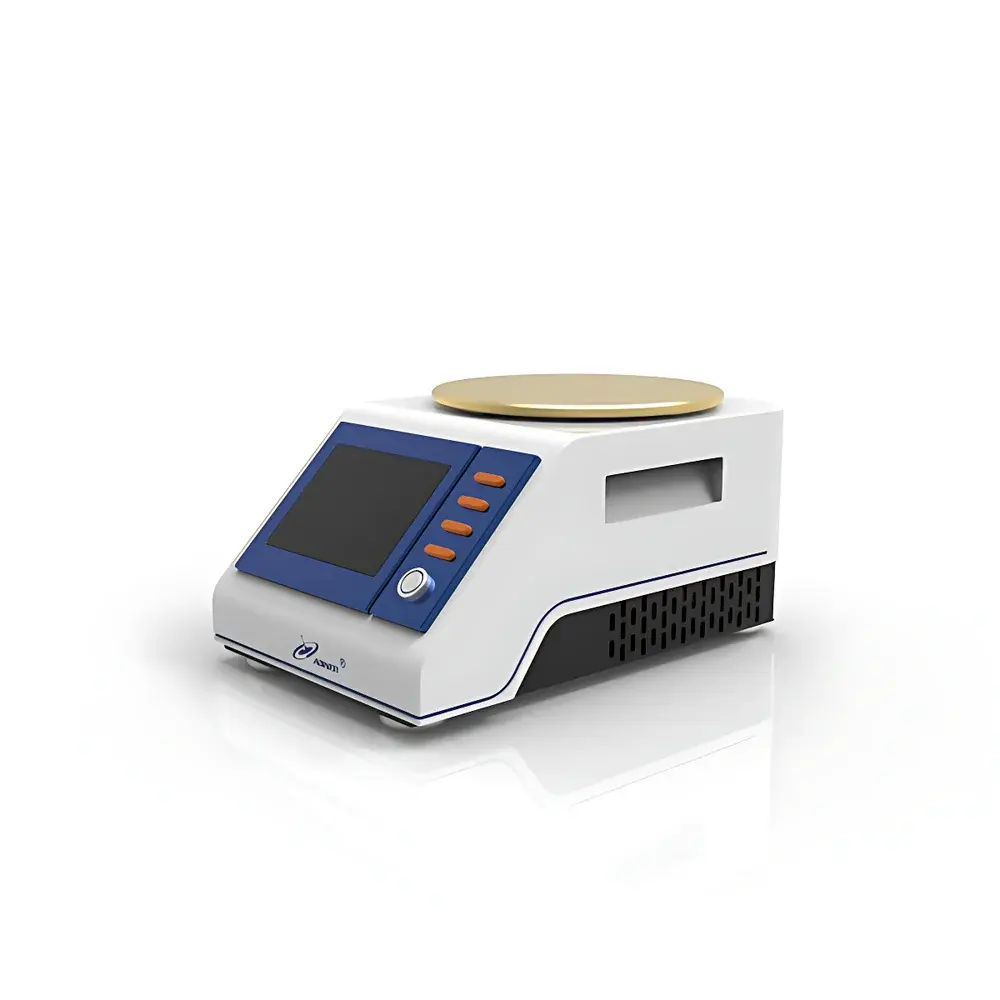
Abner High-Performance Heating Stage
| Brand | Abner |
|---|---|
| Origin | Jiangsu, China |
| Manufacturer Type | Authorized Distributor |
| Product Origin | Domestic (China) |
| Model | Abner Heating Stage |
| Price | USD 590 (FOB Jiangsu) |
Overview
The Abner High-Performance Heating Stage is an engineered thermal control platform designed for precise, stable, and repeatable temperature regulation of samples in research laboratories and industrial process environments. Based on resistive heating principles with closed-loop PID feedback control, it delivers accurate thermal management across a broad operational range—up to 500 °C in vacuum-compatible configurations—while maintaining exceptional spatial uniformity and temporal stability. The stage integrates high-grade PT100 or K-type thermocouple sensing, low-drift analog signal conditioning, and digital temperature setpoint resolution down to 0.1 °C. Its architecture supports integration into multi-instrument workflows including optical microscopy, probe station testing, thin-film deposition systems, and controlled-atmosphere gloveboxes—making it suitable for applications demanding strict thermal reproducibility under GLP, ISO/IEC 17025, or internal QC protocols.
Key Features
- Precision Temperature Control: Dual-sensor configuration (primary control + independent monitoring) with ±0.3 °C typical accuracy over full range; real-time PID parameter tuning via front-panel interface or software.
- Uniform Thermal Field: Optimized heater layout and thermal mass distribution ensure ≤±1.5 °C spatial variation across standard 100 mm × 100 mm active area (measured per ASTM E220 at steady state).
- Multi-Mode Operation: Supports constant-temperature hold, linear ramping (0.1–20 °C/min), and up to 8-segment programmable temperature profiles with dwell timing and slope control.
- Rapid Thermal Response: Achieves 95% of target temperature within 60 seconds from ambient to 200 °C (standard aluminum stage); enhanced versions with ceramic-heated substrates reduce thermal inertia for sub-30 s response.
- Integrated Safety Architecture: Hardware-based over-temperature cutoff (independent of main controller), reinforced electrical isolation (≥2 kV AC dielectric strength), audible/visual alarm outputs, and fail-safe relay shutdown.
- Modular Interface Options: Standard M4/M6 threaded mounting holes; optional vacuum feedthroughs (KF16/KF25), gas inlet ports (SS316 tubing), center aperture (Ø12–30 mm), and microscope-compatible low-profile housing (<12 mm height).
Sample Compatibility & Compliance
The Abner Heating Stage accommodates rigid and semi-rigid substrates including silicon wafers (2″–8″), glass slides, quartz plates, metal coupons, and polymer films. Surface flatness tolerance is maintained at ≤3 µm over 100 mm span to support optical alignment and contact-based measurements. All structural components comply with RoHS 2011/65/EU and REACH SVHC regulations. Vacuum-rated variants use low-outgassing materials (e.g., anodized aluminum 6061-T6, Vespel SP-21, or Macor ceramic) certified to <1×10⁻⁹ mbar·L/s/cm² total mass loss (per ASTM E595). Device firmware supports audit trail logging and user access levels—enabling alignment with FDA 21 CFR Part 11 requirements when deployed in regulated QC/QA environments.
Software & Data Management
Stage operation is supported by AbnerControl™ PC software (Windows 10/11, 64-bit), providing graphical profile editing, real-time temperature/time plotting, data export in CSV/TXT formats, and script-based automation via TCP/IP or USB-VCOM protocols. The embedded controller stores ≥1000 hours of timestamped temperature logs with 1 Hz sampling resolution. Optional LabVIEW™ and Python SDKs enable integration into custom test sequences and automated metrology platforms. All exported datasets include metadata headers (setpoint, actual temp, sensor ID, UTC timestamp, operator ID) to satisfy traceability requirements in ISO 17025-accredited labs.
Applications
- Semiconductor Process Development: Pre-bake and post-exposure bake (PEB) of photoresists; wafer-level thermal cycling for reliability stress testing; in-situ annealing during electrical characterization on probe stations.
- Advanced Materials Research: Controlled growth and transfer of 2D materials (graphene, TMDCs); solid-state reaction kinetics studies; phase transformation analysis in oxide thin films.
- Life Sciences: Temperature-assisted cell culture substrate conditioning; thermal modulation of hydrogel swelling behavior; microfluidic chip heating for PCR pre-amplification stages.
- Optical & Metrological Integration: Real-time differential interference contrast (DIC) imaging during thermal expansion measurement; in-situ Raman spectroscopy under controlled thermal bias.
- Manufacturing QA: Thermal validation of adhesive curing cycles; coefficient of thermal expansion (CTE) calibration standards; solder reflow profile verification using thermocouple-mapped reference boards.
FAQ
What is the maximum recommended operating temperature for standard models?
Standard air-cooled units are rated to 300 °C continuously; vacuum or inert-gas purged configurations support sustained operation up to 500 °C.
Can this stage be used under high vacuum conditions?
Yes—vacuum-optimized versions feature low-outgassing construction, ceramic insulation, and KF-flanged feedthroughs compatible with base pressures down to 1×10⁻⁷ mbar.
Is remote control and data logging supported?
Yes—full command-line and GUI-based remote operation is available via USB-CDC or Ethernet; all temperature readings and system events are logged with UTC timestamps and exportable in machine-readable formats.
Does the stage meet electromagnetic compatibility (EMC) standards?
Complies with EN 61326-1:2013 for laboratory equipment, including radiated emissions (Class B) and immunity to electrostatic discharge (IEC 61000-4-2, ±8 kV contact).
Are custom aperture sizes or mounting patterns available?
Yes—Abner offers OEM mechanical customization including non-standard cutouts, extended thermal zones, and bespoke flange interfaces per customer mechanical drawings.



