
CLEAN DH30 Dissolved Hydrogen (H₂) Meter for Hydrogen-Rich Water Analysis
| Brand | CLEAN |
|---|---|
| Origin | Taiwan |
| Manufacturer Type | Authorized Distributor |
| Product Category | Domestic (China Market Distribution) |
| Model | DH30 |
| Price | USD 285 (FOB) |
Overview
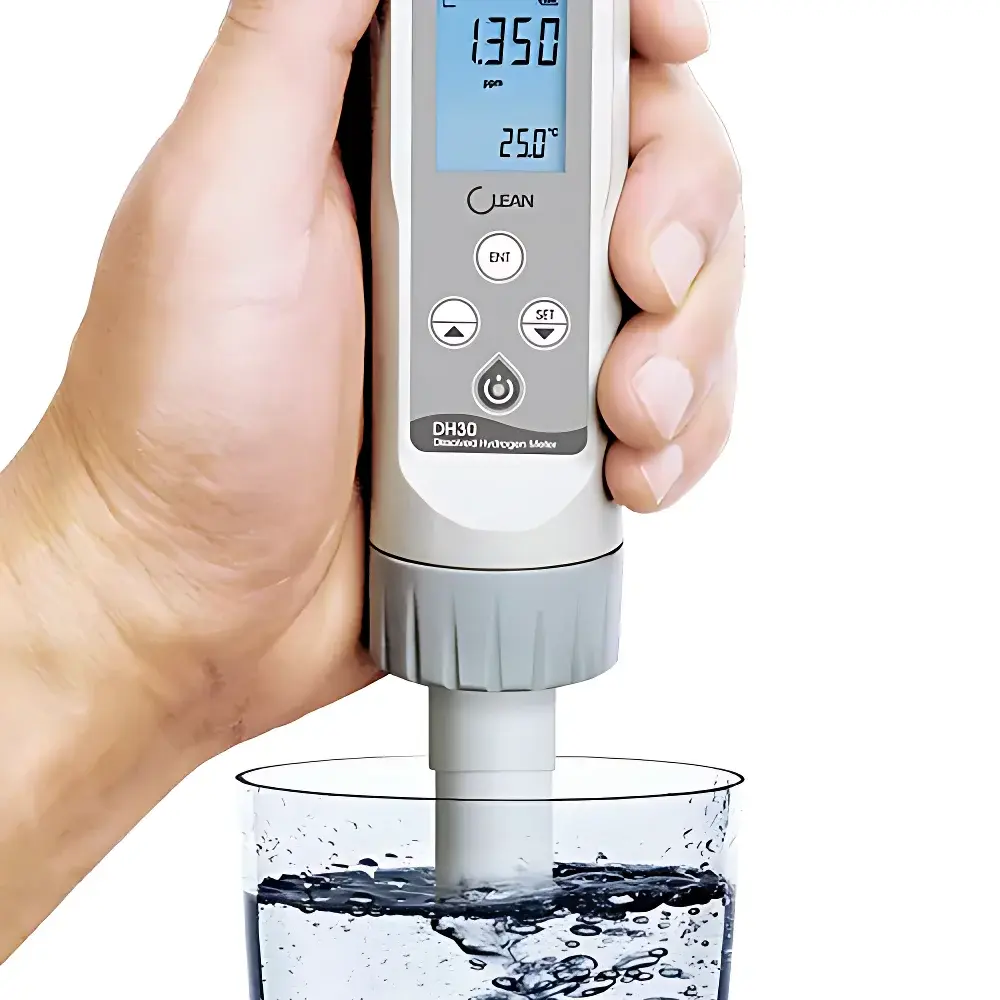
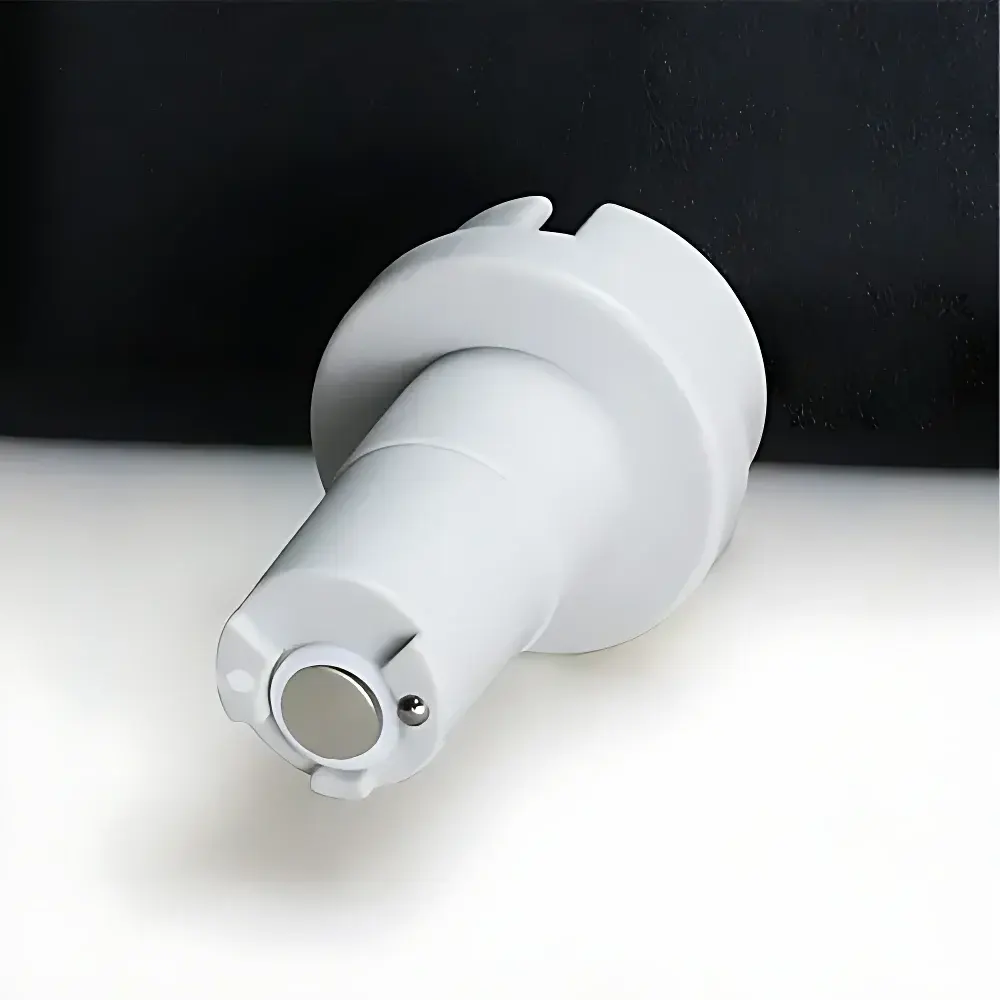
The CLEAN DH30 Dissolved Hydrogen Meter is a handheld electrochemical sensor instrument engineered for direct, real-time quantification of molecular hydrogen (H₂) concentration in aqueous solutions—specifically hydrogen-rich water (HRW), also known as “hydrogen water” or “sui-so water” in Japanese nomenclature. Unlike pH, ORP, or TDS meters, the DH30 employs a polarographic dissolved hydrogen electrode (CS6931 sensor) based on Clark-type amperometric detection. It measures the partial pressure of dissolved H₂ gas at the electrode surface under controlled diffusion conditions, converting the resulting current into a calibrated concentration output in parts per million (ppm) by mass. This principle aligns with ISO 5814:2012 (Water quality — Determination of dissolved oxygen — Electrochemical probe method), adapted for H₂ via validated sensor kinetics and temperature-compensated calibration algorithms. The device is not intended for gaseous H₂ monitoring or non-aqueous media; its operational validity is strictly confined to aqueous systems within defined temperature and ionic strength ranges.
Key Features
- Polarographic dissolved hydrogen sensor (CS6931) with integrated temperature compensation (±0.1 °C resolution)
- Measurement range: 0.000–2.000 ppm H₂ (mass basis), resolution: 0.001 ppm, accuracy: ±0.002 ppm at 25 °C
- Auto-ranging digital display with 20 × 30 mm multi-line LCD and user-selectable backlight
- IP67-rated enclosure for dust-tight and immersion-resistant operation up to 1 m for 30 min
- Replaceable sensor module with 12-month functional warranty from date of activation
- Auto-power-off after 5 minutes of inactivity; powered by a single 1.5 V AAA battery (IEC LR03)
- Operating ambient: –5 °C to +60 °C; relative humidity <90% non-condensing
Sample Compatibility & Compliance
The DH30 is validated for use with deionized water, purified drinking water, electrolytically generated HRW, nano-emulsified HRW, and pressurized bottled HRW formulations. It is incompatible with seawater, high-ionic-strength brines (>500 µS/cm), oxidizing disinfectant residuals (e.g., >0.1 mg/L free chlorine), or viscous colloidal suspensions. While no international standard yet governs dissolved H₂ measurement in beverages, the DH30’s methodology conforms to foundational electrochemical sensing principles outlined in ASTM D888-22 (Standard Test Methods for Dissolved Oxygen in Water) and supports traceability to NIST-traceable H₂ gas standards via laboratory cross-validation protocols. Device documentation and calibration logs meet basic GLP documentation requirements for in-house QC verification.
Software & Data Management
The DH30 operates as a standalone field instrument with no onboard data logging, Bluetooth, or USB interface. All measurements are displayed in real time only; no internal memory or export capability is provided. Users requiring audit trails must manually record readings alongside environmental metadata (temperature, sample ID, time). For regulated environments (e.g., clinical HRW preparation labs), integration with external LIMS or electronic lab notebooks is recommended using standardized manual entry templates compliant with FDA 21 CFR Part 11 Annex 11 principles—though the meter itself does not provide electronic signature or audit trail functionality.
Applications
- Verification of H₂ output stability from hydrogen water generators, electrolysis units, and magnesium-based infusion devices
- Quality control screening of commercial HRW beverages prior to distribution or shelf-life validation
- Academic and preclinical research labs assessing H₂ dissolution kinetics under varying pressure, temperature, and container material conditions
- Consumer education and point-of-use verification to distinguish between saturated (~1.6 ppm), supersaturated (>1.6 ppm), and subtherapeutic (<0.8 ppm) HRW batches
- Field assessment of H₂ retention during storage in aluminum pouches, PET bottles, and glass containers with different headspace volumes
FAQ
Does the DH30 require routine calibration?
No. The CS6931 sensor is factory-calibrated against certified H₂-saturated water standards and designed for zero-adjustment operation over its rated service life. A two-point verification using air-saturated water (theoretical ~0.000 ppm) and freshly prepared H₂-saturated water (theoretical ~1.6 ppm at 25 °C/1 atm) is recommended before critical measurements.
Can the DH30 measure hydrogen in alkaline ionized water?
Yes—provided residual oxidants (e.g., hypochlorite, ozone) are absent and pH remains between 4.0 and 10.5. High pH alone does not interfere, but concurrent strong oxidizers may polarize the electrode surface and cause drift.
Why does temperature selection matter?
Because H₂ solubility follows Henry’s law inversely with temperature. The DH30 applies automatic thermal compensation to maintain ppm accuracy across its operating range; uncorrected readings at non-25 °C conditions would deviate by ~0.02 ppm/°C.
Is the sensor compatible with other brands’ electrodes?
No. The CS6931 is proprietary to CLEAN and mechanically and electrically interfaced only with the DH30 main unit. Third-party electrodes lack matching polarization voltage profiles and thermal response curves.
How often should the sensor be replaced?
Annually under normal usage (≤2 hrs/day exposure to HRW), or sooner if response time exceeds 60 seconds to reach 95% of final reading or if baseline noise increases beyond ±0.003 ppm.







