
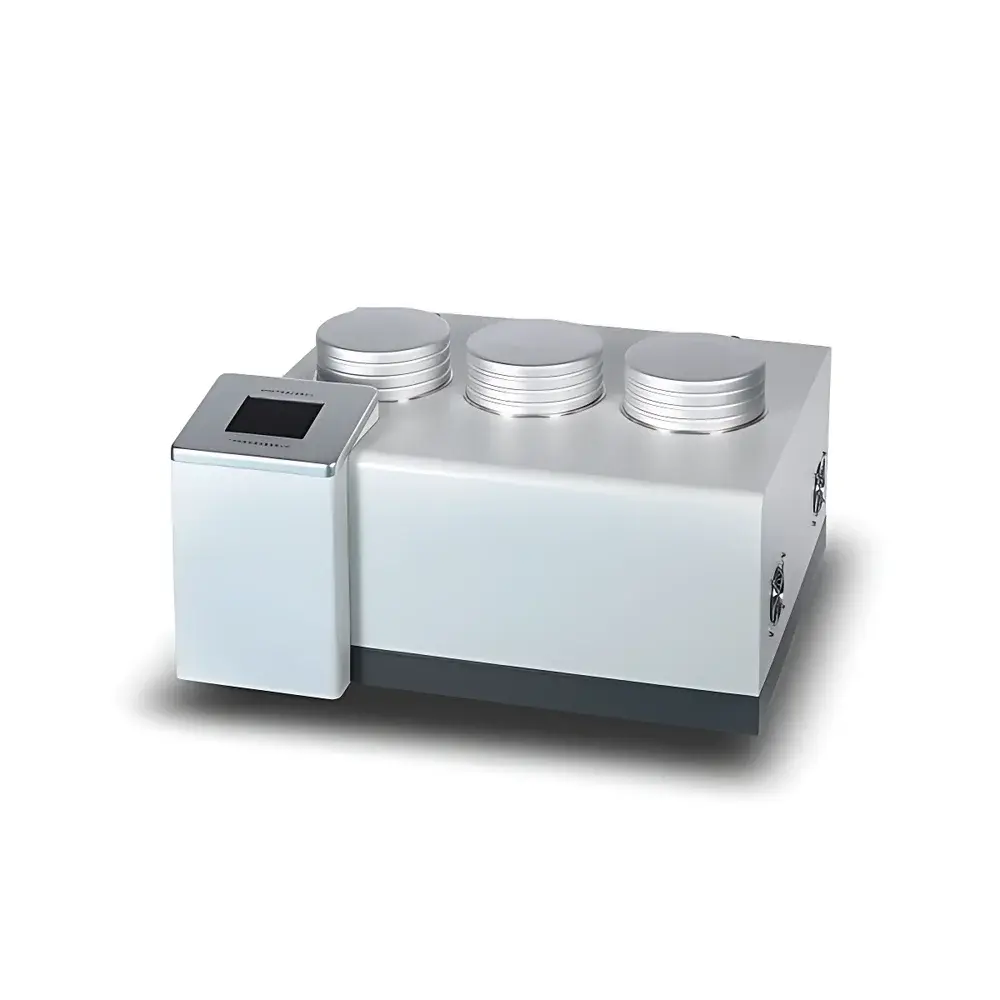
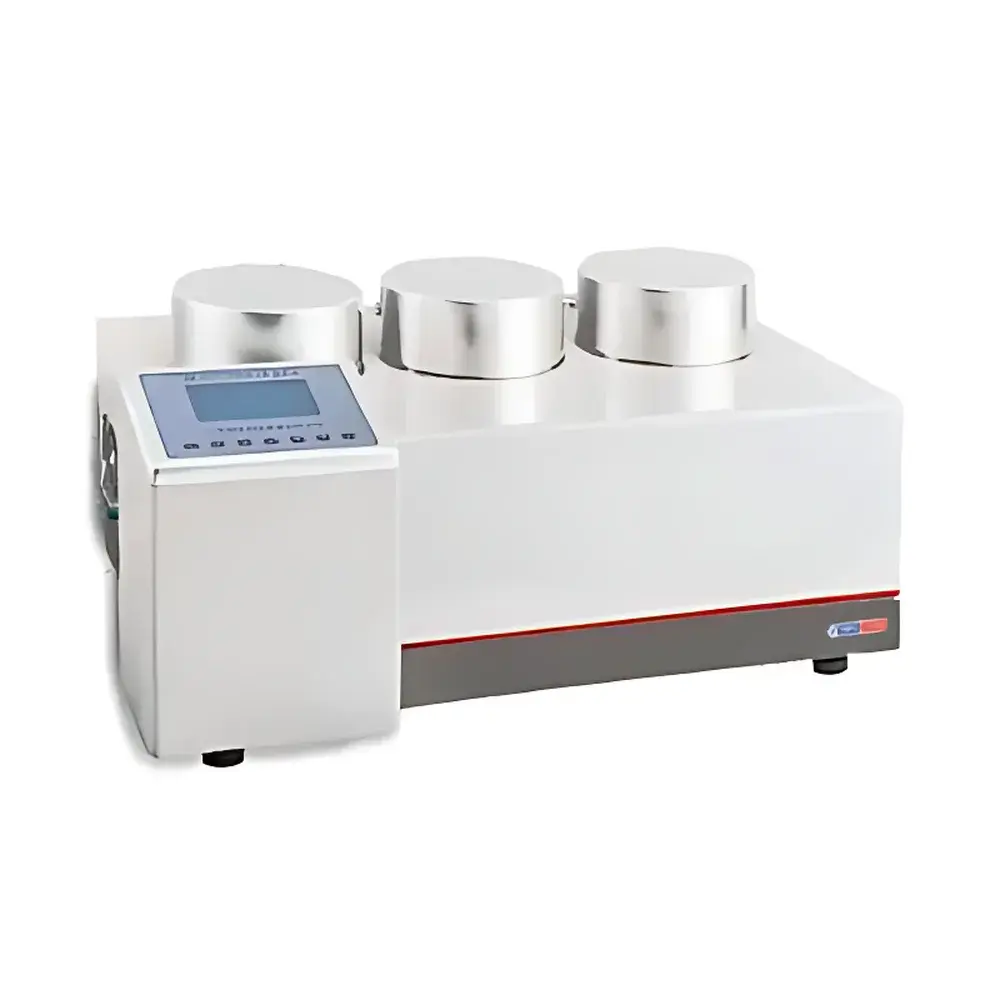
GBPI N530 Tri-Chamber Independent Gas Permeability Tester
| Brand | GBPI |
|---|---|
| Origin | Guangdong, China |
| Manufacturer Type | Manufacturer |
| Origin Category | Domestic |
| Model | N530 |
| Price Range | USD 14,000 – 70,000 |
| Measurement Range | 0.02–50,000 cm³/m²·day·0.1 MPa |
| Accuracy | ±0.01 cm³/m²·day·0.1 MPa |
| Temperature Range | 5–50 °C |
| Temperature Control Precision | ±0.1 °C |
| Humidity Range (optional) | 10–90 %RH |
| Humidity Control Precision (optional) | ±2 %RH |
| Vacuum Accuracy | 0.1 Pa |
| Test Chamber Vacuum Level | <20 Pa |
| Test Pressure Range | −0.1 to +0.1 MPa |
| Gas Supply Pressure | 0.1–0.8 MPa |
| Test Gases | O₂, CO₂, N₂ |
| Carrier Gas Interface | 1/8″ stainless steel fitting |
| Sample Quantity | 3 independent chambers |
| Max Sample Thickness | ≤2 mm |
| Sample Diameter | Ø80 mm |
| Effective Test Area | 50.24 cm² |
| Power Supply | 220 V AC, 50 Hz |
Overview
The GBPI N530 Tri-Chamber Independent Gas Permeability Tester is an engineered solution for precise, high-reproducibility gas transmission rate (GTR) measurement across packaging and barrier material development workflows. It operates on the differential pressure (manometric) principle—compliant with core international standards including ISO 2556, ISO 15105-1, ASTM D1434, GB/T 1038, JIS K7126-A, and YBB00082003. In this method, a conditioned specimen is sealed between two isolated test chambers. The high-pressure chamber is charged with the target test gas (O₂, CO₂, or N₂), while the low-pressure chamber is maintained under high vacuum (<20 Pa). A stable, user-defined pressure differential (±0.1 MPa) is actively sustained across the film via closed-loop pressure regulation. As gas permeates through the sample, the resulting pressure rise in the low-pressure chamber is continuously monitored by three independent high-resolution capacitive pressure transducers—one per chamber—enabling real-time calculation of gas transmission rate (cm³/m²·day·0.1 MPa) based on ideal gas law and Fickian diffusion kinetics.
Key Features
- Tri-chamber architecture with fully independent sensor arrays, temperature control, and pressure management—enabling concurrent testing of three dissimilar materials under distinct environmental conditions (e.g., varying T, RH, or gas type).
- Dual-mode operation: configurable for positive-pressure (high→low) or negative-pressure (vacuum-draw) permeation, supporting both conventional and accelerated barrier assessment protocols.
- Automated, computer-controlled test execution—from vacuum evacuation and gas charging to data acquisition, endpoint detection, and report generation—with no manual intervention required after sample loading.
- Active differential pressure stabilization system maintains constant ΔP within ±0.005 MPa throughout the test duration, eliminating drift-related uncertainty and ensuring metrological traceability.
- Electromagnetic programmable thermal control with ramp-rate adjustment (0.1–5 °C/min) and long-term stability of ±0.1 °C—validated per ISO 17707 Annex B for barrier testing instrumentation.
- Optional integrated humidity control module employing dual-stream vapor-saturation technology, delivering precise RH setpoints (10–90 %RH, ±2 %RH) in the test environment to simulate real-world storage conditions.
- Real-time multi-parameter visualization: simultaneous plotting of GTR, chamber pressure, temperature, and ΔP per chamber; auto-saved curve data in CSV and native .gbr formats.
- Comprehensive safety architecture: overpressure cutoff (0.15 MPa), vacuum interlock, thermal runaway protection, and emergency stop—all compliant with IEC 61010-1 for laboratory equipment.
Sample Compatibility & Compliance
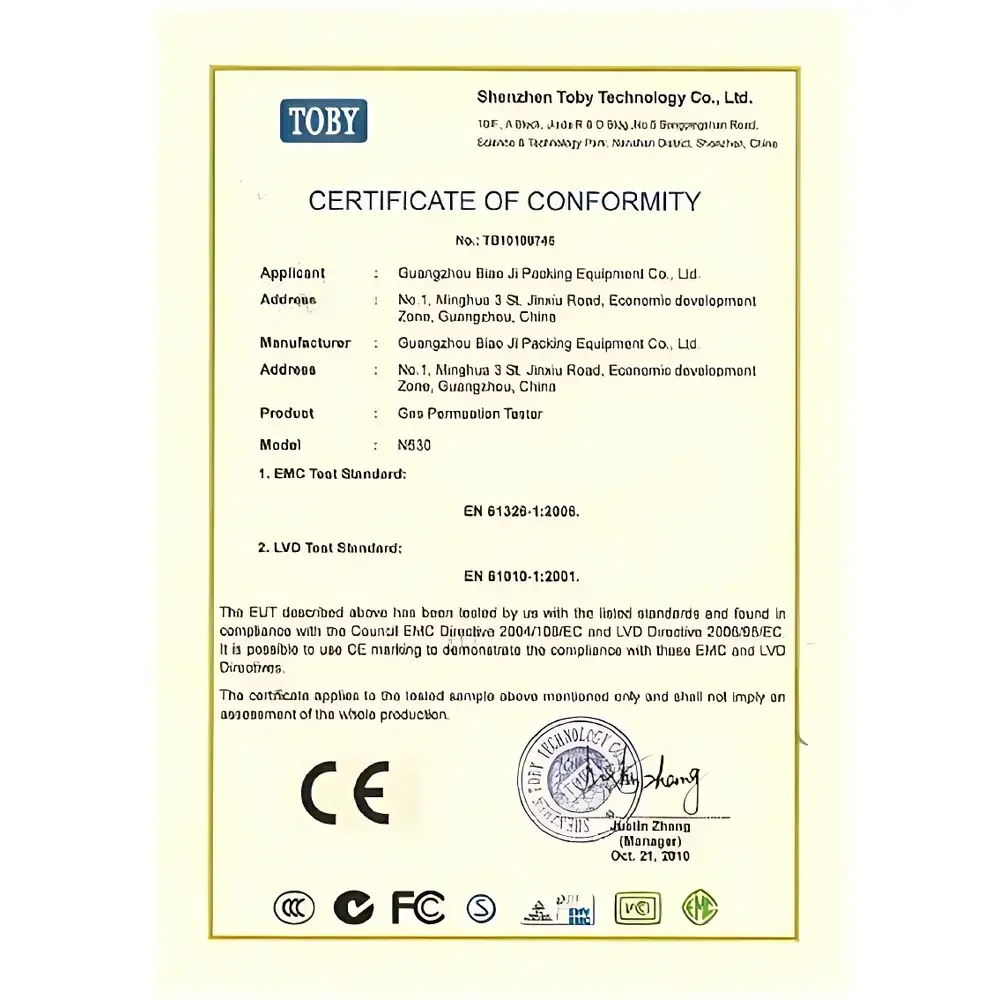
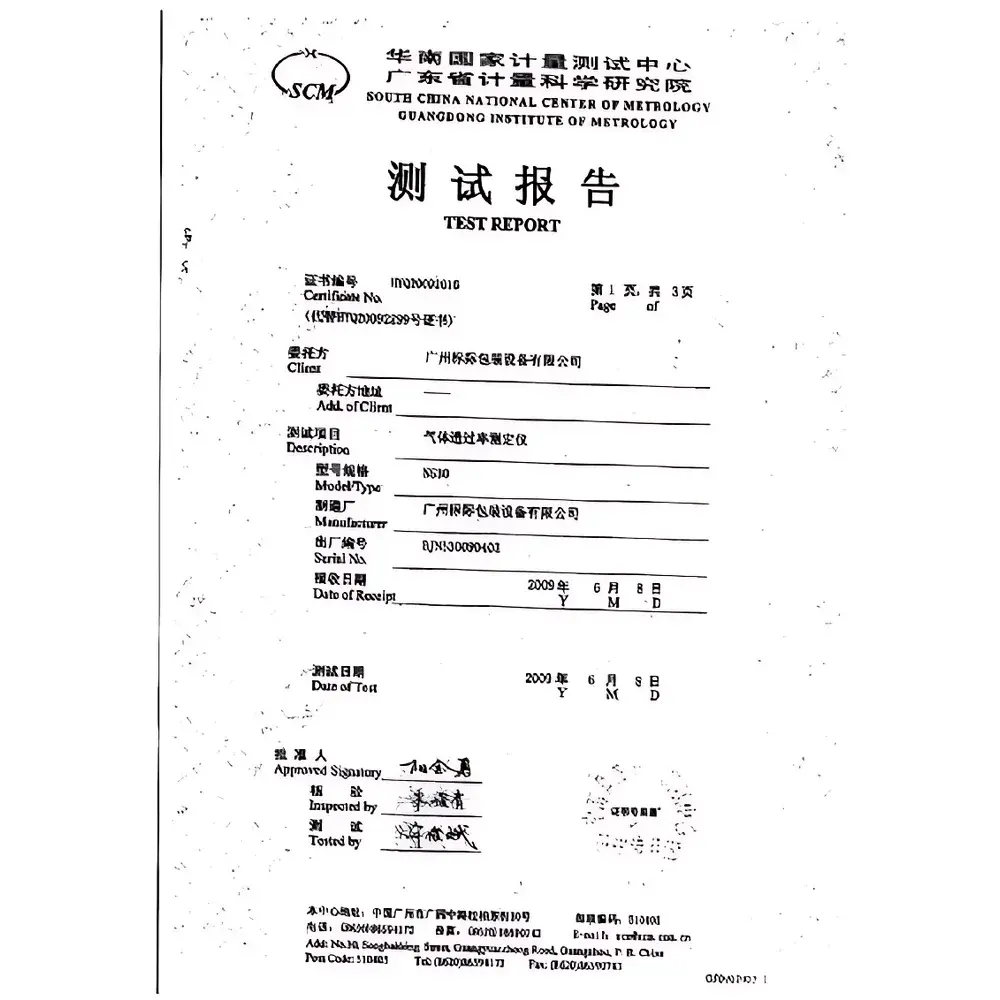
The N530 accommodates rigid and flexible planar specimens up to 2 mm thick and Ø80 mm in diameter (effective area = 50.24 cm²), including polymer films (PET, PE, PP, EVOH, PVDC), metallized laminates, aluminum foil composites, pharmaceutical blister foils, IV bag substrates, and coated paperboard. Its tri-chamber design allows comparative evaluation of material batches, aging studies, or QC release testing without cross-contamination or thermal crosstalk. All operational modes and calibration procedures are documented per GLP requirements. Data integrity meets FDA 21 CFR Part 11 criteria when used with validated software configuration—including electronic signatures, audit trails, and immutable raw-data archiving. Full compliance documentation (Declaration of Conformity, test reports per ISO/IEC 17025-accredited verification) is provided with each unit.
Software & Data Management
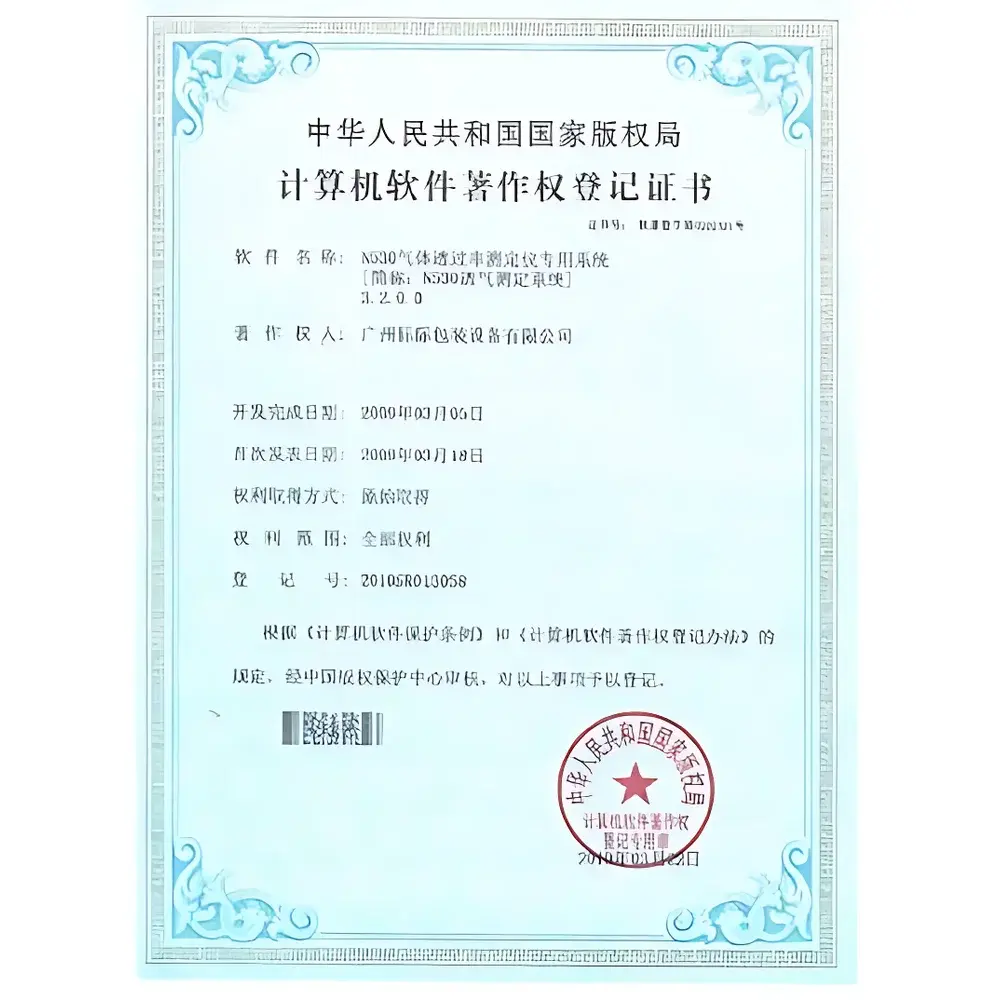
GBPI PermeaSoft v4.2 is a Windows-based application developed for ISO 17025-aligned laboratories. It supports automated method setup (gas type, T/RH, ΔP, duration), real-time remote monitoring via Ethernet, and batch-level reporting with customizable templates (A4 PDF, Excel export). Raw pressure-time datasets are stored with metadata (operator ID, timestamp, calibration certificate ID, environmental logs). Audit trail records all user actions—including parameter edits, calibration events, and report exports—with tamper-proof hashing. Optional LIMS integration is available via ASTM E1467-compliant API. Software validation packages (IQ/OQ/PQ protocols) and electronic signature modules are available upon request for regulated environments.
Applications
- Quality control of high-barrier packaging for food, pharma, and electronics—verifying O₂ transmission rate (OTR) for shelf-life modeling per ASTM F1307.
- Development of multilayer coextrusions and nanocomposite films—quantifying synergistic barrier effects under controlled T/RH gradients.
- Accelerated aging studies using elevated temperature protocols (e.g., 40 °C/75 %RH) to predict long-term performance of medical device pouches per ISO 11607-1.
- Regulatory submission support for USP , EP 3.2.1, and Chinese Pharmacopoeia ChP 9621—providing traceable, auditable GTR data for container-closure system qualification.
- Failure analysis of delaminated or pinholed structures—detecting localized permeation anomalies via chamber-to-chamber variability metrics.
FAQ
What gases can be tested on the N530?
O₂, CO₂, and N₂ are fully supported. Other non-corrosive permanent gases may be qualified upon consultation with GBPI Application Engineering.
Is humidity control mandatory for standard operation?
No—humidity control is optional. The base system operates at ambient RH; the dual-stream humidification module must be specified at time of order.
How is calibration verified and maintained?
Each unit ships with NIST-traceable reference films (certified OTR values). Annual recalibration services include pressure transducer linearity checks, thermal uniformity mapping, and vacuum integrity validation per ISO 15105-2 Annex C.
Can the instrument be integrated into an existing lab network?
Yes—Ethernet connectivity enables remote operation, centralized data logging, and secure access via VLAN segmentation. IT security configurations (TLS 1.2+, firewall rules) are documented in the Network Integration Guide.
What regulatory documentation is supplied?
CE Declaration of Conformity, Factory Calibration Report, ISO/IEC 17025 Verification Summary, User Manual (EN/ES/FR/DE), and Electrical Safety Certificate per IEC 61010-1 are included. Additional GMP/GLP validation support packages are available.





