
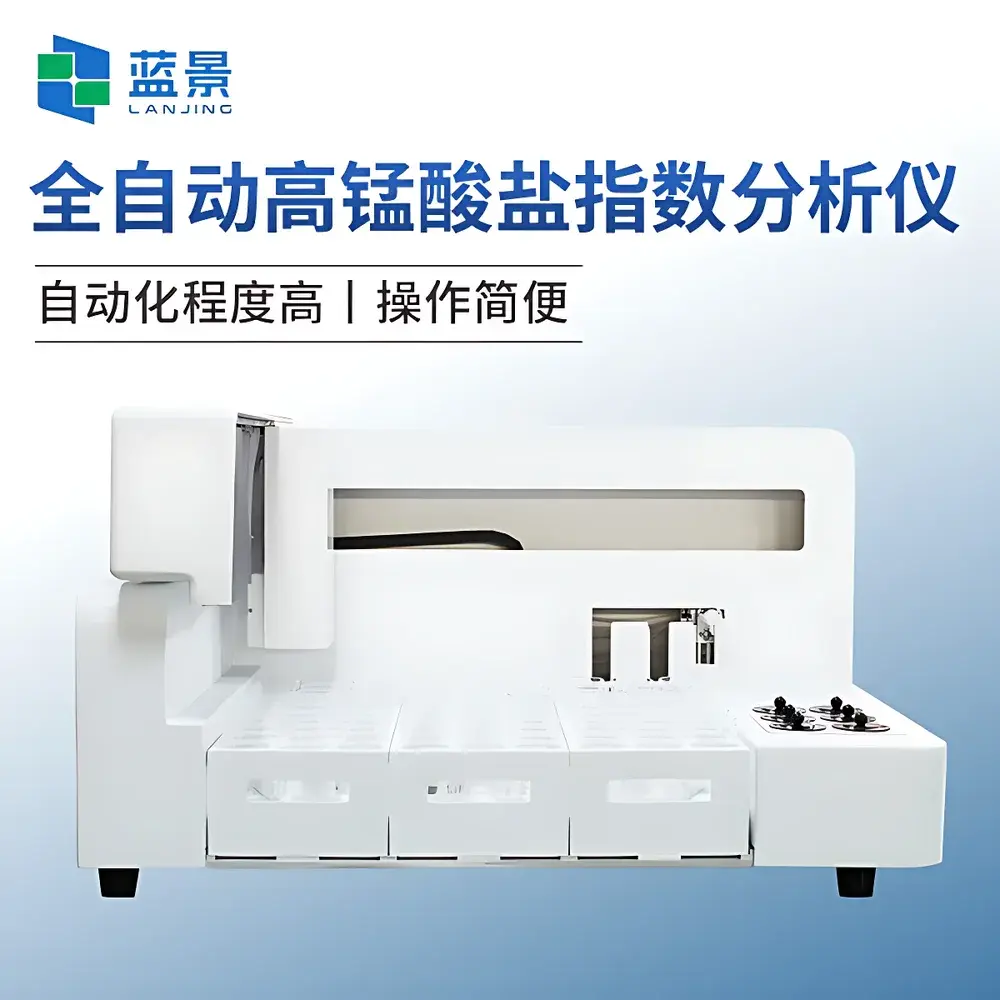
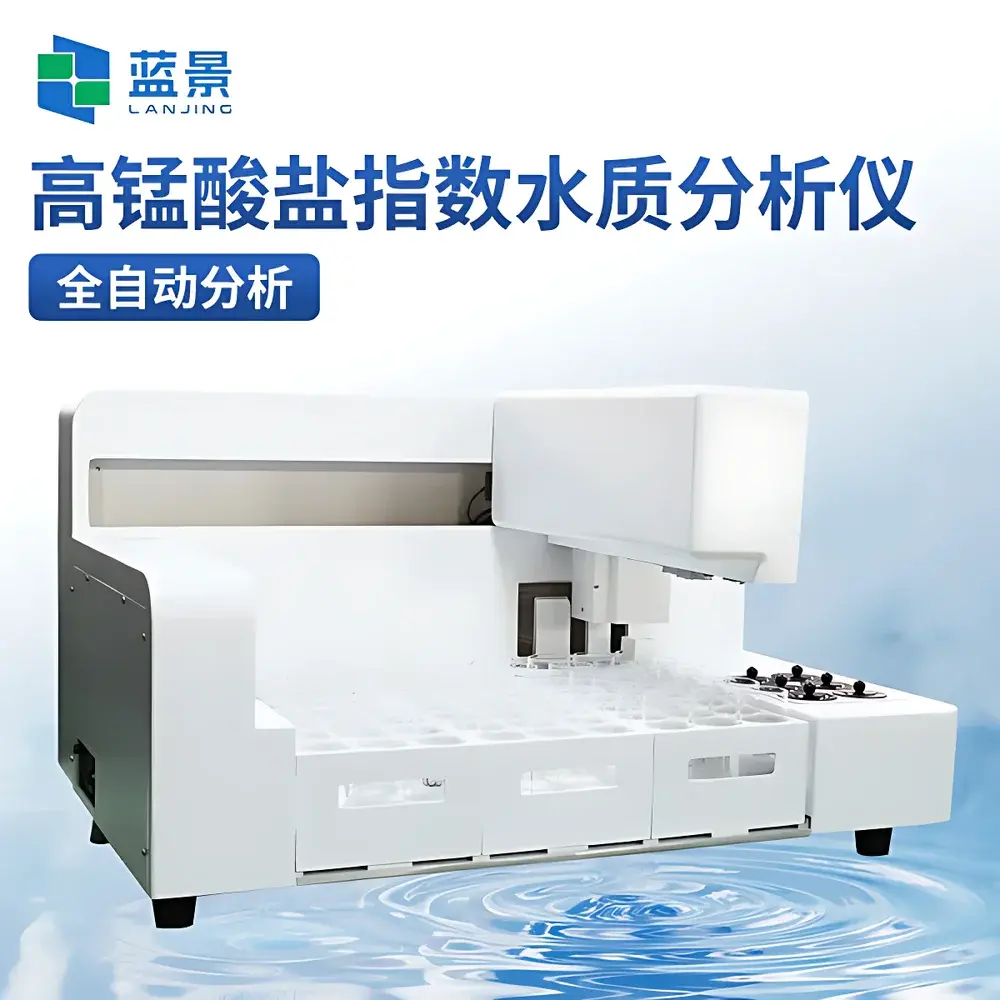
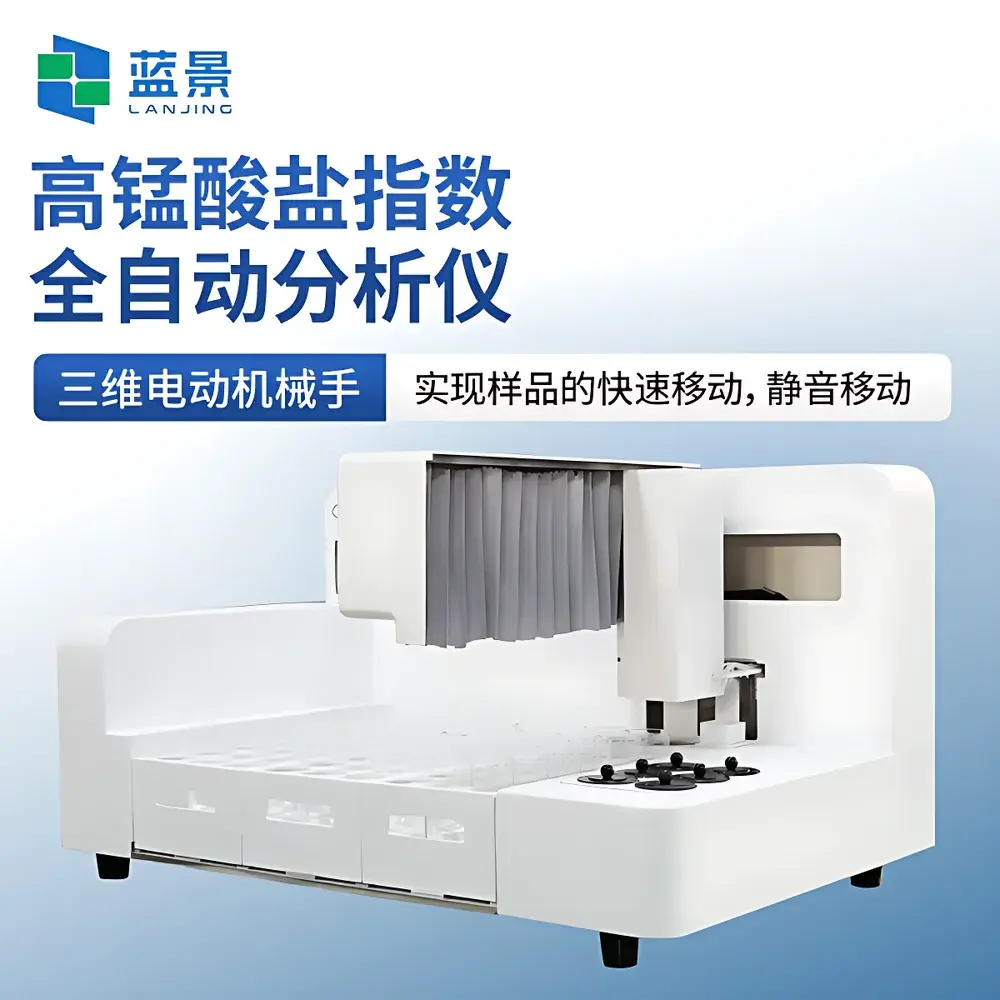
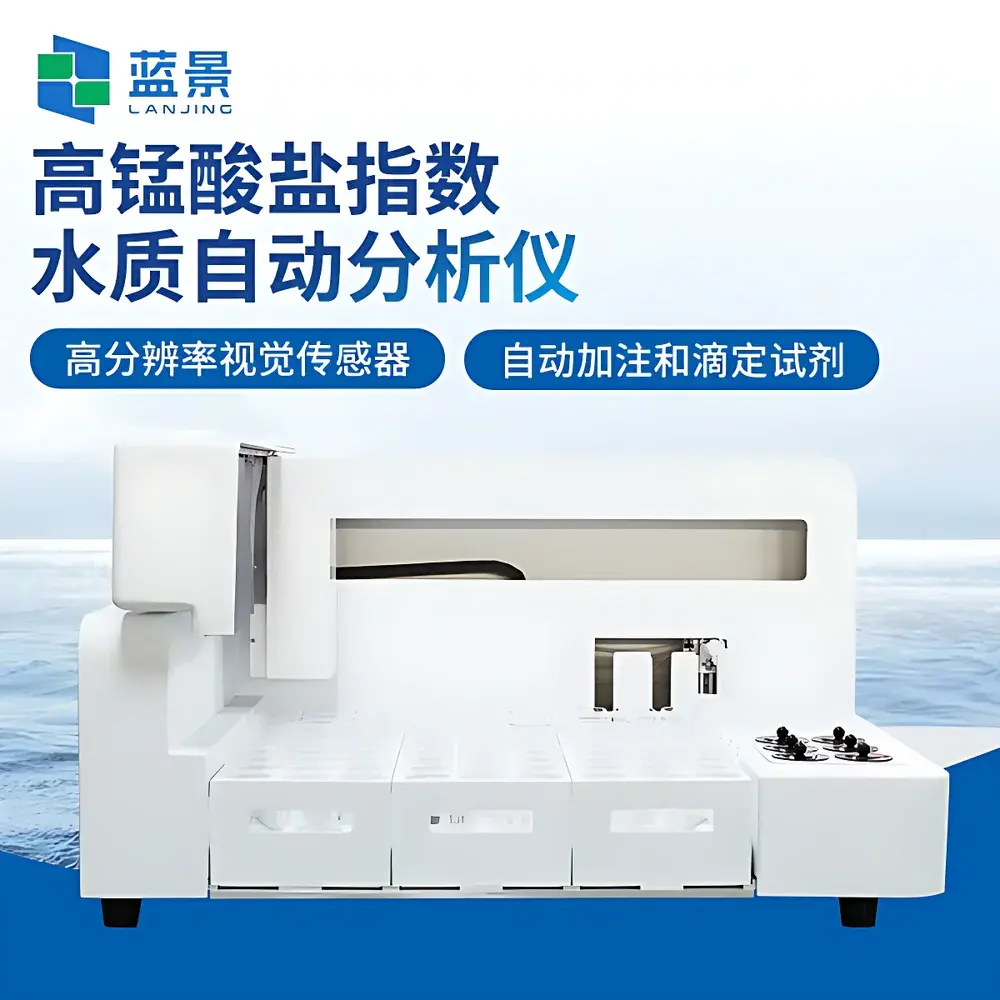
Lanjing LJ-QCMn54 Automated Permanganate Index Analyzer
| Brand | Lanjing |
|---|---|
| Origin | Shandong, China |
| Manufacturer Type | Direct Manufacturer |
| Country of Origin | China |
| Model | LJ-QCMn54 |
| Instrument Type | Laboratory Benchtop Analyzer |
| Measurement Range | 0.05–5 mg/L KMnO₄ |
| Sample Volume | 100 mL |
| Sample Throughput | ≤5 min/sample |
| Detection Endpoint Resolution | 1 µL |
| Heating Temperature Accuracy | ±0.1 °C |
| Digestion Positions | 6 |
| Sample Capacity | 54 positions |
| Dimensions (L×W×H) | 1000 × 650 × 550 mm |
| Operating Ambient | 5–35 °C, 30–85% RH, 70–106 kPa, AC 220 V / 50 Hz |
Overview
The Lanjing LJ-QCMn54 Automated Permanganate Index Analyzer is a fully integrated benchtop system engineered for precise, reproducible determination of the permanganate index (CODMn) in water samples according to standardized oxidative titrimetric principles. Based on the classical acid or alkaline potassium permanganate oxidation method—where MnO₄⁻ serves as the oxidant under controlled thermal and pH conditions—the instrument automates the complete analytical workflow: sample aspiration, reagent dispensing, 80 °C constant-temperature digestion, endpoint-controlled titration with sodium oxalate, and colorimetric endpoint recognition. Unlike manual or semi-automated methods, the LJ-QCMn54 eliminates operator-dependent variability in timing, temperature control, and endpoint judgment—critical factors affecting result accuracy and inter-laboratory comparability. Its design complies with the fundamental metrological requirements of ISO/IEC 17025 for testing laboratories and supports audit-ready data integrity through embedded process logging.
Key Features
- 6-position anti-fog electrically heated digestion bath with programmable temperature range (room temperature to 125 °C) and ±0.1 °C thermal stability—ensuring consistent oxidation kinetics across all samples.
- High-resolution visual endpoint detection system simulating human chromatic perception; dynamically tracks the decolorization of purple MnO₄⁻ to faint pink Mn²⁺, enabling sub-microliter endpoint resolution (1 µL).
- Three-axis precision robotic arm with silent stepper motor actuation for repeatable sample positioning and transfer between digestion, titration, and waste stations.
- Integrated 54-position removable sample carousel with quartz cuvettes (≥90% SiO₂ content), optimized for UV-Vis transparency and thermal shock resistance during boiling water bath immersion.
- Self-calibrating peristaltic titration pump with automatic zero-point and stroke-volume validation prior to each assay cycle—guaranteeing volumetric accuracy <1% RSD.
- Intelligent liquid level monitoring across reagent reservoirs; real-time low-level alerts prevent assay interruption and support GLP-compliant reagent traceability.
- Emergency stop circuitry, over-temperature cutoff, and auto-refill function for digestion bath water—meeting IEC 61010-1 safety requirements for laboratory equipment.
Sample Compatibility & Compliance
The LJ-QCMn54 is validated for analysis of surface water, groundwater, drinking water, and environmental wastewater matrices per national and international regulatory frameworks. It strictly implements the reaction chemistry and procedural controls defined in GB 11892–1989 “Water Quality—Determination of Permanganate Index” and GB/T 5750.7–2023 “Standard Methods for Examination of Drinking Water—Part 7: Organic Parameters—Section 4: Permanganate Index.” The system supports dual-method operation (acidic and alkaline digestion) with configurable heating profiles, enabling compliance with method-specific digestion time and temperature stipulations. All hardware components—including quartz sample cells, PTFE-coated fluidic pathways, and corrosion-resistant heating elements—are selected to minimize analyte adsorption, reagent carryover, and cross-contamination—key prerequisites for ISO 5667-3 and US EPA guidance on water sampling preservation.
Software & Data Management
The embedded workstation software provides full method configuration, sequence scheduling, real-time process visualization, and raw data export in CSV and PDF formats. Each analysis generates an immutable audit trail containing timestamped events: sample ID assignment, digestion start/end times, titrant volume consumed, endpoint confirmation flag, ambient temperature/humidity logs, and operator login metadata. Optional 21 CFR Part 11 compliance mode enables electronic signatures, role-based access control, and secure user authentication—facilitating integration into GxP-regulated environmental testing labs. Remote monitoring via encrypted Wi-Fi connection allows supervisors to view live assay status and receive push notifications for completion or error conditions using the dedicated mobile application.
Applications
This analyzer is deployed routinely in municipal water quality surveillance programs, provincial CDC laboratories, hydrological survey institutes, and third-party environmental testing facilities where high-throughput, traceable CODMn data are required for regulatory reporting (e.g., China’s Environmental Quality Standards for Surface Water GB 3838–2002). Its robustness supports long-duration unattended operation during seasonal monitoring campaigns—particularly valuable during flood or drought response periods when rapid assessment of organic pollution load is critical. The system also serves research applications involving comparative oxidation capacity studies, disinfection by-product precursor evaluation, and method validation against reference materials certified by CNAS-accredited providers.
FAQ
What standards does the LJ-QCMn54 comply with for permanganate index testing?
It conforms to GB 11892–1989 and GB/T 5750.7–2023, and its operational parameters align with ISO 8467:1993 “Water Quality—Determination of Permanganate Index.”
Can the instrument perform both acidic and alkaline permanganate index methods?
Yes—method selection, digestion temperature, and reagent volumes are fully configurable via the software interface.
Is external PC hardware required for operation?
No—the system includes an onboard industrial-grade controller with touchscreen interface; a PC is optional for advanced data archiving or network integration.
How is calibration and verification handled?
The instrument performs automated pump calibration before each batch and accepts certified reference materials (e.g., potassium hydrogen phthalate or potassium permanganate CRM) for performance verification per ISO/IEC 17025 Clause 7.7.
What maintenance routines are recommended?
Daily: rinse fluidic lines with deionized water; weekly: inspect quartz cuvettes for scratches and replace peristaltic pump tubing every 3 months under continuous use.
Related Products







