
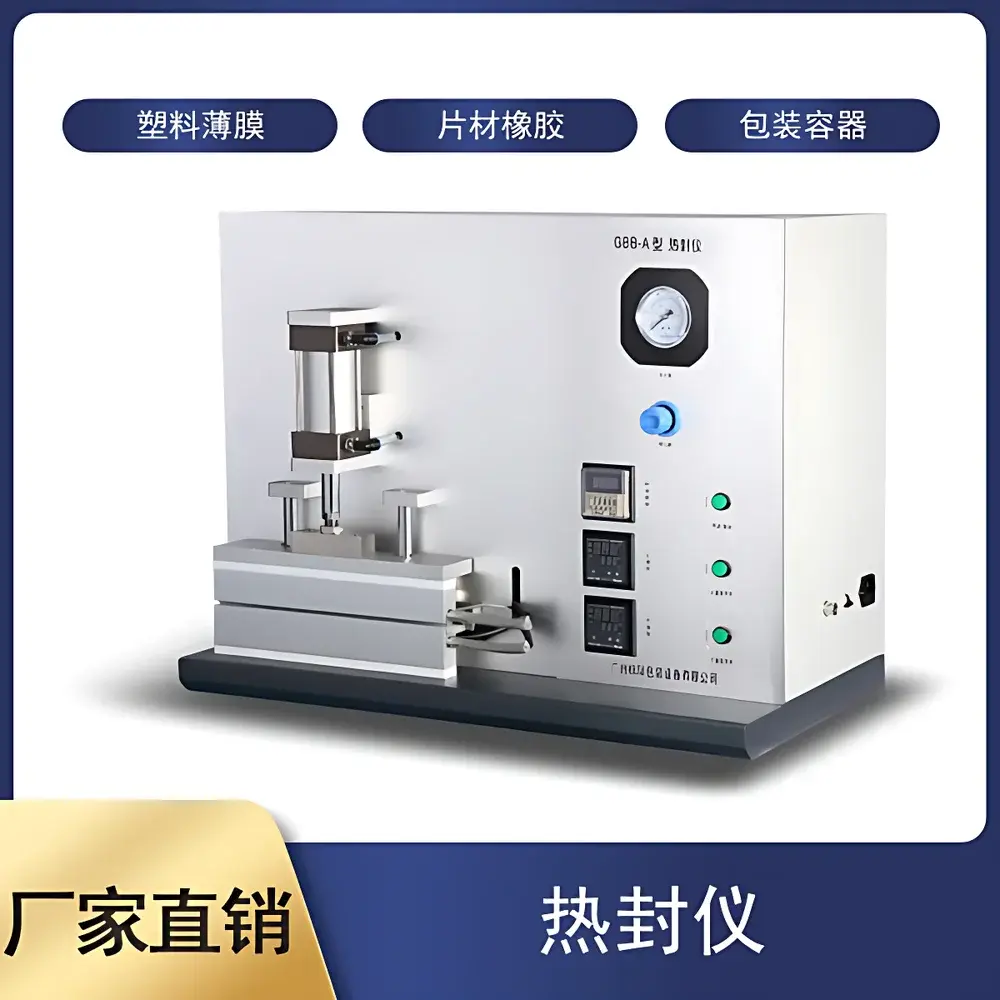
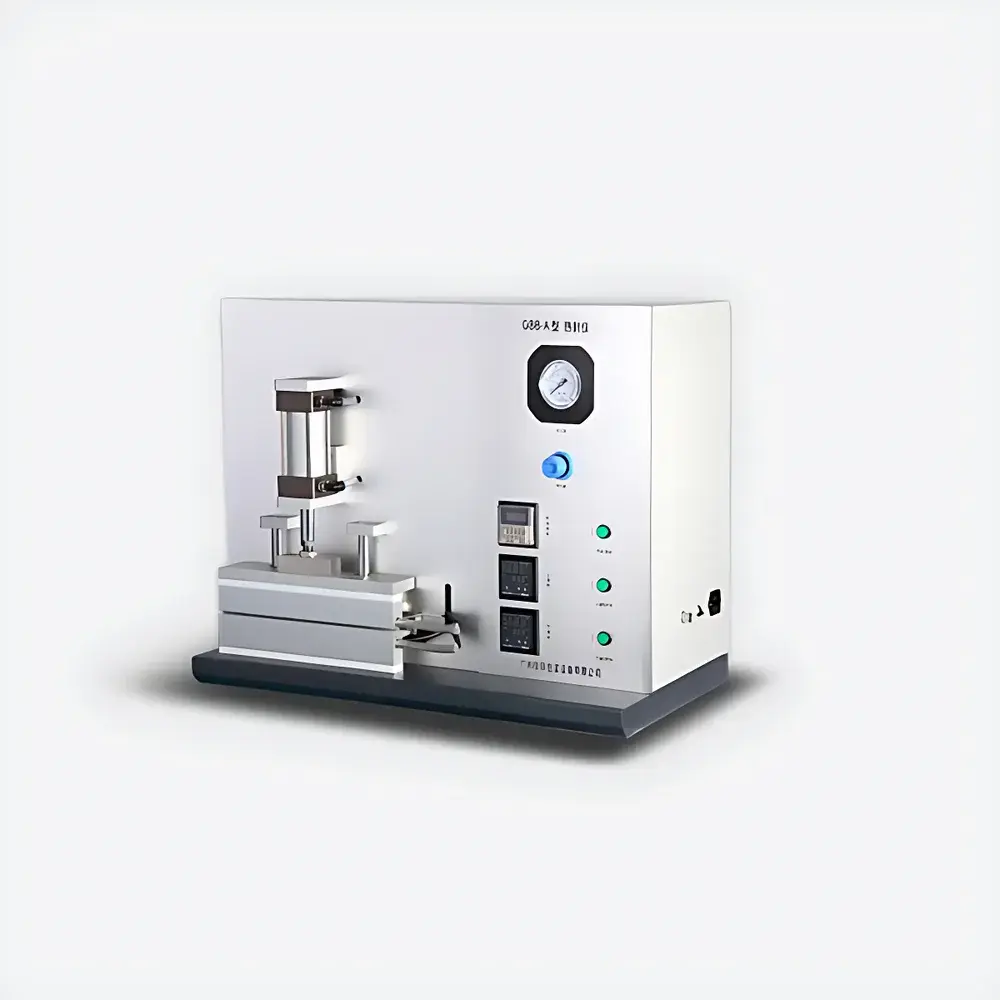
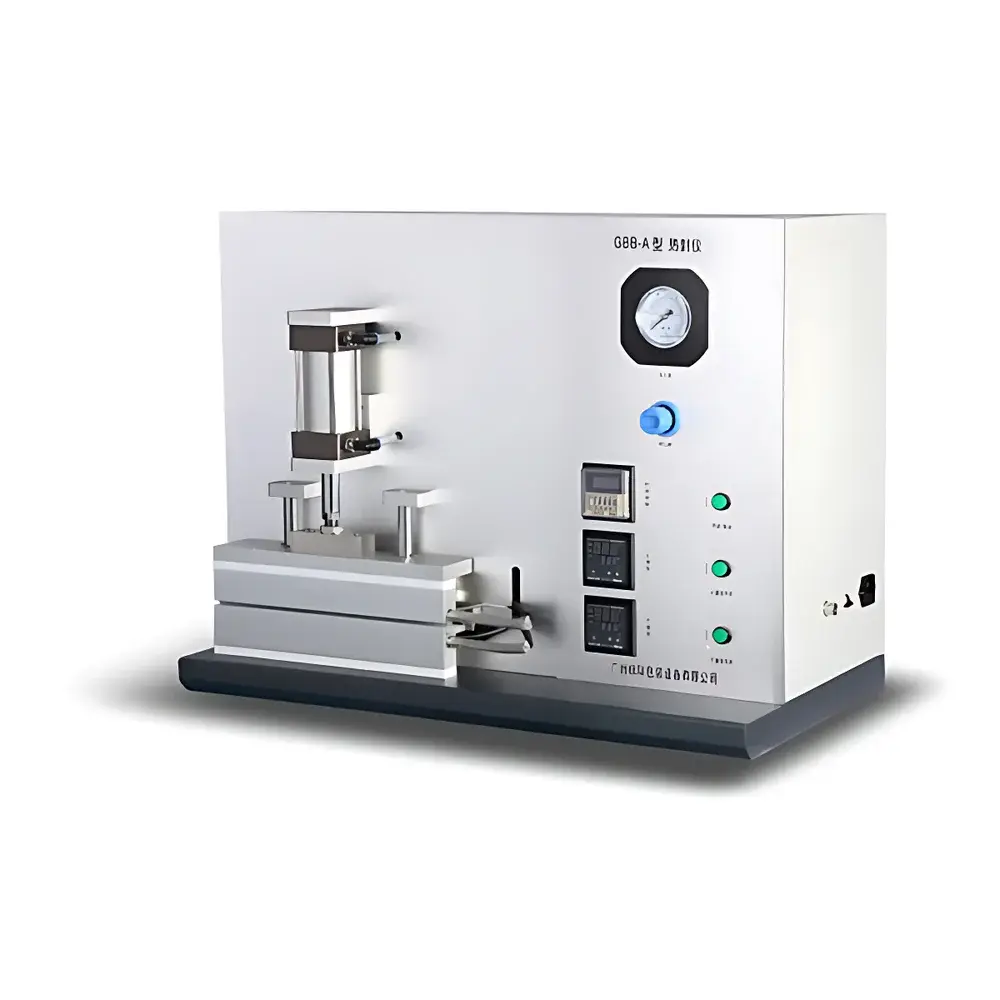
GBPI GBB-A Single-Point Heat Sealing Tester
| Brand | GBPI |
|---|---|
| Origin | Guangdong, China |
| Manufacturer Type | Manufacturer |
| Country of Origin | China |
| Model | GBB-A-aa |
| Quotation | Upon Request |
| Temperature Range | Ambient to 300 °C |
| Temperature Control Accuracy | ±1 °C |
| Heat Sealing Time | 0.1–999.9 s |
| Sealing Pressure | 0.05–0.8 MPa |
| Sealing Surface Dimensions | 300 × 5.5 mm (upper/lower sealing blades), lower sealing bar with silicone pad |
| Heating Mode | Dual-mode (automatic & manual), externally mounted pneumatic cylinder |
| Air Source | Compressed air (required) |
| Overall Dimensions | 700 × 400 × 540 mm |
| Weight | 45 kg |
| Power Rating | 2000 W |
| Electrical Supply | AC 220 V, 50 Hz |
Overview
The GBPI GBB-A Single-Point Heat Sealing Tester is an engineered laboratory instrument designed for precise, repeatable evaluation of thermoplastic seal integrity under controlled thermal, mechanical, and temporal conditions. It operates on the principle of contact-based thermal sealing—applying calibrated temperature, pressure, and dwell time to a defined area of flexible packaging material (e.g., laminated films, pouches, blister lidding, or medical device pouches) to generate a localized seal. The resulting seal strength—commonly assessed via subsequent tensile peel or burst testing—is directly correlated to these three critical process parameters. This instrument supports deterministic process validation in packaging development, quality assurance, and regulatory compliance workflows, particularly where seal formation must meet stringent reproducibility requirements across production batches.
Key Features
- Independent dual-zone temperature control for upper and lower sealing elements—enabling asymmetric thermal profiling and gradient seal studies.
- Pneumatically actuated sealing mechanism using externally mounted cylinders, ensuring consistent force delivery and eliminating mechanical hysteresis associated with internal linkages.
- Configurable operation modes: fully automated cycle sequencing (programmable time/temperature/pressure profiles) and manual foot-switch activation for rapid prototyping or troubleshooting.
- Modular sealing interface: standard 300 × 5.5 mm smooth stainless steel blades; optional custom geometries (e.g., circular, stepped, or contoured surfaces) and surface finishes (e.g., matte, polished, or PTFE-coated) available upon request.
- Integrated silicone cushion on the lower sealing bar to accommodate dimensional variation in multi-layer substrates and mitigate edge deformation during compression.
- Front-accessible PT100 sensor ports allow traceable calibration using NIST-traceable reference thermometers—no disassembly required.
- Thermal isolation design minimizes ambient heat bleed, improving temperature stability and reducing warm-up stabilization time.
Sample Compatibility & Compliance
The GBB-A accommodates a broad spectrum of thermoplastic packaging materials, including polyethylene (LDPE, HDPE), polypropylene (CPP, BOPP), polyester (PET), ethylene vinyl alcohol (EVOH), aluminum foil laminates, and medical-grade Tyvek®/polyethylene composites. Its fixed-area sealing geometry ensures standardized test conditions per recognized international methodologies. The instrument is validated for conformance with key industry standards: QB/T 2358–1998 (Chinese standard for plastic film heat seal strength), ASTM F2029–2016 (Standard Test Method for Making Heat-Sealed Packages for Use in Integrity Testing), and YBB 00122003–2015 (Chinese pharmaceutical packaging standard for heat-sealable composite films). While the tester itself does not perform seal strength measurement, its output parameters are directly input into downstream peel or burst testers compliant with ASTM F88, ISO 11607–2, or EN 868–5 for full packaging validation cycles.
Software & Data Management
The GBB-A operates via embedded firmware with local LCD interface and tactile keypad navigation. All parameter sets—including temperature setpoints, dwell durations, pressure levels, and mode selection—are stored in non-volatile memory with timestamped logging capability. Optional RS-232 or USB-C connectivity enables integration with external LabVIEW™ or Python-based data acquisition systems for automated batch logging and SPC charting. Audit trails comply with GLP and GMP documentation requirements when paired with validated software environments; raw parameter records support 21 CFR Part 11-compliant electronic signatures when deployed within qualified LIMS ecosystems.
Applications
- Optimization of heat seal parameters during packaging line commissioning and changeover validation.
- Comparative evaluation of sealant layer performance across resin grades, additive packages, or aging conditions.
- Root cause analysis of seal failures (leaks, delamination, scorching) through controlled parametric sweeps.
- Supporting ISO 11607–1 Annex A risk assessments by generating empirical data on seal margin robustness.
- Method development for accelerated aging studies where seal integrity must be preserved after exposure to sterilization (e.g., EtO, gamma) or environmental stressors.
- Academic research on polymer interdiffusion kinetics at sealed interfaces under variable thermal histories.
FAQ
What compressed air specifications are required for stable operation?
A minimum supply pressure of 0.6 MPa (6 bar) with oil-free, desiccated air is recommended; flow rate ≥ 15 L/min at peak actuation.
Can the GBB-A be integrated into a fully automated packaging validation line?
Yes—via dry-contact I/O signals (start/stop/error) and serial command protocol, enabling synchronization with PLC-controlled conveyors and vision inspection stations.
Is third-party calibration certification available?
GBPI provides factory calibration certificates traceable to CNAS-accredited laboratories; on-site calibration services are offered globally under service contract.
Does the instrument support dynamic pressure ramping during sealing?
No—the GBB-A delivers constant pressure throughout the dwell period; for ramped profiles, the GBPI GBB-B dual-pressure-series model is recommended.
How frequently should temperature sensors be recalibrated?
Annual verification is advised; more frequent checks (e.g., quarterly) are required in high-utilization QA labs or when operating near maximum temperature limits (≥280 °C).





