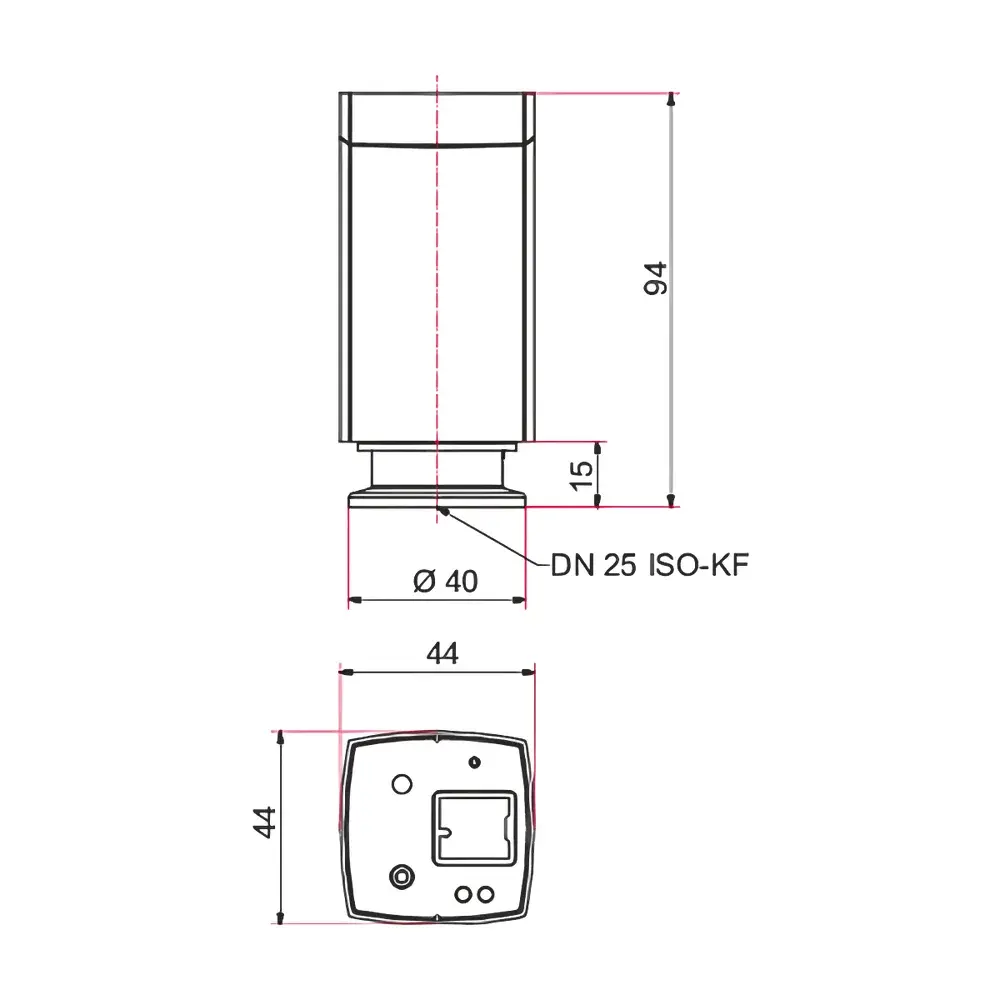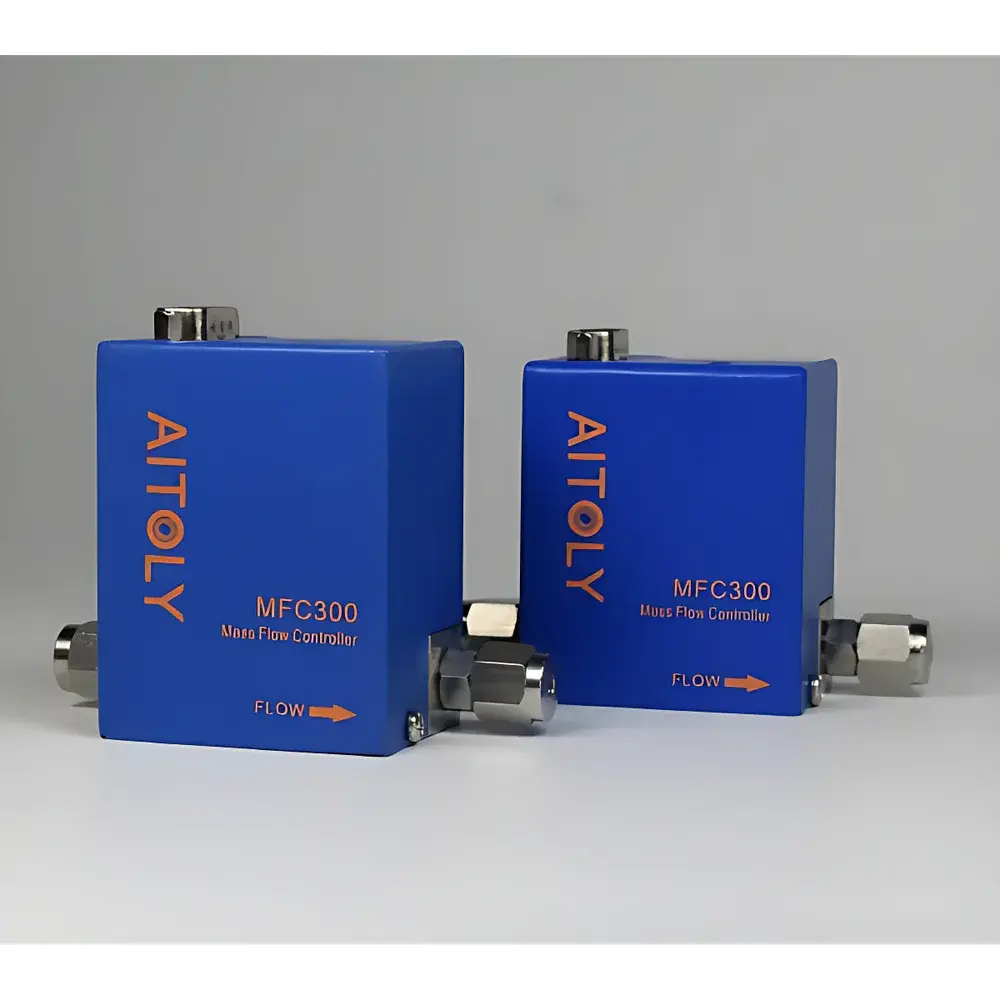
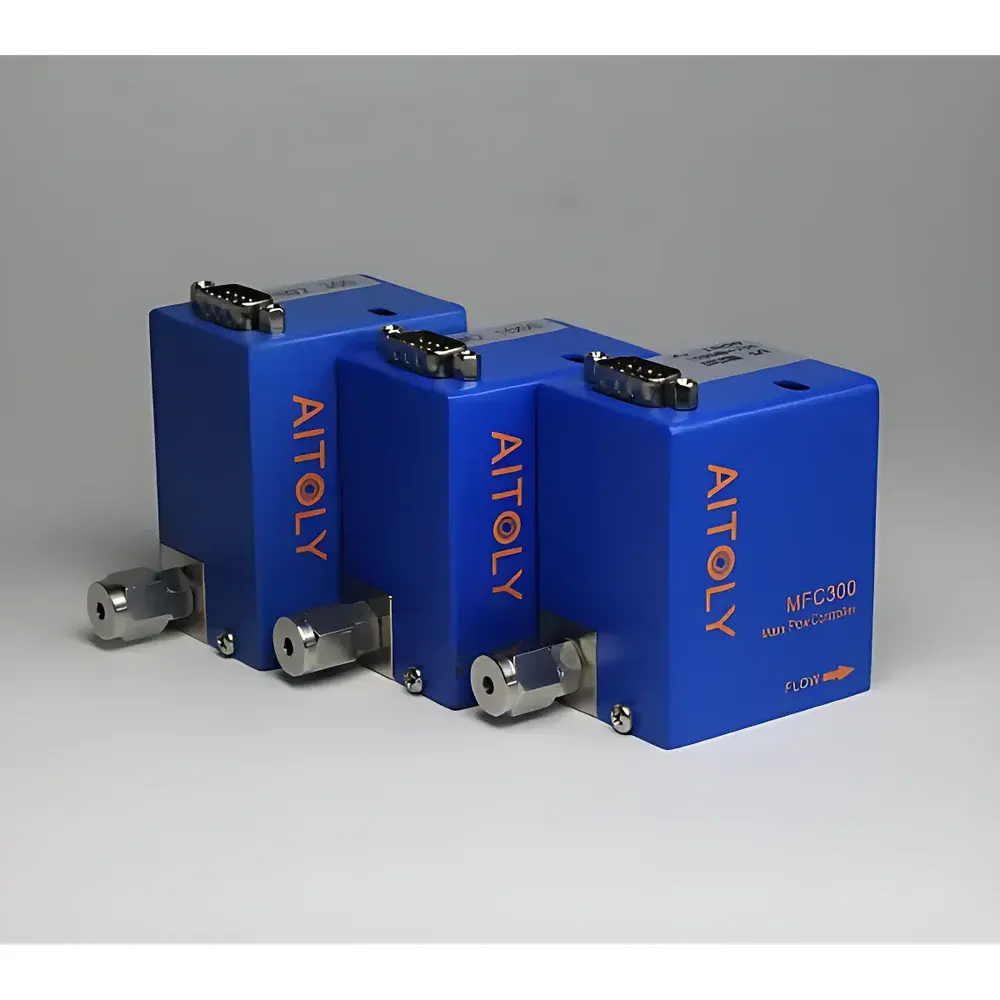
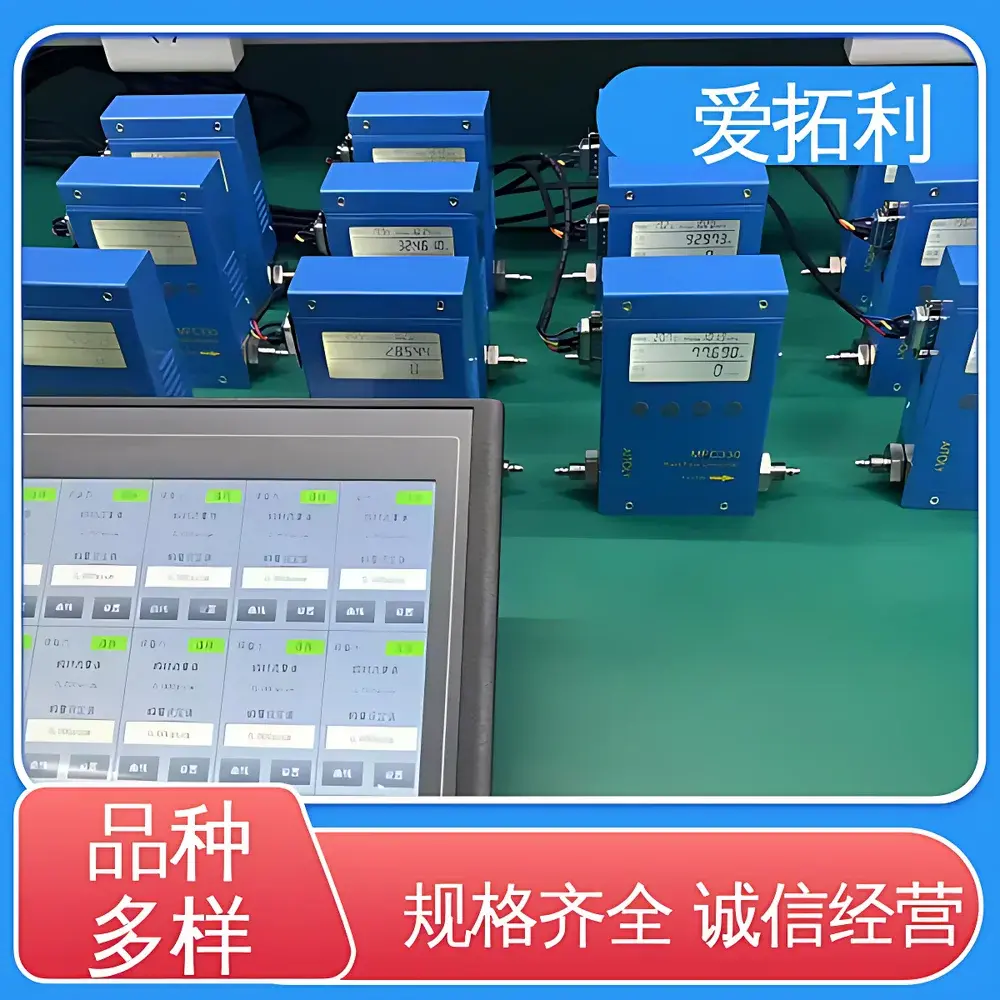
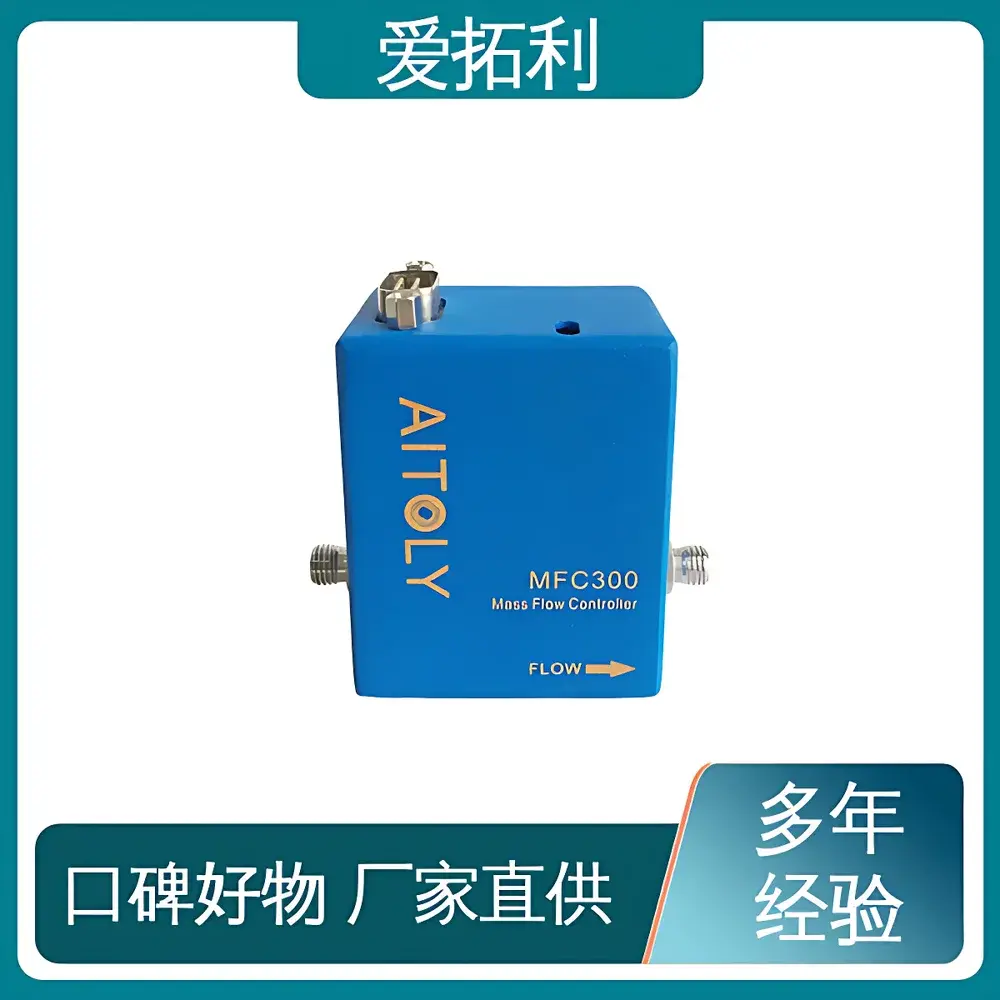
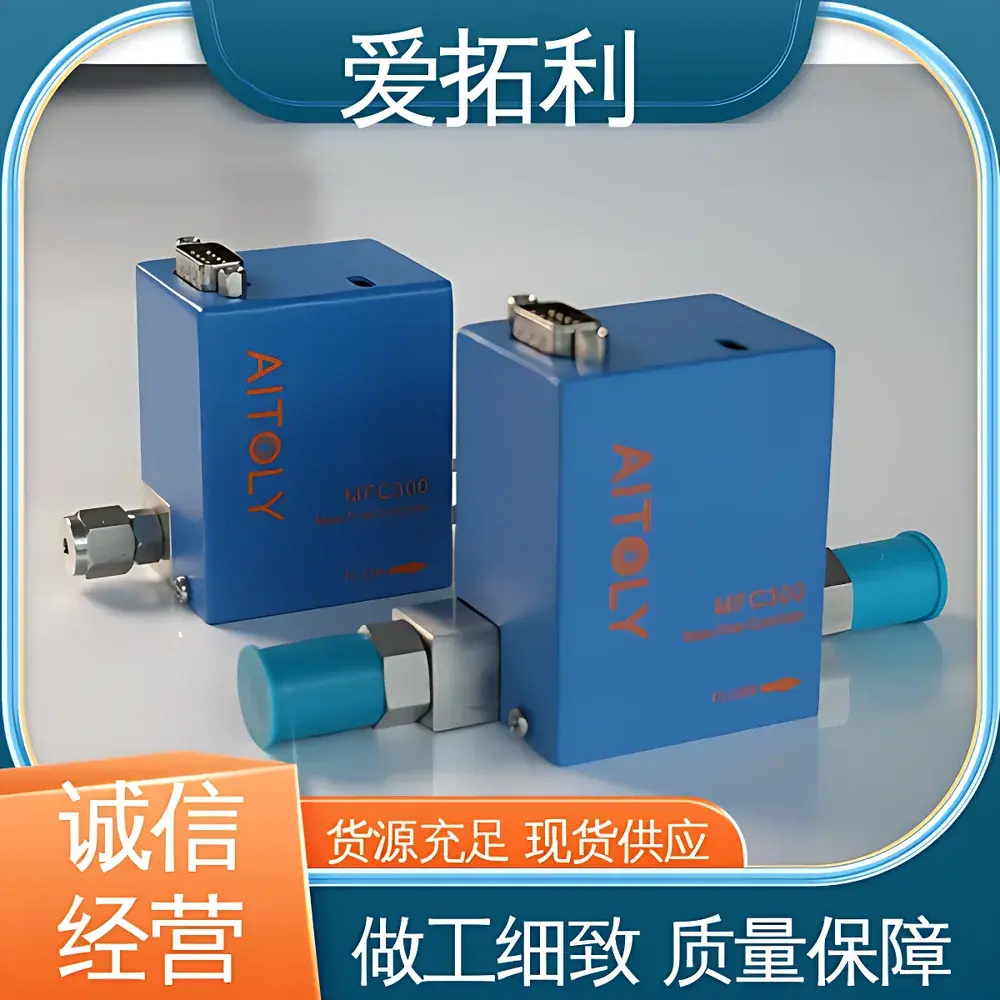
Aitoly MFC300_RS232 Thermal Mass Flow Controller
| Brand | Aitoly |
|---|---|
| Origin | Jiangsu, China |
| Model | MFC300_RS232 |
| Flow Principle | Thermal Mass Flow Measurement |
| Power Supply | 15–40 VDC |
| Accuracy | ±0.5 % FS |
| Linearity | ±1 % FS |
| Repeatability | ±0.5 % FS |
| Response Time | <1 s |
| Full-Scale Range Options | 0–5 to 0–5 L/min (sccm/LPM) |
| Operating Pressure Differential | 0–1 MPa |
| Max Burst Pressure | 1.1 MPa |
| Ambient Temperature | 0–65 °C |
| Gas Compatibility | Air, He, Ar, N₂, O₂, H₂, NO, CO, CH₄, NH₃, N₂O, NO₂, CO₂ |
| Electrical Interface | DB9 connector |
| Output Signals | Analog (0–5 V / 0–10 V / 4–20 mA), RS232, RS485, RS422, CAN (galvanically isolated) |
| Gas Port Options | M8×1, 4 mm push-to-connect, 6 mm push-to-connect |
| Tubing ID | 3–3.2 mm, 4 mm, 6 mm |
| Display Resolution | 0.1 sccm (for low-range models) |
| Zero Drift | Extremely low (typ. <0.02 % FS/°C) |
| Moving Parts | None |
Overview
The Aitoly MFC300_RS232 is a precision thermal mass flow controller engineered for real-time, closed-loop regulation of gas mass flow rates in industrial process control, laboratory automation, and analytical instrumentation systems. Unlike volumetric flow devices, it employs constant-temperature anemometry (CTA) — a calibrated thermal dispersion principle — to directly measure and control mass flow independent of pressure and temperature fluctuations. This eliminates the need for external compensation algorithms and ensures stable operation across variable inlet conditions. Designed for integration into multi-gas environments, the MFC300_RS232 supports up to 13 pre-calibrated gases without hardware modification, including reactive species such as NH₃, NO₂, and CO₂, with traceable calibration data traceable to NIST-traceable standards. Its all-solid-state architecture — featuring no moving parts, MEMS-based thermal sensors, and hermetically sealed flow channels — delivers long-term reliability and minimal maintenance requirements in continuous-duty applications.
Key Features
- No moving parts: Eliminates mechanical wear, enabling >50,000 hours MTBF and consistent performance across thermal cycling.
- Multi-gas capability: Factory-calibrated for 13 common industrial and specialty gases; gas selection configurable via digital command or front-panel interface.
- Dual-mode control: Simultaneous support for analog setpoint input (0–5 V, 0–10 V, 4–20 mA) and bidirectional digital communication (RS232, RS485, RS422, CAN) with galvanic isolation to prevent ground loop interference.
- High dynamic response: <1 second step response time (10–90 %) enables precise transient flow control in pulsed gas delivery, CVD, ALD, and plasma etch processes.
- Low zero drift: <0.02 % FS/°C typical thermal zero shift ensures measurement integrity over ambient temperature variations from 0 to 65 °C.
- Flexible power architecture: Operates from a single unregulated DC supply (15–40 VDC), compatible with standard industrial power rails and battery-backed control cabinets.
- Modular mechanical interface: Standardized gas port options (M8×1 thread, 4 mm & 6 mm push-to-connect) accommodate diverse tubing materials (stainless steel, PTFE, Peek) and system integration needs.
Sample Compatibility & Compliance
The MFC300_RS232 is validated for use with non-corrosive and mildly corrosive gases under clean-dry conditions per ISO 8573-1 Class 4 (solid particles ≤ 15 µm, dew point ≤ +3 °C, oil content ≤ 1 mg/m³). It complies with CE marking requirements for electromagnetic compatibility (EN 61326-1) and low-voltage directive (2014/35/EU). While not certified for hazardous area use (ATEX/IECEx), its intrinsically safe signal outputs and isolation design permit deployment in Zone 2 classified environments when installed per IEC 60079-14 guidelines. For regulated industries, the device supports audit-ready configuration logging and firmware version reporting — essential for GLP/GMP-aligned validation protocols and FDA 21 CFR Part 11-compliant workflows when paired with compliant host software.
Software & Data Management
Digital communication interfaces support ASCII command protocol (ASCII-based SCPI-like syntax) and Modbus RTU over RS485/RS232, enabling seamless integration with LabVIEW, Python (PySerial), MATLAB, and PLC-based SCADA systems. All parameters — including gas type, full-scale range, control mode (open/closed loop), and alarm thresholds — are programmable and retainable in non-volatile memory. The controller logs real-time flow, temperature, and valve position data at user-defined intervals (10 ms to 10 s), exportable via serial dump or automated CSV generation. When used with the optional MCL300 master controller, up to 16 MFC300 units can be daisy-chained on a single RS485 bus, with synchronized timestamping and centralized calibration management — critical for multi-channel gas blending and reactor feed systems requiring traceable, time-correlated flow records.
Applications
- Chemical vapor deposition (CVD) and atomic layer deposition (ALD) tool gas delivery subsystems.
- Gas chromatography carrier gas control and detector make-up flow regulation.
- Environmental emission monitoring systems requiring multi-gas calibration agility.
- Industrial combustion optimization (e.g., natural gas/oxygen ratio control in furnaces).
- Pharmaceutical lyophilization and inert gas purging where precise N₂ or argon dosing is required.
- Research-grade fuel cell test stations demanding sub-second response for H₂/air stoichiometry control.
- Calibration laboratories performing secondary flow standard verification against primary gravimetric or piston provers.
FAQ
What gases are supported out-of-the-box?
Air, He, Ar, N₂, O₂, H₂, NO, CO, CH₄, NH₃, N₂O, NO₂, and CO₂ — each with individual thermal property compensation coefficients stored in firmware.
Can the MFC300_RS232 operate without a host controller?
Yes — it accepts analog setpoint signals and provides local flow readout via optional integrated display module or external MCL300 controller.
Is firmware update possible in-field?
Yes — firmware upgrades are performed via RS232 using Aitoly’s proprietary configuration utility; version history and checksum verification are retained.
What is the maximum allowable differential pressure across the unit?
1.0 MPa operating differential pressure; 1.1 MPa maximum burst rating per EN 13480-3.
Does the device meet any industry-specific flow calibration standards?
Factory calibration is performed per ISO/IEC 17025-accredited procedures; certificates include uncertainty budgets referenced to NIST-traceable mass flow standards.