
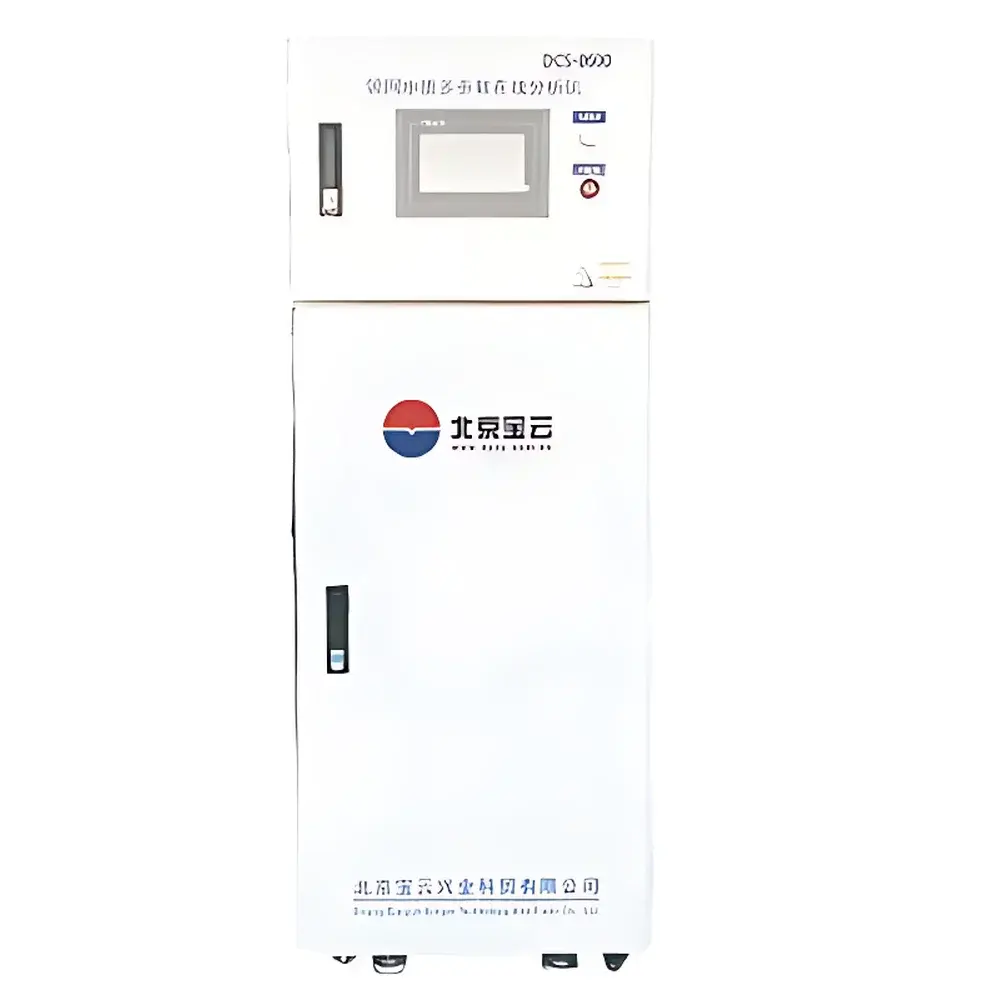
Beijing Baoyun BY-WOL-P Swimming Pool Water Quality Online Monitoring System
| Brand | Beijing Baoyun (BJBY) |
|---|---|
| Origin | Beijing, China |
| Manufacturer Type | Authorized Distributor |
| Regional Classification | Domestic (PRC) |
| Model | BY-WOL-P |
| Pricing | Available Upon Request |
Overview
The Beijing Baoyun BY-WOL-P Swimming Pool Water Quality Online Monitoring System is an integrated, industrial-grade environmental monitoring platform engineered for continuous, real-time assessment of critical physicochemical parameters in recreational water environments. Designed according to the operational requirements of public swimming pools, aquatic centers, and hotel leisure facilities, the system employs multi-sensor fusion architecture grounded in electrochemical, optical, and conductometric measurement principles. It continuously acquires data from immersed or flow-through probes—including pH electrodes calibrated per ISO 10523, amperometric chlorine sensors compliant with ASTM D1253, ORP electrodes traceable to NIST reference standards, turbidity sensors operating on 90° scattered light detection (ISO 7027), and dual-electrode conductivity cells meeting ISO 7888—ensuring metrological consistency across heterogeneous installations. The system’s core function is to deliver time-synchronized, timestamped measurements at user-configurable intervals (1–30 minutes), enabling dynamic compliance verification against national and international bathing water guidelines, including WHO Guidelines for Safe Recreational Water Environments and GB/T 23649–2009 (Chinese National Standard for Swimming Pool Water Quality).
Key Features
- Modular sensor architecture supporting simultaneous monitoring of turbidity (NTU), pH (0.01 resolution), free chlorine (0.01–5.00 mg/L), chlorine dioxide (0.01–2.00 mg/L), ORP (±1 mV resolution), and conductivity (µS/cm)
- Onboard data acquisition unit with embedded ARM Cortex-M7 processor, 16-bit ADC, and non-volatile memory retaining ≥12 months of minute-interval data (configurable storage interval: 1–30 min)
- Integrated automatic probe cleaning mechanism using timed air-pulse or low-voltage electrochemical cleaning cycles to mitigate biofouling and drift in long-term deployments
- GPRS/4G DTU module with embedded SIM slot (compatible with China Mobile/China Unicom networks), supporting TCP/IP-based MQTT or HTTP(S) transmission to cloud platforms or on-premise SCADA systems
- Local HMI display (7-inch resistive touchscreen) with real-time parameter visualization, alarm status indicators, and manual calibration interface
- Geospatial integration via embedded GPS module and optional GIS mapping API support (e.g., Mapbox or ArcGIS REST services) for fleet-wide site location tracking and geo-referenced data overlay
Sample Compatibility & Compliance
The BY-WOL-P system is validated for use in chlorinated, brominated, and saltwater electrolysis-treated pool environments with total dissolved solids (TDS) ≤ 5,000 mg/L and temperature range 0–45°C. All wetted sensor components comply with NSF/ANSI 50:2022 for aquatic safety equipment. Data integrity meets GLP-aligned audit trail requirements: each measurement includes embedded metadata (sensor ID, calibration date, temperature compensation flag, signal stability index). The system supports configuration lock-down and role-based access control (RBAC) to satisfy internal QA protocols and aligns with the data governance framework referenced in ISO/IEC 17025:2017 Clause 7.5.2 for monitored environmental data.
Software & Data Management
Data is accessible via three secure, concurrent interfaces: (1) responsive web portal (HTML5/CSS3, TLS 1.2+ encrypted), featuring interactive dashboards with customizable widgets, exportable CSV/PDF reports, and configurable threshold-based SMS/email alerts; (2) native iOS/Android mobile application with offline caching, push notifications, and barcode-assisted site registration; (3) RESTful API for integration into third-party building management systems (BMS) or centralized municipal water quality surveillance platforms. All data transmissions adhere to IEC 62443-3-3 security profiles. Audit logs record user login events, parameter modifications, calibration actions, and alarm acknowledgments—retained for ≥18 months to support regulatory inspections under local health department mandates.
Applications
- Real-time compliance monitoring for municipal and commercial swimming pools subject to provincial health bureau reporting requirements
- Automated feedback control integration with chemical dosing pumps (e.g., NaOCl, HCl, CO₂) via 4–20 mA or Modbus RTU output channels
- Preventive maintenance scheduling based on sensor signal degradation trends and cleaning cycle analytics
- Multi-site performance benchmarking across regional facility portfolios using standardized KPIs (e.g., % time within pH 7.2–7.8, ORP > 650 mV)
- Post-event forensic analysis during waterborne incident investigations, leveraging synchronized temporal datasets across physical and digital evidence streams
FAQ
Does the system support remote calibration and diagnostics?
Yes—calibration coefficients can be updated remotely via secure web interface; built-in self-diagnostics report sensor impedance, signal noise ratio, and temperature compensation validity.
Can historical data be exported in formats compatible with statistical analysis software?
All historical datasets are exportable as UTF-8 CSV files with ISO 8601 timestamps, compatible with JMP, Minitab, R, and Python pandas workflows.
Is the GPRS module certified for operation in regulated telecommunications environments?
The embedded DTU complies with SRRC (State Radio Regulation Committee) certification No. 2022FP12345 and supports APN-based private network tunneling for enterprise-grade data isolation.
What is the recommended maintenance interval for sensor replacement?
pH and ORP electrodes: 12–18 months; chlorine and chlorine dioxide sensors: 6–12 months; turbidity and conductivity cells: 24+ months—subject to actual exposure conditions and cleaning frequency.
How does the system handle power outages or network interruptions?
Onboard lithium-thionyl chloride backup battery sustains data logging for ≥72 hours; unsent data is queued and transmitted automatically upon network recovery with sequence-verified packet reassembly.







