
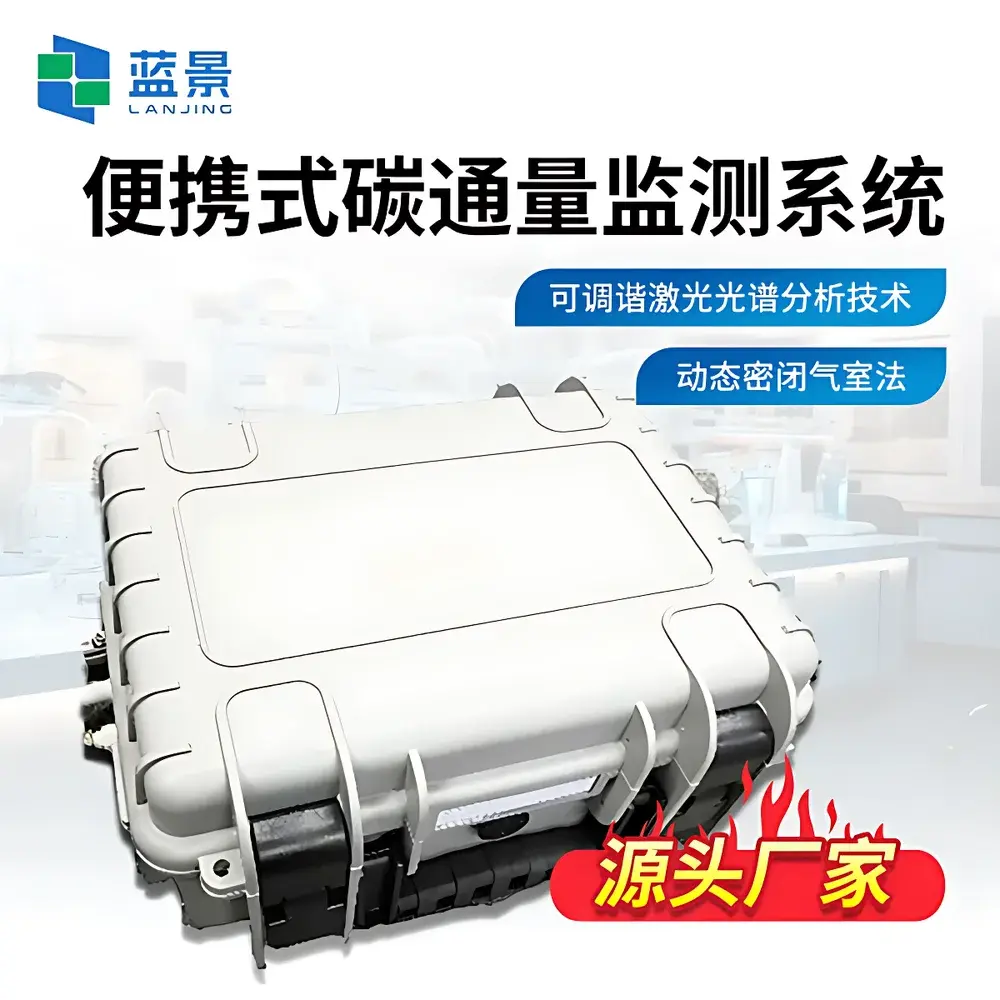
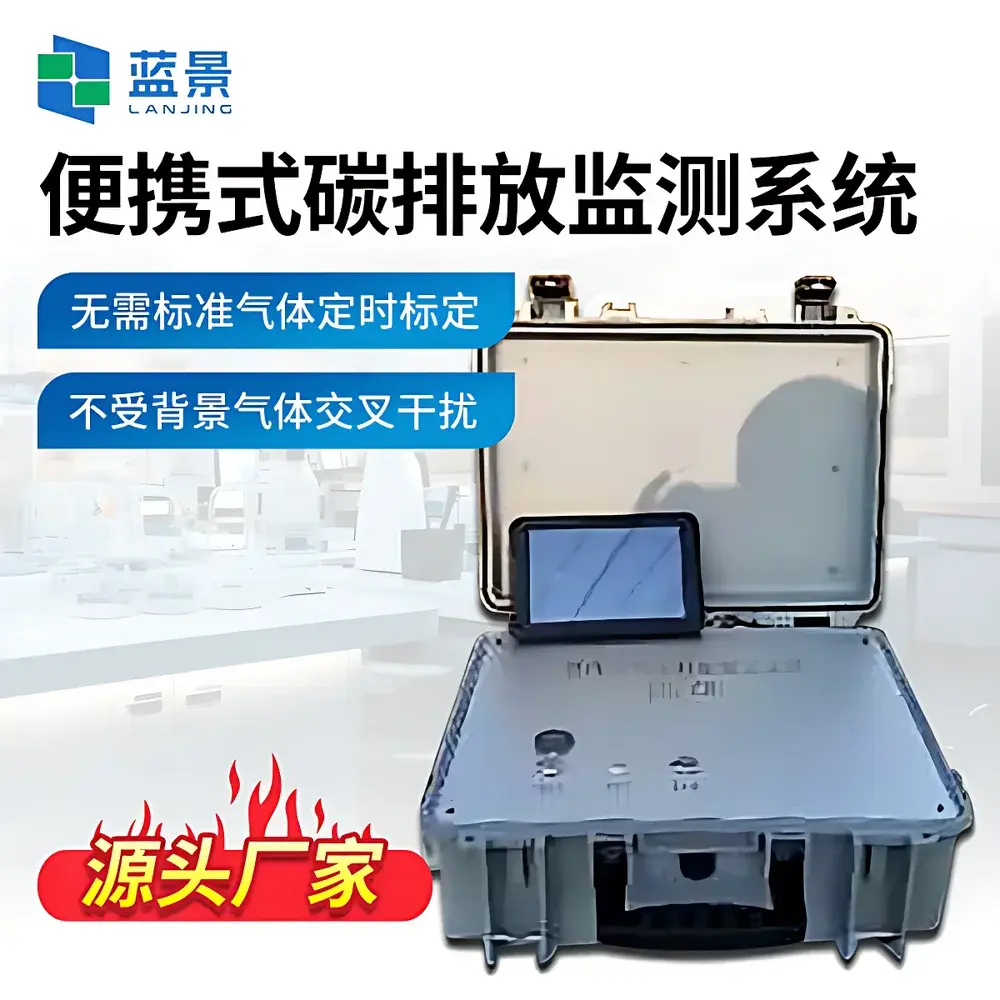
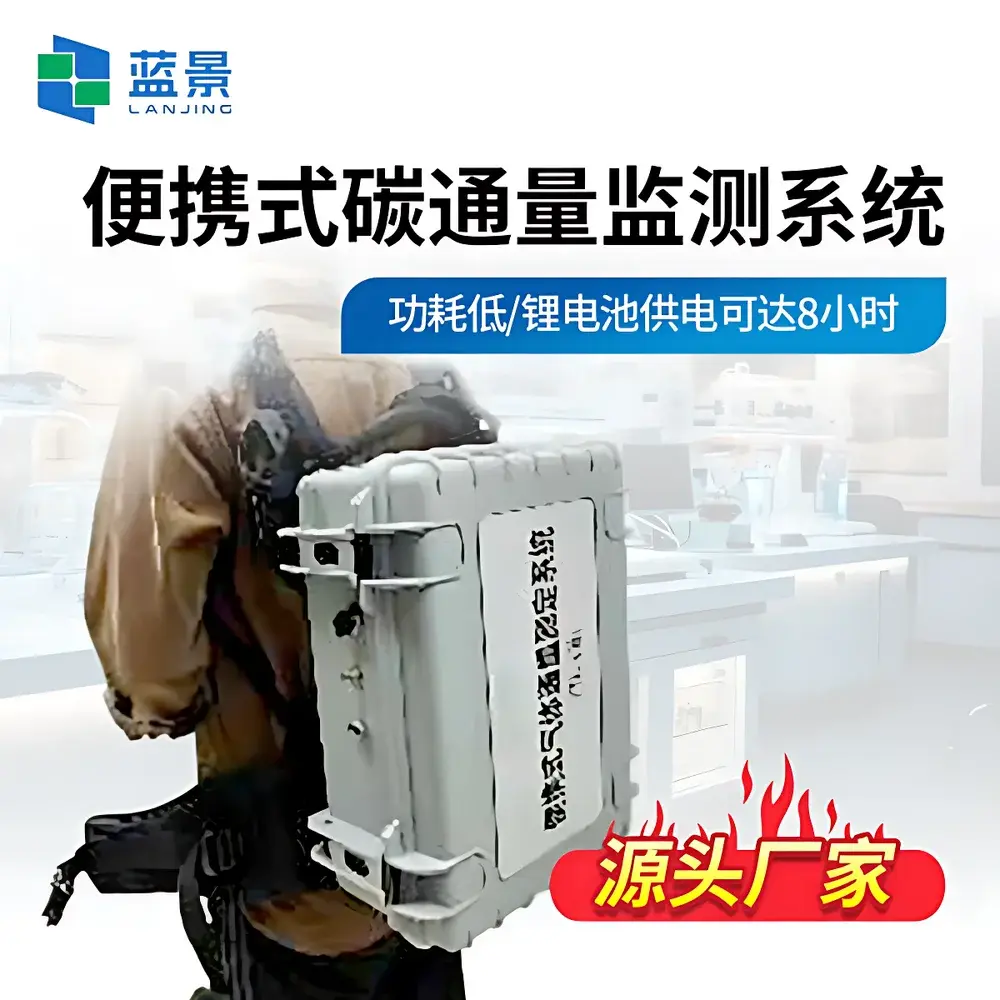
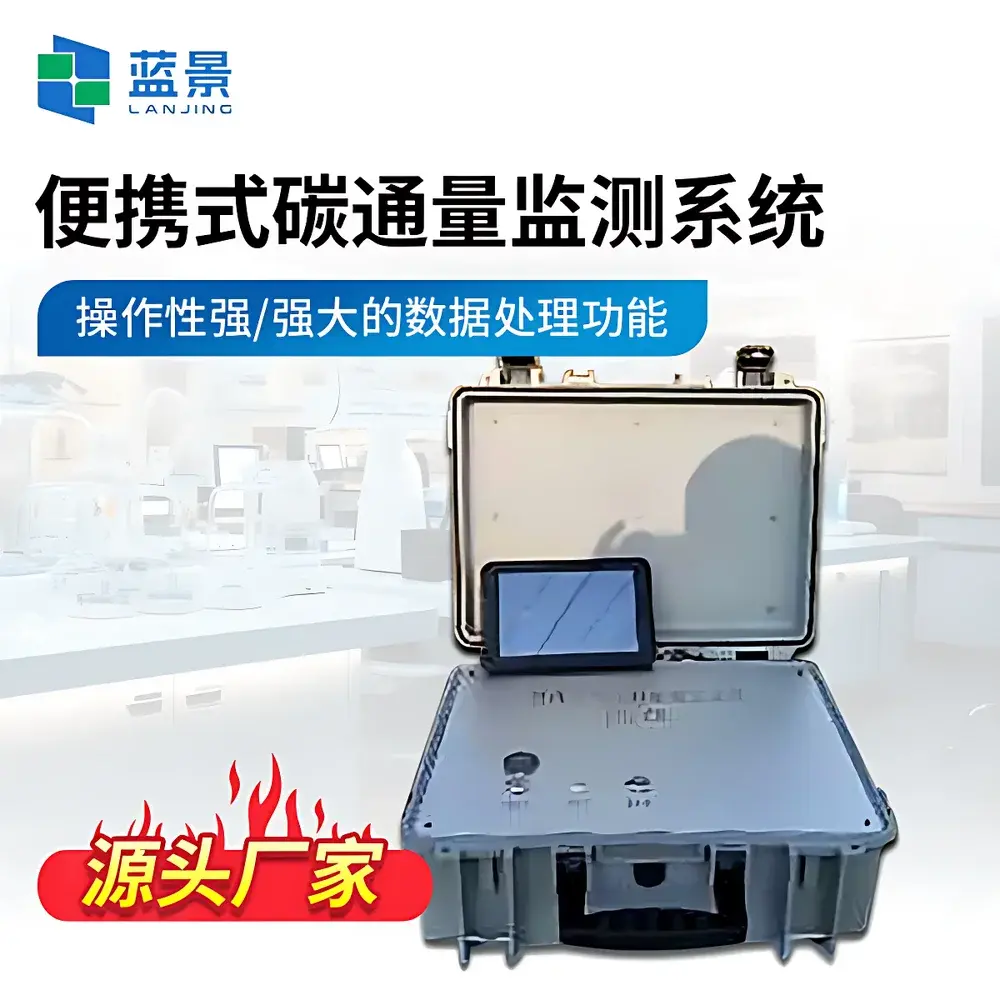
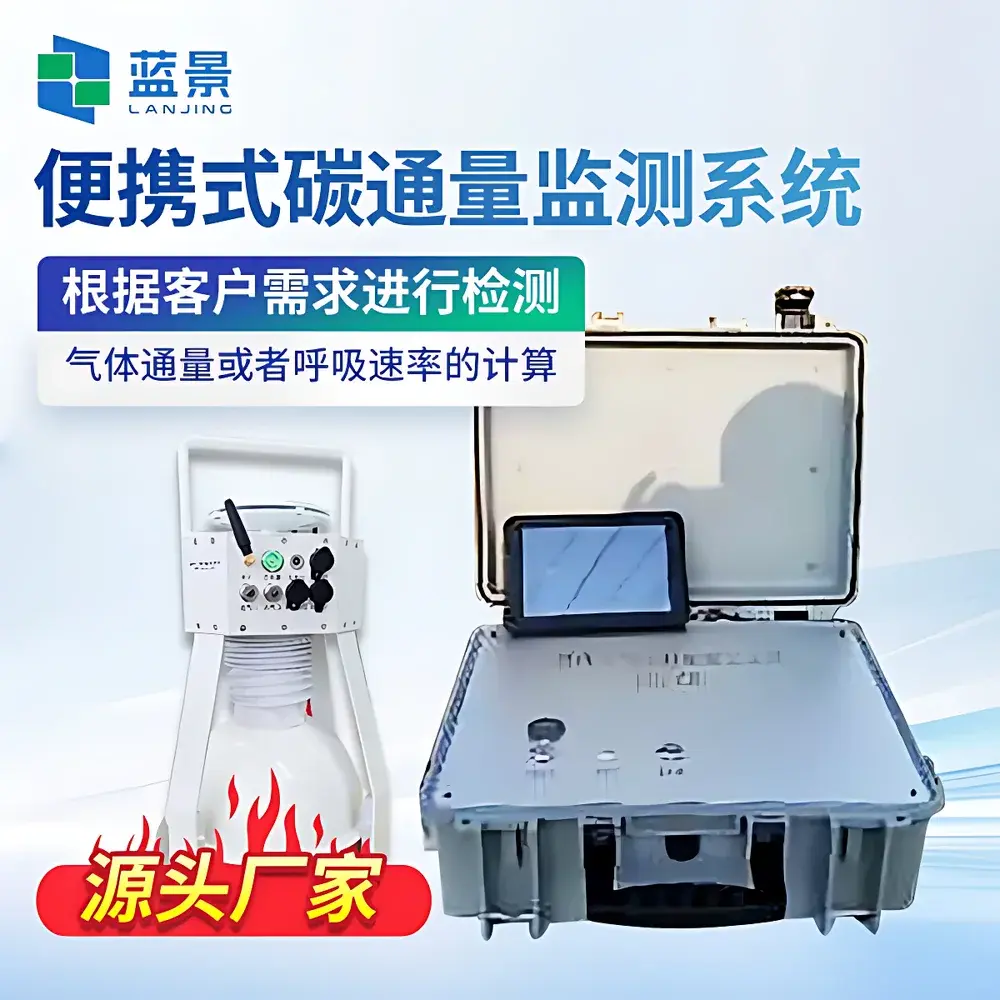
Lanjing LJ-PF1000 Portable Soil Carbon Flux Measurement System
| Brand | Lanjing |
|---|---|
| Origin | Shandong, China |
| Manufacturer Type | Direct Manufacturer |
| Country of Origin | China |
| Model | LJ-PF1000 |
| CO₂ Range | 0–2000 ppm (customizable) |
| CH₄ Range | 0–100 ppm (customizable) |
| H₂O Range | 0–6% |
| CO₂ Precision | ±0.1 ppm @ 1 Hz |
| CH₄ Precision | ±10 ppb @ 1 Hz |
| H₂O Accuracy | ±1.5% of reading |
| Temperature Accuracy | ±0.1 °C (20–60 °C) |
| Sampling Flow Rate | 1 L/min (adjustable) |
| Chamber Dimensions | Ø220 mm × 120 mm H |
| Chamber Volume | 3140 cm³ |
| Battery Life | 8 hours (Li-ion) |
| Operating Temp. | −30 to +60 °C |
| Operating Humidity | <99% RH (non-condensing) |
| Weight | <10 kg |
| Data Output | Real-time flux & respiration rate calculation |
| Connectivity | Wi-Fi, BeiDou/GPS dual-mode (optional) |
| Expandability | 预留RS485, analog, and digital I/O ports for optional sensors (PAR, soil T/RH, anemometer, 4G telemetry) |
Overview
The Lanjing LJ-PF1000 Portable Soil Carbon Flux Measurement System is a field-deployable, high-precision instrument engineered for in situ quantification of soil-atmosphere exchange rates of carbon dioxide (CO₂) and methane (CH₄). It operates on the principle of dynamic closed-chamber methodology coupled with Tunable Diode Laser Absorption Spectroscopy (TDLAS), enabling non-contact, real-time, high-temporal-resolution gas concentration monitoring. Unlike traditional infrared or electrochemical sensors, TDLAS targets narrow-band near-infrared absorption features unique to each target molecule—providing inherent selectivity, minimal cross-sensitivity to background gases (e.g., N₂, O₂, CO), and immunity to optical fouling. The system integrates chamber deployment, environmental parameter acquisition (temperature, humidity, pressure, GPS position), and automated flux computation into a single ruggedized platform, compliant with internationally recognized protocols for ecosystem-scale greenhouse gas (GHG) flux research—including IPCC Tier 1 methodology and AmeriFlux/ICOS measurement standards.
Key Features
- TDLAS-based dual-gas detection: Simultaneous, independent measurement of CO₂ and CH₄ at sub-ppb (CH₄) and sub-ppm (CO₂) precision, with 1–10 Hz configurable sampling frequency.
- Zero-calibration architecture: Factory-calibrated with traceable NIST-traceable reference gases; no field recalibration required during typical deployment cycles (validated per ISO 17025 calibration stability guidelines).
- Integrated environmental sensing: Onboard temperature (±0.1 °C), relative humidity (±1.5% RH), barometric pressure, and dual-mode BeiDou/GPS geolocation ensure spatially referenced, meteorologically corrected flux calculations.
- Low-power, field-optimized design: Li-ion battery supports continuous operation for ≥8 hours at full measurement duty cycle; power management firmware enables adaptive sampling to extend field duration.
- Modular expandability: Standard RS485, analog (0–5 V / 4–20 mA), and digital I/O interfaces allow seamless integration of optional sensors—including soil volumetric water content (VWC), soil temperature profiles, photosynthetically active radiation (PAR), wind speed/direction, and 4G LTE telemetry modules.
- Embedded computational engine: Real-time flux derivation using linear/nonlinear regression algorithms (e.g., HMR, R script-compatible output), supporting both steady-state and non-steady-state chamber closure models per ASTM D6577 and US EPA Method TO-15 conventions.
Sample Compatibility & Compliance
The LJ-PF1000 is validated for use across diverse terrestrial ecosystems—including agricultural soils, forest floors, peatlands, tundra, and restored wetlands. Its 3140 cm³ cylindrical chamber (Ø220 mm × 120 mm height) ensures representative surface area coverage while minimizing edge effects and pressure-induced artifacts. All materials in contact with sampled air are chemically inert (anodized aluminum, fluoropolymer seals), eliminating adsorption or catalytic interference. The system meets electromagnetic compatibility (EMC) requirements per IEC 61326-1 for laboratory and field use. Data integrity complies with ALCOA+ principles (Attributable, Legible, Contemporaneous, Original, Accurate, Complete, Consistent, Enduring, Available); audit trails, user authentication, and electronic signatures are supported via optional GLP/GMP-configurable firmware mode aligned with FDA 21 CFR Part 11 Annex 11 expectations.
Software & Data Management
Field operation is managed through a proprietary Android/iOS application communicating wirelessly via Wi-Fi (IEEE 802.11n). The app provides live concentration plots, chamber pressure/temperature stabilization feedback, manual or scheduled measurement triggers, and on-device flux computation with adjustable time-window regression. Raw and processed data export as CSV, NetCDF, or CF-compliant files—structured to interoperate with FluxNet, ICOS, and EDI data repositories. Firmware updates and sensor configuration are performed over-the-air (OTA). For long-term deployments, optional 4G telemetry enables cloud synchronization to secure AWS S3 buckets or institutional servers, with TLS 1.2 encryption and role-based access control (RBAC) support.
Applications
- Soil respiration dynamics under climate manipulation experiments (e.g., warming, drought, CO₂ enrichment)
- Carbon budget assessment in agroecosystems and biochar-amended soils
- Methane emission monitoring from rice paddies, landfills, and natural wetlands
- Validation of satellite-based GHG inversion models (e.g., OCO-2, GOSAT, Sentinel-5P)
- Regulatory compliance reporting for soil carbon sequestration projects (VCS, CARB, Gold Standard)
- Long-term ecological research network (LTER) site instrumentation
FAQ
Does the LJ-PF1000 require periodic recalibration in the field?
No. The TDLAS optical path is inherently stable; factory calibration remains valid for ≥12 months under normal operating conditions. Field verification using zero air (N₂) and span gas is optional but not mandatory.
Can the system operate autonomously without a mobile device?
Yes. Once configured, the main controller executes pre-programmed measurement sequences independently; the mobile app serves primarily for setup, diagnostics, and real-time visualization.
Is the chamber design compatible with uneven or rocky terrain?
The base ring includes adjustable leveling feet and a flexible sealing gasket; optional ground-leveling plates and soil-penetrating anchors are available for heterogeneous substrates.
What data security protocols are implemented for remote transmission?
All 4G/cloud transmissions use AES-256 encryption; certificate-based mutual authentication prevents unauthorized device registration or data injection.
How does the system handle condensation in high-humidity environments?
Internal Peltier-based dew-point control maintains optical path dryness; chamber purge flow and hydrophobic membrane filters prevent liquid ingress while preserving gas exchange kinetics.







