
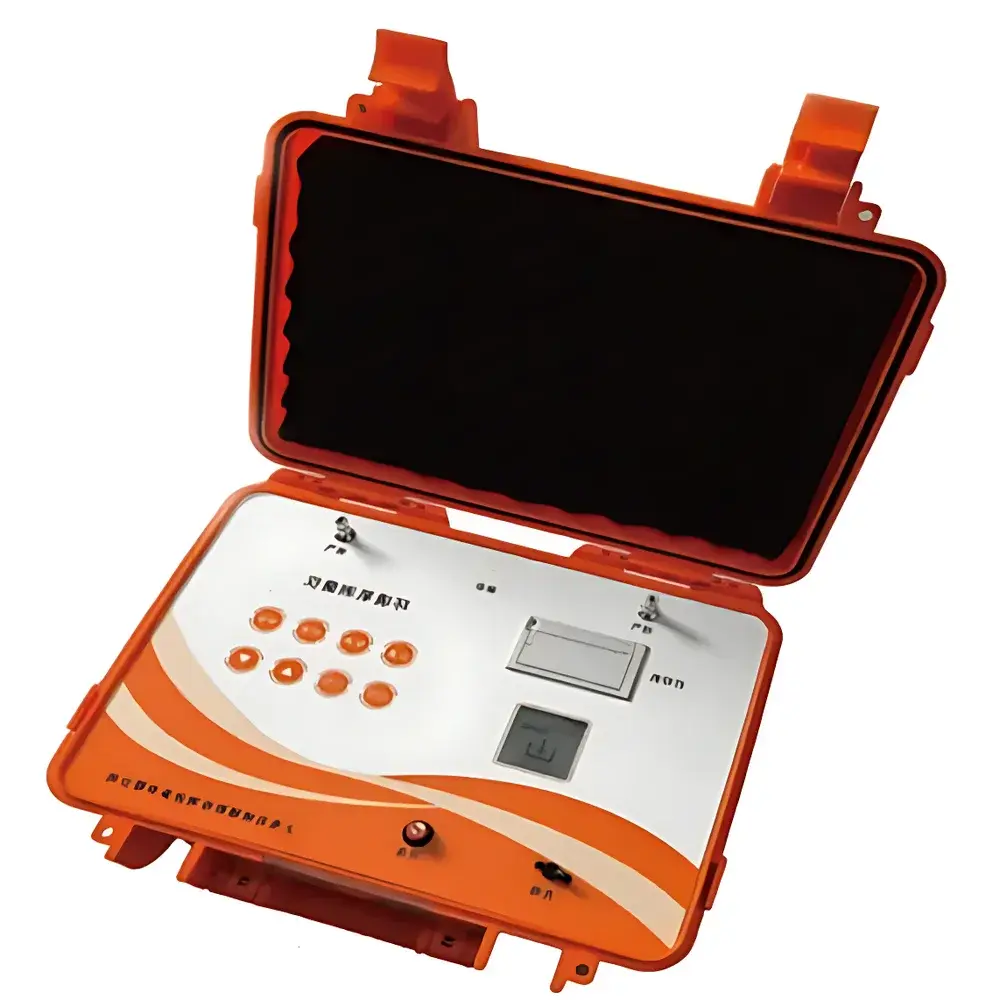
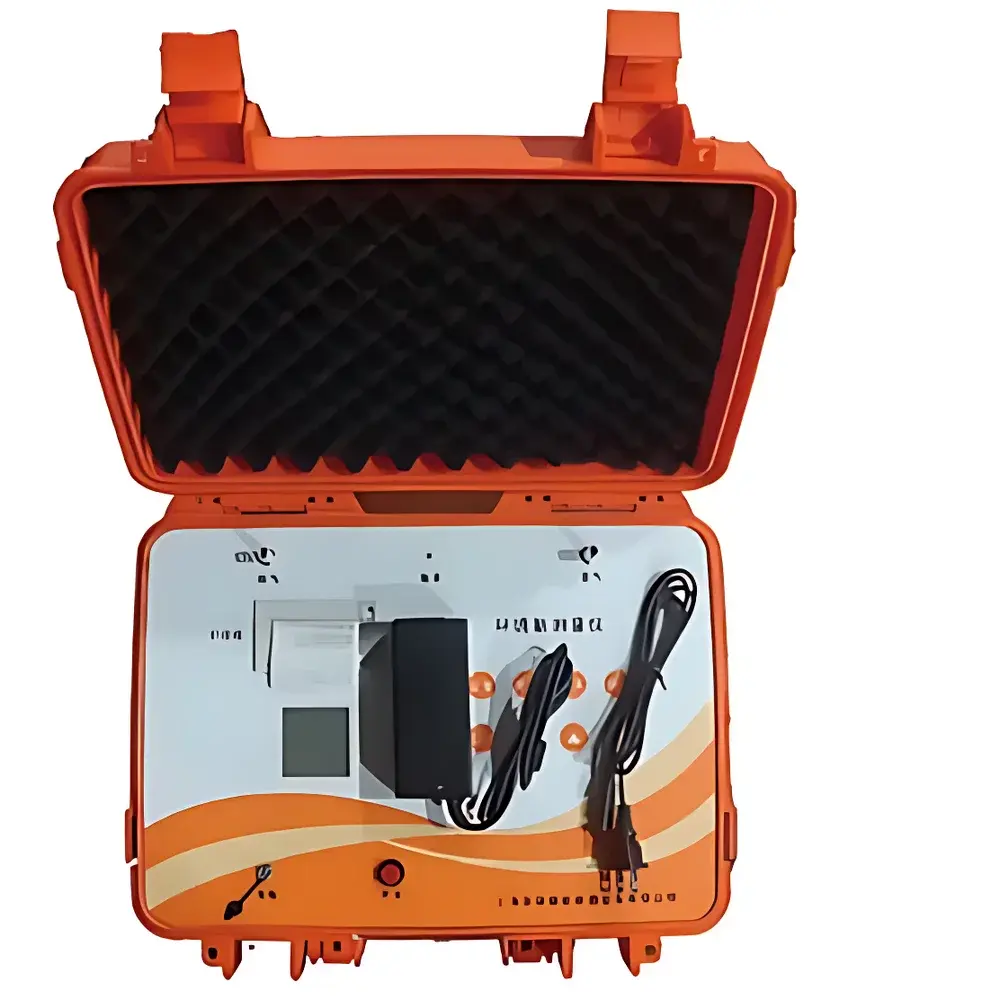
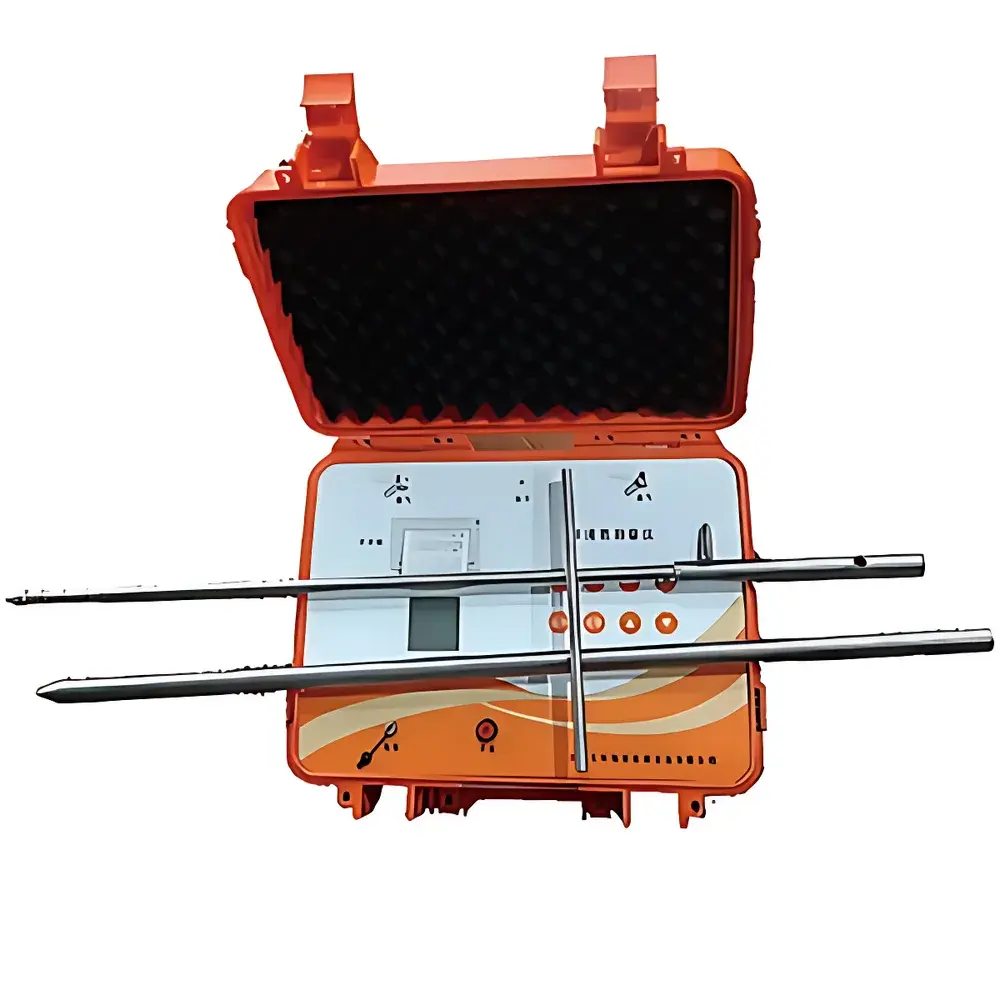
BJBY JC-RAD-14 Portable Radon Detector
| Brand | BJBY |
|---|---|
| Origin | Beijing, China |
| Model | JC-RAD-14 |
| Sampling Method | Active Pump-aspiration |
| Measurement Range | Air Radon: 3–150,000 Bq/m³ |
| Soil Radon | 300–400,000 Bq/m³ |
| Radon Exhalation Rate | 0.001–10.000 Bq/(m²·s) |
| Water Radon | 0.003–100 Bq/L |
| Detection Repeatability | ≤5% (at 1800 Bq/m³, 65% RH, 25°C) |
| 8-h Drift | ≤10% |
| Power | Rechargeable Li-ion battery (≥30 h continuous operation) or AC adapter |
| Operating Temperature | −10°C to +40°C |
| Relative Humidity | ≤98% RH |
| Display | Backlit dot-matrix LCD |
| Data Storage | >200,000 records |
| Flow Rate | Up to 3 L/min (peak) |
| Communication Interfaces | USB, RS232, RS485, TCP/IP, Industrial Wireless |
| Inlet/Outlet Fittings | Anodized Aluminum |
| Self-background Count Rate | ≤0.3 cpm |
Overview
The BJBY JC-RAD-14 Portable Radon Detector is a field-deployable, alpha-spectrometric radon measurement instrument engineered for high-sensitivity, real-time quantification of radon-222 (²²²Rn) in multiple environmental matrices. It operates on the principle of electrostatic collection and pulse-height analysis of alpha particles emitted by radon progeny (primarily ²¹⁸Po and ²¹⁴Po) deposited onto a silicon PIN photodiode detector. The instrument employs active pump-aspiration sampling—ensuring controlled, reproducible airflow through a desiccant-dried gas path—to minimize humidity-induced quenching effects and enhance counting efficiency. Its compact, rugged chassis and low-power architecture support unattended continuous monitoring or rapid point measurements across diverse operational environments—from indoor air quality surveys and building material assessments to geological prospecting and nuclear facility perimeter surveillance.
Key Features
- Multi-matrix capability: Simultaneous configuration for air, soil gas, water (via emanation), and radon exhalation rate measurements using standardized accessory kits.
- Dual-language (English/Chinese) graphical user interface with intuitive menu navigation and context-sensitive prompts—designed for both technical operators and field technicians without specialized radiation training.
- Integrated desiccation system: Nafion™-based or silica-gel moisture trap ensures consistent sample dryness, directly improving alpha detection efficiency and reducing measurement uncertainty at high ambient humidity.
- Robust mechanical switch design: Physically isolates battery from circuitry during standby—eliminating parasitic drain and extending service life between recharges.
- Industrial-grade communication suite: Native support for USB mass storage mode, Modbus RTU over RS485, TCP/IP Ethernet (DHCP/static IP), and optional industrial wireless modules (LoRaWAN or LTE-M) for remote telemetry integration into SCADA or cloud-based environmental dashboards.
- Built-in thermal printer with timestamped output: Enables immediate hardcopy documentation compliant with ISO/IEC 17025 field reporting requirements.
- Alpha-particle filtration: Integrated stainless-steel mesh filter upstream of the detection chamber removes airborne particulates and short-lived progeny, ensuring only gaseous radon contributes to the measured signal.
Sample Compatibility & Compliance
The JC-RAD-14 meets fundamental metrological requirements for radon instrumentation as defined in ISO 11665-2:2019 (Measurement of radon-222 in air — Part 2: Integrated measurement method using passive detectors) and aligns with methodology principles outlined in ASTM D6700-21 (Standard Practice for Determining Radon Emanation Rate of Materials). While not certified to IEC 62585 or ANSI N42.32, its performance characteristics—including ≤5% repeatability under controlled reference conditions and ≤10% 8-hour stability—support use in regulatory screening applications per national guidelines (e.g., GB/T 14582–2022 in China; EPA Protocol for Radon and Radon Decay Product Measurements). The device complies with electromagnetic compatibility (EMC) standards EN 61326-1:2013 and safety standard EN 61010-1:2010 for portable electrical equipment used in non-hazardous locations.
Software & Data Management
Data acquisition, calibration management, and report generation are supported via the proprietary RadonView PC software (Windows 10/11 compatible), which provides audit-trail-enabled session logging, customizable export formats (CSV, PDF, XML), and configurable alarm thresholds (audio/visual/LED). All stored records include GPS-tagged metadata (when external GNSS module is connected), temperature, relative humidity, pressure, flow rate, and real-time spectral histograms. Firmware updates preserve data integrity and support future protocol extensions—including GLP-compliant electronic signature workflows and 21 CFR Part 11–ready audit logs (pending site-specific validation).
Applications
- Indoor air quality assessment in residential, commercial, and public buildings (schools, hospitals, offices)
- Soil gas radon mapping for uranium exploration, seismic precursor studies, and geotechnical risk evaluation
- Radon exhalation rate testing of construction materials (concrete, granite, phosphogypsum) per ISO 11665-5
- Groundwater and well-water radon screening in hydrogeological surveys
- Post-remediation verification of radon mitigation systems (sub-slab depressurization, sealing, ventilation)
- Environmental baseline studies for nuclear facility siting and decommissioning projects
- Research applications in atmospheric transport modeling and radon-thoron discrimination (with optional thoron delay chamber)
FAQ
What detection technology does the JC-RAD-14 employ?
It uses pulse ionization detection with electrostatic collection of radon progeny onto a passivated implanted planar silicon (PIPS) detector, followed by alpha-energy discrimination via digital pulse-height analysis.
Can it measure radon in water directly?
No—it measures water-borne radon indirectly via the “emanation method”: water samples are agitated in a sealed vial, and the headspace gas is transferred to the detector for analysis.
Is calibration traceable to national standards?
Yes—factory calibration is performed against NIST-traceable radon reference sources; users may perform field recalibration using certified check sources (e.g., ²²⁶Ra-based) following ISO 11665-3 procedures.
Does it require periodic maintenance beyond desiccant replacement?
Yes—the alpha-particle filter should be cleaned quarterly, and the pump diaphragm inspected annually; full system verification is recommended every 12 months per ISO/IEC 17025 Clause 7.7.
Is the internal battery replaceable by the end user?
Yes—the Li-ion pack is field-swappable using standard Torx tools; replacement batteries meet UN38.3 transport requirements and retain full charge-cycle specifications for ≥500 cycles.
Related Products







