
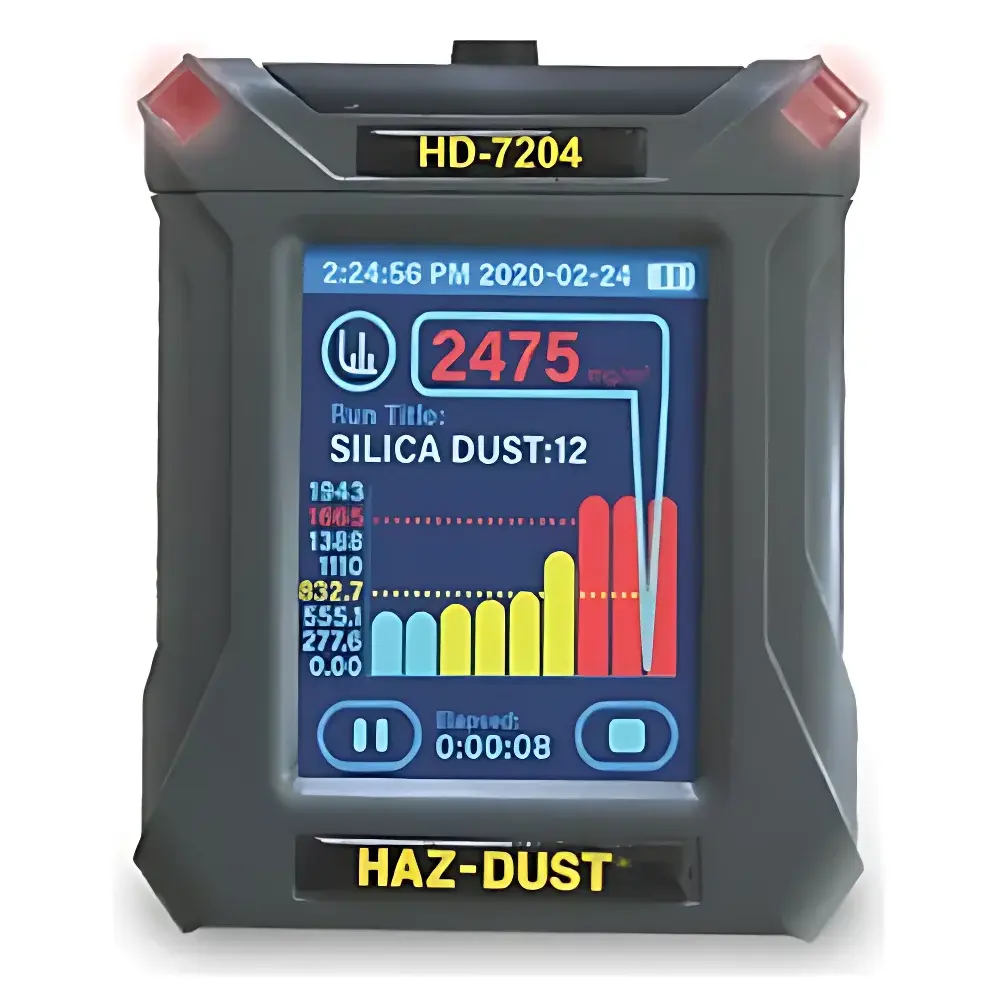
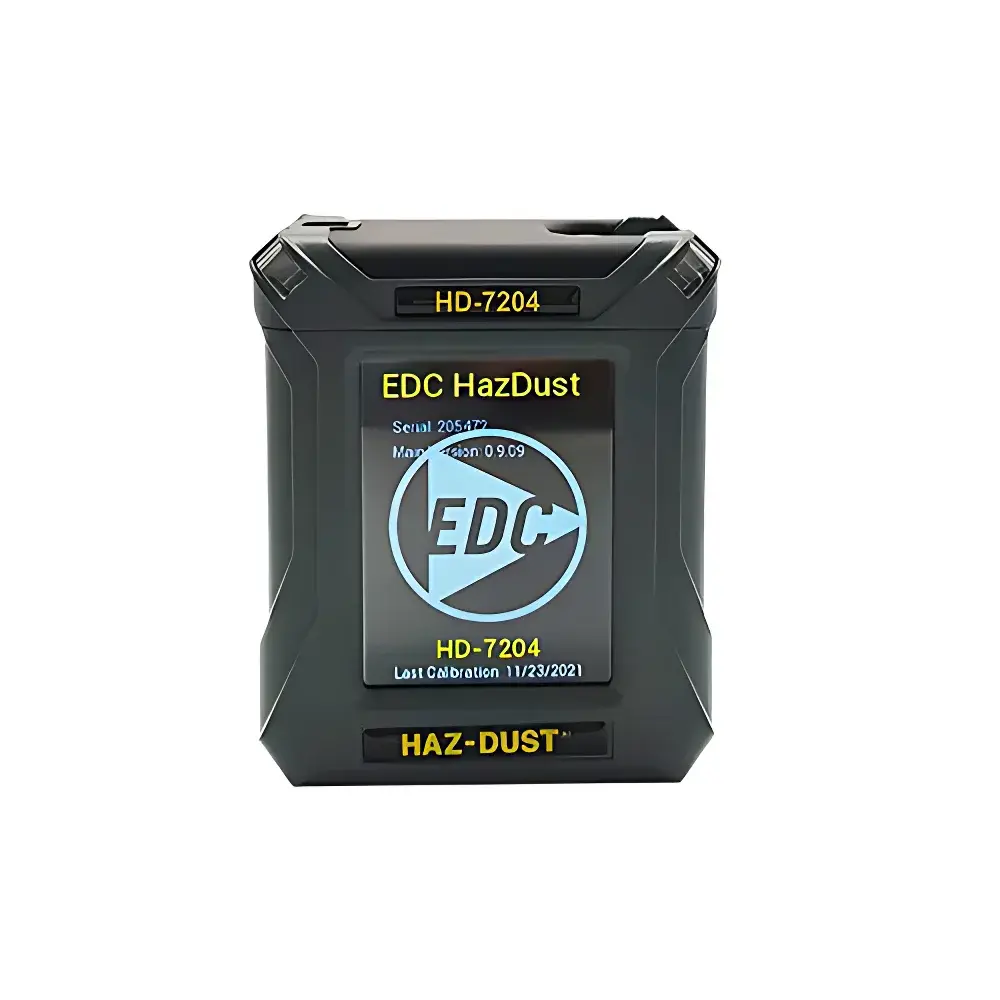
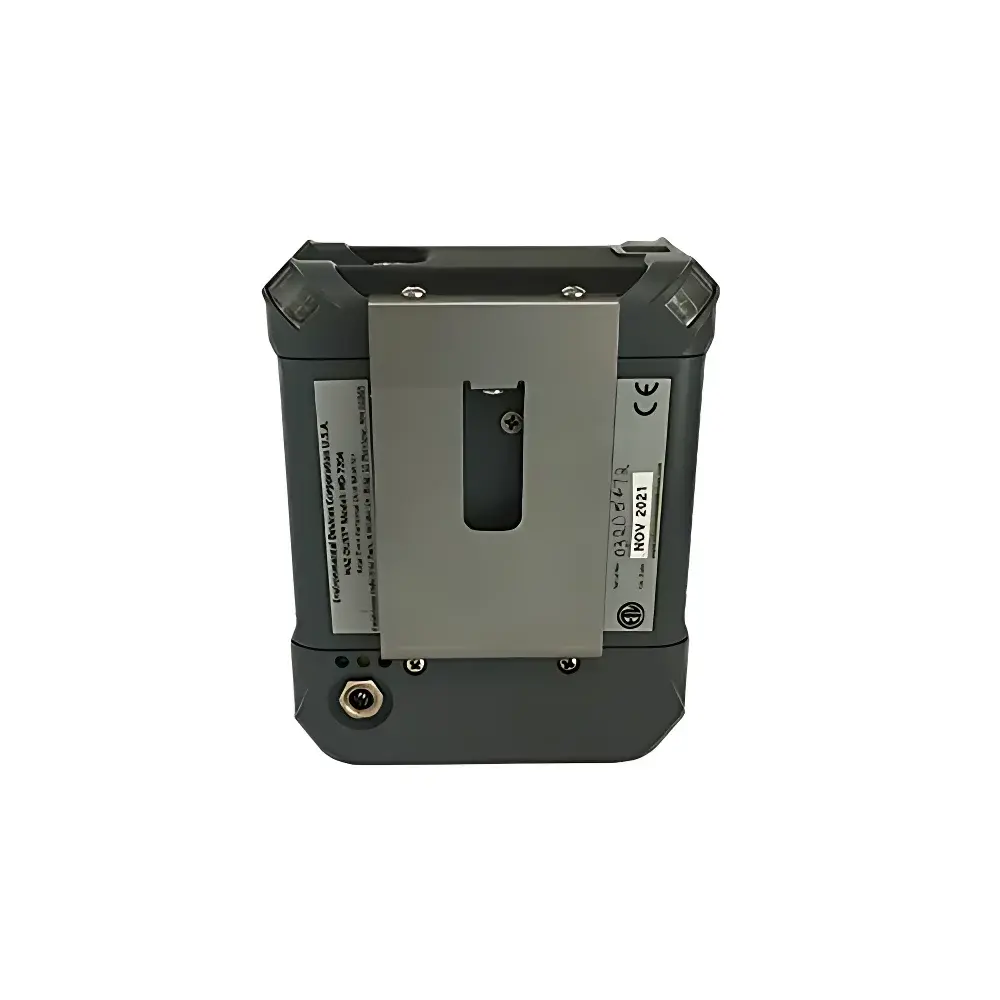
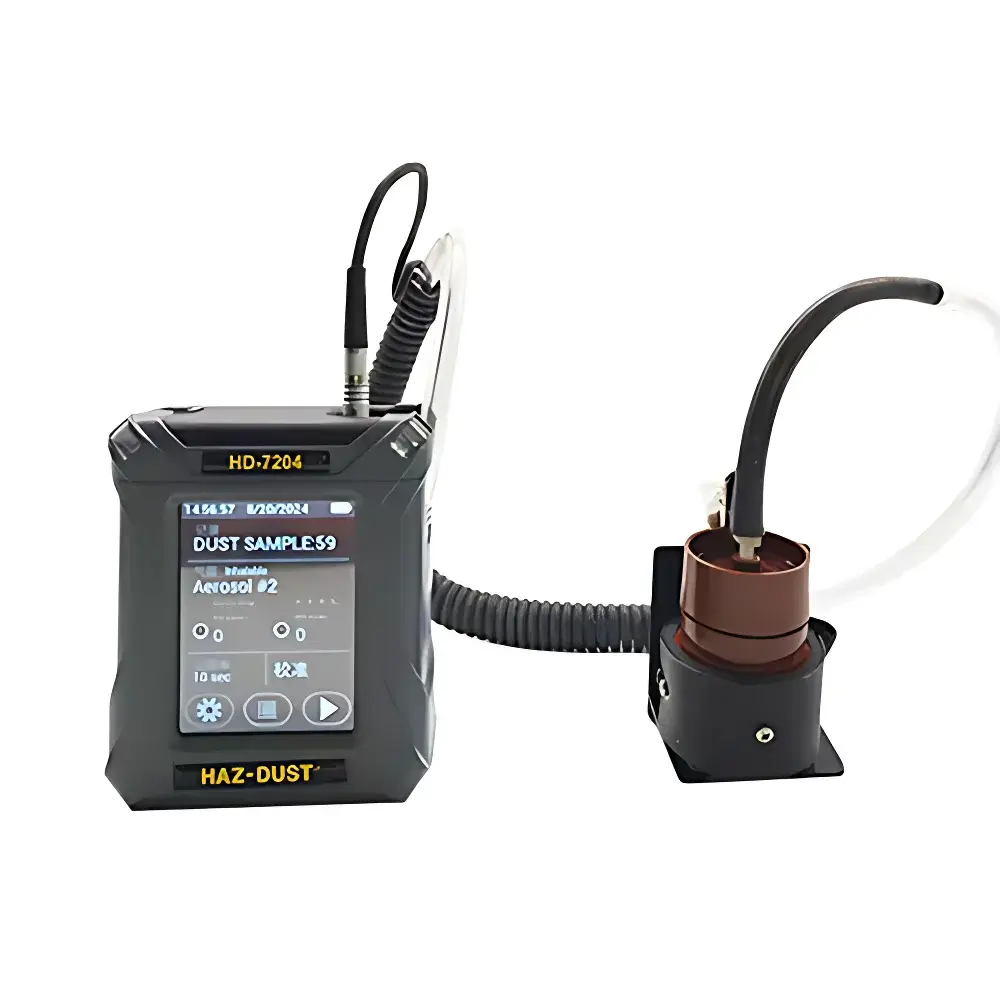
SKC HAZ-DUST 7204 Real-Time Personal Dust Monitor
| Brand | SKC |
|---|---|
| Origin | USA |
| Model | HAZ-DUST 7204 |
| Sensor Type | 90° Optical Light Scattering (880 nm) |
| Measurement Range | 0.001–500 mg/m³ (1–500,000 µg/m³) |
| Resolution | 1 µg/m³ |
| Accuracy | ±10% vs. gravimetric filter mass (SAE Fine Test Dust, ISO 12103-1 A2) |
| PM Size Coverage | 0.1–100 µm |
| Cut-Point Compatibility | IOM (2.0 L/min), GS-3 Cyclone (2.75 L/min, 4 µm), Thoracic (2.0 L/min), Chest (2.0 L/min) |
| Flow Control | 1–5 L/min, maintained within ±5% across backpressures up to 70 inH₂O |
| Display | 3.5″ 24-bit resistive color touchscreen with auto-brightness |
| Battery | Rechargeable Li-ion (7.4 V, 3350 mAh) |
| Operating Temp | 0–50 °C |
| Humidity | 0–95% RH non-condensing |
| Data Storage | 43,200 points |
| Sampling Intervals | 1, 4, 10, or 60 s |
| Compliance | CEN/ISO 7708, OSHA Silica Rule (29 CFR 1926.1153), MSHA DPM standards |
| Software | DustComm Pro (Windows 10+) |
| Certifications | CE, UL, CB, CUL, PSE, RCM |
Overview
The SKC HAZ-DUST 7204 is a portable, real-time personal dust monitor engineered for occupational hygiene professionals conducting compliance-driven aerosol exposure assessments in industrial, mining, construction, and manufacturing environments. It employs 90° optical light scattering at 880 nm — a well-established photometric principle validated against gravimetric reference methods — to deliver continuous, size-selective particulate mass concentration measurements in the respirable, thoracic, and inhalable fractions. Unlike integrative filter-based samplers requiring post-sampling lab analysis, the HAZ-DUST 7204 provides immediate feedback on airborne dust burden directly within the worker’s breathing zone, enabling dynamic exposure assessment, task-based monitoring, and rapid intervention decisions. Its design adheres to the physical sampling conventions defined by ISO 7708 and regulatory frameworks including OSHA’s respirable crystalline silica standard (29 CFR 1926.1153) and MSHA’s diesel particulate matter (DPM) guidelines. The instrument does not provide intrinsic explosion protection and is intended for use in non-hazardous (non-classified) locations only.
Key Features
- Real-time optical sensing with NIST-traceable calibration using SAE Fine Test Dust (ISO 12103-1 A2) and gravimetric reference weights
- Integrated flow-compensated pump with user-selectable flow rates (1–5 L/min), maintaining accuracy within ±5% across variable backpressure conditions
- Modular inlet compatibility: IOM inhalable sampler (2.0 L/min), GS-3 respirable cyclone (2.75 L/min, 4 µm cut-point), thoracic and chest impactors — all compliant with CEN/ISO 7708
- Optical sensor mounted within the OSHA-defined breathing zone (10–15 cm from nose/mouth), optimized for ergonomic wear and minimal interference with work activity
- 3.5″ high-contrast resistive color touchscreen with auto-brightness, supporting real-time scrolling concentration plots (1-sec and 10-sec intervals), TWA, min/max/average statistics, and configurable units (mg/m³ or µg/m³)
- Lithium-ion battery delivering >22 hours of continuous operation at 2.0 L/min with IOM inlet and no filter loading
- Compact form factor (12.1 × 8.9 × 5.7 cm; 0.51 kg) with integrated tripod mount option and wireless data transfer capability
- Audible (90 dB at 0.9 m) and visual alarms for STEL exceedance, pump failure, low battery, and flow deviation
- On-device zero stability of ±0.001 mg/m³ over 24 h (logarithmic 10-sec averaging), ensuring baseline integrity during extended shifts
Sample Compatibility & Compliance
The HAZ-DUST 7204 supports interchangeable 37 mm and 25 mm pre-weighed, pre-loaded filter cassettes — including SKC’s 37 mm “Gem” cassette for diesel particulate matter (DPM) and quartz filters rated to 1093 °C — enabling parallel photometric and gravimetric validation per ISO 8518 and ASTM D6246. Its inlet configurations meet internationally recognized aerosol fraction definitions: the IOM sampler satisfies inhalable mass criteria (ISO 7708:1995), while the GS-3 cyclone achieves respirable mass selectivity with a 50% cut-point at 4 µm under 2.75 L/min flow — aligning with OSHA’s silica rule and EU directives. The device itself carries CE, UL, CB, CUL, PSE, and RCM marks, confirming electromagnetic compatibility (EMC) and electrical safety compliance. Though not intrinsically safe or explosion-proof, its operational envelope (0–50 °C, 0–95% RH non-condensing) supports deployment in ambient industrial settings subject to GLP-aligned field protocols.
Software & Data Management
DustComm Pro software (Windows 10 or later) serves as the primary interface for configuration, calibration verification, and dataset export. It enables full audit trail generation — including timestamps, operator ID, calibration logs, alarm events, and flow validation records — supporting documentation requirements under FDA 21 CFR Part 11 (when deployed in pharmaceutical manufacturing hygiene programs) and ISO/IEC 17025-accredited laboratories. Raw time-series data (concentration, flow, battery voltage, temperature) are stored onboard (43,200 points) and exportable in CSV or Excel-compatible formats. Users may assign custom dataset names, annotate sampling contexts (e.g., “grinding – Zone B”), and generate aerosol profile reports aligned with exposure banding methodologies. Firmware updates and sensor diagnostics are managed through the same platform, ensuring long-term traceability and method consistency.
Applications
The HAZ-DUST 7204 is routinely deployed for short-duration task monitoring (e.g., abrasive blasting, concrete cutting, powder handling), longitudinal shift-level exposure profiling, and engineering control verification (e.g., local exhaust ventilation efficacy). Its responsiveness makes it suitable for identifying transient peak exposures missed by 8-hour integrated sampling — critical for assessing compliance with OSHA’s permissible exposure limits (PELs) and ACGIH TLVs®. In mining operations, it supports MSHA-mandated DPM monitoring when paired with the GS-3 cyclone and appropriate filtration. In pharmaceutical cleanrooms and battery material processing facilities, it assists in verifying containment integrity and evaluating operator exposure to nanoscale metal oxides (e.g., Ni, Co, Mn compounds) within the 0.1–100 µm aerodynamic diameter range. Its portability and battery endurance also facilitate multi-worker surveys across large facilities without reliance on external power.
FAQ
Does the HAZ-DUST 7204 require daily calibration before use?
Yes — zero calibration and flow verification must be performed prior to each sampling session using the included zero kit and calibrated flowmeter, per SKC’s recommended operating procedure and ISO 8518 Annex B guidance.
Can the instrument be used for regulatory compliance reporting?
It is designed as a screening and exposure assessment tool; final compliance determinations require concurrent gravimetric sampling per OSHA Method ID-142 or NIOSH Method 0600, with photometric data used to inform sampling strategy and identify high-risk tasks.
Is the optical sensor affected by humidity or volatile organic compounds (VOCs)?
The sensor exhibits stable performance up to 95% RH non-condensing; however, high concentrations of condensable vapors (e.g., glycol mists, solvent aerosols) may cause temporary signal drift and should be evaluated case-by-case with co-located reference sampling.
What maintenance is required between annual factory calibrations?
Users must perform routine optical window cleaning (with isopropyl alcohol and lint-free swabs), inspect inlet components for wear, verify battery health, and log all field calibrations — all documented in accordance with internal QA procedures and ISO/IEC 17025 clause 6.4.
Is DustComm Pro software validated for 21 CFR Part 11 compliance?
The software supports electronic signatures, audit trails, and role-based access control; full Part 11 validation is the responsibility of the end-user organization and must be executed per their internal computer system validation (CSV) protocol.
Related Products







