
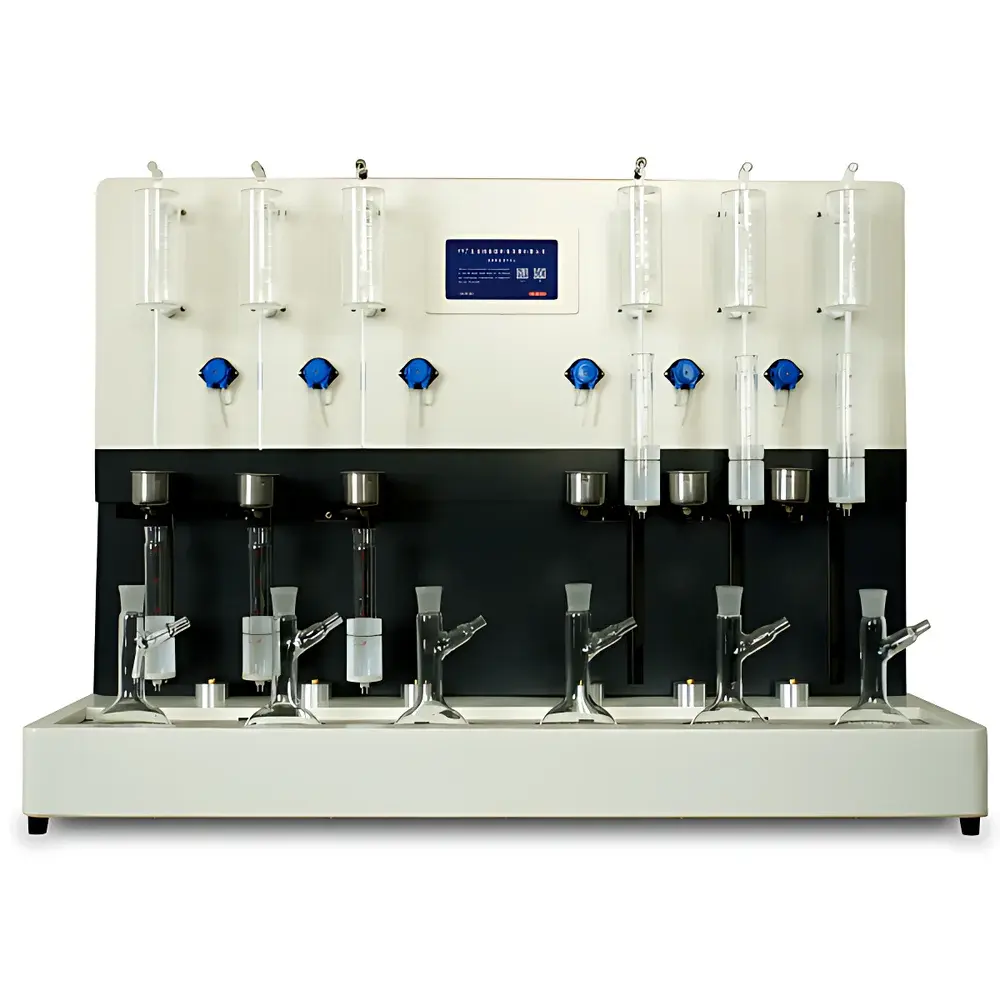
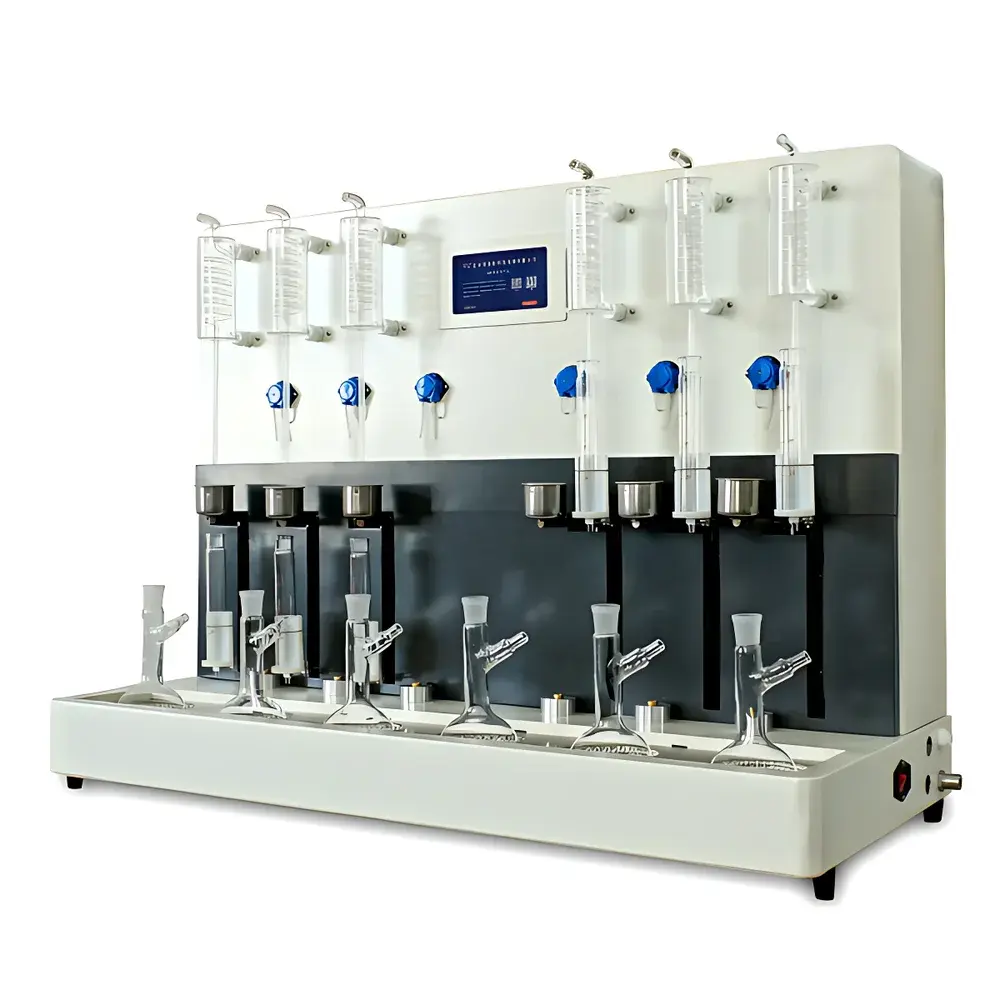
TTL TTL-QZS Sulfide Acidification Distillation and Absorption System
| Brand | TTL |
|---|---|
| Origin | Beijing, China |
| Manufacturer Type | Direct Manufacturer |
| Product Category | Domestic |
| Model | TTL-QZS |
| Instrument Type | Laboratory Benchtop System |
| Price Range | USD 7,000 – 14,000 (FOB Beijing) |
| Certifications | Chinese Utility Model Patent ZL202221875739.3 |
Overview
The TTL TTL-QZS Sulfide Acidification Distillation and Absorption System is a fully automated, benchtop laboratory instrument engineered for precise, reproducible quantification of total sulfide (H₂S, HS⁻, S²⁻) in aqueous environmental samples—including wastewater, surface water, groundwater, and sludge digester liquors. It operates on the standardized acidification-distillation-absorption principle per ISO 16301:2014, ASTM D4129–19, and EPA Method 376.1. In this process, sample matrix is acidified under inert nitrogen purge to convert all sulfide species to volatile hydrogen sulfide gas; the liberated H₂S is then selectively distilled, condensed, and quantitatively absorbed into an alkaline trapping solution (e.g., zinc acetate or NaOH). The resulting absorbate is subsequently analyzed by spectrophotometry (e.g., methylene blue method), ion chromatography, or amperometric titration—enabling trace-level detection down to 0.5 µg/L with high inter-laboratory reproducibility.
Key Features
- Simultaneous parallel processing of up to six independent samples, each with fully programmable and isolated operational parameters
- Touchscreen-driven graphical user interface (GUI) with real-time visual workflow guidance—displaying distillation status, temperature progression, volume accumulation, and system alerts
- Bowl-shaped ceramic heating element ensuring uniform thermal distribution across all reaction vessels; thermal efficiency optimized for rapid, controlled ramping from ambient to 300 °C
- Programmable distillation volume limit (≤300 mL) with automatic termination and audible/visual notification upon target volume achievement
- Dual-mode distillation control: mass-based (via integrated precision balance option) or time-based, supporting method flexibility and validation requirements
- Automated absorption tube disengagement mechanism—physically separates the absorption train from the condenser outlet at end-of-distillation to eliminate back-diffusion and prevent carryover contamination
- Self-contained condenser cleaning cycle using deionized water; no manual disassembly required, minimizing cross-sample interference and operator exposure risk
- Real-time monitoring of cooling water inlet/outlet temperatures with fail-safe shutdown if flow interruption or thermal deviation exceeds preset thresholds
- Patented mechanical architecture (Utility Model Patent ZL202221875739.3) enhancing structural integrity, thermal stability, and long-term calibration retention
Sample Compatibility & Compliance
The TTL-QZS accommodates standard 500 mL borosilicate glass digestion vessels and compatible absorption tubes (e.g., 50 mL volumetric flasks or gas-washing bottles). It supports matrices with suspended solids ≤2% w/v and chloride concentrations up to 10,000 mg/L without pre-filtration—validated per ISO 5667-3:2018 for sampling preservation and handling. All wetted components are chemically resistant (PTFE, borosilicate glass, PEEK), ensuring compatibility with acidic reagents (e.g., phosphoric or hydrochloric acid) and oxidative preservatives (e.g., zinc acetate + NaOH). The system meets GLP documentation requirements via timestamped event logging and supports audit-ready data export for regulatory submissions aligned with EPA, EU Water Framework Directive (2000/60/EC), and China’s HJ 1226–2021 standard for sulfide determination.
Software & Data Management
The embedded firmware records complete run metadata—including setpoints, actual temperatures, distillation volumes/times, alarm events, and system diagnostics—with automatic UTC timestamping. Data export is supported via USB 2.0 to CSV or PDF report formats. Optional PC-based software enables remote scheduling, multi-instrument fleet monitoring, and integration with LIMS platforms via configurable API endpoints. Audit trail functionality complies with FDA 21 CFR Part 11 requirements when paired with user authentication and electronic signature modules (available as add-on configuration).
Applications
- Regulatory compliance testing for municipal and industrial wastewater discharge permits (e.g., NPDES, GB 8978–1996)
- Process monitoring in anaerobic digesters, biogas scrubbing units, and sulfate-reducing bacterial activity studies
- Environmental impact assessments of mining effluents and sediment porewater
- Method validation and reference material analysis in certified environmental testing laboratories
- Research applications in aquatic biogeochemistry, sulfur cycling, and redox-sensitive contaminant speciation
FAQ
What standards does the TTL-QZS comply with for sulfide analysis?
It is designed and validated for ISO 16301:2014, ASTM D4129–19, EPA Method 376.1, and China’s HJ 1226–2021.
Can the system handle high-salinity or turbid samples?
Yes—tested with chloride up to 10,000 mg/L and suspended solids ≤2% w/v; filtration is optional but not mandatory for routine use.
Is the condenser cleaning cycle fully automated?
Yes—the system initiates a timed rinse with deionized water post-run; no disassembly or manual intervention is required.
Does the instrument support electronic recordkeeping for GLP/GMP environments?
Yes—full event logging, user access control, and audit-trail-capable data export are included; 21 CFR Part 11 compliance is achievable with optional software licensing.
What is the typical time to boil for a 250 mL sample at 200 °C setpoint?
Approximately 8–10 minutes from ambient temperature, depending on initial sample temperature and vessel fill level—consistent across all six channels due to uniform heating design.
Related Products







