
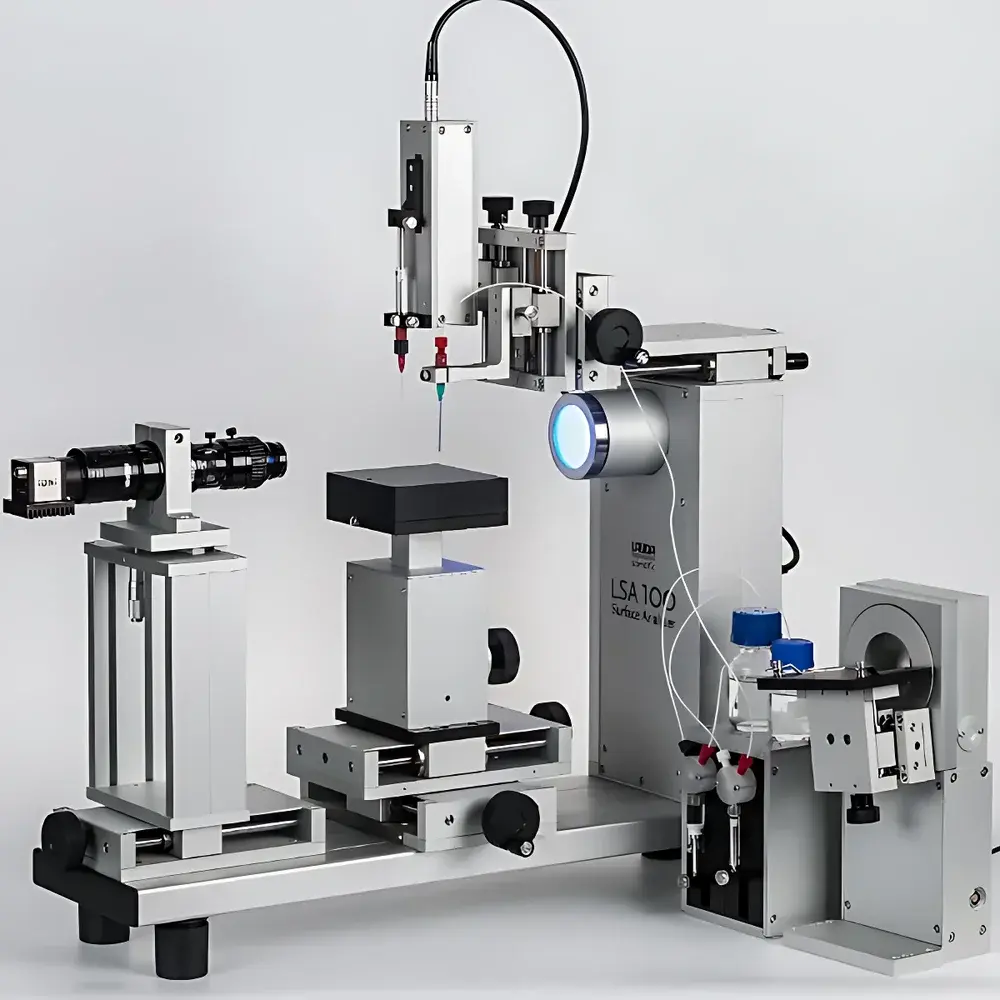
LAUDA Scientific LSA100OEDM Optical Expansion Rheometer (Video-Based Contact Angle Analyzer)
| Brand | LAUDA Scientific |
|---|---|
| Origin | Germany |
| Model | LSA100OEDM |
| Instrument Type | Benchtop Video Optical Contact Angle & Interfacial Rheometer |
| Contact Angle Range | 0–180° |
| Contact Angle Accuracy | ±0.1° |
| Contact Angle Resolution | 0.01° |
| Interfacial Tension Range | 0.001–2000 mN/m |
| Interfacial Tension Resolution | 0.01 mN/m |
| Sample Stage Dimensions | 100 × 100 mm |
| Maximum Sample Size | ∞ × 290 × 76 mm (L×W×H) |
| Stage Load Capacity | 12 kg |
| Zoom Lens | 6.5× Motorized Zoom Optical System |
| Camera | 1280 × 960 px, 54 fps @ full resolution |
| Field of View | 1.1 × 0.8 to 9.1 × 6.9 mm |
| Vertical Oscillation Unit | ADDU-30XCN (Frequency Range: 0.0005–10 Hz |
| Resolution | 1 ms |
| Max Amplitude | 20 µL |
| Volume/Area Compensation | Active feedback-controlled compensation for evaporation/thermal drift |
| Software | SurfaceMeter v5.x — supports real-time dilatational modulus calculation, multi-frequency sweeps, relaxation analysis, contour-based video logging, and GLP-compliant audit trail |
Overview
The LAUDA Scientific LSA100OEDM is a high-precision, benchtop optical expansion rheometer engineered for quantitative dilatational interfacial rheology and comprehensive surface/interface characterization. Unlike conventional contact angle analyzers, the LSA100OEDM integrates a motorized vertical oscillation unit (ADDU-30XCN) with real-time image acquisition and advanced interfacial shape analysis to measure dynamic interfacial responses under controlled sinusoidal or stepwise perturbations. Its core measurement principle relies on the Young–Laplace equation inversion applied to high-fidelity pendant drop or bubble profiles, enabling simultaneous quantification of interfacial tension (γ), interfacial area (A), and their time-resolved derivatives. This allows direct computation of the dilatational modulus (E = dγ/d ln A) and complex viscoelastic parameters (E′, E″) without post-acquisition video replay—eliminating latency and operator-dependent frame selection bias. Designed for long-term stability, the system maintains constant dV/V during oscillation via closed-loop volume compensation, ensuring measurement integrity over durations exceeding 8 hours—a critical capability for studying slow-kinetic surfactant adsorption and film relaxation.
Key Features
- Real-time dilatational modulus calculation at ≥50 Hz sampling rate—no reliance on offline video analysis
- Dual-mode oscillation control: fixed-frequency (0.0005–10 Hz) and automated frequency-sweep protocols for storage/loss modulus profiling
- Active interfacial area and volume compensation to suppress artifacts from evaporation, thermal drift, or syringe compliance
- Contour-based video logging—records only drop/bubble boundary coordinates instead of full-frame video, reducing storage demand by >90%
- Modular template-driven workflow in SurfaceMeter software: preconfigured methods for oscillation rheology, relaxation kinetics, CMC determination, and fiber contact angle
- High-stability pneumatic bubble generation with leak-compensated volume tracking for reliable gas–liquid interface studies
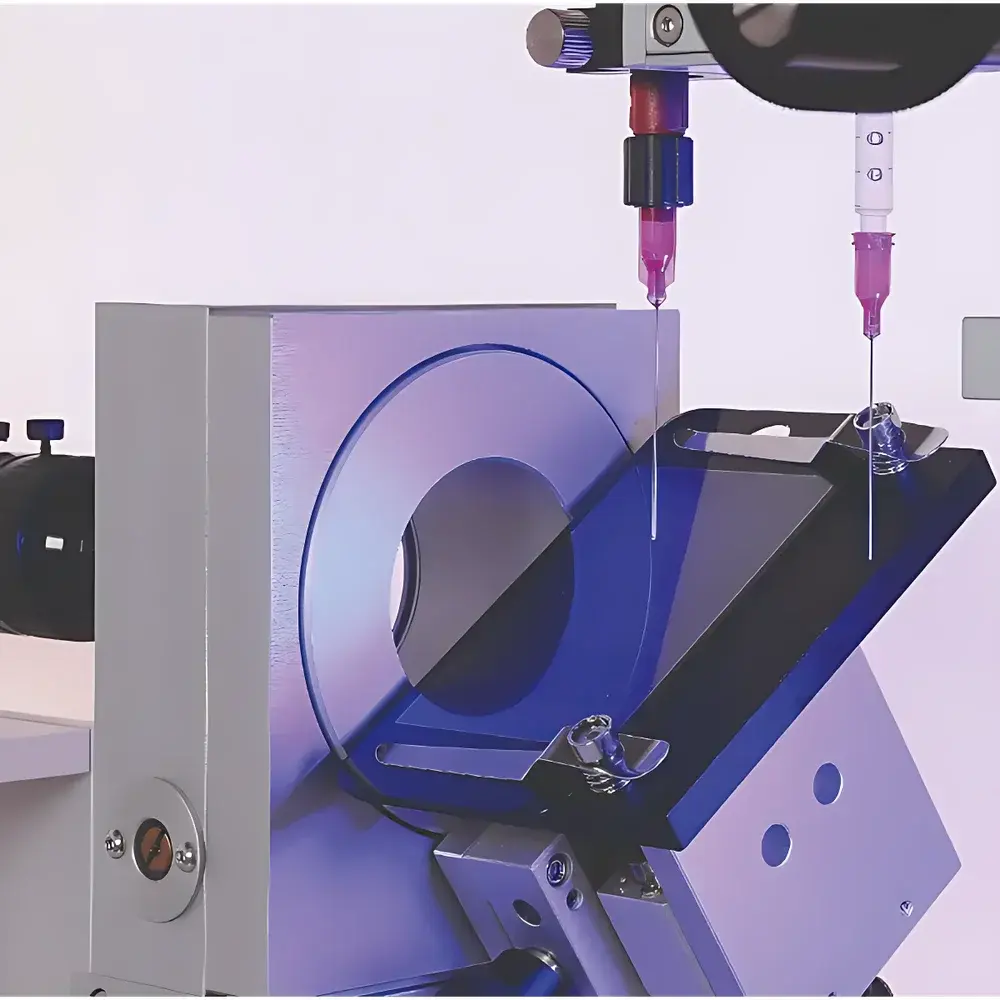
- X/Y/Z precision motion stages (100/100/50 mm travel) with micrometer-level repeatability for multi-point surface energy mapping
Sample Compatibility & Compliance
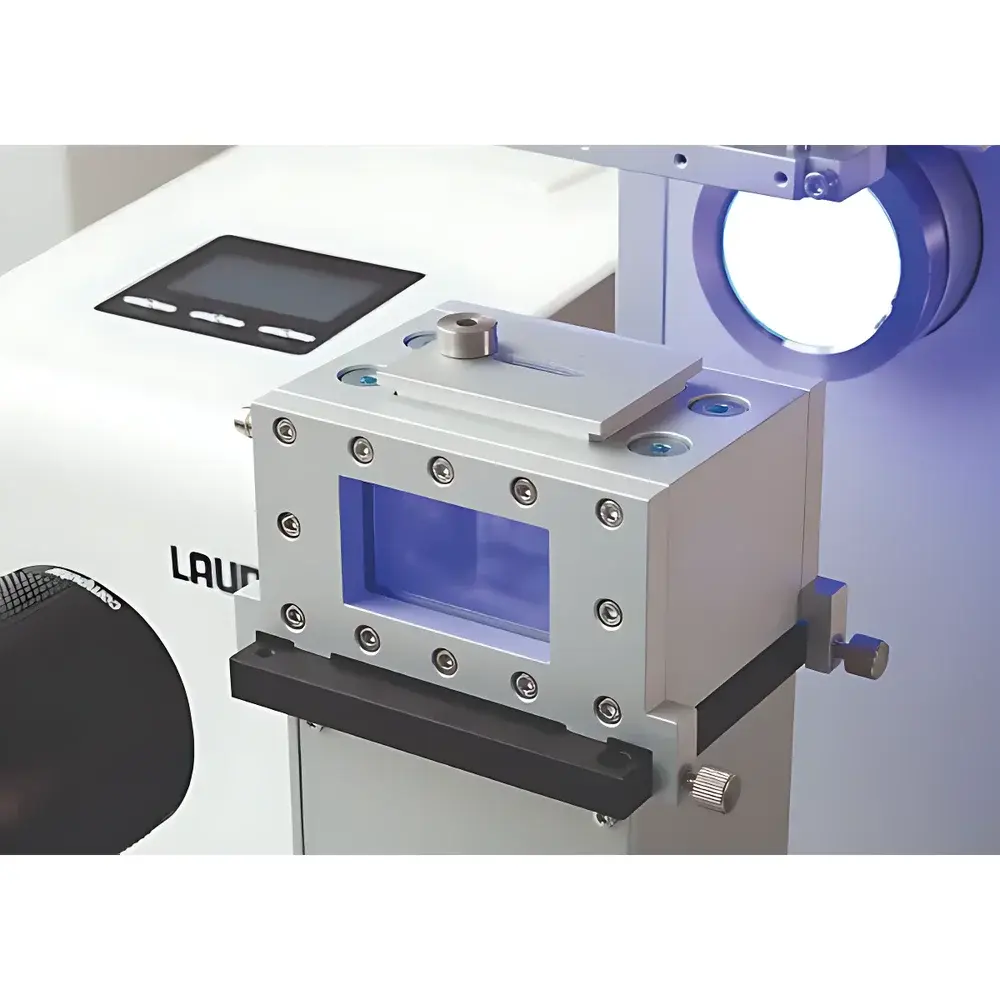
The LSA100OEDM accommodates diverse sample geometries—including flat substrates, fibers, powders, porous membranes, and liquid films—via optional modules (e.g., fiber holder, powder dispersion stage, tilting platform). Its non-contact LED illumination and low-heat output prevent thermal distortion of sensitive biological or polymeric interfaces. All measurements comply with ASTM D7490 (contact angle), ISO 19403-2/-4 (surface free energy), and ISO/IEC 17025 traceability requirements when operated with calibrated reference liquids (e.g., water, diiodomethane, ethylene glycol). SurfaceMeter software includes 21 CFR Part 11–compliant user access controls, electronic signatures, and immutable audit trails—meeting GLP/GMP documentation standards for regulated pharmaceutical and cosmetic R&D environments.
Software & Data Management
SurfaceMeter v5.x provides a unified environment for instrument control, real-time visualization, and advanced data reduction. The software implements iterative Young–Laplace fitting with sub-pixel edge detection, automatic baseline correction, and statistical outlier rejection across hundreds of consecutive frames. Raw interfacial tension and area trajectories are exported in CSV/HDF5 formats with metadata (timestamp, temperature, oscillation parameters). Built-in curve-fitting engines support Maxwell, Voigt, and Kelvin–Voigt models for viscoelastic parameter extraction. All processing steps—including contour selection, baseline definition, and modulus integration—are fully scriptable via Python API for integration into automated QA/QC pipelines.
Applications
- Surfactant formulation development: Quantifying time- and frequency-dependent dilatational elasticity to predict foam stability, emulsion coalescence, and spray droplet retention
- Biological interface studies: Characterizing lung surfactant monolayer dynamics, protein adsorption kinetics, and liposome membrane rigidity
- Colloidal stabilization mechanisms: Correlating interfacial rheology with particle wettability and Pickering emulsion lifetime
- CMC determination: Automated titration with real-time γ monitoring and second-derivative inflection point detection
- Fiber–liquid interactions: Single-filament contact angle analysis using Drop-on-Filament and Liquid Bridge methods per ISO 20417
- Temperature-dependent interfacial behavior: Integration with Peltier or circulating bath modules for Arrhenius modeling of activation energies
FAQ
What distinguishes dilatational rheology from shear rheology at fluid interfaces?
Dilatational rheology probes interfacial response to area expansion/compression—governed by surfactant adsorption/desorption kinetics and molecular packing—whereas shear rheology measures resistance to lateral deformation. The LSA100OEDM uniquely isolates dilatational behavior via controlled pendant drop/bubble oscillation.
Can the system measure both liquid–air and liquid–liquid interfaces?
Yes—by selecting appropriate density-matched subphase liquids and using the Young–Laplace or Liquid Bridge method, the LSA100OEDM quantifies interfacial tension and rheology across immiscible liquid pairs (e.g., oil–water).
Is the ADDU-30XCN oscillation unit compatible with third-party software?
The unit communicates via TTL and RS-232 protocols; OEM drivers and LabVIEW-compatible DLLs are provided for custom automation frameworks.
How does volume compensation improve measurement reproducibility?
By dynamically adjusting syringe displacement to maintain constant dV/V during oscillation, the system decouples interfacial response from evaporative loss or thermal expansion—reducing standard deviation in E′ measurements by up to 40% over 6-hour experiments.
What validation protocols are recommended for routine operation?
Daily verification using ultrapure water (γ = 72.75 mN/m at 20°C) and polystyrene reference slides (contact angle = 90.2° ± 0.5°); annual calibration against NIST-traceable tensiometers and goniometer standards.



