
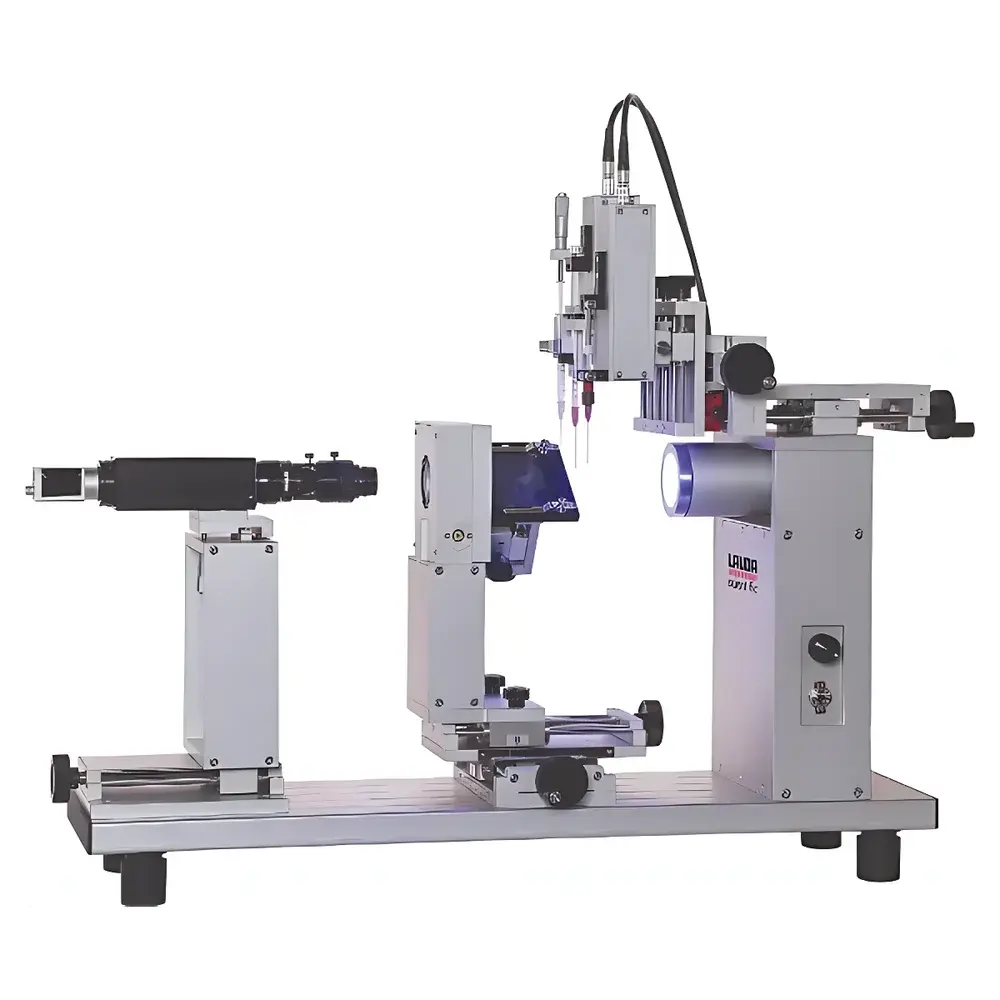
LAUDA Scientific LSA 200 Dynamic Contact Angle Analyzer
| Brand | LAUDA Scientific |
|---|---|
| Origin | Germany |
| Model | LSA 200 |
| Instrument Type | Benchtop Laboratory System |
| Contact Angle Range | 0–180° |
| Contact Angle Accuracy | ±0.1° |
| Contact Angle Resolution | 0.01° |
| Surface/Interfacial Tension Range | 0.001–2000 mN/m |
| Surface/Interfacial Tension Resolution | 0.01 mN/m |
| Sample Stage Dimensions | 100 × 100 mm |
| Maximum Sample Size (L×W×H) | ∞ × 240 × 76 mm |
| Sample Stage Load Capacity | 12 kg |
| Imaging Magnification | 6.5× Zoom Lens |
| Video Capture | USB 3.0 High-Speed Camera (up to 3300 fps, 1920 × 1200 px) |
| Light Source | Monochromatic Uniform LED (Software-Adjustable Intensity) |
Overview
The LAUDA Scientific LSA 200 Dynamic Contact Angle Analyzer is a precision-engineered benchtop instrument designed for quantitative characterization of solid–liquid and liquid–liquid interfacial phenomena. Based on high-resolution optical tensiometry and automated image analysis, the system implements three standardized dynamic contact angle measurement methodologies—tilt-stage, centrifugal rotation, and sessile drop volume variation (addition/removal)—to determine advancing, receding, and rolling angles with traceable metrological integrity. Coupled with pendant and sessile drop analysis, it enables full surface free energy decomposition (e.g., via Owens–Wendt, Fowkes, or van Oss–Chaudhury–Good models), interfacial tension quantification across immiscible phases, and automated critical micelle concentration (CMC) determination. Its modular architecture supports rigorous compliance with ISO 19403 (Contact angle measurement — Part 1–4), ASTM D7334 (Surface wettability of coatings), and GLP-aligned data acquisition workflows.
Key Features
- Triple-axis motorized sample stage (X/Y/Z) with 100/100/50 mm travel range and 12 kg load capacity, enabling precise positioning of large or irregular specimens
- Dedicated X-axis video focusing stage with 100 mm fine-adjustment travel for optimal optical alignment independent of sample height
- 6.5× zoom lens paired with a USB 3.0 high-speed camera (1920 × 1200 resolution, up to 3300 fps) for sub-millisecond droplet shape capture during dynamic events
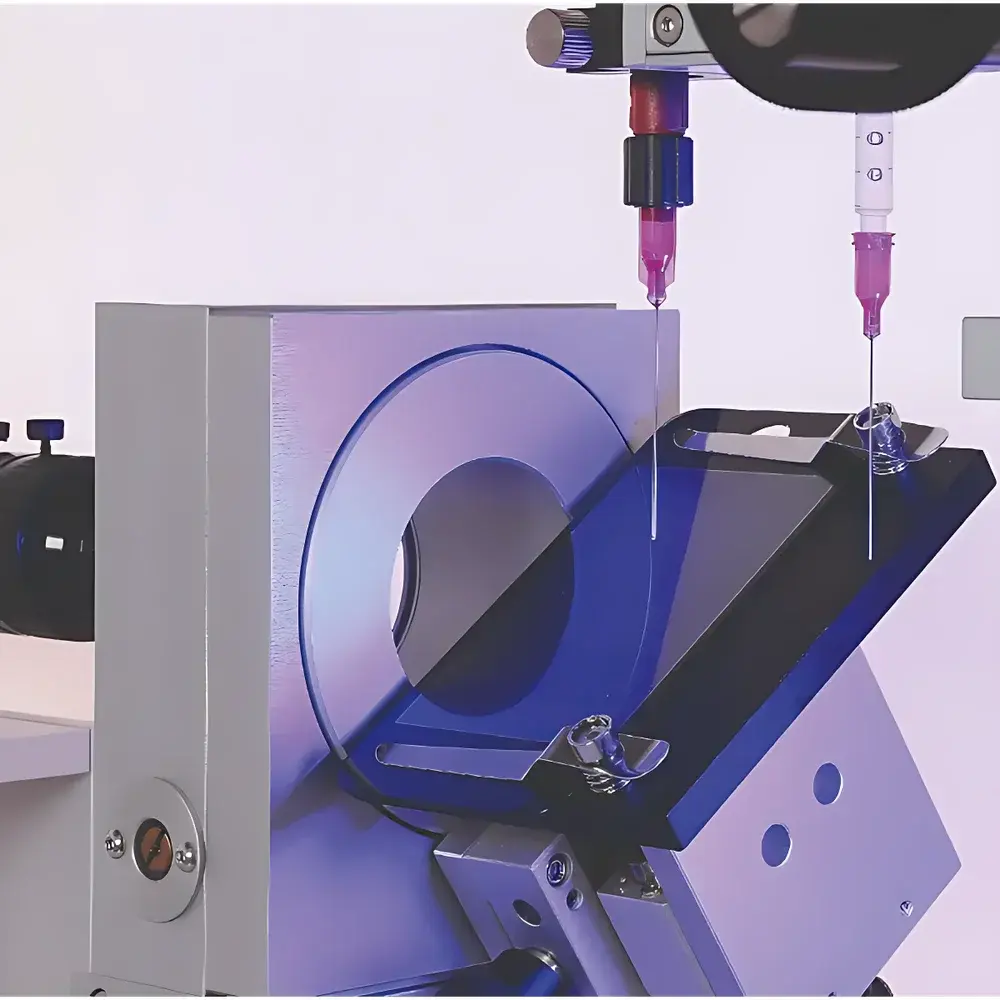
- Automated dispensing unit with closed-loop volume control (response time < 20 ms; volume range: 10–96% of syringe capacity), minimizing needle-induced distortion in add–remove measurements
- Monochromatic, uniform LED illumination with software-controlled intensity ensures consistent contrast and eliminates thermal drift effects on droplet morphology
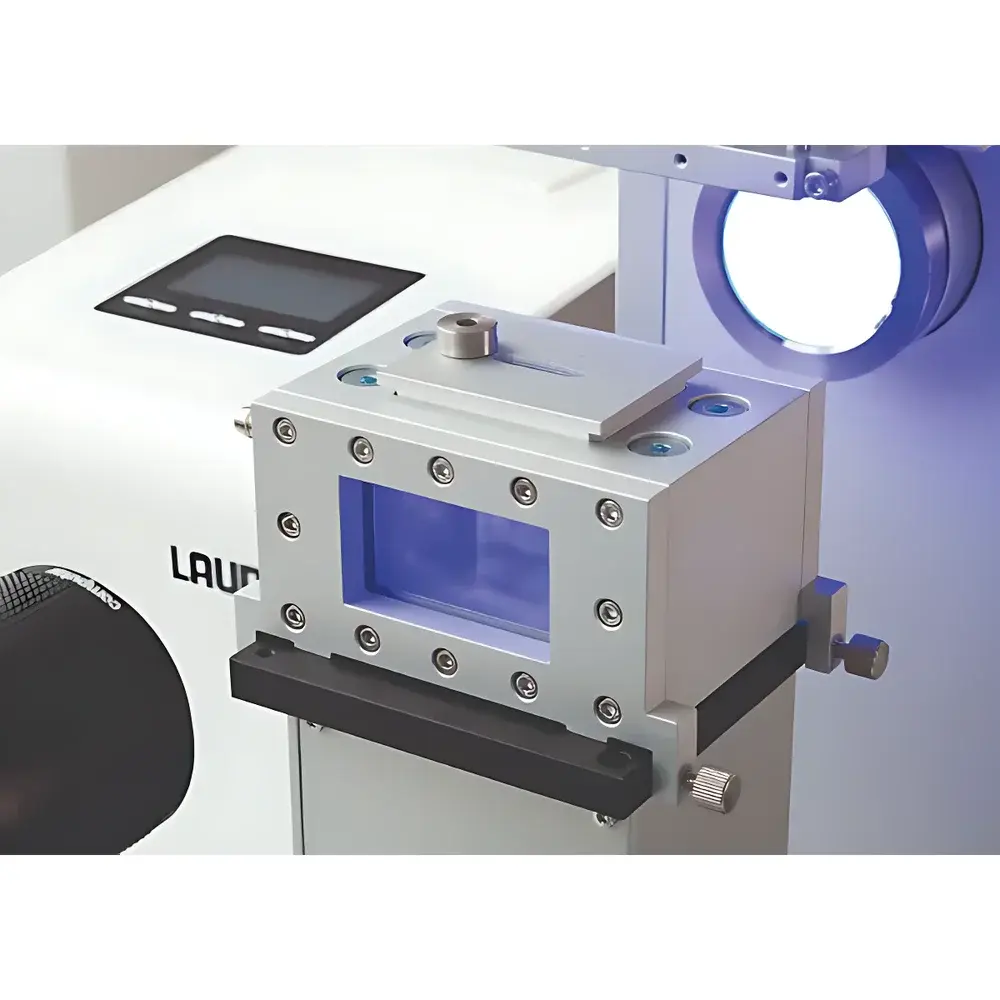
- Modular expansion capability including Washburn capillary rise module, vertical adhesion force stage, rotating horizontal retention stage, non-contact dispensing, temperature-controlled environmental chamber (−10 °C to +120 °C), dual-droplet injection, top-view imaging, oscillating drop interfacial rheology, and single-fiber contact angle analysis
Sample Compatibility & Compliance
The LSA 200 accommodates samples up to ∞ × 240 × 76 mm (L × W × H), supporting macroscopic substrates such as coated metal panels, polymer films, textile swatches, porous membranes, and functionalized ceramics. Its open-stage design permits integration with external environmental controls (humidity, gas atmosphere) and electrochemical cells. All measurement routines adhere to internationally recognized standards: ISO 19403-1:2017 (principles), ISO 19403-2:2017 (static contact angle), ISO 19403-3:2017 (dynamic contact angle), and ISO 19403-4:2017 (surface free energy). Data audit trails, user access levels, and electronic signature support align with FDA 21 CFR Part 11 requirements when configured with optional validation packages.
Software & Data Management
SurfaceMeter™ v6.x professional software provides integrated control, real-time visualization, and automated analysis. It features algorithmic edge detection optimized for low-contrast interfaces, multi-parameter curve fitting (Young–Laplace, circle, ellipse, polynomial), batch processing for repetitive CMC or aging studies, and export of raw image sequences with embedded metadata (timestamp, stage coordinates, dispensing parameters). Measurement reports include traceable uncertainty estimates per ISO/IEC 17025 guidelines. Raw data files are stored in vendor-neutral TIFF and CSV formats, ensuring long-term archival compatibility and third-party analysis interoperability.
Applications
- Surface energy mapping of plasma-treated polymers for adhesive bonding optimization
- Dynamic wettability assessment of hydrophobic/hydrophilic coatings under simulated rain or condensation cycles
- Quantitative evaluation of surfactant adsorption kinetics at oil–water interfaces using oscillating drop rheology
- CMC determination for novel biosurfactants under varying pH and ionic strength conditions
- Washburn analysis of powder compacts and porous scaffolds for pharmaceutical tablet formulation
- Interfacial stability testing of emulsions and Pickering systems in food and cosmetic R&D
- Single-fiber contact angle characterization for textile moisture management performance validation
FAQ
What dynamic contact angle methods does the LSA 200 support?
It implements tilt-stage (rolling angle), centrifugal rotation (retention force), and sessile drop volume variation (advancing/receding angle) methods—each compliant with ISO 19403-3.
Can the system measure ultra-low contact angles (<5°) on superhydrophilic surfaces?
Yes—via top-view imaging module (optional) combined with advanced edge detection algorithms calibrated for high-curvature, near-flat droplets.
Is the software compliant with 21 CFR Part 11 for regulated environments?
Full electronic signature, audit trail, and role-based access control are available upon installation of the validated software package and associated documentation.
What is the minimum measurable interfacial tension?
0.001 mN/m, validated using standard n-decane/water and silicone oil/water systems per ISO 1409.
Does the LSA 200 support temperature-controlled measurements?
Yes—via optional Peltier-based stage or environmental chamber modules, covering −10 °C to +120 °C with ±0.1 °C stability.



