
LAUDA Scientific LSA60G Video-Based Optical Contact Angle Analyzer
| Brand | LAUDA Scientific |
|---|---|
| Origin | Germany |
| Model | LSA60G |
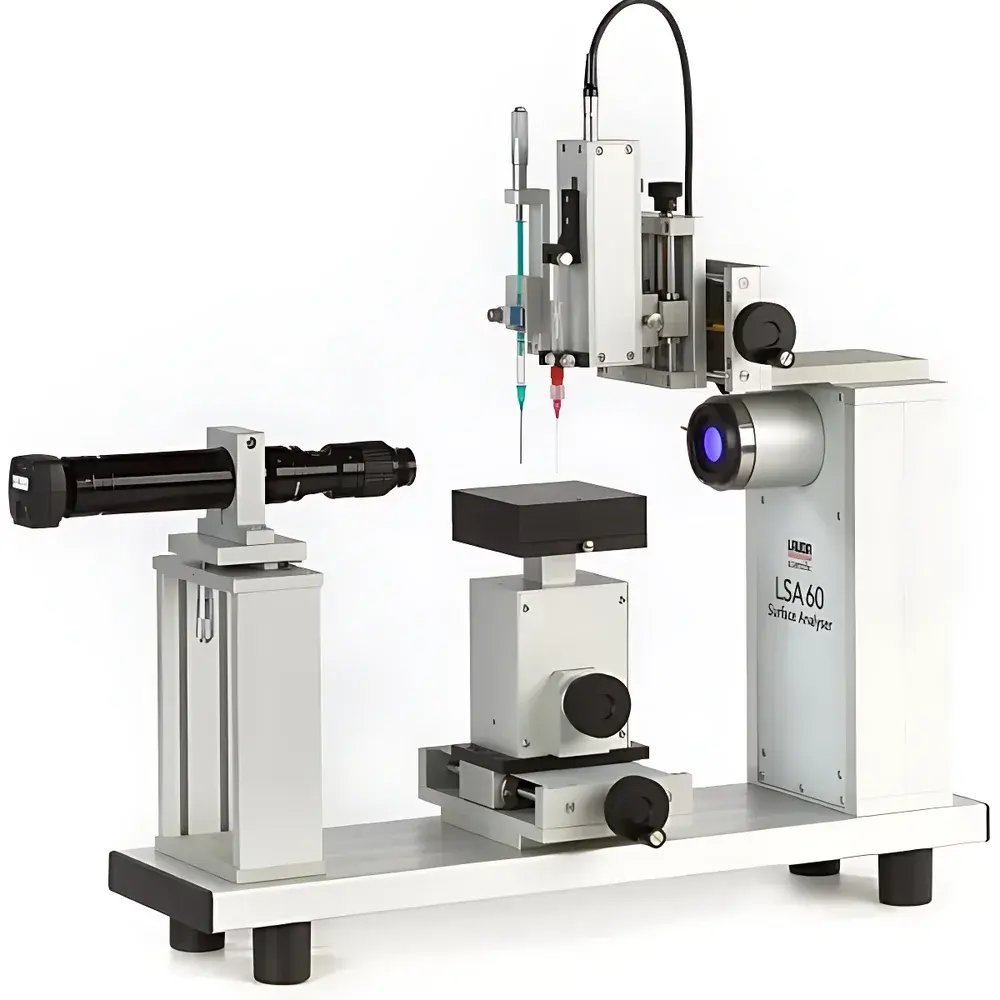
| Instrument Type | Benchtop Video Optical Contact Angle Analyzer |
| Contact Angle Range | 0–180° |
| Accuracy | ±0.1° |
| Resolution | 0.01° |
| Sample Stage Dimensions | 100 × 100 mm |
| Max. Sample Load | 12 kg |
| Max. Sample Dimensions | ∞ × 240 × 76 mm (L × W × H) |
| Lens | 1.3× Zoom Optical Lens |
| Image Resolution | 752 × 480 pixels |
| Frame Rate | 60 fps @ 752 × 480 |
| Field of View | 8.5 × 5.3 to 10.5 × 6.6 mm |
| Light Source | Monochromatic, Uniform LED Cold Light (Manual & Software-Adjustable Intensity) |
| Power Supply | 110/240 V, 50/60 Hz, 90 W |
| Base Dimensions | 600 × 160 × 517 mm (L × W × H) |
| Weight | 15 kg |
Overview
The LAUDA Scientific LSA60G is a benchtop video-based optical contact angle analyzer engineered for precision interfacial characterization in academic research laboratories, quality control environments, and industrial R&D settings. It operates on the principle of sessile drop analysis—capturing high-contrast side-view images of liquid droplets deposited on solid substrates and applying advanced edge-detection algorithms to determine the tangent angle at the three-phase boundary (solid–liquid–vapor). This non-invasive, static measurement method enables quantitative evaluation of surface wettability, hydrophobicity/hydrophilicity transitions, and surface heterogeneity. Designed with modularity and long-term operational stability in mind, the LSA60G integrates German-engineered optics, thermally stable mechanical architecture, and ISO-compliant calibration traceability—ensuring reproducible results across repeated measurements and multi-user workflows.
Key Features
- High-precision contact angle measurement with ±0.1° accuracy and 0.01° resolution, validated per ASTM D7334 and ISO 19403-2 standards
- 1.3× zoom optical lens with uniform monochromatic LED illumination, delivering consistent contrast and minimal chromatic aberration across full field-of-view (8.5 × 5.3 to 10.5 × 6.6 mm)
- Benchtop footprint (600 × 160 × 517 mm) optimized for space-constrained labs while supporting oversized samples up to ∞ × 240 × 76 mm (L × W × H)
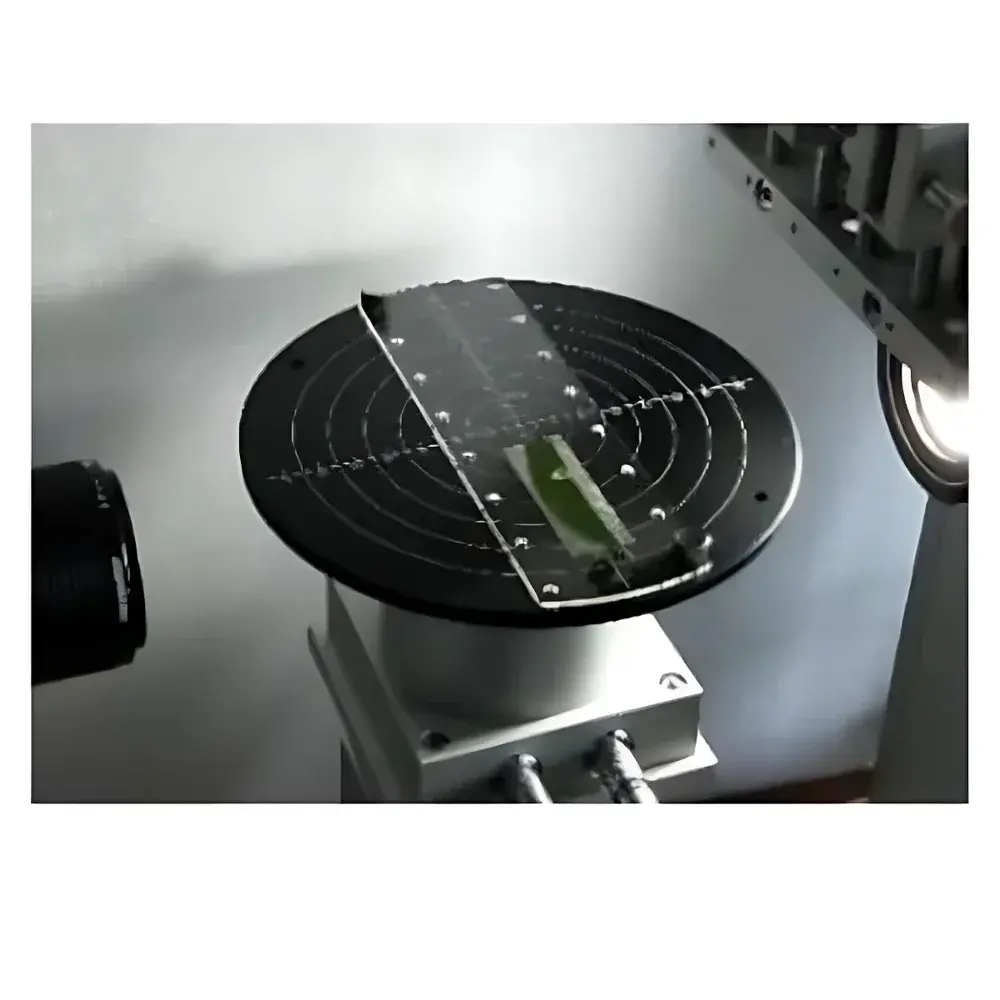
- Robust 100 × 100 mm motorized or manual sample stage with 12 kg load capacity, compatible with standard petri dishes, wafers, coated foils, and irregularly shaped specimens
- Real-time image acquisition at 60 fps (752 × 480 pixels), enabling dynamic analysis of absorption, spreading, and evaporation kinetics
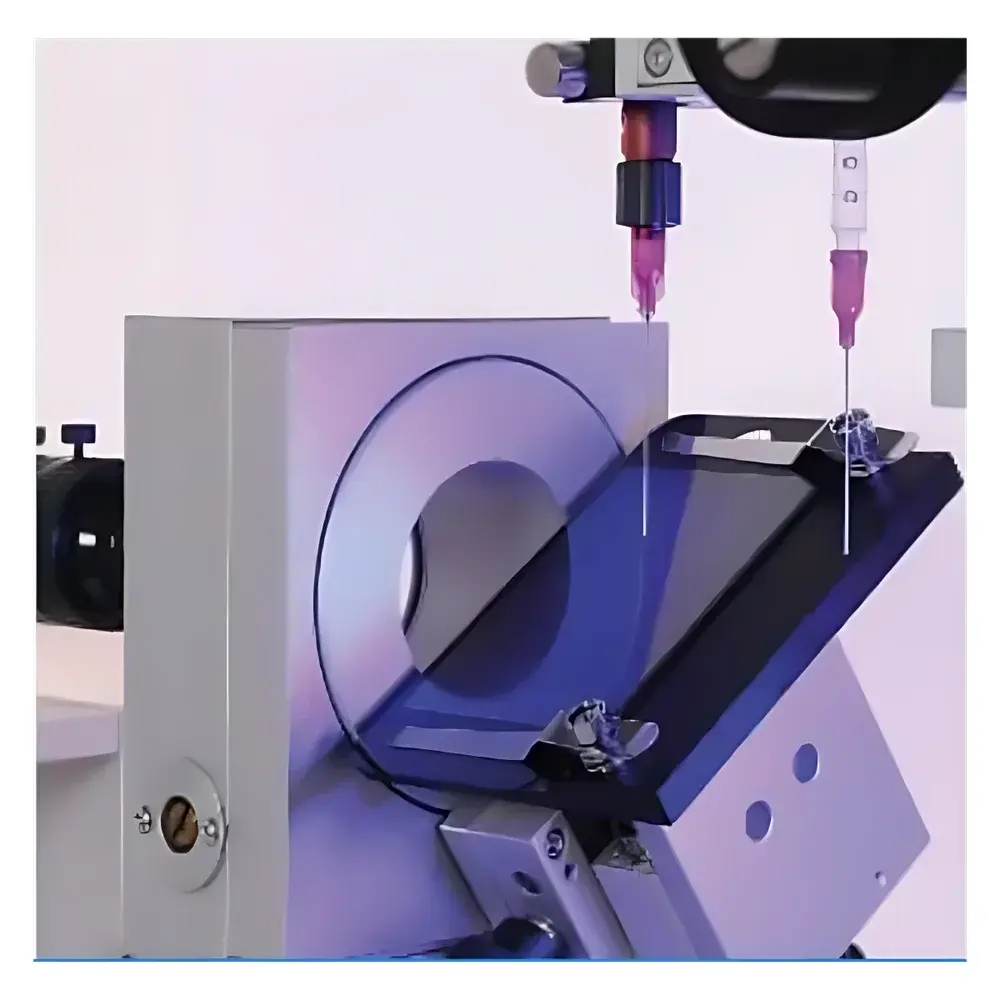
- Expandable platform: Optional upgrades include 6.5× zoom lens, high-speed camera (≥1000 fps), automated dispensing unit, and temperature-controlled stage (−20 to +80 °C)
Sample Compatibility & Compliance
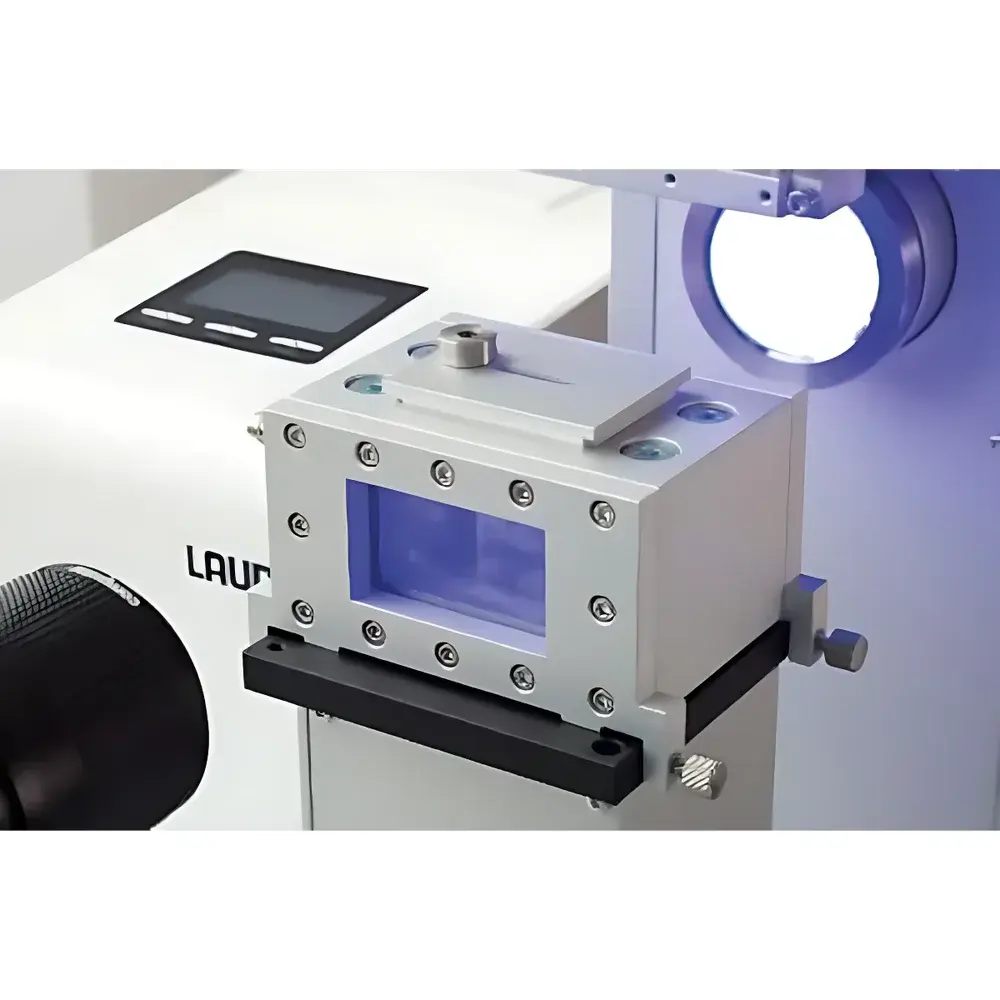
The LSA60G accommodates a broad spectrum of solid substrates—including polymers, metals, ceramics, thin films, textiles, biomaterials, and functional coatings—without requiring vacuum or conductive treatment. Its open-stage design permits direct integration with environmental chambers, humidity controllers, or gloveboxes for controlled-atmosphere measurements (e.g., RH-dependent contact angle hysteresis). All hardware components comply with CE, RoHS, and IEC 61000-6-3 electromagnetic compatibility directives. Measurement protocols align with GLP documentation requirements, and raw image data, metadata, and analysis logs are stored in vendor-neutral formats (TIFF, CSV) to support audit readiness under FDA 21 CFR Part 11 and ISO/IEC 17025 frameworks.
Software & Data Management
Operating on LAUDA’s SCA20 software suite, the LSA60G provides intuitive workflow-driven operation—from automated droplet placement detection to multi-point contact angle mapping and Owens–Wendt surface energy decomposition. The software supports batch processing, statistical reporting (mean, SD, CV%), and export to Excel, MATLAB, or Python-compatible arrays. All analysis parameters (baseline selection method, droplet volume, edge-fitting algorithm) are fully configurable and logged with timestamped audit trails. Raw video files retain embedded EXIF metadata (exposure time, gain, lens zoom position), ensuring full traceability from acquisition to final report generation.
Applications
- Quantification of surface free energy (SFE) of packaging films, medical device coatings, and anti-fouling surfaces using geometric, harmonic mean, or van Oss–Chaudhury–Good models
- Evaluation of plasma, corona, or chemical surface activation efficacy prior to adhesive bonding or printing
- Stability assessment of hydrophobic/superhydrophobic coatings under thermal cycling or UV exposure
- Characterization of porous media wettability for enhanced oil recovery (EOR) and filtration membrane development
- Quality assurance of printed electronics substrates and inkjet-printed functional layers
- Regulatory submission support for ISO 10993-5 cytotoxicity screening where surface hydrophilicity correlates with biocompatibility
FAQ
What calibration standards are recommended for routine verification?
Certified glass slides with defined contact angles (e.g., 60° ± 0.5° and 110° ± 0.5°) traceable to NIST SRM 2800 series are recommended for daily system verification.
Can the LSA60G measure advancing and receding contact angles?
Yes—when equipped with an optional automated syringe pump and dynamic dispensing module, it supports automated cyclic addition/removal of liquid for hysteresis analysis.
Is remote operation supported?
SCA20 software allows network-based instrument control and real-time monitoring via secure LAN/WAN connections, compatible with Windows Remote Desktop and VNC protocols.
Does the system support user-defined analysis algorithms?
The software SDK (available under NDA) provides COM interface access for custom scripting in Python, LabVIEW, or MATLAB, enabling integration into automated QA/QC pipelines.
What maintenance intervals are advised for optical components?
Lens cleaning with spectroscopic-grade isopropanol every 200 operational hours is recommended; LED light source lifetime exceeds 20,000 hours with no degradation in intensity uniformity.
Related Products



