
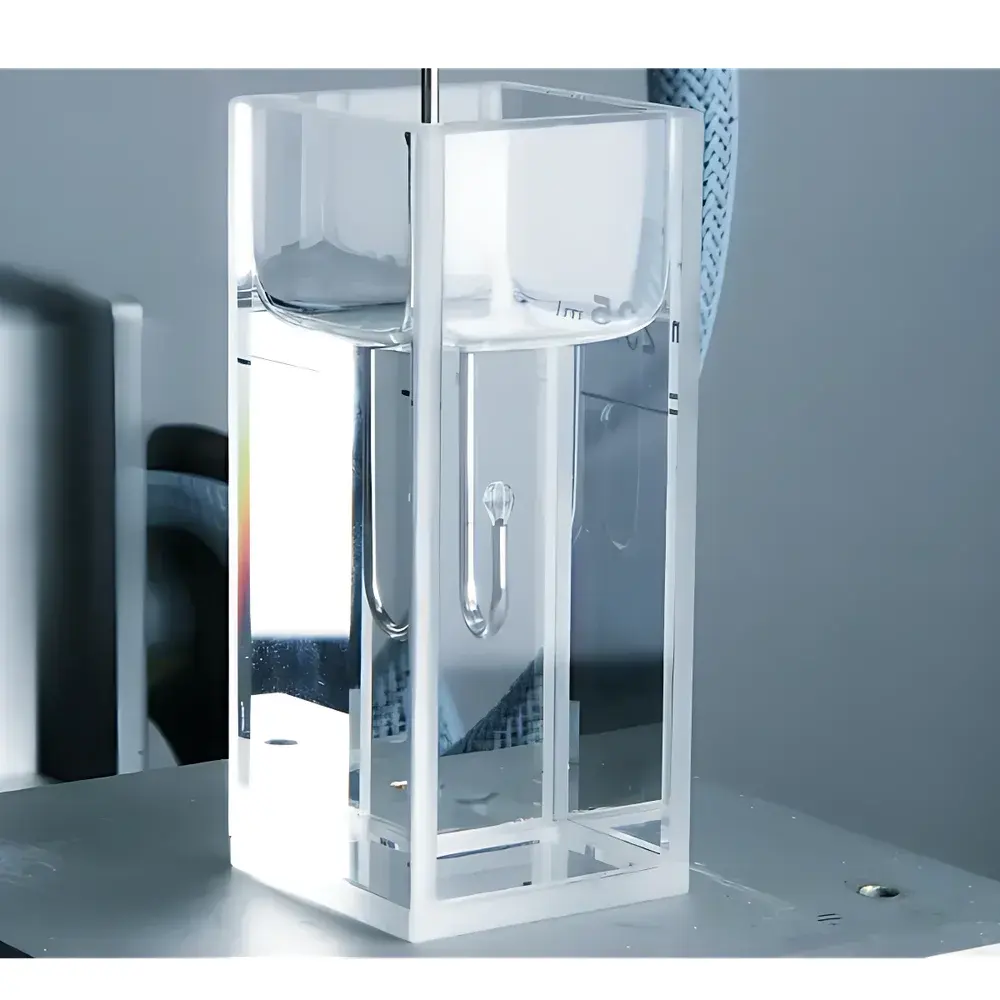
Teclis TRACKER Automatic Drop Shape Analyzer & Interfacial Rheometer
| Brand | Teclis Scientific (France) |
|---|---|
| Origin | France |
| Model | TRACKER |
| Measurement Range | 0–1000 mN/m |
| Resolution | 0.01 mN/m |
| Accuracy | 0.01 mN/m |
| Temperature Range | 0–200 °C |
| Temperature Accuracy | ±0.1 °C |
| Method | Pendant Drop / Sessile Drop / Rising Bubble / Captive Bubble |
| Camera | Monochrome CCD, 640×480 px, up to 60 fps (optional high-speed: 600 fps) |
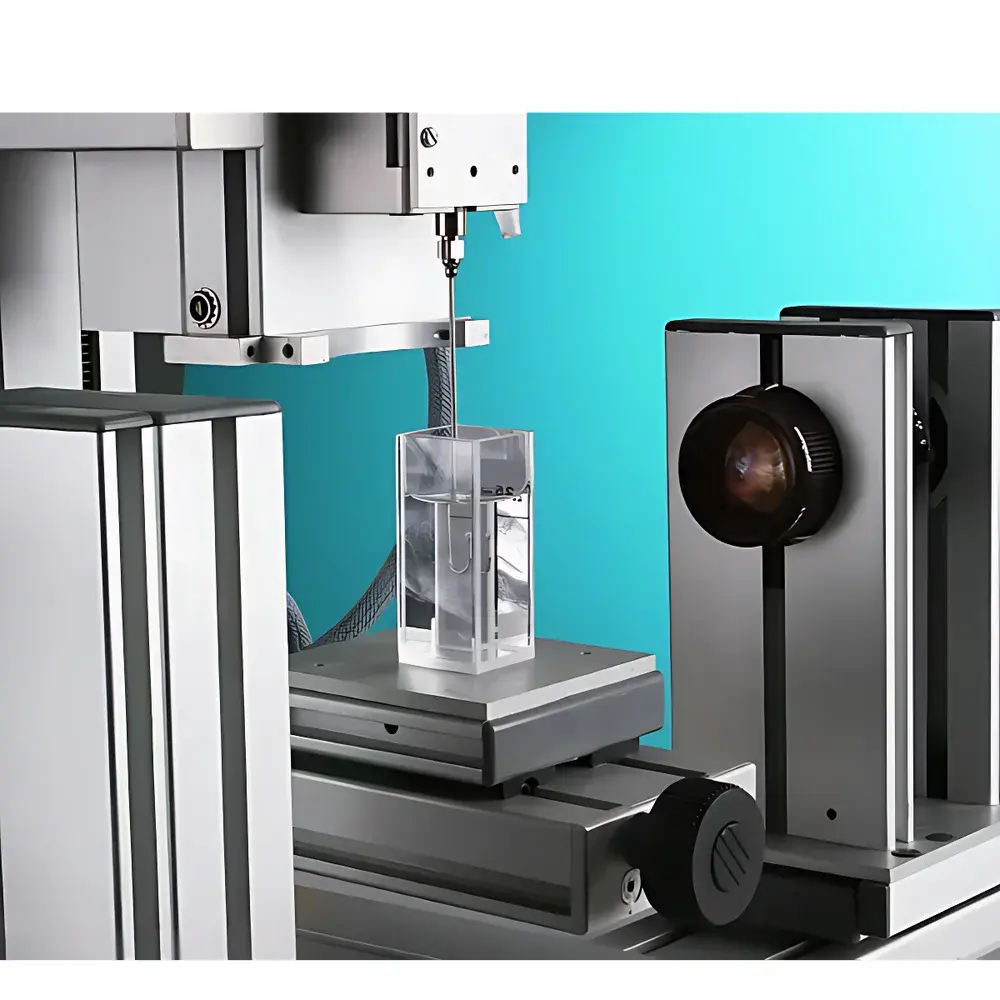
| Optical System | Telecentric lens + dual-intensity LED backlight |
| Sample Cell | Jacketed thermostatted cell with integrated magnetic stirrer |
| Temperature Control | Circulating bath (up to 90 °C), embedded Pt100 sensor (±0.2 °C) |
| Software | Young–Laplace fitting, dynamic interfacial rheology (dilatational modulus E', E''), contact angle hysteresis (advancing/receding), CMC determination, batch analysis, audit-trail-ready data logging |
Overview
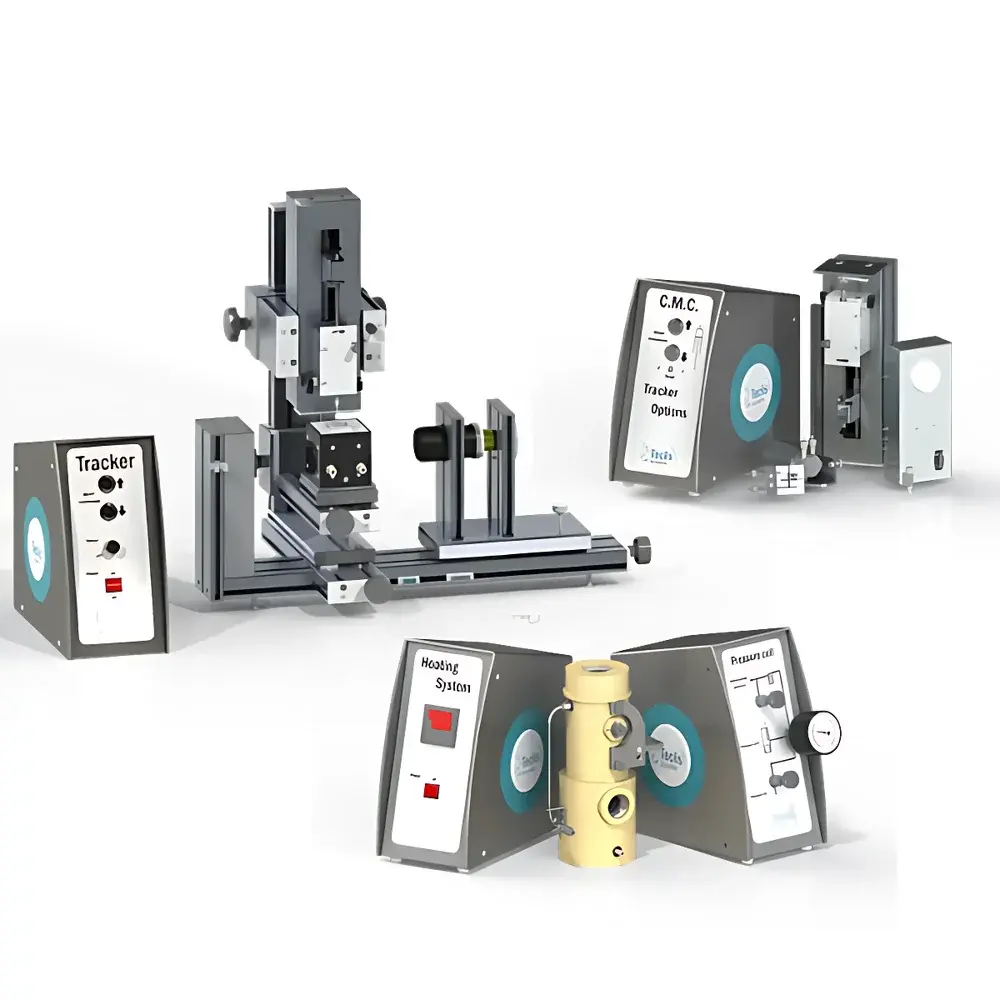
The Teclis TRACKER is an advanced, fully automated drop shape analyzer engineered for quantitative characterization of interfacial and surface rheological properties. Operating on the physical principle of axisymmetric drop shape analysis (ADSA), it determines interfacial tension (IFT), surface tension (ST), and dynamic dilatational moduli by numerically fitting experimental drop or bubble profiles to the Young–Laplace equation—a fundamental expression governing capillary equilibrium in fluid interfaces. Unlike static tensiometers, the TRACKER enables time-resolved measurement of interfacial viscoelasticity through controlled area/volume perturbations (sinusoidal, step, or pulse protocols), making it indispensable for studying molecular rearrangement kinetics at fluid–fluid and fluid–solid boundaries. Its modular architecture supports both pendant and sessile configurations, accommodating rising bubbles, suspended drops, captive bubbles, and advancing/receding contact angle measurements under precisely regulated thermal and hydrodynamic conditions.
Key Features
- High-fidelity optical subsystem: Monochrome CCD camera (640 × 480 px, 60 fps standard; optional 600 fps high-speed module) paired with a telecentric lens and dual-intensity LED backlight—optimized for contrast stability across optically dense or turbid systems.
- Thermostatically controlled sample environment: Jacketed measurement cell with integrated magnetic stirrer and Pt100 temperature sensor (±0.2 °C accuracy); compatible with external circulating baths for precise temperature regulation from 0 to 90 °C.
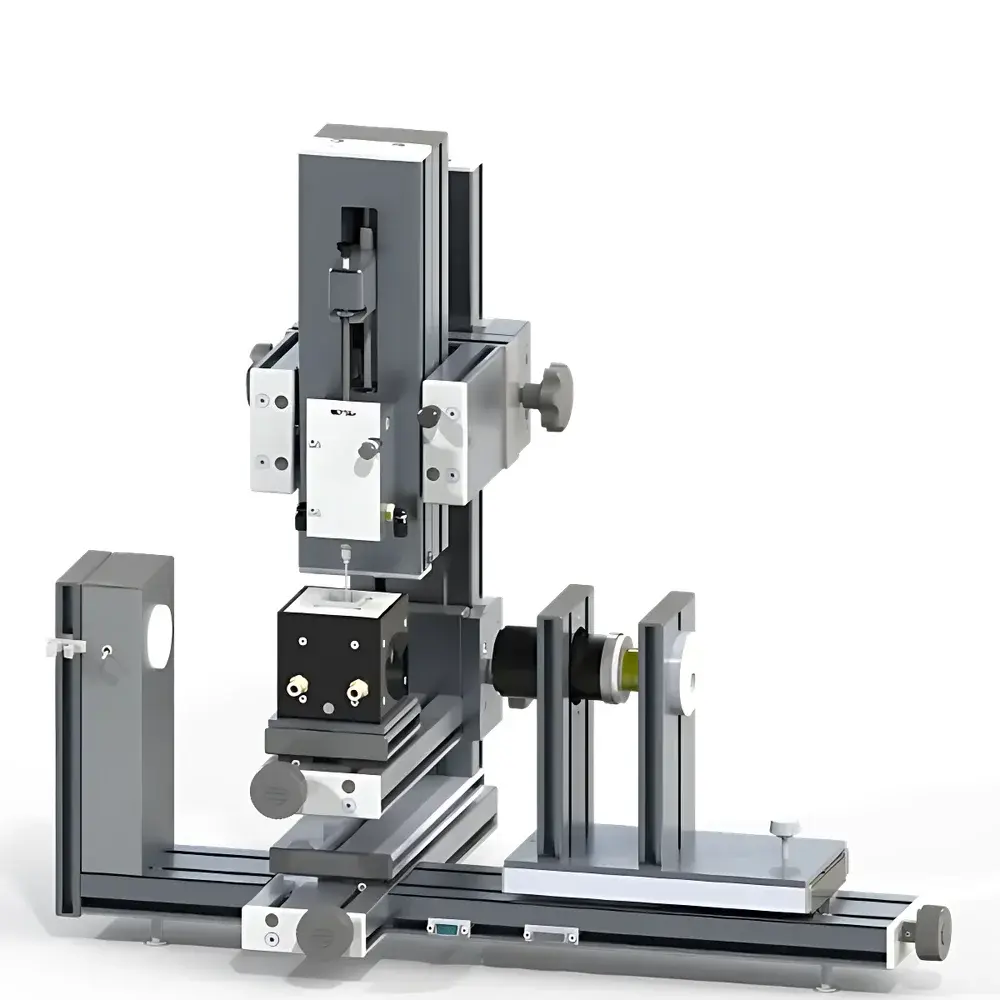
- Motorized XYZ translation stage: Enables precise leveling and positional repeatability for static/dynamic contact angle measurements on heterogeneous or curved solid substrates.
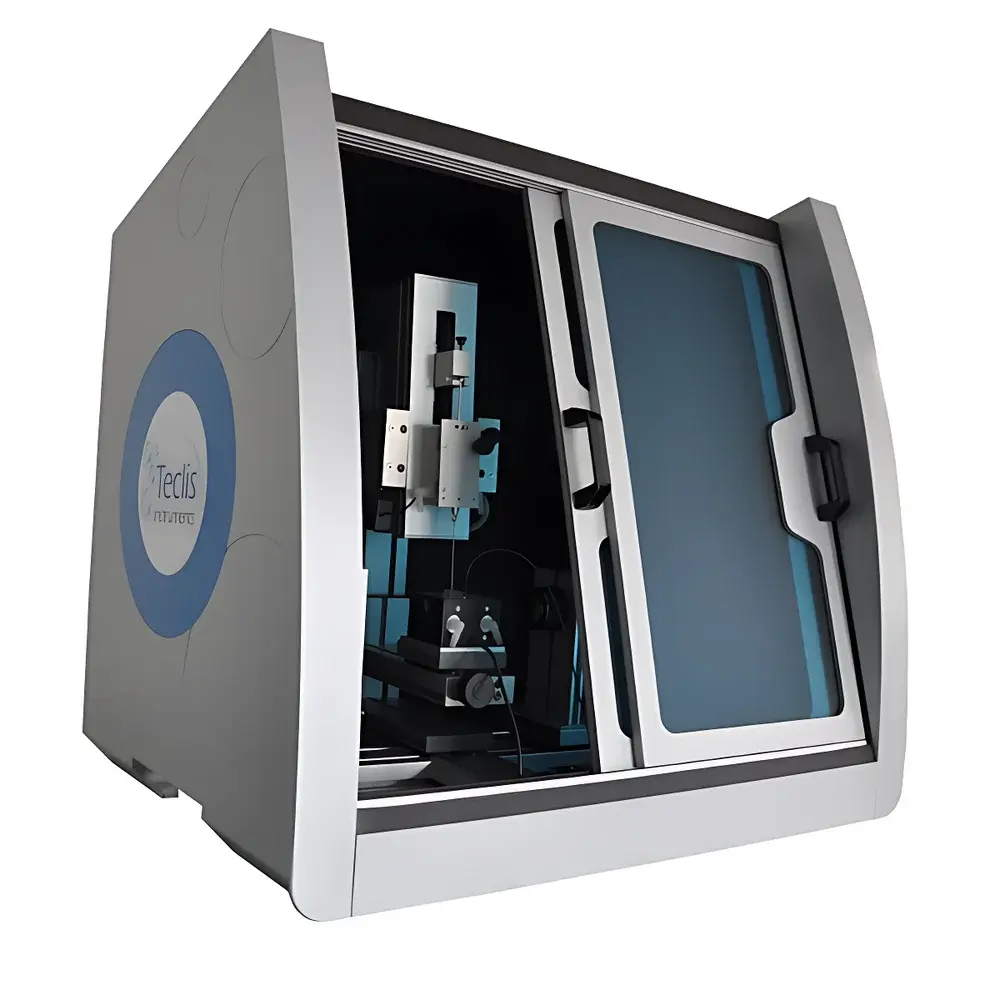
- Enclosed protective housing: Minimizes ambient light interference and particulate contamination during long-duration interfacial relaxation experiments.
- Dual-mode actuation: Programmable syringe pump control for either constant-volume maintenance or user-defined area/volume oscillation (frequency range: 10−4–102 Hz; amplitude resolution: 0.01 µL).
Sample Compatibility & Compliance
The TRACKER accommodates a broad spectrum of immiscible liquid pairs (e.g., oil/water, polymer melt/gas), surfactant solutions, biopolymer dispersions, crude oil emulsions, and functionalized solid surfaces. It complies with ASTM D971 (interfacial tension of oil against water), ISO 1409 (plastics—determination of surface tension), and USP guidelines for analytical instrument qualification. All raw image data, metadata (temperature, time, volume, environmental parameters), and processed results are timestamped and stored in a structured, non-proprietary format. The software supports 21 CFR Part 11-compliant electronic signatures, audit trails, and role-based access control—enabling full traceability required for GLP and GMP-regulated environments.
Software & Data Management
TRACKER’s proprietary software performs real-time Young–Laplace fitting using iterative least-squares optimization, delivering surface/interfacial tension values with sub-mN/m reproducibility. It calculates dilatational elasticity (E′) and viscosity (E″) directly from area strain–stress response curves, supporting both linear and large-deformation regimes. Contact angle hysteresis is quantified via automated advancing/receding cycle detection. All measurements—including CMC determination via surface pressure vs. log[concentration] plots—are exportable in CSV, TXT, or HDF5 formats. Batch processing allows parallel analysis of multiple experiments; reprocessing is possible without reacquisition. Data integrity is ensured through checksummed archives and version-controlled configuration files.
Applications
- Surfactant science: Efficiency (γcmc), effectiveness (πcmc), adsorption kinetics, competitive adsorption at mixed interfaces.
- Petroleum engineering: Crude oil–brine interfacial rheology, demulsifier screening, wettability assessment of reservoir rock analogs.
- Food colloids: Ice crystal inhibition by proteins, ethanol/sugar effects on foam stability, fat globule interface aging.
- Pharmaceuticals: Liposome membrane rigidity, protein corona formation, pulmonary surfactant mimetics.
- Coatings & lubricants: Solid–liquid interfacial energy mapping, additive-induced wetting transitions, anti-fouling surface design.
FAQ
What interfacial rheological parameters does the TRACKER measure?
It quantifies dilatational elastic modulus (E′), dilatational viscous modulus (E″), complex modulus (E*), and phase angle (δ), all derived from controlled interfacial area deformation.
Can the TRACKER measure contact angle on rough or porous substrates?
Yes—the motorized stage and high-resolution imaging enable robust sessile drop analysis even on microstructured or low-energy surfaces, with optional video-based dynamic contact angle tracking.
Is temperature control available for both the sample cell and syringe?
Both components are jacketed and compatible with external circulation, ensuring thermal homogeneity during long-term interfacial relaxation studies up to 90 °C.
How is compliance with regulatory data integrity standards achieved?
Through built-in 21 CFR Part 11 functionality: electronic signatures, immutable audit logs, user permission tiers, and encrypted raw data archiving.
Does the system support third-party automation integration?
Yes—API access and LabVIEW-compatible drivers allow synchronization with robotic liquid handlers, environmental chambers, or in-line process sensors.
Related Products



