
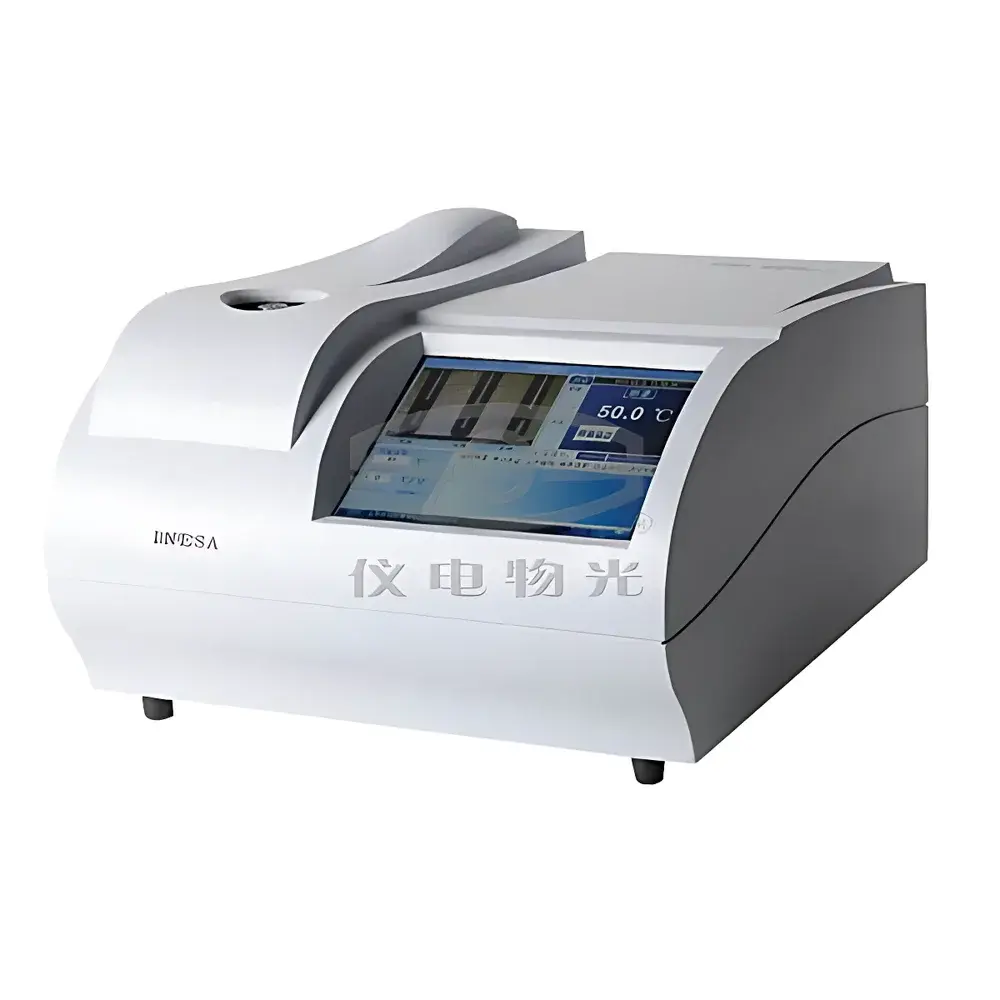
YDWG SGW®-630 Automated Image-Based Melting Point Apparatus
| Brand | YDWG |
|---|---|
| Origin | Shanghai, China |
| Model | SGW®-630 |
| Temperature Range | Ambient to 400 °C |
| Heating Rates | 0.2, 0.5, 1.0, 1.5, 2.0, 3.0, 4.0, 5.0 °C/min |
| Temperature Repeatability | ±0.2 °C (at 0.2 °C/min), ±0.3 °C (at 1.0 °C/min) |
| Temperature Accuracy | ±0.4 °C (≤200 °C), ±0.7 °C (>200 °C) |
| Temperature Resolution | 0.1 °C |
| Capillary Dimensions | OD 1.4 mm, ID 1.0 mm, Length 90 mm |
| Sample Capacity | 3 capillaries |
| Calibration Points | 8-point |
| Data Storage | 16 GB internal |
| Display | 8-inch capacitive touchscreen |
| OS | Embedded Windows-based platform |
| Compliance | Meets USP <741>, EP 2.2.17, JP 2.60, FDA 21 CFR Part 11, GLP/GMP audit trail requirements |
Overview
The YDWG SGW®-630 Automated Image-Based Melting Point Apparatus is a precision thermal analysis instrument engineered for pharmaceutical, chemical, and materials laboratories requiring regulatory-compliant, high-reproducibility melting point determination. Unlike traditional analog or basic digital units, the SGW®-630 employs real-time high-resolution digital imaging coupled with adaptive image-processing algorithms to objectively detect solid–liquid phase transitions. The system captures sequential micrographs of three parallel capillary samples under controlled linear heating, analyzing pixel-intensity gradients across the sample column to identify onset, clear point, and interval endpoints—eliminating operator subjectivity while preserving visual traceability. Its platinum resistance thermometer (Pt100) temperature sensor ensures high linearity and long-term stability across its full operating range (ambient to 400 °C), and the integrated PID-controlled heating module delivers precise ramp fidelity within ±10% of set rate across eight programmable heating profiles.
Key Features
- Triple-capillary simultaneous measurement capability—enables statistical validation and batch consistency assessment in a single run
- 8-inch industrial-grade capacitive touchscreen interface with embedded Windows OS, supporting keyboard/mouse input and direct peripheral connectivity (USB, VGA, Ethernet)
- Dual-mode operation: fully automated image-based detection + manual visual verification with frame-by-frame playback and adjustable playback speed
- 8-point independent temperature calibration using NIST-traceable reference standards—supports multi-point correction across low-, mid-, and high-temperature ranges
- FDA 21 CFR Part 11-compliant software architecture featuring role-based user management (four-tier permissions), electronic signatures, encrypted audit trails, and immutable data logging
- 16 GB onboard non-volatile storage with export options via USB or network (SMB/FTP); compatible with LIMS integration via standardized CSV/Excel output formats
- Optimized optical path design enables reliable detection of dark, opaque, or highly pigmented samples—common challenges in API characterization and natural product analysis
Sample Compatibility & Compliance
The SGW®-630 accepts standard thin-wall capillaries (1.4 mm OD × 1.0 mm ID × 90 mm length) with nominal sample height of 3 mm—fully aligned with pharmacopoeial specifications (USP , EP 2.2.17, JP 2.60). Its wide dynamic range (ambient to 400 °C) accommodates both low-melting organics (e.g., fatty acids, excipients) and high-melting inorganic salts or polymers. All firmware and application logic are validated per ICH Q2(R2) guidelines for analytical instrument qualification. System documentation includes full IQ/OQ/PQ protocols, traceable calibration certificates, and GxP-ready configuration files—supporting seamless integration into regulated QC environments governed by ISO 17025, WHO TRS 986 Annex 4, and EU GMP Annex 11 frameworks.
Software & Data Management
The embedded Windows-based software provides intuitive method creation, parameter scheduling, and real-time visualization of thermal curves alongside synchronized video thumbnails. Each measurement generates a timestamped, digitally signed report containing raw image frames, temperature vs. time plots, derivative analysis, and metadata (operator ID, instrument serial number, calibration status, environmental conditions). Audit trails record all user actions—including method edits, calibration events, and data exports—with immutable timestamps and hash-verified integrity checks. Data encryption at rest (AES-256) and TLS 1.2–secured network transfers ensure compliance with GDPR and HIPAA-aligned data protection policies. Optional remote monitoring via secure web portal supports centralized fleet management across multi-site laboratory networks.
Applications
- Pharmaceutical QC release testing of active pharmaceutical ingredients (APIs) and finished dosage forms per compendial monographs
- Polymorph screening and thermal stability assessment during preformulation development
- Quality control of fine chemicals, dyes, catalysts, and specialty polymers
- Educational use in university chemistry and pharmacy labs for teaching phase transition theory and analytical validation principles
- Regulatory submission support—generating ALCOA+ compliant data packages for FDA, EMA, PMDA, and NMPA filings
FAQ
Does the SGW®-630 support multi-language UI and reporting?
Yes—the system interface and report templates are configurable for English, Chinese, Japanese, German, and French via built-in localization modules.
Can the instrument be validated for 21 CFR Part 11 compliance in a production environment?
Yes. It ships with complete validation documentation (IQ/OQ/PQ protocols, risk assessments, and URS), and all electronic records meet Part 11 requirements for authenticity, confidentiality, and integrity.
What is the recommended calibration frequency and traceability standard?
We recommend annual calibration using certified reference materials traceable to NIST SRM 721 (indium), SRM 722 (lead), and SRM 723 (bismuth), with optional on-site service contracts available.
Is remote software update supported over network connection?
Yes—firmware and application updates can be deployed securely via HTTPS-based package delivery with digital signature verification prior to installation.
How does the image analysis algorithm handle partially melting or recrystallizing samples?
The algorithm applies temporal gradient filtering and spatial edge-detection heuristics to distinguish true melt fronts from transient artifacts; users may manually adjust sensitivity thresholds or override results using the visual playback mode.



