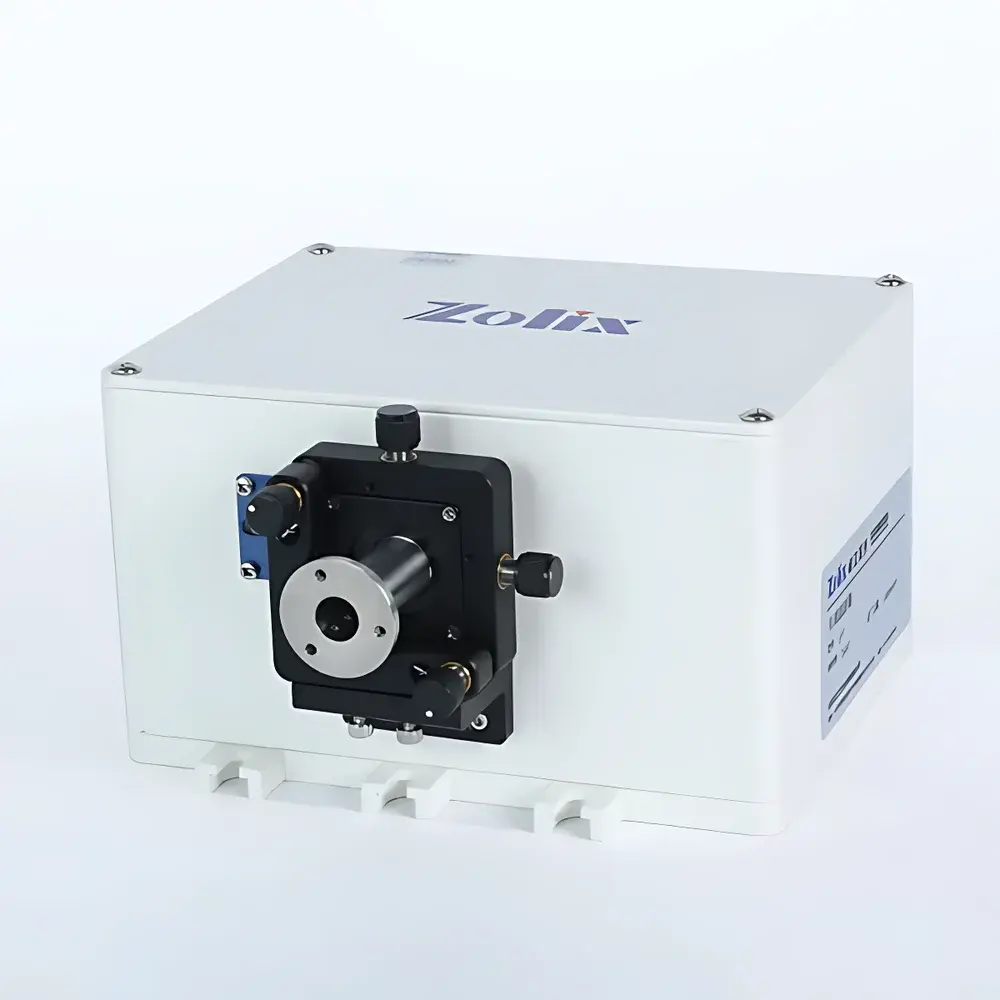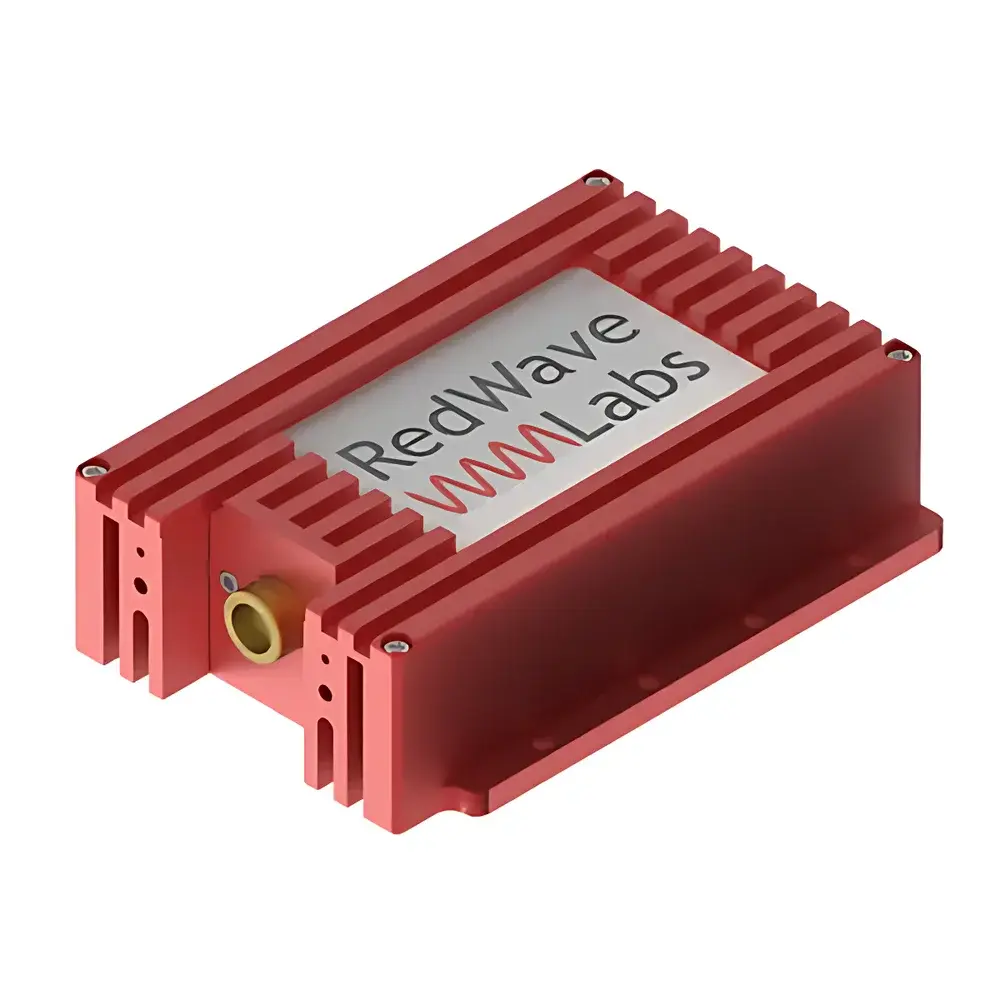
Redwave Labs AD300 Compact Single-Photon Detector Module with Integrated Counter
| Brand | Other brands |
|---|---|
| Origin | Imported |
| Manufacturer Type | General Distributor |
| Model | AD300 |
| Pricing | Upon Request |
| Quantum Efficiency | 70% @ 650 nm (Si), 55% @ 800 nm / 20% @ 1550 nm (InGaAs) |
| Dark Count Rate | 25 cps @ −20 °C (Si), 2000 cps @ −40 °C (InGaAs) |
| Dead Time | 65 ns (Si), 1.5 µs (InGaAs) |
| Timing Resolution | < 40 ps FWHM (typical, dependent on TCSPC system) |
| Operating Temperature Range | −40 °C to +85 °C |
| Power Supply | +5 V DC |
| Interface | SMB for TTL output & gating, USB-C for configuration and data streaming |
| Detector Active Area | 500 µm diameter |
| Optical Input | FC/PC fiber connector |
| Dimensions | 127.1 × 76.2 × 41.28 mm |
| Weight | 350 g |
Overview
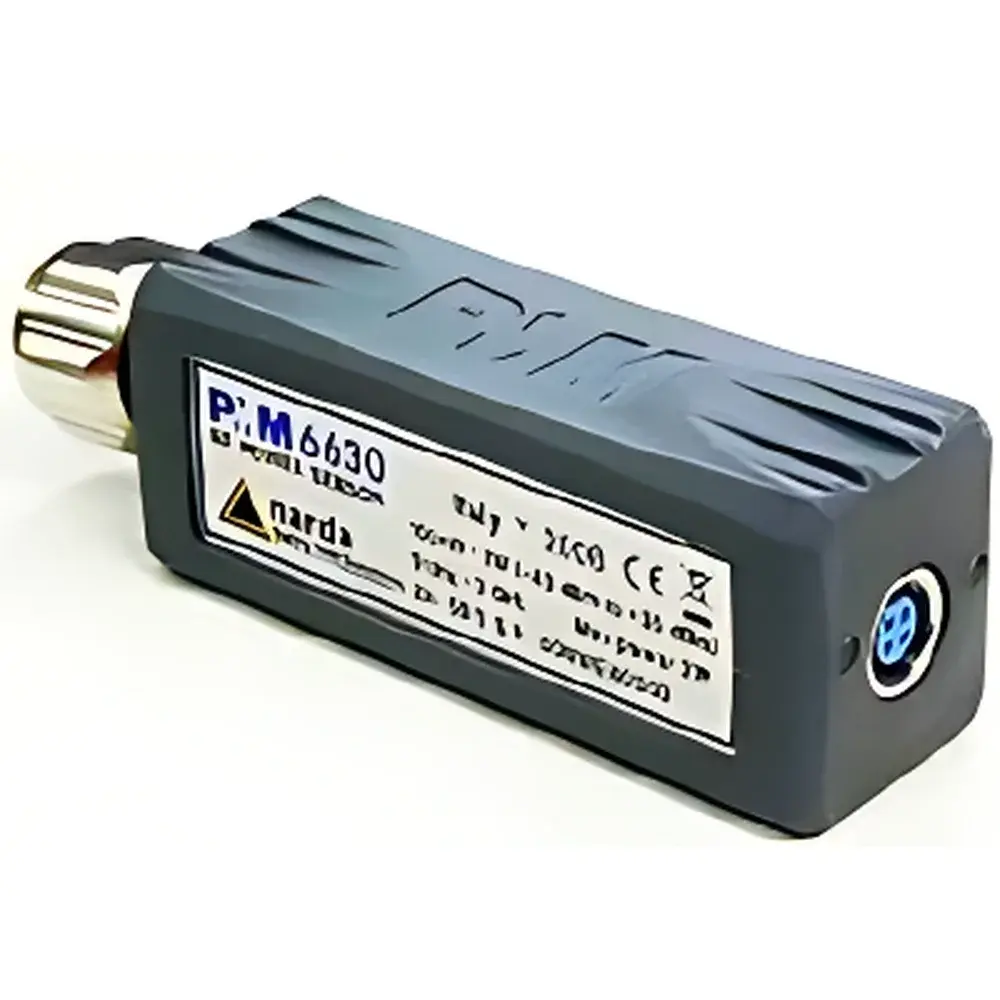
The Redwave Labs AD300 is a compact, OEM-ready single-photon detector module engineered for high-reliability operation in time-critical photonic measurement applications. Built around either a silicon (Si) or indium gallium arsenide (InGaAs) avalanche photodiode (APD), the AD300 operates in Geiger mode and incorporates active quenching circuitry to ensure rapid recovery and minimal afterpulsing. Its fully digital temperature control system enables precise thermoelectric cooling down to −40 °C—critical for suppressing dark counts in InGaAs configurations and maximizing photon detection probability (PDP) across both spectral bands. Unlike passive-cooled modules, the AD300’s integrated thermal management delivers stable performance over extended acquisition periods without external chillers or cryogenic infrastructure. The module integrates a high-speed counter and real-time pulse processing logic, enabling direct TTL-level output synchronization with external timing electronics—making it suitable for integration into time-correlated single-photon counting (TCSPC) platforms, quantum optics testbenches, and embedded LIDAR receiver subsystems.
Key Features
- Two detector variants: Si APD (400–1100 nm) with 70% PDP at 650 nm; InGaAs APD (1100–1600 nm) with 55% PDP at 800 nm and 20% at 1550 nm
- Digital thermoelectric cooler (TEC) with closed-loop temperature regulation (−40 °C to +30 °C setpoint range)
- Active quenching architecture ensuring sub-100 ns dead time (65 ns for Si, 1.5 µs for InGaAs)
- Onboard counter with timestamp resolution compatible with standard TCSPC hardware (e.g., PicoQuant HydraHarp, Becker & Hickl DPC-230)
- FC/PC fiber-optic input interface with low-insertion-loss coupling and alignment stability
- USB-C interface for firmware updates, temperature setpoint configuration, and live count-rate monitoring
- Ruggedized aluminum housing (127.1 × 76.2 × 41.28 mm, 350 g) with EMI-shielded internal layout for laboratory and field-deployable use
- Single +5 V DC power requirement via 2-pin Molex connector—no auxiliary voltages or high-voltage supplies needed
Sample Compatibility & Compliance
The AD300 supports standard single-mode and multimode optical fibers (SMF-28, MMF 50/125 µm) via its FC/PC receptacle. It complies with IEC 61000-6-3 (EMI emission) and IEC 61000-6-2 (immunity) for industrial environments. While not certified for medical or aerospace use out-of-the-box, its design adheres to fundamental principles referenced in ISO/IEC 17025 for calibration traceability of photon-counting instrumentation. For regulated environments—including GLP-compliant fluorescence lifetime analysis or FDA-submitted QKD system validation—the AD300’s deterministic gate response, audit-ready USB configuration logs, and stable thermal drift (< ±0.1 °C/hour under steady-state conditions) support documentation required for instrument qualification (IQ/OQ/PQ). All electrical interfaces meet UL 61010-1 safety requirements for measurement equipment.
Software & Data Management
Redwave Labs provides a cross-platform configuration utility (Windows/macOS/Linux) via USB-C, enabling real-time adjustment of TEC setpoint, gate width, hold-off time, and counter reset thresholds. The software exports timestamped count data in HDF5 and CSV formats, preserving metadata such as detector temperature, bias voltage, and acquisition duration—facilitating reproducible analysis per FAIR data principles. Integration with Python (via PyVISA and NumPy) and MATLAB is supported through documented SCPI-like command sets. For TCSPC systems, the AD300 outputs standardized NIM/TTL-compatible pulses (40 ns width for Si, 25 ns for InGaAs) synchronized to an external gate signal delivered via SMB port—ensuring compatibility with commercial time-to-digital converters (TDCs) and histogramming engines without custom FPGA logic.
Applications
- Time-resolved fluorescence spectroscopy and fluorescence lifetime imaging microscopy (FLIM)
- Quantum key distribution (QKD) receiver units operating at telecom wavelengths (1310/1550 nm)
- Low-light laser scanning confocal and multiphoton microscopy
- Atmospheric LIDAR and ranging systems requiring photon-starved detection
- Fundamental quantum optics experiments: Hong–Ou–Mandel interference, Bell state measurements
- Single-molecule tracking and super-resolution localization microscopy (e.g., PALM/STORM)
- Particle physics scintillation readout where compactness and radiation-tolerant packaging are advantageous
FAQ
What is the maximum count rate supported by the AD300?
The Si variant supports sustained rates up to 15 Mcps (limited by 65 ns dead time); the InGaAs variant is optimized for gated operation and achieves effective rates > 100 kcps under 10 MHz gating with > 95% detection efficiency per gate window.
Can the AD300 be used in free-space optical setups?
Yes—when paired with an appropriate collimator and focusing lens assembly, the FC/PC port can be adapted to free-space coupling using commercially available fiber-to-free-space interfaces (e.g., Thorlabs F230SMA-1550).
Is firmware upgrade capability available post-purchase?
Yes—USB-C firmware updates preserve all user-configured thermal and timing parameters while enabling future enhancements to timing jitter compensation and dark count suppression algorithms.
Does the module include calibration certificates?
Standard shipment includes factory-measured PDP vs. wavelength curves (NIST-traceable reference detector used), dark count vs. temperature plots, and timing jitter characterization reports—available upon request with purchase order.