
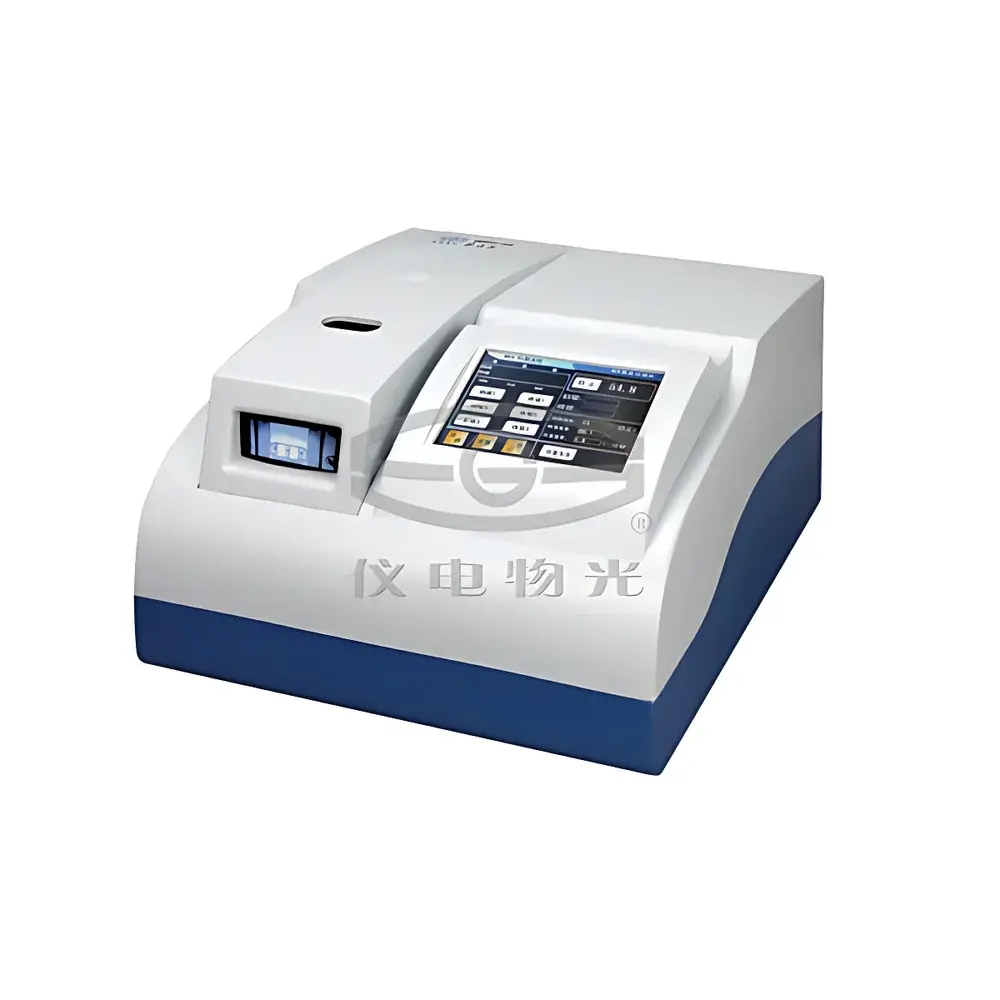
Yidian Woguang WRS-3A Dual-Mode (Visual & Automatic) Melting Point Apparatus
| Brand | Yidian Woguang (YDWG) |
|---|---|
| Origin | Shanghai, China |
| Model | WRS-3A |
| Temperature Range | Ambient to 320 °C |
| Heating Rates | 0.2, 1.0, 1.5, 3.0 °C/min |
| Temperature Repeatability | ±0.3 °C at 1.0 °C/min |
| Temperature Accuracy | ±0.5 °C ≤200 °C |
| Capillary Dimensions | OD 1.4 mm, ID 1.0 mm, Length 90 mm |
| Sample Capacity | 3 samples per run |
| Temperature Resolution | 0.1 °C |
| Display | 5.6-inch color TFT touchscreen |
| Data Storage | 100 measurement records |
| Interface | USB, RS232, USB flash drive support |
| Power Supply | 220 V ±10 %, 50 Hz ±1 Hz, 180 W |
Overview
The Yidian Woguang WRS-3A Dual-Mode Melting Point Apparatus is a precision thermal analysis instrument engineered for reliable, traceable determination of solid-phase transition temperatures in pharmaceuticals, fine chemicals, polymers, and organic compounds. It operates on the principle of controlled linear heating combined with dual detection modalities: real-time visual observation through an integrated optical viewing system and automated photometric detection via calibrated light transmission monitoring across three parallel capillary channels. This hybrid architecture satisfies both pharmacopoeial compliance requirements—such as those specified in USP <741>, EP 2.2.17, and ChP IV—while accommodating challenging sample types including deeply colored, opaque, or low-transmittance substances where optical auto-detection alone may yield ambiguous onset interpretation. The unit employs a PID-controlled heating block with high thermal uniformity and minimal overshoot, ensuring stable ramp profiles critical for reproducible endpoint identification under GLP or GMP-aligned laboratory workflows.
Key Features
- Dual-mode operation: seamless switching between manual visual assessment and automatic photometric melting point detection—enabling method flexibility without hardware reconfiguration
- Triple-sample capacity with independent thermal profiling: simultaneous analysis of up to three specimens using standardized pharmacopoeial capillaries (1.4 mm OD × 1.0 mm ID × 90 mm length), supporting statistical evaluation including mean, SD, and range calculation
- Precision temperature control: selectable heating rates (0.2, 1.0, 1.5, 3.0 °C/min) with linearity deviation ≤±10% across the full ramp range; certified accuracy of ±0.5 °C up to 200 °C and ±0.8 °C above
- High-resolution thermal readout: 0.1 °C digital resolution with repeatability of ±0.3 °C at 1.0 °C/min heating rate—validated per ISO 8573-1 and ASTM E324 calibration protocols
- Intuitive human-machine interface: 5.6-inch color TFT touchscreen with multilingual menu navigation, real-time temperature curve visualization, and context-sensitive parameter guidance
- Regulatory-ready data handling: built-in storage for 100 complete test records (including date/time stamp, operator ID, method name, raw thermal profile, and final result); exportable via USB or RS232 to LIMS or ELN systems
Sample Compatibility & Compliance
The WRS-3A accepts standard thin-wall glass capillaries conforming to USP <741> dimensions and packing specifications (sample height: 3 mm). Its visual mode eliminates reliance on optical transparency, permitting accurate melting point assessment of dyes, metal complexes, carbon-black-loaded polymers, and other non-transmissive materials. The instrument supports method validation per ICH Q5C and meets essential design criteria for use in QC laboratories operating under FDA 21 CFR Part 11-compliant environments when paired with audit-trail-enabled software and user-access controls. Calibration is performed using NIST-traceable reference standards (e.g., indium, caffeine, phenacetin), with multi-point verification capability embedded in firmware.
Software & Data Management
No proprietary PC software is required for basic operation—the WRS-3A functions autonomously with onboard processing and local data retention. However, optional PC connectivity enables advanced reporting: exported CSV files contain time-stamped temperature readings, derivative curves (dT/dt), and annotated melt onset/offset points. All stored records include immutable metadata (operator code, calibration status flag, ambient temperature log, and heating rate confirmation) to satisfy ALCOA+ data integrity principles. Optional CK-NT24S dot-matrix printer provides hard-copy output compliant with 21 CFR Part 11 Annex 11 documentation requirements when configured with secure print authentication.
Applications
- Pharmaceutical quality control: identity testing and purity verification of active pharmaceutical ingredients (APIs) and excipients per USP monographs
- Chemical synthesis validation: reaction endpoint confirmation and intermediate characterization in R&D labs
- Academic research: thermodynamic profiling of eutectic systems, polymorph screening, and crystallinity assessment
- Materials science: thermal stability evaluation of specialty polymers, liquid crystals, and phase-change materials
- Food & cosmetics: verification of fat composition, wax melting behavior, and emulsifier performance
FAQ
Does the WRS-3A comply with pharmacopoeial standards for melting point determination?
Yes—it adheres to USP <741>, EP 2.2.17, JP 2.60, and ChP IV methodologies, supporting both visual and automated modes as permitted by these guidelines.
Can the instrument be calibrated with traceable reference materials?
Yes—multi-point calibration using NIST-traceable standards (e.g., indium at 156.6 °C, tin at 231.9 °C) is supported directly through the touchscreen interface.
Is audit trail functionality available for regulated environments?
While the base unit does not generate electronic audit trails, all exported data files contain immutable timestamps and method parameters; integration with validated third-party LIMS/ELN systems enables full 21 CFR Part 11 compliance.
What is the maximum recommended operating temperature for routine use?
The specified upper limit is 320 °C; continuous operation above 300 °C requires periodic verification of heating block thermal homogeneity and capillary integrity.
How is sample loading verified prior to analysis?
The optical viewing port includes integrated LED illumination and adjustable focus, allowing direct visual confirmation of sample height (3 mm), packing density, and absence of air gaps before initiating the heating cycle.
Related Products



