
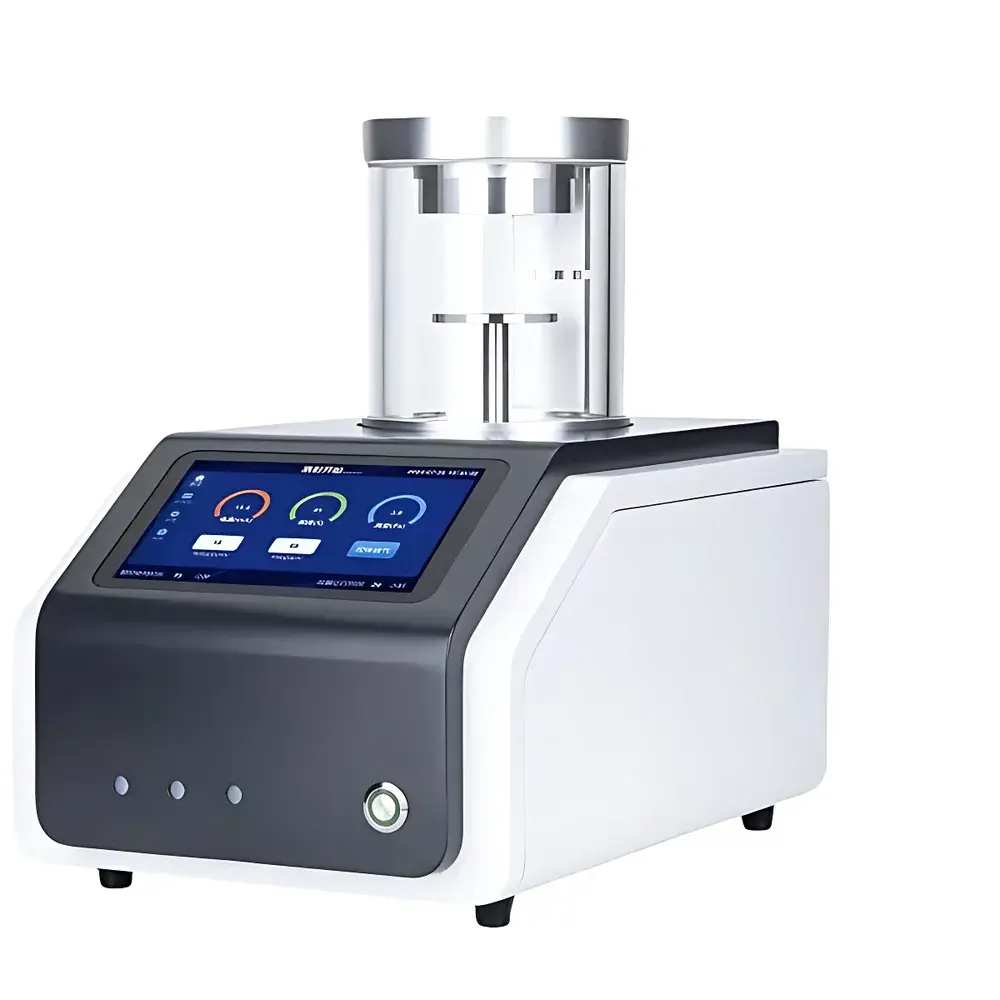
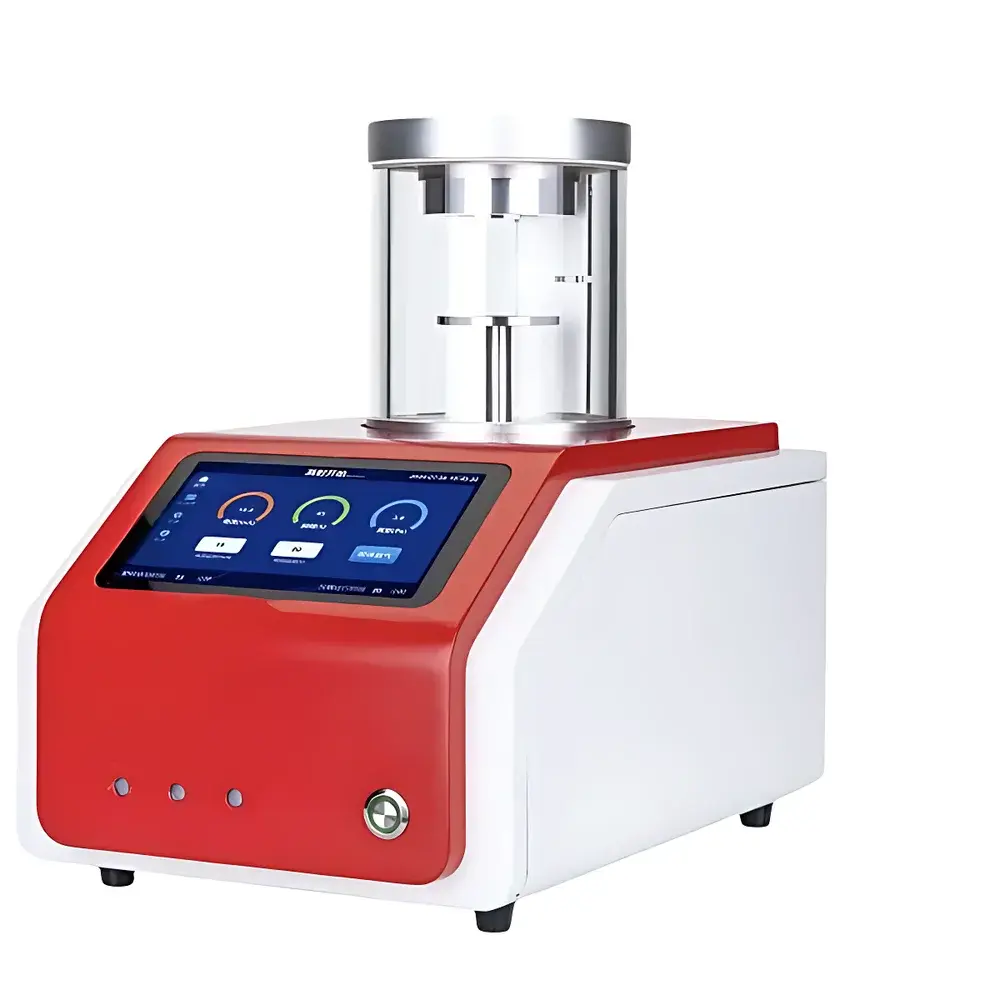
Beam Convergence GVC2000 Magnetron Sputter Coater
| Brand | Beam Convergence |
|---|---|
| Model | GVC2000 |
| Origin | Beijing, China |
| Manufacturer Type | Direct Manufacturer |
| Country of Origin | China |
| Pricing | Upon Request |
Overview
The Beam Convergence GVC2000 Magnetron Sputter Coater is a benchtop vacuum deposition system engineered for high-precision, low-damage conductive coating of non-conductive specimens prior to scanning electron microscopy (SEM) analysis. It operates on the principle of direct-current (DC) magnetron sputtering—where energetic argon ions, accelerated in a low-pressure plasma environment (typically 5–20 Pa), bombard a metallic target (e.g., Au, Pt, or custom alloys), ejecting atoms that condense uniformly onto the sample surface. Unlike thermal evaporation, magnetron sputtering delivers superior grain refinement, minimal substrate heating (<40 °C), and exceptional thickness reproducibility—critical for high-magnification imaging (>100 k×) and energy-dispersive X-ray spectroscopy (EDS) compatibility. The GVC2000 integrates dual operational modes: time-controlled sputtering for routine applications and real-time thickness monitoring via quartz crystal microbalance (QCM) feedback—enabling nanoscale film control down to ±0.5 nm resolution under stable vacuum conditions.
Key Features
- Dual-mode operation: Time-based sputtering and QCM-driven thickness-controlled deposition with real-time nm-scale feedback
- Multi-target configuration support: Four independent target positions (standard: Au, Pt; customizable up to four user-defined materials)
- Optimized plasma confinement: Permanent magnet array beneath each cathode ensures high ionization efficiency and reduced arcing—even at low currents (5–60 mA)
- Integrated vacuum management: Digital pressure readout (0.1–1×10⁵ Pa range), auto-calibration function, and programmable venting sequence
- Intuitive HMI interface: Touch-responsive LCD with dedicated screens for parameter setup, real-time curve plotting (current, pressure, thickness vs. time), and system diagnostics
- Robust chamber design: Stainless-steel vacuum chamber (Ø150 mm × H120 mm), O-ring sealed, compatible with standard SEM stubs and planchets (up to 32 mm diameter)
Sample Compatibility & Compliance
The GVC2000 accommodates a broad spectrum of electron microscopy specimens—including biological tissues, polymers, ceramics, battery separators, and nanomaterials—without requiring conductive pre-treatment or carbon tape masking. Its low-energy sputtering process preserves delicate surface topography and prevents charging artifacts during subsequent SEM imaging. All operational parameters—including current, pressure, sputter duration, and target selection—are logged with timestamped metadata, supporting GLP-compliant documentation requirements. While not certified to ISO/IEC 17025, the system’s repeatable performance aligns with ASTM E1558 (Standard Guide for Preparation of Specimens for SEM) and meets baseline expectations for routine QC/QA labs operating under internal SOPs. Vacuum integrity conforms to ISO 2859-1 sampling plans for leak-rate validation (≤1×10⁻³ Pa·L/s after pump-down).
Software & Data Management
The GVC2000 operates via embedded firmware with no external PC dependency. All process data—including sputter start/stop timestamps, cumulative target usage (in minutes), total instrument runtime (in hours), and per-run thickness curves—are stored locally in non-volatile memory. Export is supported via USB flash drive in CSV format for traceability and audit readiness. The interface supports configurable data retention policies and includes password-protected administrator access for calibration resets and system-level settings. For regulated environments, the system supports manual entry of operator ID and sample ID per run—facilitating alignment with FDA 21 CFR Part 11 principles when paired with lab-wide electronic record systems.
Applications
- High-resolution SEM imaging of insulating samples: Achieves uniform, ultra-fine-grained coatings (Au: 6–10 nm; Pt: 3–5 nm) enabling artifact-free imaging at magnifications up to 457 k×
- Battery materials characterization: Enables clear visualization of pore architecture in polymer separators without metal agglomeration or edge shadowing
- Nanoparticle dispersion analysis: Facilitates accurate size distribution measurement (e.g., D1 = 6.34 nm, D2 = 8.80 nm, D3 = 6.86 nm) on silicon substrates
- Failure analysis of MEMS devices: Provides conformal, low-stress metallization for cross-sectional SEM inspection
- Archaeological and geological specimen preparation: Preserves fragile surface features during coating of fossilized or weathered samples
FAQ
What target materials are factory-configured on the GVC2000?
The standard configuration includes one gold (Au) and one platinum (Pt) target. Additional targets—including Cr, Pd, Ir, and custom alloys—can be installed using the four-position turret mount.
Does the system support reactive sputtering (e.g., with O₂ or N₂)?
No—the GVC2000 is optimized for inert-gas (Ar) DC sputtering only. Reactive gas introduction is not supported due to lack of mass flow controller integration and plasma stability constraints.
How is film thickness calibrated and verified?
Thickness is monitored in real time using a quartz crystal microbalance (QCM) sensor. Calibration is performed using reference films of known stoichiometry and density; users may adjust density input (e.g., 19.3 g/cm³ for Au, 21.4 g/cm³ for Pt) to improve accuracy.
What vacuum pump is required?
A two-stage rotary vane pump capable of reaching ≤5×10⁻² Pa base pressure is required. Turbo-molecular pumps are not necessary but may be used for faster pump-down in high-throughput labs.
Is remote monitoring or network connectivity available?
No—the GVC2000 is a standalone instrument with local HMI control only. No Ethernet, Wi-Fi, or RS-232 interfaces are provided.




