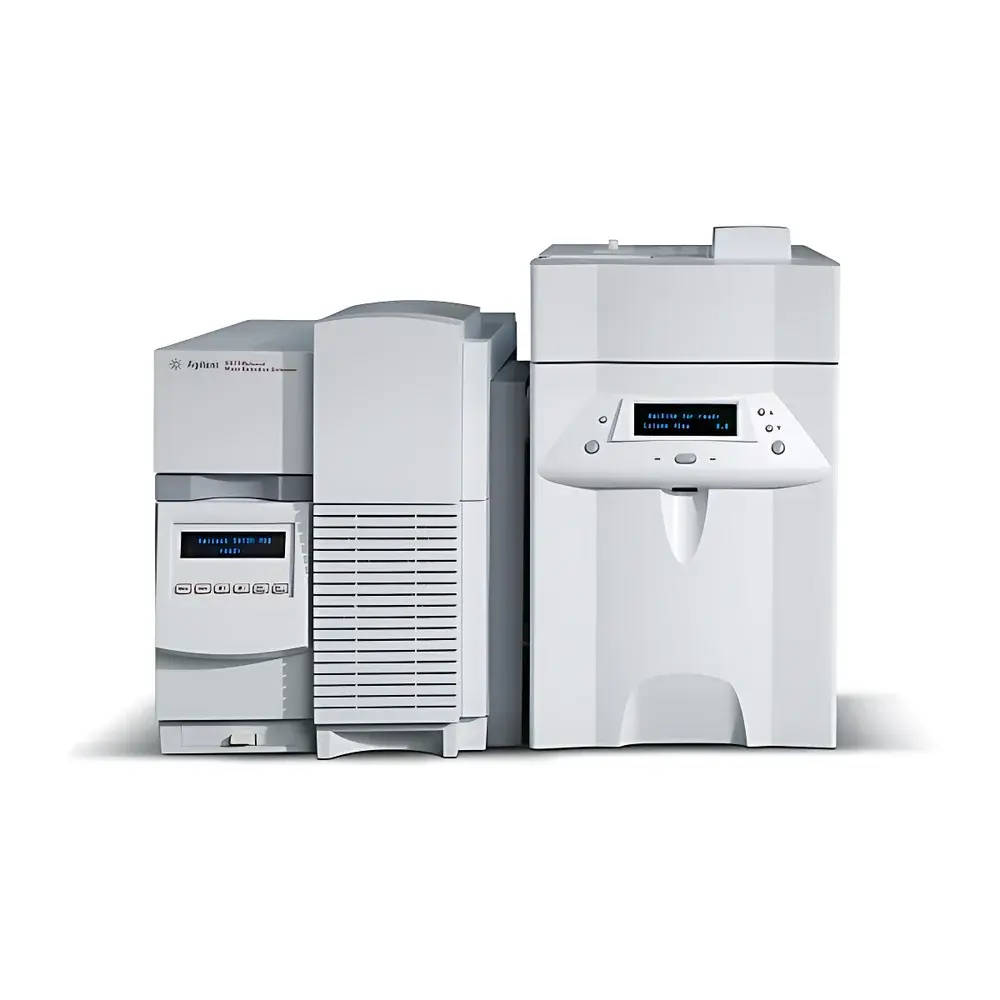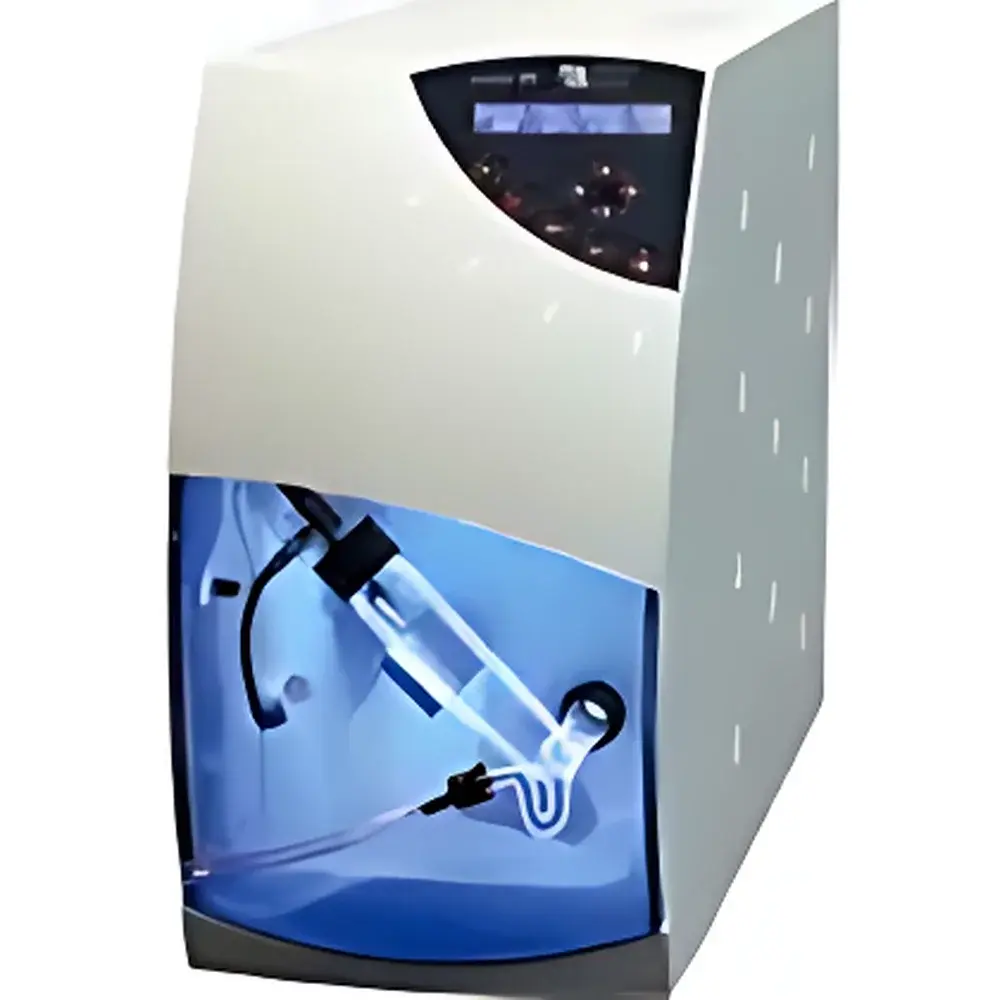
Sedex ELSD-LT III (Sedex 100) Low-Temperature Evaporative Light Scattering Detector
| Brand | SEDEX (by S.E. Industries) |
|---|---|
| Origin | France |
| Model | ELSD-LT / ELSD-LT II / ELSD-LT III (Sedex 75/85/100) |
| Light Source | LED (470 nm) |
| Detector | High-sensitivity photomultiplier tube with digital signal processing |
| Detection Limit | 100 pg (C12EO8, micro-HPLC) |
| Typical Quantitation Range | 0.5–5 µg |
| Evaporation Temperature Range | Ambient to 100 °C (1 °C resolution) |
| Flow Rate Compatibility | 100 µL/min – 5 mL/min |
| Nebulizer Options | 4 types (HPLC, CC, Micro, UPLC) |
| Carrier Gas Consumption | <3.0 L/min |
| Required Gas Supply | N₂ or clean dry air, ≥5 L/min at 2–4.5 bar |
| Baseline Noise | <1 mV/h (aqueous), <3 mV/h (non-aqueous, GAIN-dependent) |
| Signal Output | 0–1 V analog |
| Gain Setting | 1–12 (2048-point digital resolution) |
| Data Acquisition Rate | 100 Hz |
| Interface | RS-232 |
| Software Control | Optional full-parameter programming (Agilent-compatible drivers available) |
| GLP Compliance Features | Audit trail, user authentication, parameter locking |
| Dimensions | 250 × 480 × 550 mm |
| Weight | 18.5 kg |
| Power | 230 V / 50 Hz / 1.7 A |
Overview
The Sedex ELSD-LT III (Sedex 100) is a low-temperature evaporative light scattering detector engineered for universal, non-destructive detection of non-volatile and semi-volatile analytes in liquid chromatography applications. Unlike UV-absorbing or electrochemical detectors, the ELSD-LT III operates on the principle of nebulization, solvent evaporation, and light scattering—making it inherently mass-sensitive and independent of chromophore presence or redox activity. Its optimized low-temperature evaporation chamber (ambient to 100 °C, ±1 °C control) preserves thermolabile compounds while minimizing thermal degradation and baseline drift. Designed for integration with HPLC, UHPLC, preparative LC, and LC/MS systems, this detector delivers consistent response across diverse compound classes—including lipids, carbohydrates, polymers, surfactants, and natural products—without requiring derivatization or calibration standards for relative quantitation.
Key Features
- Enhanced optical architecture featuring a high-stability 470 nm LED light source and low-noise photomultiplier tube with real-time digital signal processing
- Programmable gain (1–12) and temperature ramping for method optimization and reproducible peak shape
- Four interchangeable nebulizer heads (HPLC, CC, Micro, UPLC) enabling seamless adaptation to flow rate ranges from 100 µL/min to 5 mL/min
- Integrated self-cleaning function with visual nebulization monitoring for rapid maintenance and reduced downtime
- 100 Hz data acquisition rate ensures accurate peak fidelity, especially for narrow UHPLC peaks
- Full RS-232 interface with optional Agilent-compatible driver software supporting remote parameter control, sequence execution, and method storage
- GLP-compliant firmware with audit trail logging, password-protected configuration modes, and user-level access control
Sample Compatibility & Compliance
The ELSD-LT III detects any non-volatile or semi-volatile solute that forms stable particles upon mobile-phase evaporation—including compounds lacking UV chromophores (e.g., sugars, glycosides, phospholipids) or those prone to decomposition under UV or electrochemical conditions. It supports gradient elution with volatile mobile phases (e.g., water/acetonitrile, water/methanol) and is compatible with common additives such as TFA, formic acid, and ammonium acetate (≤20 mM). The detector meets essential regulatory expectations for analytical instrument qualification: its digital signal path enables traceable gain and temperature settings; audit logs satisfy FDA 21 CFR Part 11 requirements when used with compliant chromatography data systems; and its robust mechanical design supports routine operation in ISO/IEC 17025-accredited laboratories. No external chillers or gas dryers are required—the system incorporates internal carrier gas regulation and thermal stabilization.
Software & Data Management
While the ELSD-LT III operates autonomously via front-panel LCD and tactile controls, optional software integration provides full method automation and compliance-ready documentation. The native RS-232 interface supports bidirectional communication with third-party CDS platforms (e.g., Agilent OpenLab, Waters Empower, Thermo Chromeleon) using standardized ASCII command protocols. Software-controlled parameters include evaporation temperature ramp profiles, gain scheduling, auto-zero triggers, timed shutdown, and real-time signal scaling. All configuration changes are timestamped and logged in non-volatile memory, supporting GLP/GMP audit readiness. Data output is delivered as analog 0–1 V signals synchronized with 100 Hz sampling—ensuring compatibility with legacy integrators and modern digitizers alike.
Applications
This detector is routinely deployed in pharmaceutical QC (e.g., excipient profiling, oligosaccharide analysis in biologics), food science (lipid oxidation products, starch hydrolysates), polymer characterization (molecular weight distribution by SEC), and natural product isolation (terpenoids, flavonoid glycosides). Its 100 pg detection limit (C12EO8, micro-HPLC) and minimal band broadening support method development for challenging separations where UV sensitivity is insufficient. In preparative LC workflows, the ELSD-LT III serves as a robust fraction collector trigger—especially valuable when collecting unknown or uncharacterized compounds without reference standards.
FAQ
Is the ELSD-LT III compatible with non-volatile mobile phase additives?
No—additives such as phosphate buffers, SDS, or high-concentration salts must be avoided, as they produce persistent residue and compromise detector stability.
Can the detector be used with gradient elution?
Yes, provided the mobile phase remains fully volatile and additive-free; gradients involving acetonitrile/water or methanol/water are routinely supported.
What carrier gas specifications are required?
Clean, oil-free nitrogen or compressed air at ≥5 L/min supply capacity and regulated pressure between 2–4.5 bar; actual consumption remains below 3.0 L/min.
Does the unit include hardware-based GLP features?
Yes—audit trail logging, user authentication, parameter lockout, and time-stamped configuration history are embedded in firmware and persist through power cycles.
Is preventive maintenance documented in the manual?
Yes—the operator manual includes scheduled cleaning intervals, nebulizer inspection protocols, and optical alignment verification procedures aligned with ISO/IEC 17025 maintenance guidelines.
Related Products