
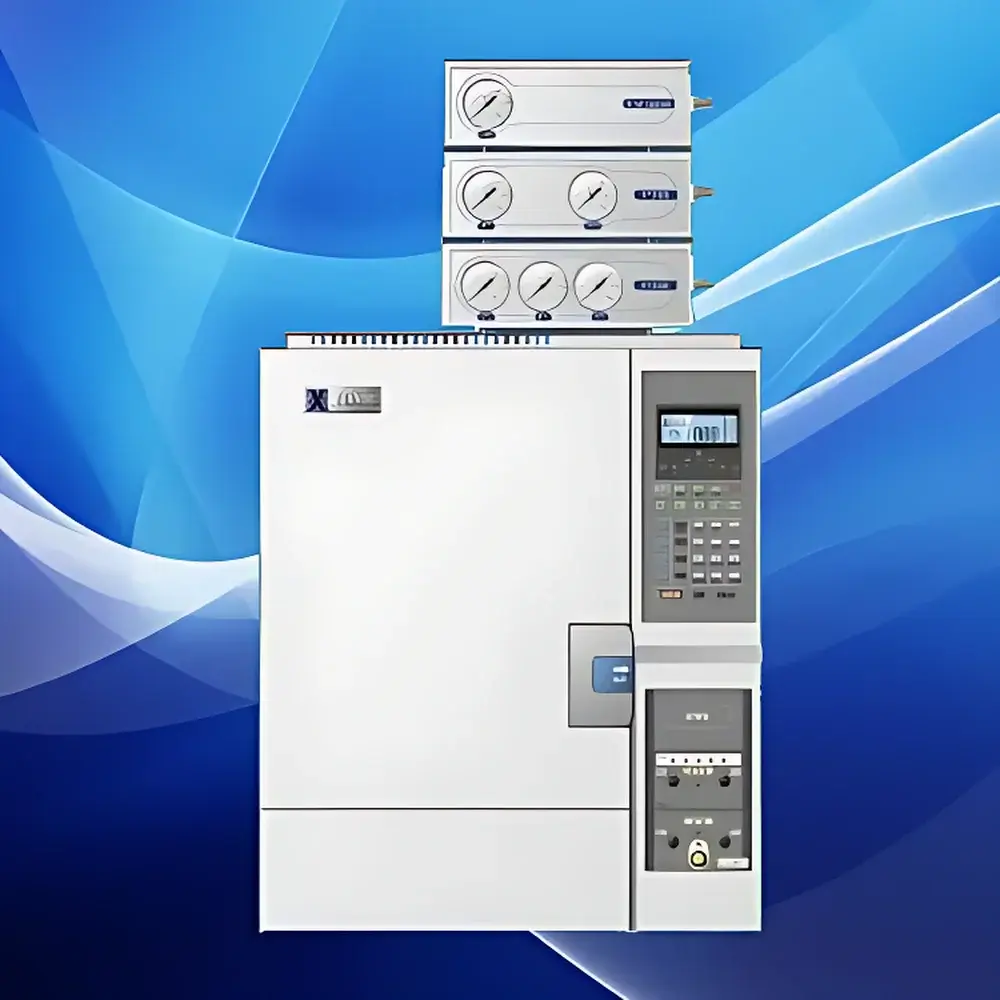
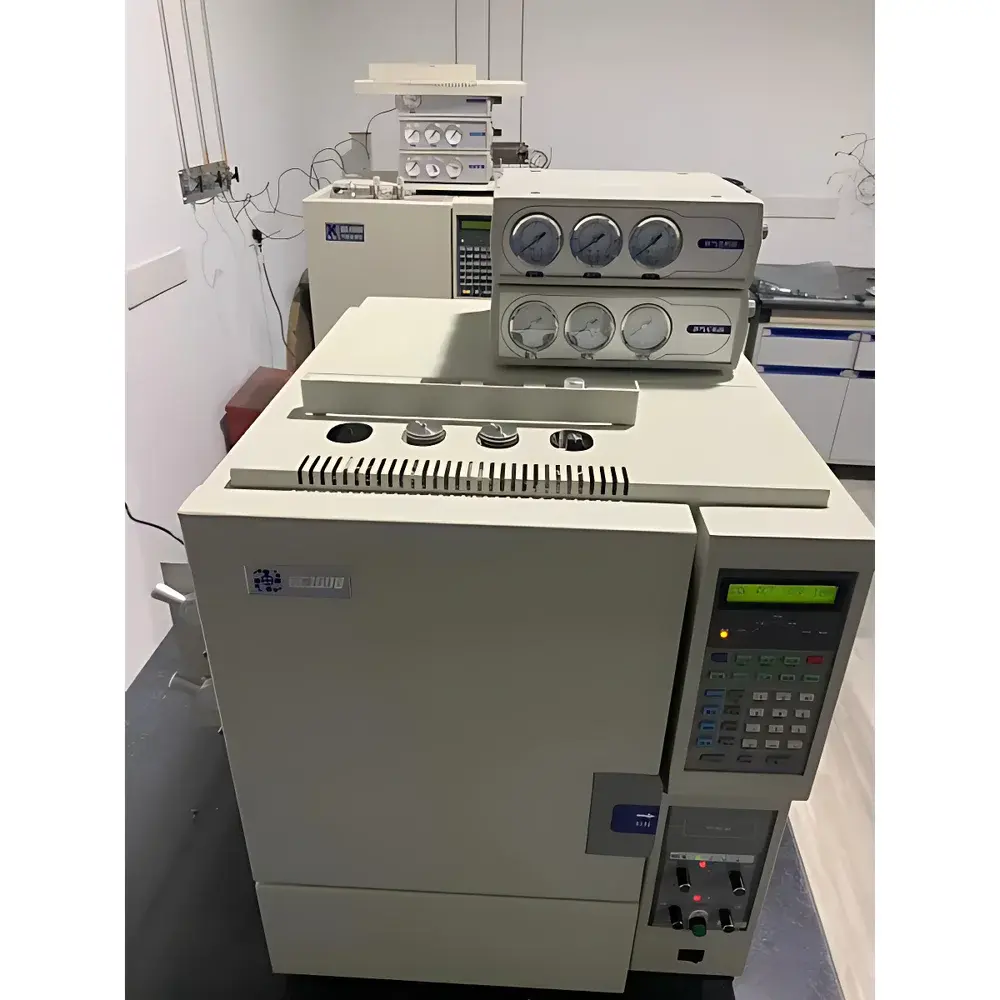
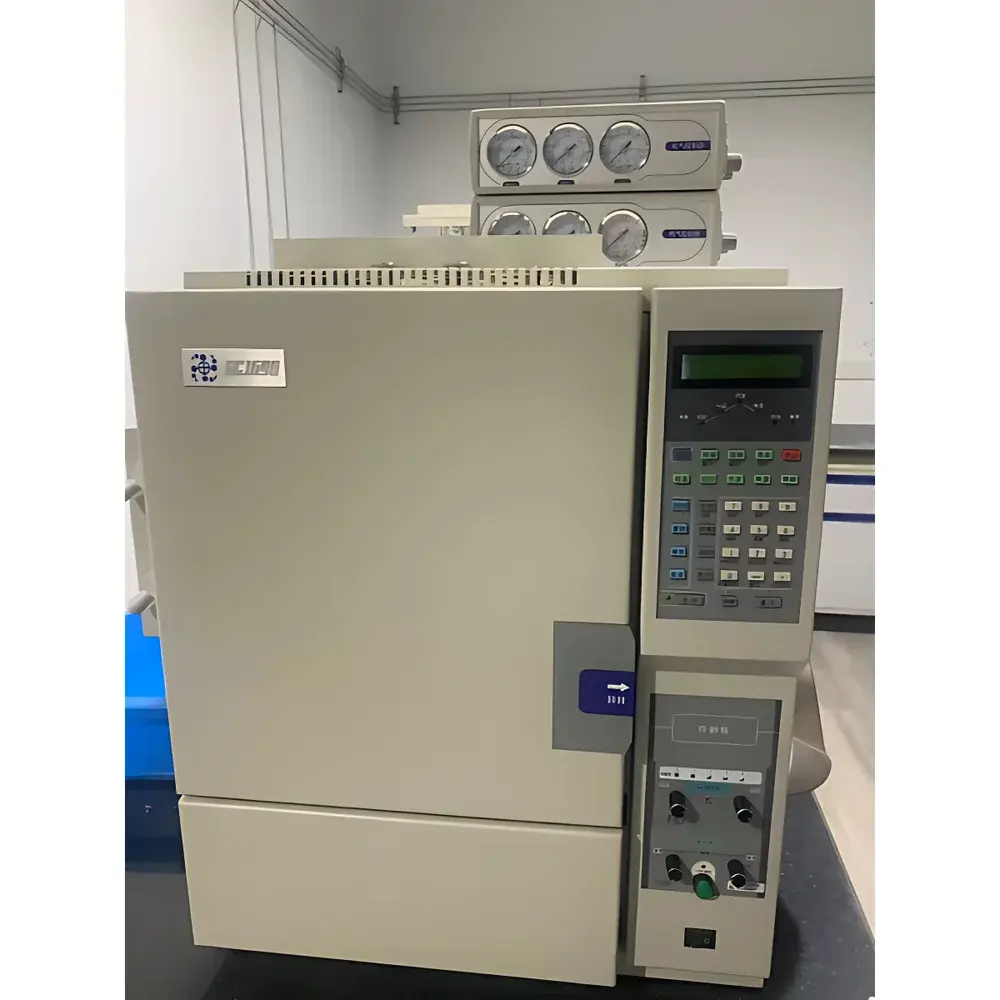
Jiedao GC1690 Pesticide Residue-Specific Gas Chromatograph
| Brand | Jiedao |
|---|---|
| Origin | Zhejiang, China |
| Instrument Type | Laboratory Gas Chromatograph |
| Application Scope | General-Purpose with Pesticide Residue Focus |
| Temperature Control Zones | 6 independent zones (including column oven, injector, detector, AUX1–AUX3) |
| Column Oven Temp Range | +7 °C to 420 °C |
| Programmed Temperature Ramping | 5-step linear ramping |
| Injector Max Temp | 420 °C |
| Carrier Gas Pressure Control | Electronic pressure control (EPC) compatible |
| Carrier Gas Flow Control | Mass flow controller (MFC) optional |
| Detector Compatibility | FID, TCD, FPD, NPD, ECD (up to 3 simultaneously) |
| Injection Modes | Split/splitless, on-column, packed-column vaporizing, WBC for wide-bore capillary, 6-port gas sampling valve |
| Safety Protections | Over-temperature, over-current (TCD), and system crash protection circuits |
| Data Interface | RS-232 or USB (legacy PC connectivity) |
| Compliance | Designed to support GLP-compliant workflows |
Overview
The Jiedao GC1690 Pesticide Residue-Specific Gas Chromatograph is a robust, modular laboratory-scale gas chromatography system engineered for reliable separation and quantification of volatile and semi-volatile organic compounds—particularly organochlorine, organophosphorus, pyrethroid, and carbamate pesticide residues—in complex matrices such as fruits, vegetables, grains, soil, and water. Built upon a dual-furnace thermal architecture with six independently controlled temperature zones, the GC1690 employs conventional packed- and capillary-column separation principles governed by partition coefficients and retention time behavior under precisely regulated carrier gas flow (N₂, He, or H₂). Its column oven—vertically oriented to minimize thermal cross-talk—supports stable isothermal operation from +7 °C above ambient to 420 °C, with five-stage programmable heating profiles and automatic rear-door ventilation for rapid cooling between runs. The system adheres to fundamental chromatographic performance criteria defined in ASTM D3699 (hydrocarbon analysis), ISO 10382 (pesticide residue testing), and US EPA Method 8081/8270, serving as a foundational platform for laboratories performing routine QC, regulatory compliance screening, and method development under ISO/IEC 17025-accredited conditions.
Key Features
- Six independent temperature-controlled zones—including column oven, dual injectors, three detector compartments, and AUX1 auxiliary heater—enabling simultaneous multi-method execution.
- Column oven with vertical thermal design, 5-step linear program ramping, and dual over-temperature protection (420 °C operational limit + fixed 450 °C hardware cutoff).
- Dedicated safety architecture: Over-temperature shutdown, TCD over-current protection (prevents tungsten filament burnout during no-gas startup), and system-level crash detection with automatic power cutoff and visual alarm.
- Modular gas control system: External-mounted, segregated gas modules for capillary, carrier, and fuel/oxidant lines—allowing intuitive flow ratio adjustment, rapid fault isolation, and zero-downtime maintenance.
- Flexible injection configuration: Supports split/splitless, on-column, packed-column vaporizing, wide-bore capillary (WBC), and 6-port gas sampling valve—enabling adaptation to diverse sample introduction requirements without hardware replacement.
- Multi-detector compatibility: Up to three detectors—FID (for universal hydrocarbon response), ECD (for halogenated pesticides), FPD (for P/S-selective detection), NPD (for nitrogen/phosphorus compounds), and TCD (for permanent gases and low-carbon volatiles)—can be installed concurrently.
- Ergonomic human interface: Backlit LCD display with color-coded membrane keypad (green = temp, blue = detector, white = numeric, black = event control) optimized for glove-compatible operation in analytical labs.
Sample Compatibility & Compliance
The GC1690 accommodates liquid, gaseous, and solid-phase extracted samples introduced via syringe, headspace vial, or purge-and-trap concentrator. It routinely analyzes compounds with boiling points up to 399 °C—including chlorpyrifos, diazinon, cypermethrin, and endosulfan—across food, environmental, and agrochemical testing workflows. While not pre-certified to FDA 21 CFR Part 11, its hardware architecture supports audit-trail-capable data acquisition when paired with compliant third-party software (e.g., OpenLab CDS or Chromeleon). The instrument’s thermal stability, retention time reproducibility (<0.02 min RSD), and baseline noise characteristics align with ISO 17025 clause 5.4.2 for equipment suitability verification. Its design facilitates adherence to national standard methods such as GB 23200.113–2021 (China), EN 15662:2018 (EU), and AOAC 2007.01 (multi-residue analysis).
Software & Data Management
The GC1690 operates in standalone mode using embedded firmware and does not include proprietary chromatography data system (CDS) software. Raw signal output is delivered via RS-232 or USB to external PCs running validated CDS platforms. Users may integrate the instrument into existing LIMS environments through ASCII-based peak table export (.txt) or CSV-formatted quantitative reports. All detector parameters—including FID hydrogen/air flows, ECD pulse settings, and TCD bridge current—are adjustable via front-panel controls and retained in non-volatile memory. For GLP-regulated environments, laboratories are advised to implement electronic signature-enabled CDS solutions that provide full audit trails, user access logs, and version-controlled method storage—consistent with Annex 11 and ALCOA+ data integrity principles.
Applications
- Multi-residue pesticide screening in fresh produce, cereals, and processed foods per SANTE/11312/2021 guidelines.
- Residual solvent analysis in pharmaceutical excipients (ICH Q3C-compliant).
- VOC profiling in drinking water (EPA 524.2, 624).
- Fatty acid methyl ester (FAME) analysis in biodiesel feedstocks (ASTM D6584).
- Hydrocarbon fingerprinting in soil and sediment extracts (EPA 8015M).
- Quality control of synthetic intermediates in fine chemical manufacturing.
FAQ
Does the GC1690 support electronic pressure control (EPC) for carrier gas?
Yes—while the base configuration uses mechanical flow regulation, optional EPC modules are available for precise, software-adjustable pressure management across all gas channels.
Can the instrument perform method transfer from legacy GC systems?
Yes—the consistent thermal gradients, standardized detector interfaces, and compatibility with common column dimensions (e.g., 30 m × 0.25 mm ID × 0.25 µm film) enable straightforward migration of validated methods.
Is remote monitoring or network connectivity supported?
No native Ethernet or Wi-Fi capability is integrated; however, serial-to-Ethernet converters may be deployed to enable TCP/IP communication with supervisory SCADA or lab automation systems.
What calibration standards are recommended for pesticide residue analysis?
Certified reference materials traceable to NIST SRMs (e.g., SRM 3148 for organophosphates) or CRM providers such as AccuStandard or Sigma-Aldrich are advised for initial qualification and ongoing system suitability testing.
How frequently should the inlet liner and septum be replaced during high-throughput pesticide analysis?
Under typical batch processing (≤50 injections/day), replace the liner every 100–200 injections and the septum every 50–80 injections—adjusting based on observed ghost peaks, retention time drift, or pressure fluctuations.



