
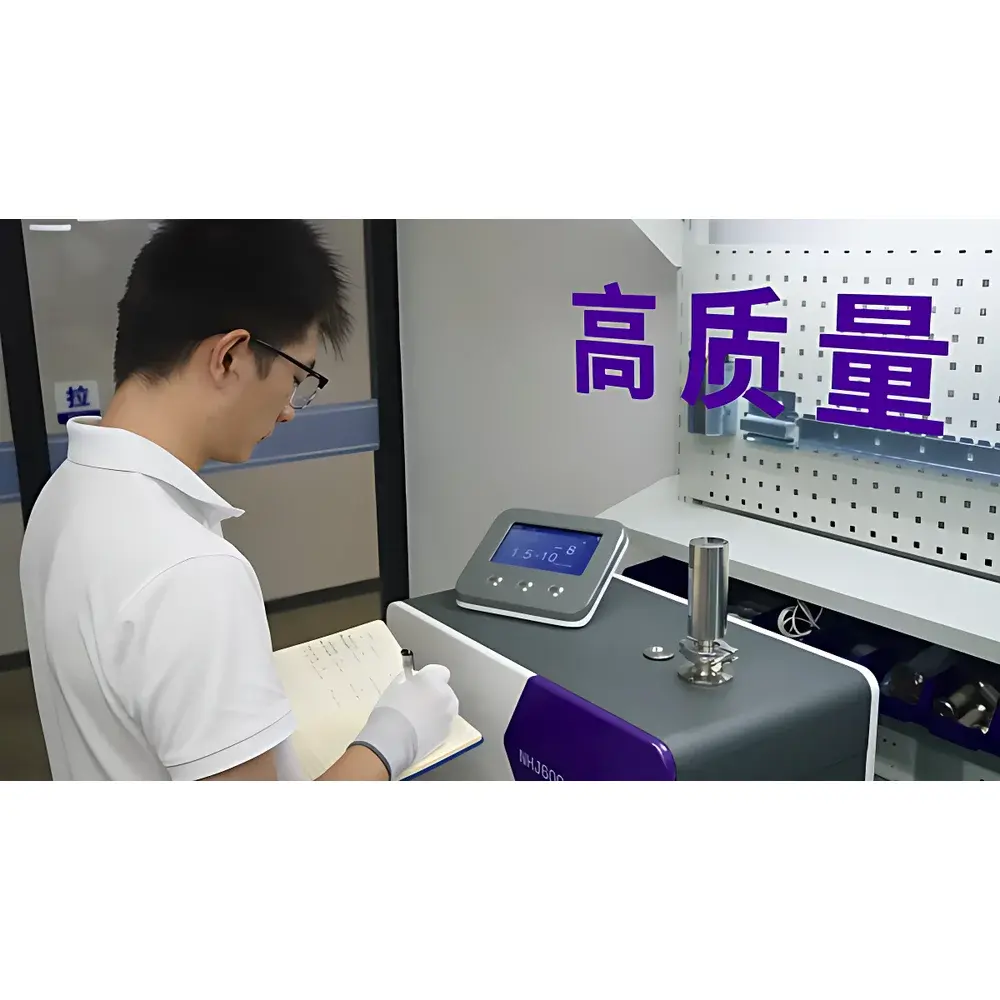
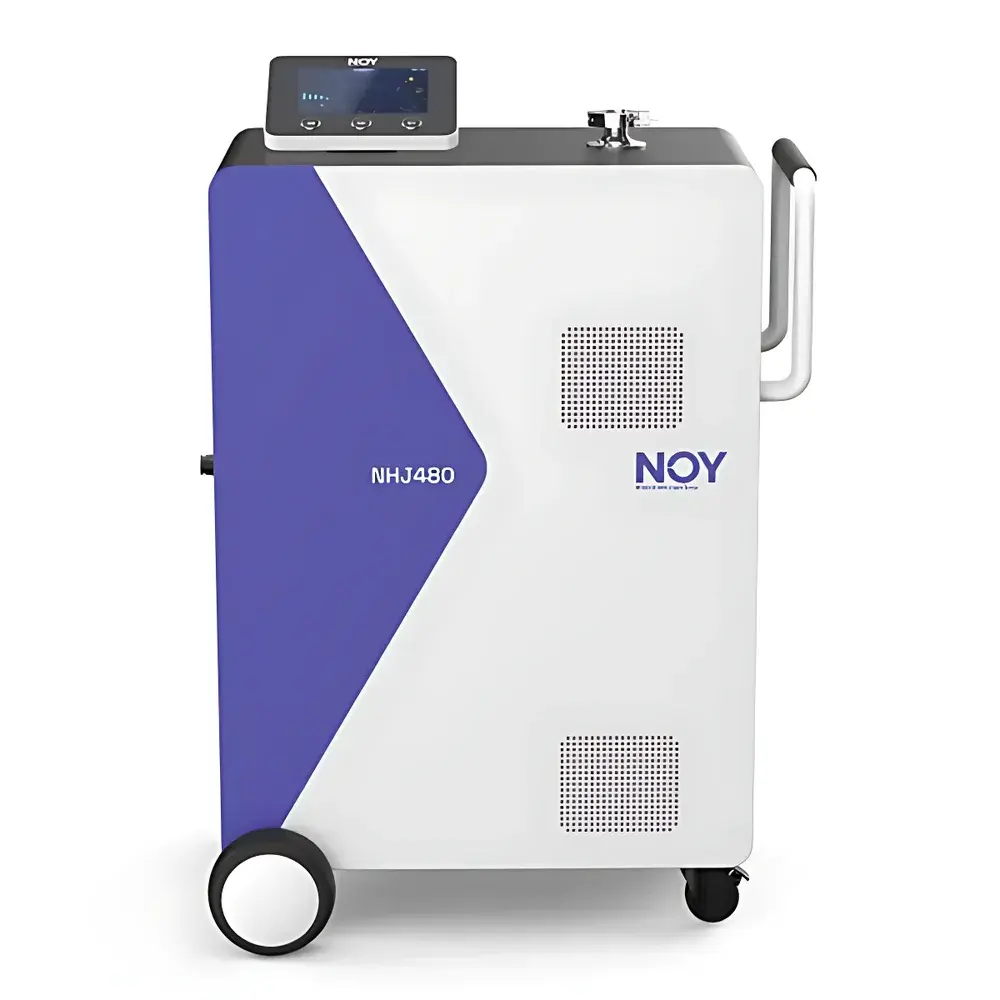
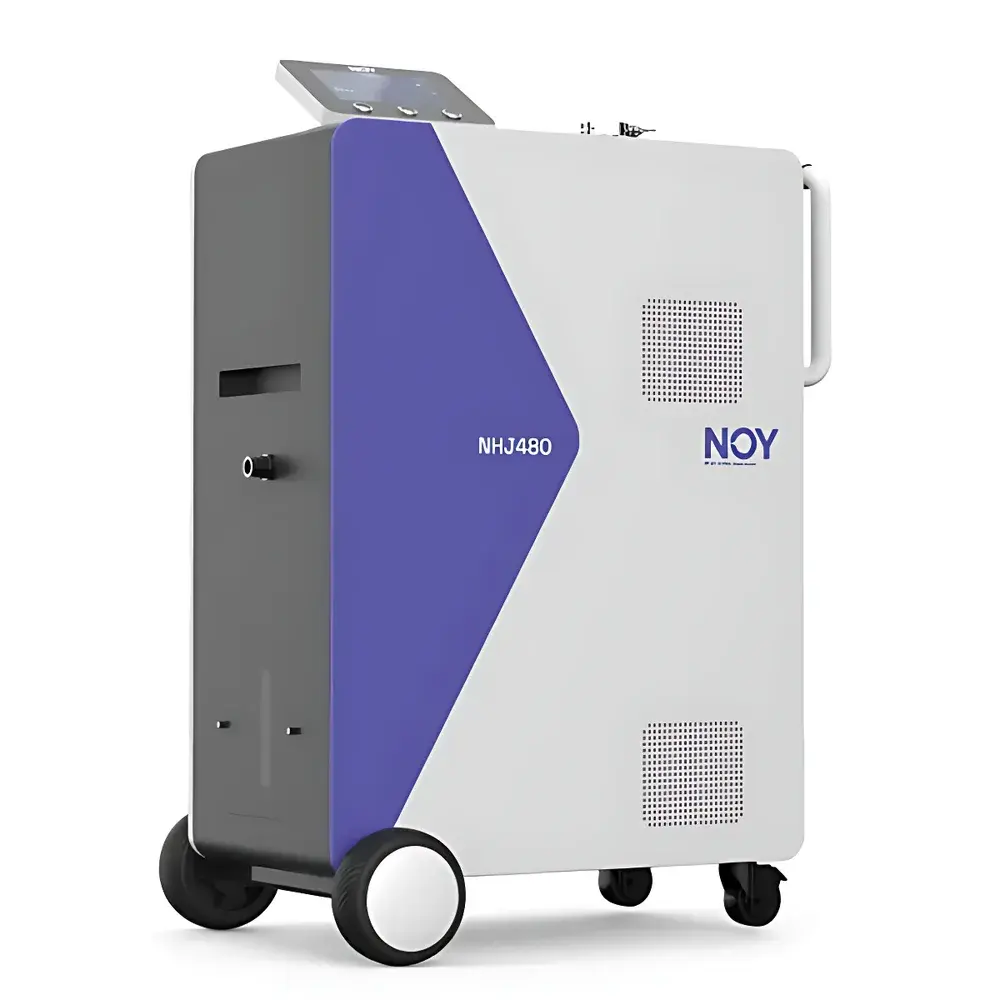
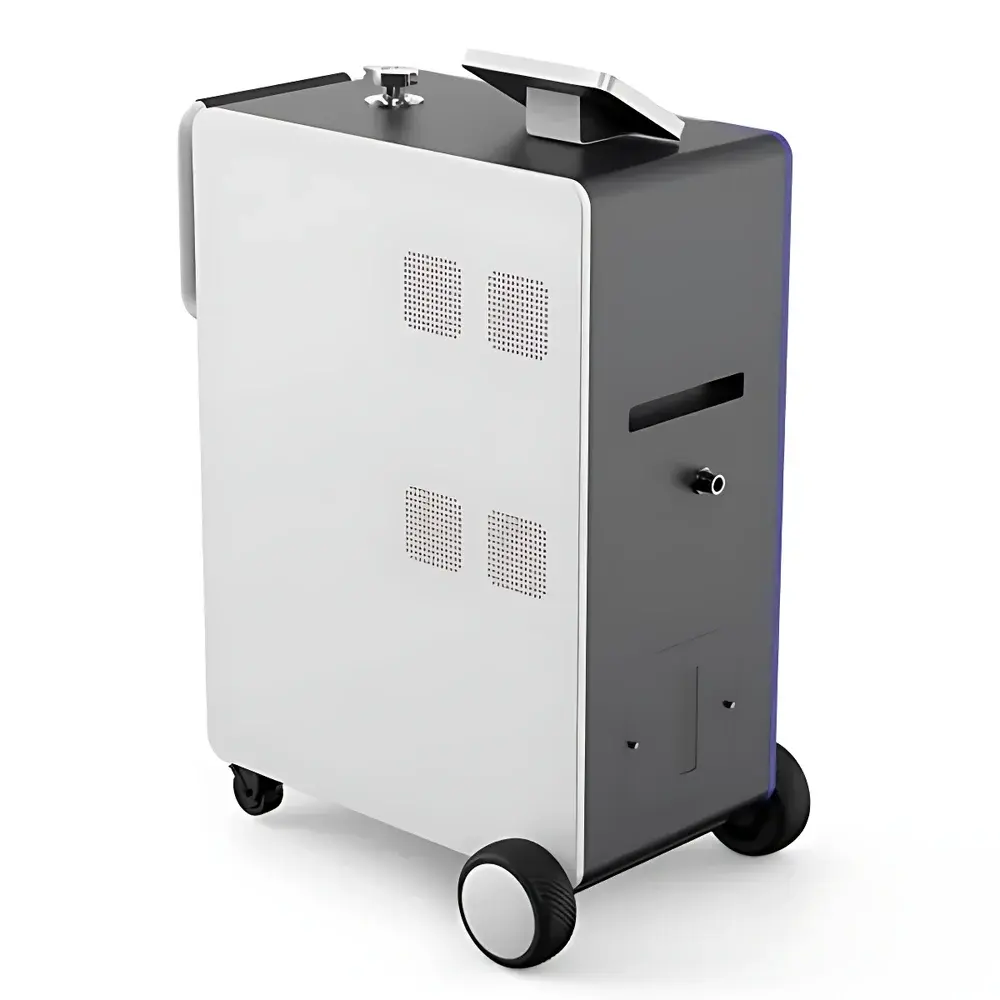
NOY NHJ480 Helium Mass Spectrometer Leak Detector
| Brand | NOY |
|---|---|
| Origin | Anhui, China |
| Manufacturer Type | OEM Manufacturer |
| Instrument Type | Benchtop |
| Detection Method | Vacuum Mode |
| Minimum Detectable Leak Rate | 3×10⁻¹³ Pa·m³/s |
| Warm-up Time | ≤90 s |
| Response Time | ≤0.5 s |
| Maximum Inlet Pressure | ≤2000 Pa |
| Leak Rate Display Range | 1×10⁻² to 1×10⁻⁹ Pa·m³/s (zero-referenced) |
Overview
The NOY NHJ480 Helium Mass Spectrometer Leak Detector is a benchtop-grade, fully automated vacuum-mode leak detection system engineered for high-precision integrity verification in demanding industrial and research environments. It operates on the principle of helium mass spectrometry—ionizing helium atoms introduced into a vacuum chamber, separating them via a 180° non-uniform magnetic sector mass analyzer, and detecting the resulting He⁺ ion current at mass-to-charge ratio (m/z) = 4. This method delivers exceptional selectivity for helium against background gases (e.g., N₂, O₂, H₂O), enabling reliable quantification of minute leaks even in complex vacuum systems. Designed for integration into cleanroom-compatible production lines, semiconductor packaging validation, vacuum insulation testing, and aerospace component qualification, the NHJ480 meets fundamental operational requirements for ISO 10110-7 (optical component vacuum integrity), ASTM E493 (standard test methods for helium leak testing), and supports GLP/GMP-aligned workflows through traceable calibration and audit-ready operation logs.
Key Features
- High-sensitivity detection with a minimum detectable leak rate of 3×10⁻¹³ Pa·m³/s—achieved through dual-iridium filament ion source architecture, offering superior oxidation resistance and extended service life (>10,000 hours typical under standard operating conditions).
- Optimized vacuum-path design featuring particle traps and laminar-flow gas handling to prevent dust ingress and minimize contamination risk—critical for applications in microelectronics packaging and medical device manufacturing.
- Automated operational sequence including auto helium peak scanning, real-time zero-point calibration, and seamless range switching across nine decades (1×10⁻² to 1×10⁻⁹ Pa·m³/s), eliminating manual gain adjustments.
- Thermally and electromagnetically isolated mechanical and electronic modules—ensuring long-term signal stability and minimizing drift during extended continuous operation.
- Integrated silent-caster mobility system with reinforced chassis, enabling repositioning between test stations without compromising alignment or vacuum integrity.
- Fast system readiness: warm-up time ≤90 seconds; response time ≤0.5 seconds from helium pulse initiation to stable reading—supporting high-throughput inline quality control.
Sample Compatibility & Compliance
The NHJ480 accommodates a broad spectrum of test objects—from small hermetic packages (e.g., MEMS sensors, laser diodes) to large-volume vacuum chambers (up to 5 m³ with compatible pumping configuration). Its inlet port accepts standard CF-35 and KF-40 flanges, and maximum allowable inlet pressure of ≤2000 Pa ensures compatibility with roughing-pump-backed systems. The instrument complies with IEC 61000-6-3 (EMC emission standards) and IEC 61000-6-2 (immunity requirements). While not certified to UL/CE for standalone safety compliance, it is designed for integration into CE-marked vacuum systems meeting EN 61000-6-4 and EN 61000-6-2. Calibration traceability follows ISO/IEC 17025 guidelines when performed using NIST-traceable helium reference leaks.
Software & Data Management
The NHJ480 includes embedded firmware supporting RS-232, USB-C, and Ethernet interfaces for bidirectional communication with host SCADA or MES platforms. Optional NOY LeakMaster PC software provides real-time waveform visualization, pass/fail threshold programming, batch logging (CSV/TXT export), and timestamped event history. Remote operation is enabled via the official NOY Connect mobile application (iOS/Android), allowing users to initiate/stop tests, perform zero calibration, and monitor live leak rate values—including graphical trend display and alarm notification. All data entries include operator ID, timestamp, and environmental metadata (chamber pressure, ambient temperature), satisfying FDA 21 CFR Part 11 requirements for electronic records when deployed with user authentication and audit trail activation.
Applications
- Semiconductor fabrication: Hermeticity screening of TO-can packages, RF modules, and wafer-level encapsulated devices.
- Aerospace & defense: Validation of cryogenic fuel line joints, satellite thermal vacuum housings, and avionics enclosure seals.
- Medical device manufacturing: Leak verification of implantable pacemaker casings, drug delivery cartridges, and sterilization pouch integrity.
- Energy sector: Testing of fusion reactor vacuum vessel welds, superconducting magnet cryostats, and hydrogen storage canisters.
- Research infrastructure: Characterization of ultra-high vacuum (UHV) systems in synchrotron beamlines and atomic physics laboratories.
FAQ
What vacuum pumping configuration is required to achieve the specified 3×10⁻¹³ Pa·m³/s sensitivity?
A turbomolecular pump with ≥300 L/s pumping speed backed by a dry scroll pump (≥12 m³/h) is recommended. Base pressure below 1×10⁻⁴ Pa is necessary prior to helium introduction.
Does the NHJ480 support quantitative leak localization?
No—it is a quantitative vacuum-integrated detector only. For pinpoint localization, it must be paired with a helium spray probe (sold separately) and operated in sniffer mode, though this reduces sensitivity to ~1×10⁻⁹ Pa·m³/s.
Is firmware upgradable in the field?
Yes—updates are delivered via USB flash drive or network download and retain all user-configured thresholds and calibration history.
Can the instrument operate continuously for 24/7 production monitoring?
Yes—designed for unattended operation with thermal management optimized for ambient temperatures from 15–30°C and relative humidity ≤70% non-condensing.
What documentation is provided for regulatory audits?
Factory calibration certificate, operation manual, electrical safety report, and optional IQ/OQ protocol templates compliant with ISO 13485 and GAMP5 are available upon request.
Related Products





