
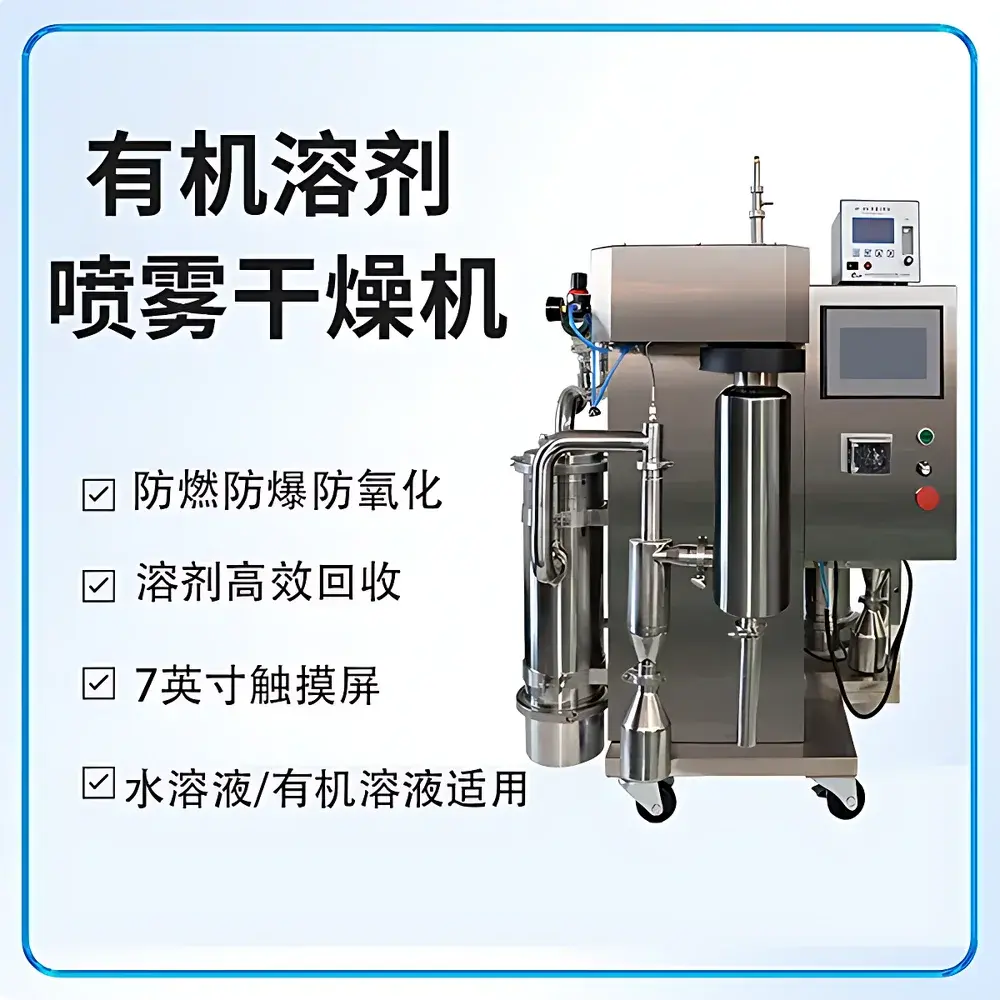
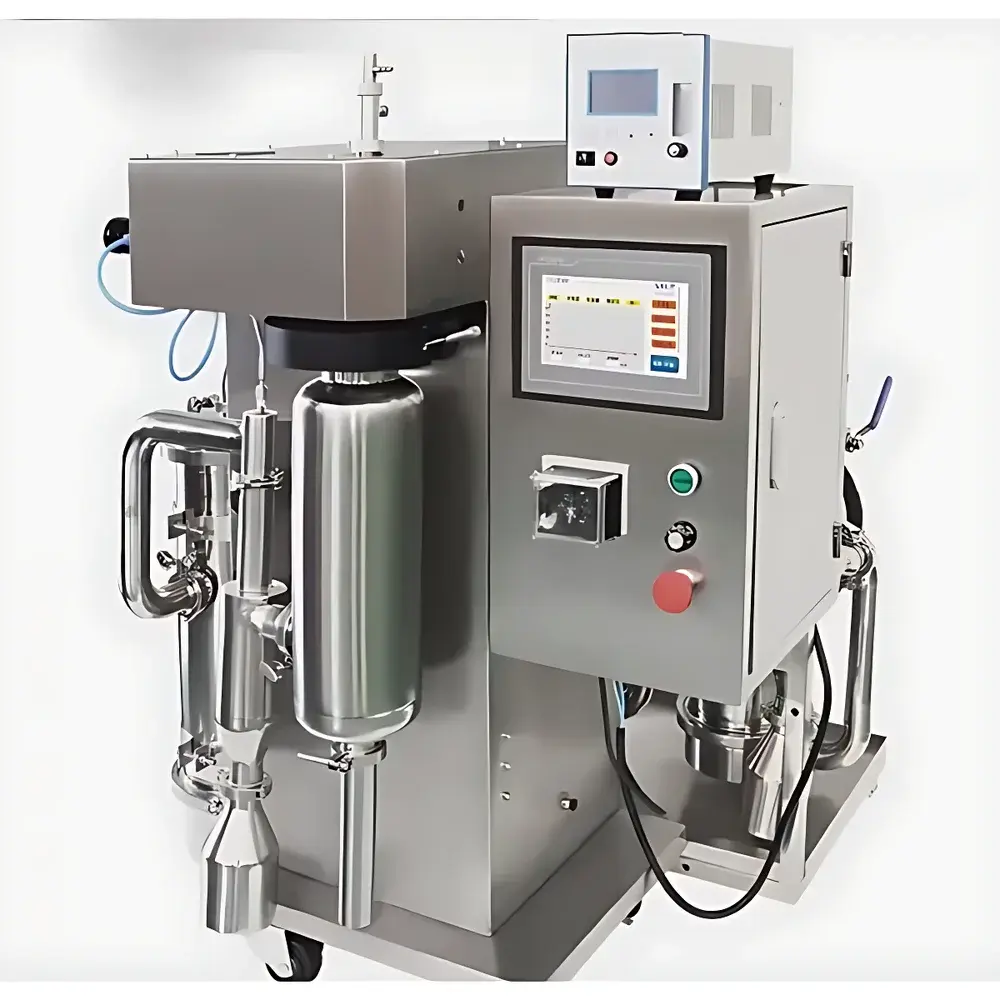
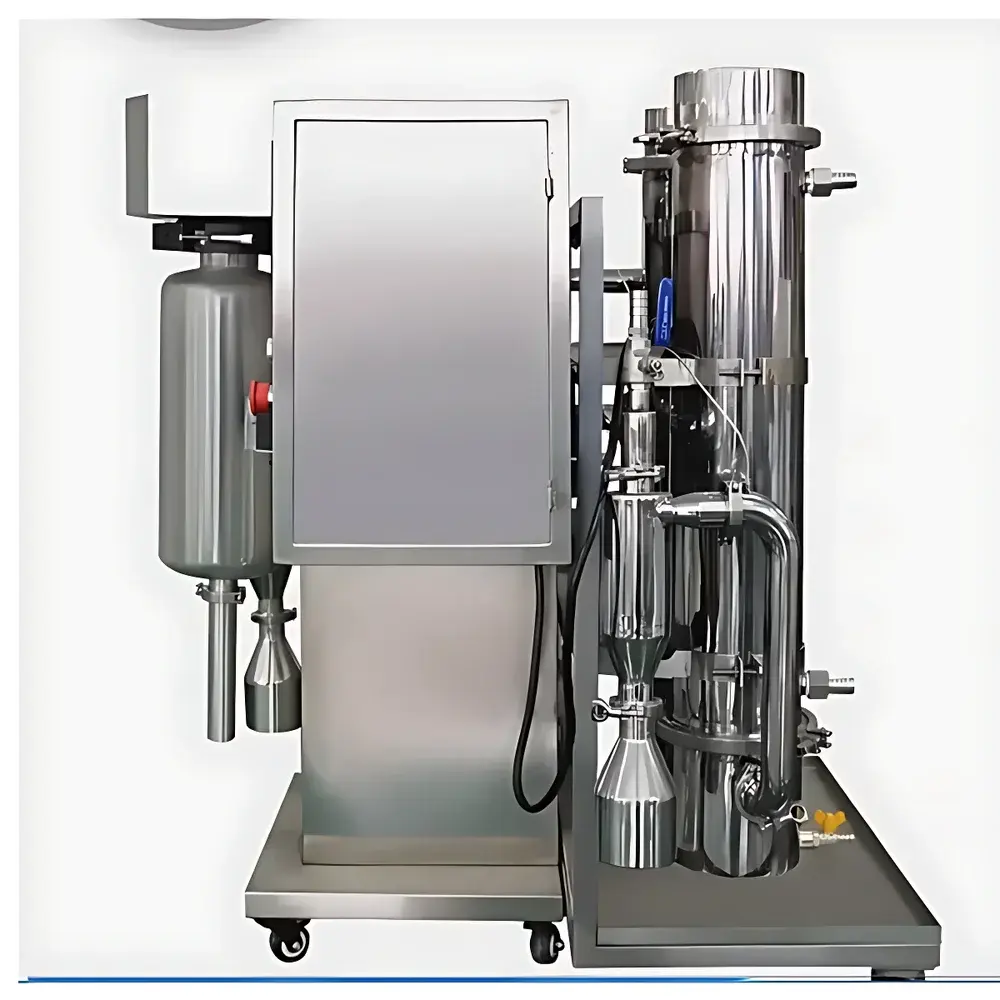
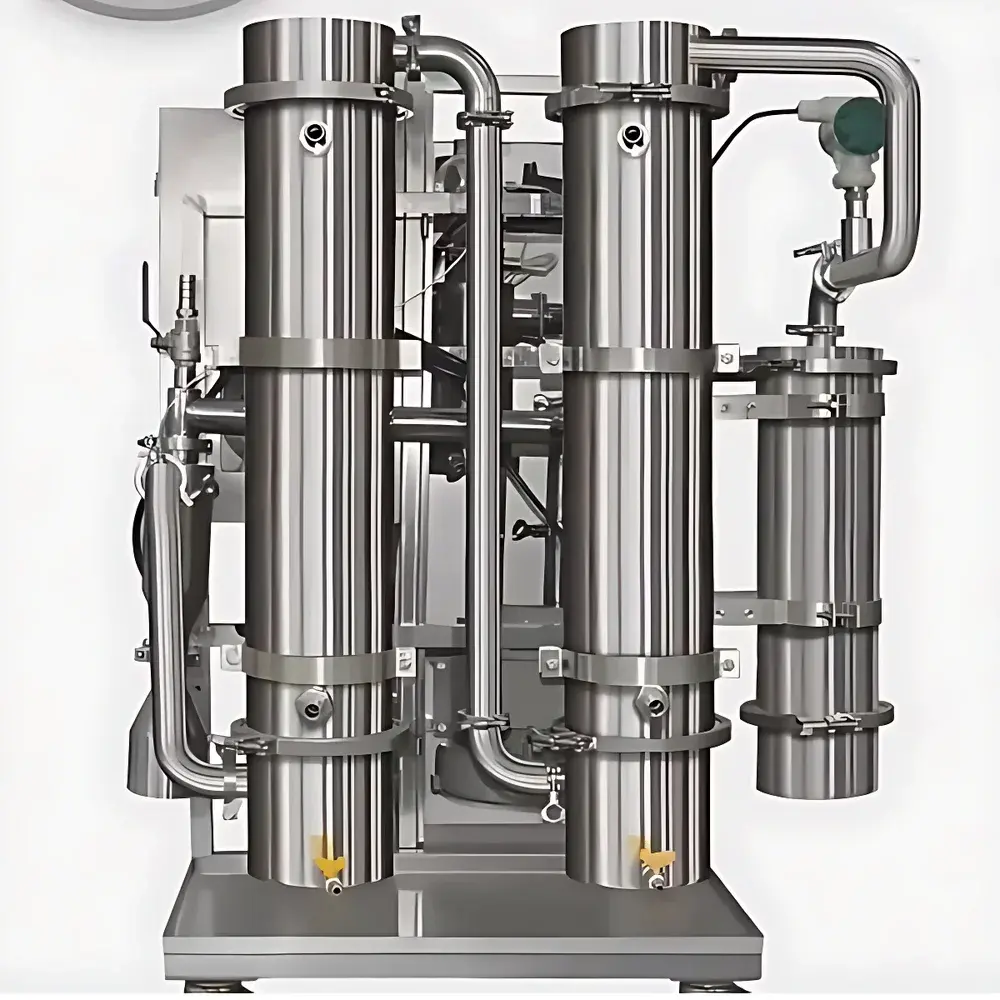
AnYuJie AYJ-PWGZ6000 Benchtop Inert-Gas Spray Dryer for Organic Solvents
| Brand | AnYuJie |
|---|---|
| Origin | Zhejiang, China |
| Model | AYJ-PWGZ6000 |
| Sample Types | Aqueous & organic solvent solutions |
| Max Feed Rate | 1000 mL/h (dependent on solids content) |
| Inlet Temperature Range | RT–250 °C |
| Outlet Temperature Range | RT–140 °C |
| Particle Size Output | 5–250 µm |
| Oxygen Monitoring | 0–100% O₂ (±0.1% accuracy) |
| Pressure Monitoring | 0–100 kPa |
| Automatic Pressure Relief Threshold | ≥0.02 MPa |
| Airflow Control | 0–30 m³/h (inverter-driven blower) |
| Condenser Temp Range | −5 to 30 °C (±0.5 °C) |
Overview
The AnYuJie AYJ-PWGZ6000 is a benchtop inert-gas spray dryer engineered for safe, reproducible drying of heat-sensitive and oxidation-prone materials dissolved in organic solvents—such as acetone, ethanol, THF, chloroform, and ethyl acetate—as well as aqueous systems. Unlike conventional open-air spray dryers, this system operates under fully closed-loop nitrogen circulation, eliminating oxygen exposure and mitigating explosion risk during solvent evaporation. Its design adheres to fundamental principles of evaporative mass transfer and droplet thermodynamics: liquid feed is atomized via dual-fluid nozzles into fine mist within a heated inert environment; rapid solvent removal yields dry particulates whose morphology and residual solvent content are governed by precise control of inlet/outlet temperatures, residence time, and gas-phase partial pressure. The unit is intended for R&D-scale formulation development, pharmaceutical intermediate processing, nanomaterial synthesis, and functional coating powder preparation—where solvent recovery, particle size distribution control, and thermal stability preservation are critical.
Key Features
- Inert nitrogen recirculation architecture reduces nitrogen consumption by >70% versus continuous purge systems, lowering operational cost and enhancing process sustainability.
- Real-time oxygen monitoring (0–100% range, ±0.1% accuracy) triggers automatic feed pump interlock when O₂ exceeds user-defined threshold (default: ≤3%), ensuring strict compliance with OSHA and ATEX-informed safety protocols for flammable solvent handling.
- Integrated pressure-sensing module (0–100 kPa) coupled with programmable automatic relief valve activation at ≥0.02 MPa—plus rupture disc backup—provides redundant overpressure protection aligned with ASME BPVC Section VIII requirements.
- Multi-stage solvent condensation system (-5 to 30 °C, ±0.5 °C stability) achieves >92% solvent recovery efficiency across common low-boiling organics, minimizing waste disposal burden and supporting ISO 14001-aligned lab practices.
- High-efficiency sintered stainless steel filter (316L, 0.2 µm pore rating) retains fine particles (>99.9% capture efficiency for ≥5 µm aerosols), reducing product loss and enabling direct collection of free-flowing powders.
- Clad-wall heating system minimizes thermal gradient losses in ductwork and maintains ±0.5 °C temperature stability across inlet, outlet, and jacket zones—critical for preserving amorphous structure in APIs or polymer nanoparticles.
- Modular, tool-free disassembly of cyclone separator and drying chamber enables rapid cleaning and validation per FDA 21 CFR Part 11 and EU GMP Annex 15 guidelines.
Sample Compatibility & Compliance
The AYJ-PWGZ6000 accommodates a broad spectrum of solution-based feedstocks, including but not limited to: polymer solutions (PLGA, PVP, cellulose derivatives), small-molecule drug suspensions, metal-organic framework (MOF) precursors, catalyst colloids, and nanoemulsions. It supports both water-miscible and water-immiscible organic solvents—validated for use with ethanol, isopropanol, acetone, dichloromethane, and ethyl acetate. All wetted parts conform to ASTM A240 Type 316L stainless steel specifications. System-level documentation includes traceable calibration certificates for all temperature, pressure, and oxygen sensors. Optional integration with on-site nitrogen generators eliminates dependency on high-pressure cylinders, further improving facility safety and audit readiness for GLP/GMP environments.
Software & Data Management
The 7-inch industrial-grade touchscreen HMI runs embedded Linux firmware with real-time data logging at 1 Hz resolution. Temperature profiles (inlet, outlet, condenser, jacket), O₂ concentration, system pressure, airflow rate, and feed pump speed are simultaneously recorded and exportable in CSV format. Curve memory function stores up to 200 historical drying protocols, each timestamped and user-annotated. Audit trail capability logs operator ID, parameter changes, alarm events, and system start/stop cycles—fully compliant with FDA 21 CFR Part 11 electronic record requirements when paired with network-authenticated login (optional LDAP integration). Remote monitoring via Ethernet or Wi-Fi is supported through secure HTTP/HTTPS API endpoints.
Applications
- Pharmaceutical R&D: Production of inhalable dry powders, amorphous solid dispersions, and sterile-excipient blends without thermal degradation.
- Materials Science: Synthesis of uniform microspheres for battery cathode precursors (e.g., LiCoO₂, NMC), ceramic nanopowders, and porous silica carriers.
- Food & Nutraceuticals: Encapsulation of volatile oils, probiotics, and omega-3 fatty acids using GRAS-compliant solvents under oxygen-free conditions.
- Academic Research: Kinetic studies of solvent evaporation dynamics, particle formation mechanisms, and crystallinity modulation via controlled quenching.
- Quality Control Labs: Rapid generation of reference standards from solution-phase analytes prior to HPLC or DSC characterization.
FAQ
Can the AYJ-PWGZ6000 handle chlorinated solvents such as dichloromethane or chloroform?
Yes—provided appropriate chemical compatibility verification is performed for seals and gasket materials (Viton® or Kalrez® recommended); condenser coil material must be confirmed as 316L SS or Hastelloy C-276 for extended exposure.
Is remote software update capability available?
Firmware updates are delivered via USB flash drive with SHA-256 checksum verification; over-the-air updates require optional enterprise license and TLS 1.2-secured connection.
What is the typical particle size distribution width (SPAN) achievable?
Under optimized settings (e.g., 10% w/v ethanol solution, 150 °C inlet, 80 °C outlet), Dv10–Dv90 SPAN values typically fall between 1.8–2.3 for monodisperse model systems; broader distributions occur with high-viscosity or surfactant-stabilized feeds.
Does the system meet explosion protection standards for Class I, Division 1 environments?
The base configuration meets Class I, Division 2 / Zone 2 requirements; full Class I, Division 1 certification requires factory-installed ATEX/IECEx-rated motor, purge system, and junction boxes—available as custom-engineered option.
How is solvent residue quantified post-drying?
Residual solvent analysis is performed offline using headspace GC-FID or GC-MS per USP <467>; the dryer itself does not include integrated analytical instrumentation but provides consistent, repeatable drying endpoints suitable for method transfer to QC labs.



