
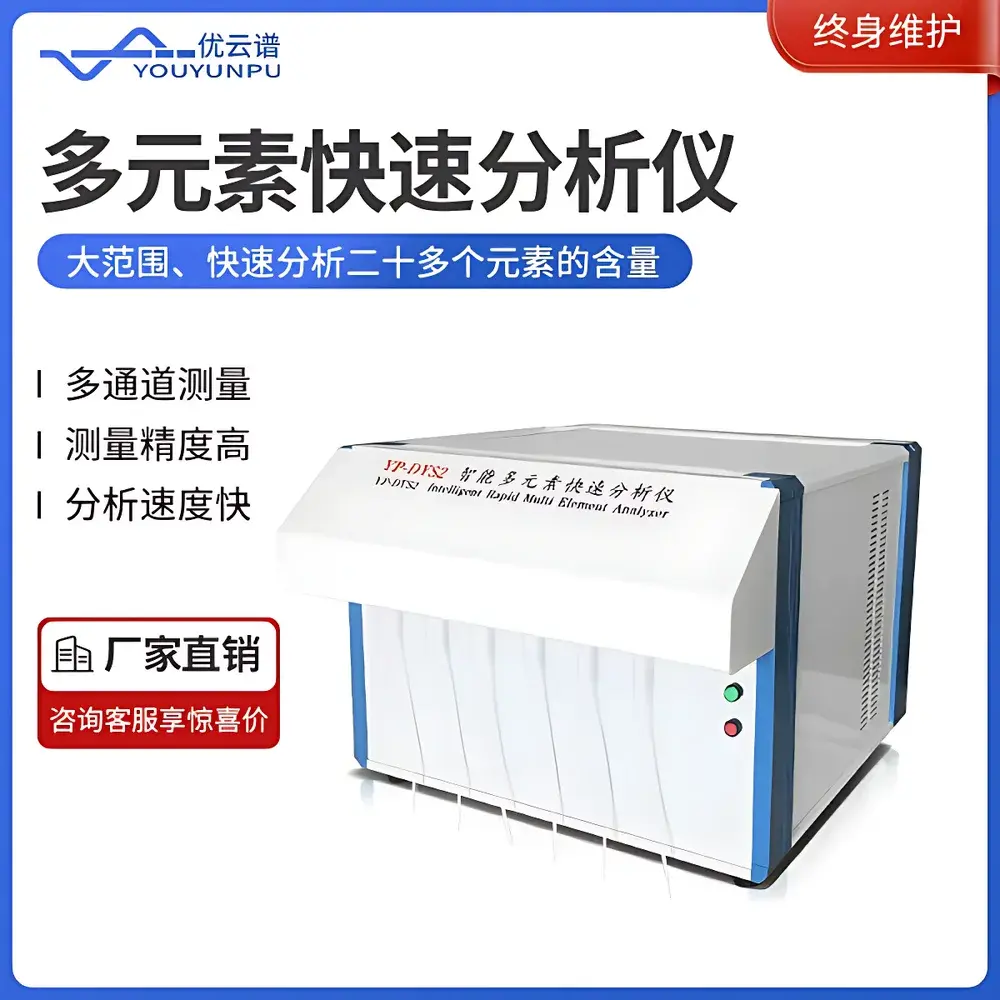
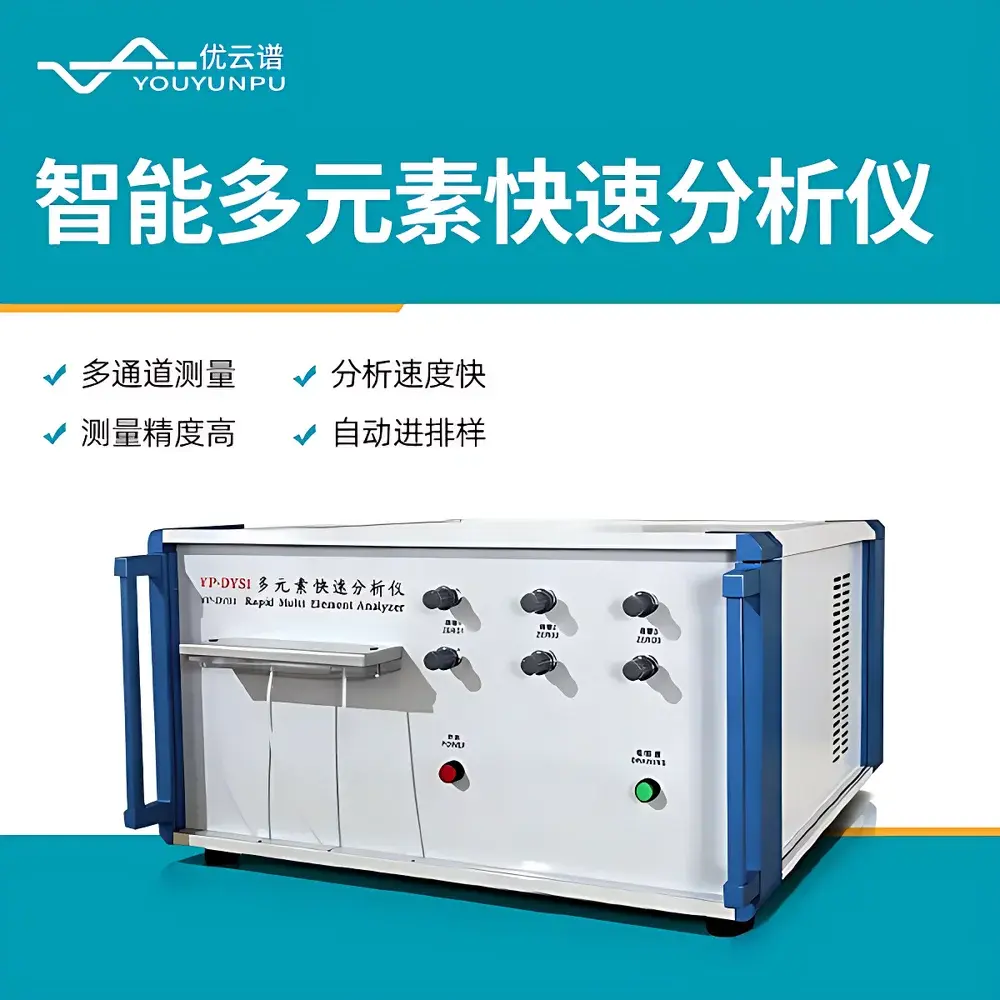
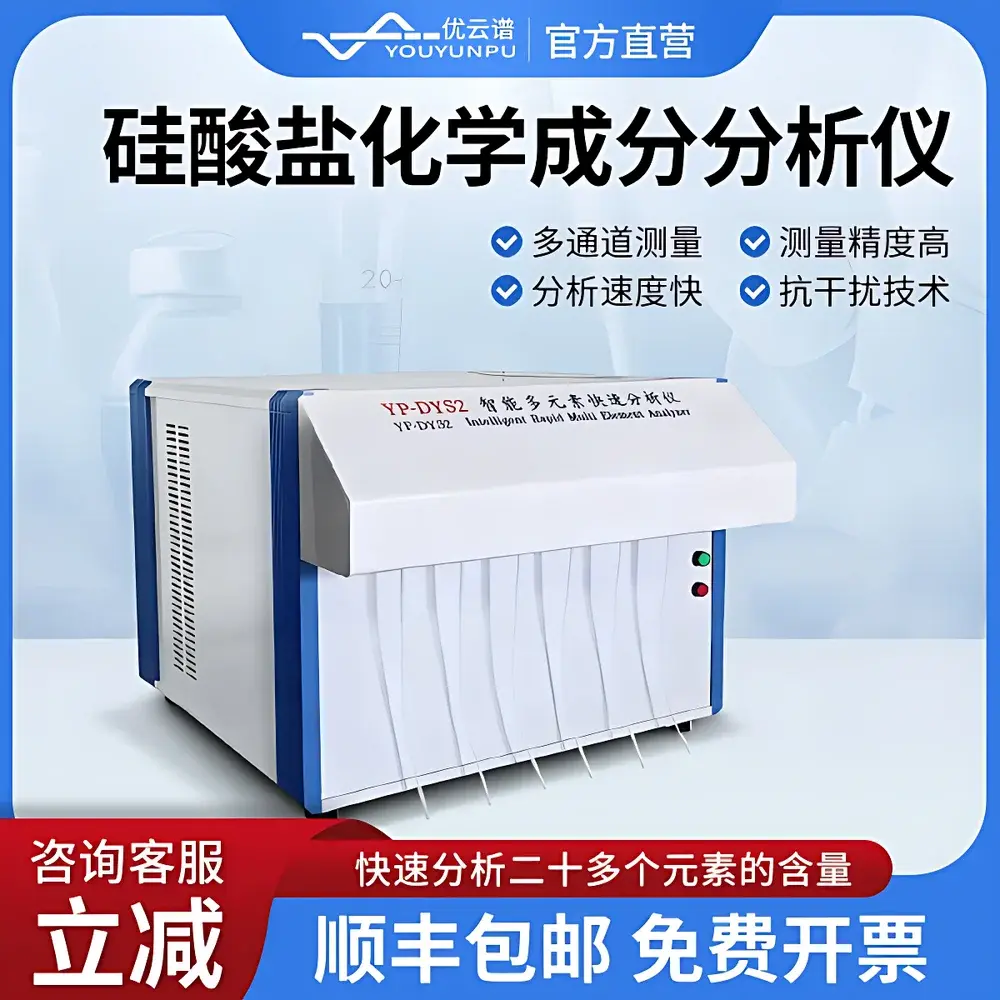
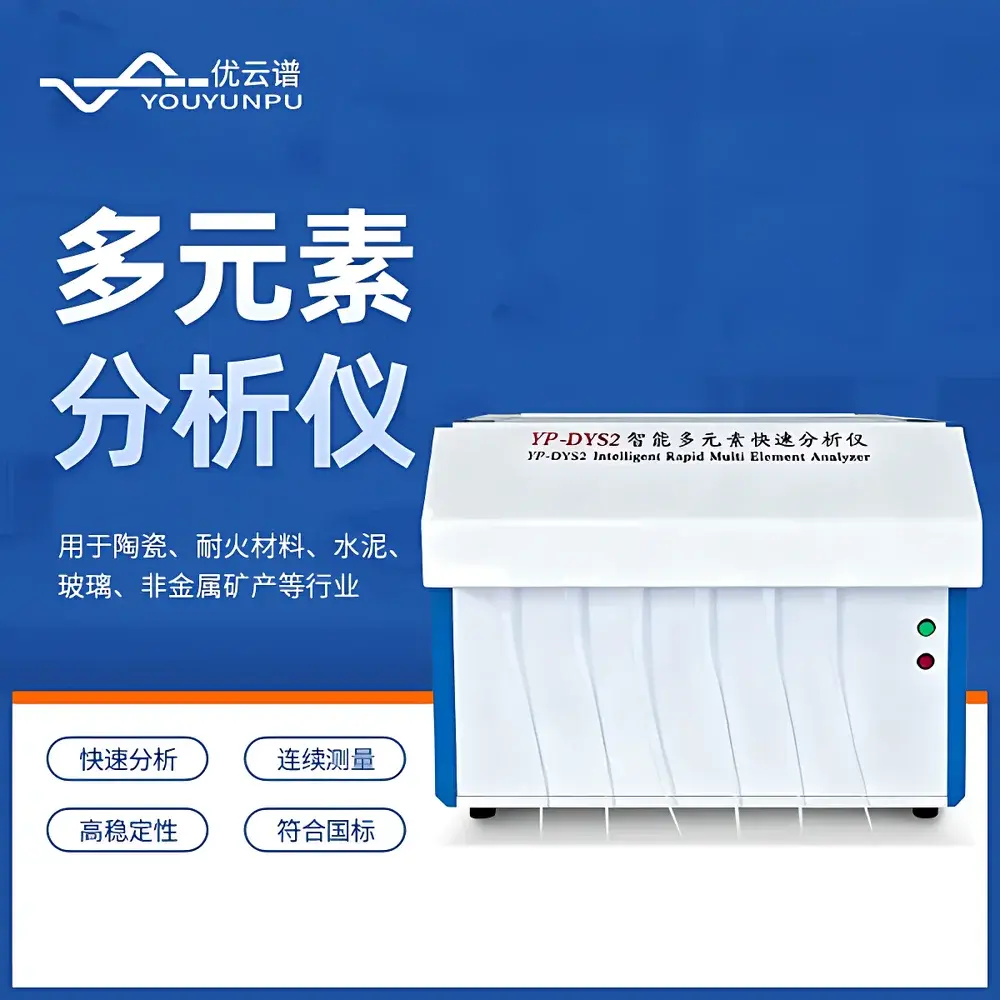
Youyunpu YP-DYS2 Intelligent Multi-Element Rapid Analyzer for Silicate Chemical Composition Analysis
| Brand | Youyunpu |
|---|---|
| Origin | Shandong, China |
| Manufacturer Type | Direct Manufacturer |
| Country of Origin | China |
| Model | YP-DYS2 |
| Price | USD 2,350 (FOB Qingdao) |
Overview
The Youyunpu YP-DYS2 Intelligent Multi-Element Rapid Analyzer is a dedicated wet-chemical spectrophotometric instrument engineered for quantitative elemental analysis in silicate-based materials. It operates on the principle of colorimetric photometry—measuring absorbance of chromogenic complexes formed via standardized wet-chemistry digestion and derivatization protocols. Unlike atomic absorption or ICP-based systems, the YP-DYS2 integrates fully automated liquid handling with six independent optical measurement channels, enabling simultaneous multi-element determination without instrumental reconfiguration. Its design targets routine QC/QA laboratories in ceramics, refractories, glass, cement, and non-metallic mineral processing—where high sample throughput, method traceability, and compliance with traditional silicate analysis standards (e.g., GB/T 4734, GB/T 6900, QB/T 2578–2002) are critical operational requirements. The analyzer employs high-stability photodiode arrays with enhanced signal-to-noise ratio, calibrated against NIST-traceable standard solutions, and features software-controlled auto-zeroing and linear calibration correction to minimize drift-induced error.
Key Features
- Integrated six-channel photometric detection system with independent cuvette positions and dual-beam referencing per channel
- Automated liquid dispensing module with 3× increased sample mass capacity (up to 3 g) and proportional reagent volume scaling, reducing relative error by >40% compared to prior-generation units
- Embedded microprocessor control with real-time sensor feedback for temperature, reagent delivery pressure, and optical path stability
- Software-driven calibration management: automatic zero-point adjustment, multi-point linear regression, and slope/intercept validation logs stored with timestamp and operator ID
- Robust mechanical architecture: corrosion-resistant fluidic pathways, PTFE-coated reaction vessels, and sealed optical compartments meeting IP54 environmental rating
- Compliance-ready audit trail: full GLP/GMP-aligned data recording—including raw absorbance values, calibration coefficients, reagent lot numbers, and user actions—exportable as CSV or PDF
Sample Compatibility & Compliance
The YP-DYS2 is validated for use with solid silicate matrices requiring fusion or acid digestion pretreatment, including ceramic raw materials and glazes, refractory bricks and powders, soda-lime and borosilicate glasses, Portland and aluminate cements, and industrial minerals (e.g., kaolin, bentonite, zircon sand, wollastonite, cordierite). It supports analysis of up to 24 elements—including SiO₂, Al₂O₃, Fe₂O₃, TiO₂, K₂O, Na₂O, CaO, MgO, B₂O₃, ZrO₂, Li₂O, SnO₂, PbO, ZnO, MnO, Cr₂O₃, BaO, NiO, CoO, P₂O₅, CuO, V₂O₅, MoO₃, and elemental Mo—within concentration ranges from 0.001 wt% (for select elements under optimized conditions) to 99 wt%. All analytical procedures align with Chinese national standards GB/T 4734 (ceramics), GB/T 6900 (refractories), and QB/T 2578–2002 (glass), and are adaptable to ISO 21068 (silicate rock analysis) and ASTM C25 (chemical analysis of lime and limestone) through method validation documentation.
Software & Data Management
The proprietary HM-DYS2 Analysis Suite (v4.2) runs on Windows 10/11 and provides full workflow control—from sample registration and digestion protocol selection to spectral acquisition, calibration application, and report generation. Software modules include: (1) Method Editor for custom curve fitting (linear, quadratic, or polynomial); (2) Batch Processing Manager supporting up to 20 sequential samples with auto-pause/resume; (3) Data Integrity Module enforcing 21 CFR Part 11–compliant electronic signatures, role-based access control, and immutable audit logs; (4) Export Engine generating ISO/IEC 17025–compatible test reports with uncertainty estimation per element. Raw data files (.dys) retain full metadata: instrument serial number, lamp hours, ambient temperature/humidity, and digestion time stamps.
Applications
This analyzer serves core quality control functions across industrial R&D and production environments: incoming raw material verification (e.g., clay composition consistency, feldspar alkali balance), intermediate process monitoring (e.g., batch homogeneity in glaze mixing, slag composition in refractory manufacturing), and final product certification (e.g., SiO₂/Al₂O₃ ratio in technical ceramics, alkali content in low-expansion glass). It is routinely deployed in university materials science labs for teaching classical silicate analysis methodology, in third-party testing labs accredited to CNAS (China National Accreditation Service) for inspection services, and in export-oriented factories supplying ASEAN, Middle Eastern, and African markets where GB-standard compliance is contractually mandated. Its robustness and minimal consumables dependency make it especially suitable for laboratories with limited access to high-purity gases or ultra-low-particulate water.
FAQ
Does the YP-DYS2 require external ICP or AAS instrumentation to complete full silicate analysis?
No. The YP-DYS2 performs complete wet-chemical analysis using standardized colorimetric reactions; no auxiliary spectroscopic instruments are needed for its designated 24-element scope.
Can the instrument be validated for ISO/IEC 17025 accreditation?
Yes—full validation documentation, including precision/repeatability studies per element, linearity assessment across working ranges, and inter-laboratory comparison data, is provided with each unit.
What maintenance intervals are recommended for long-term photometric stability?
Lamp replacement every 2,000 operating hours; quarterly verification of optical alignment and fluidic seal integrity; annual recalibration using certified reference materials (CRM) traceable to GBW standards.
Is remote software support available for troubleshooting method deviations?
Yes—secure remote desktop access (with client consent) is supported via TLS-encrypted connection for real-time diagnostics and parameter optimization.
Are reagent kits supplied with lot-specific certificates of analysis?
All DHF-88 series reagents include CoA listing purity, moisture content, heavy metal limits, and expiration date—aligned with GB/T 603 chemical reagent specifications.
Related Products





