
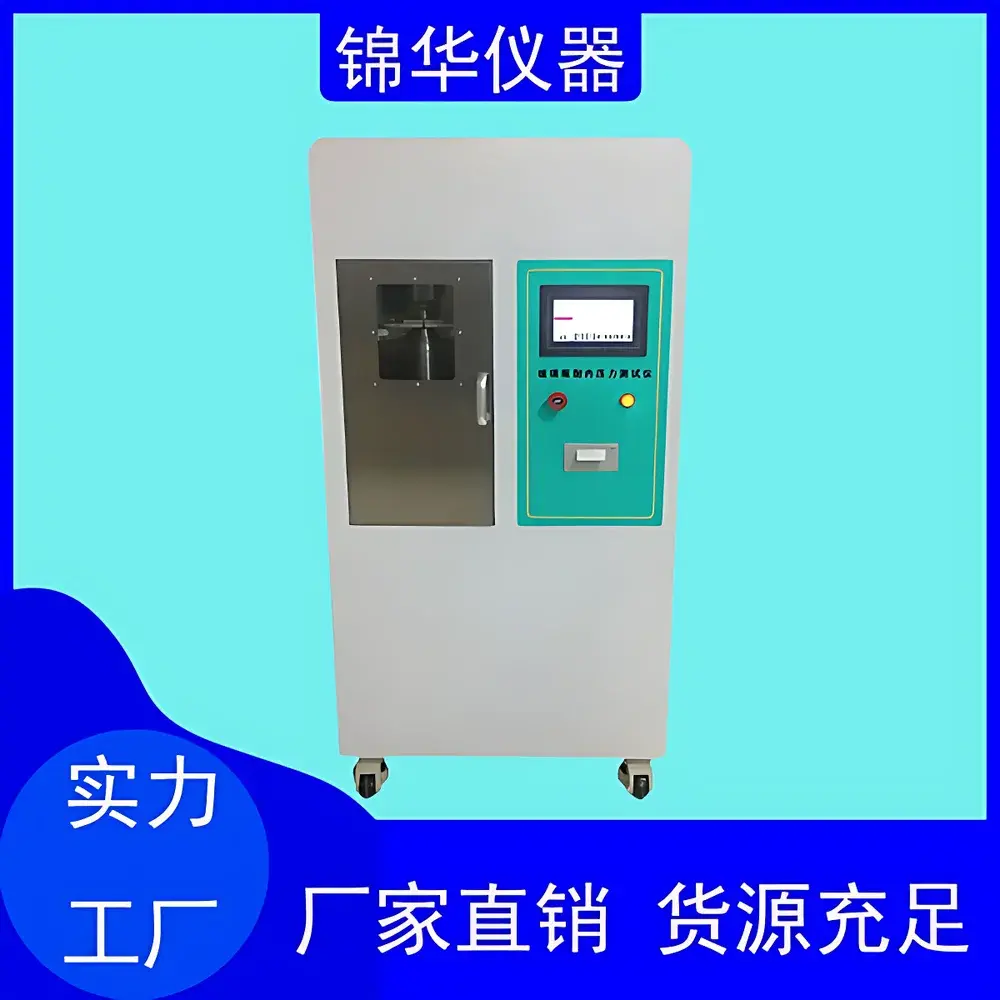
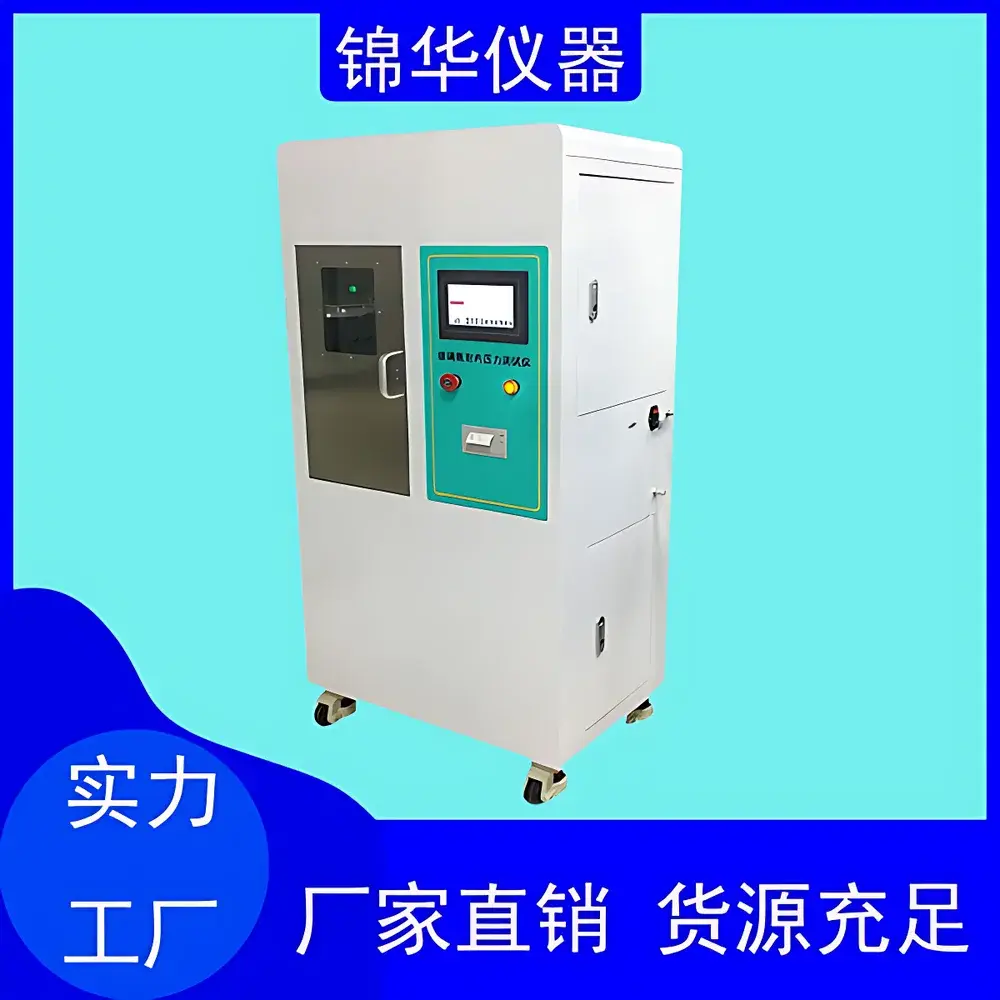
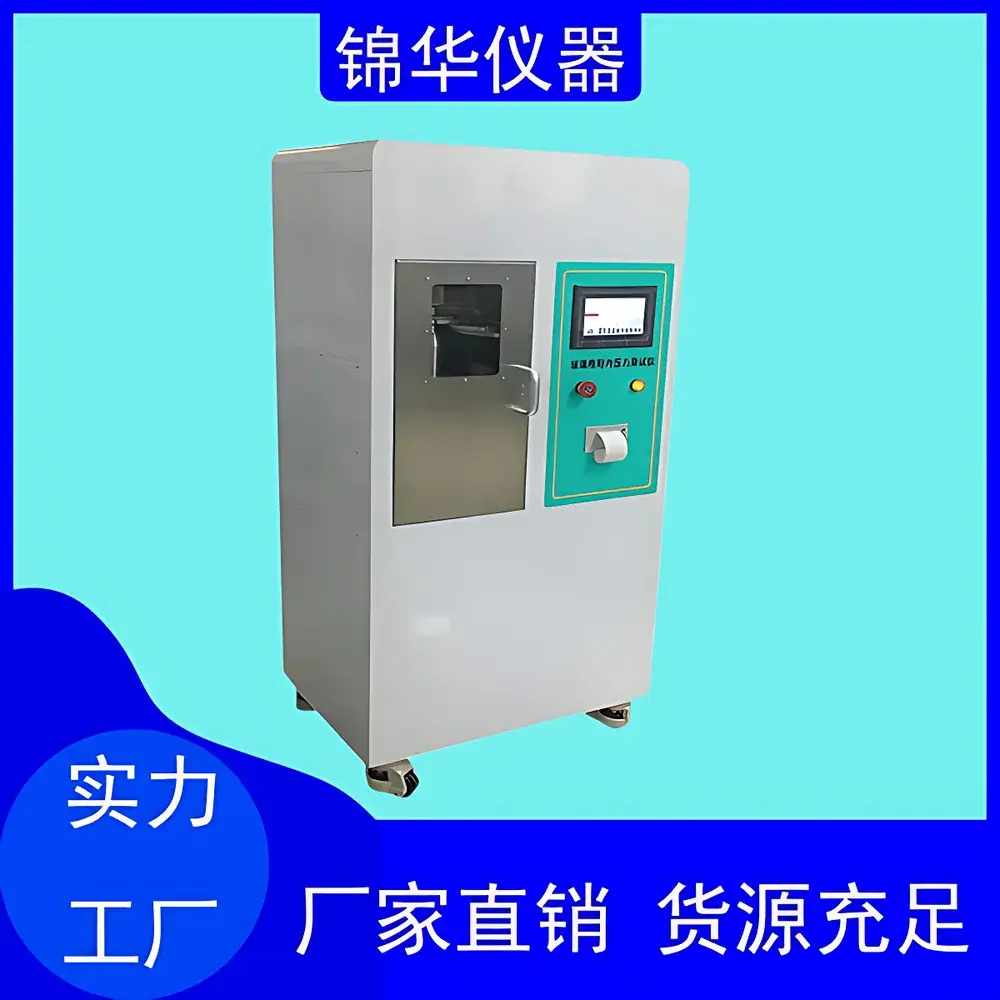
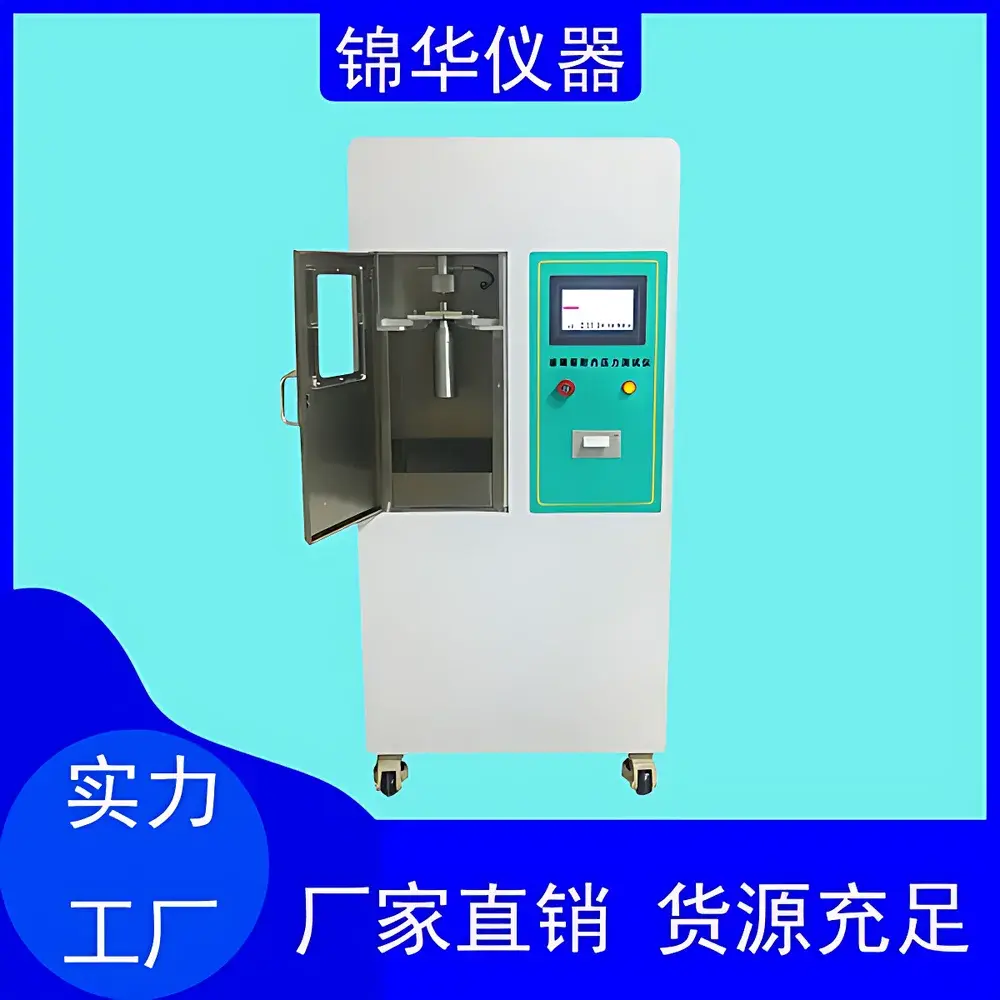
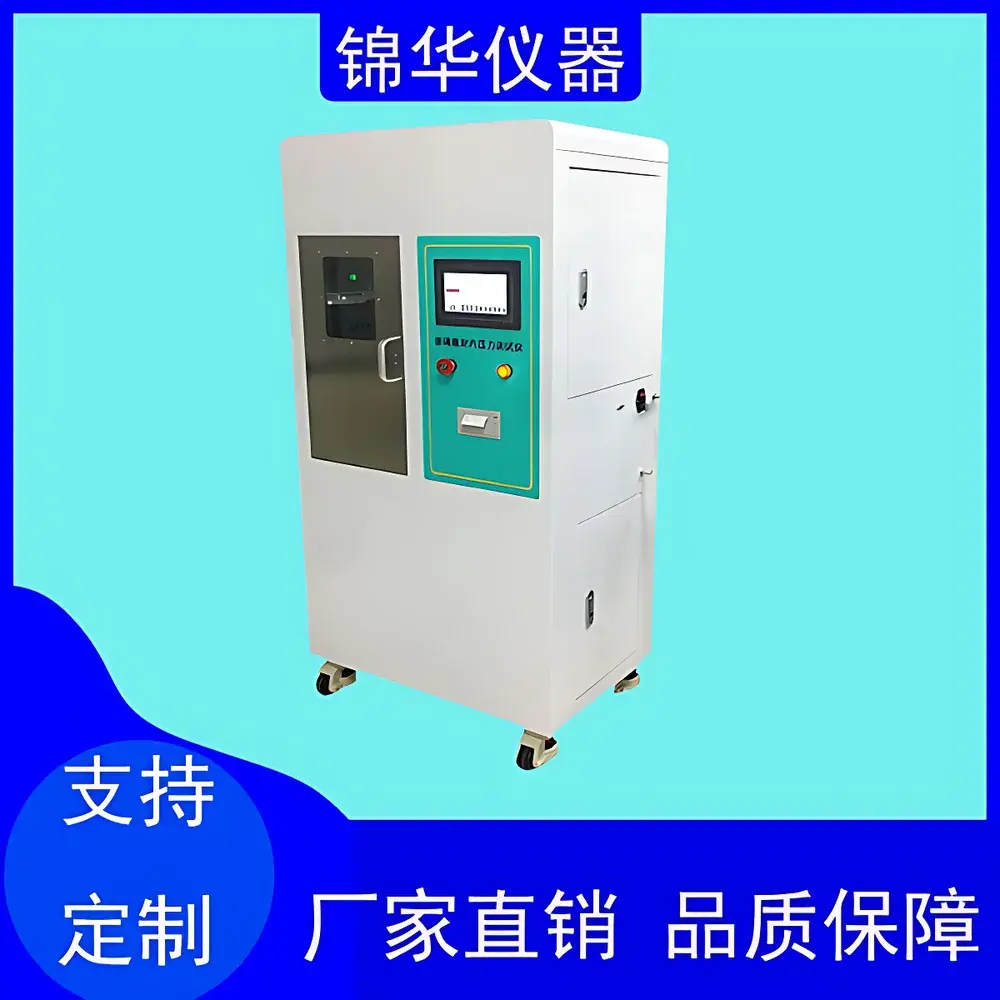
Jinhuatester NNY-01 Internal Pressure Tester for Glass Bottles
| Brand | Jinhuatester |
|---|---|
| Origin | Shandong, China |
| Manufacturer Type | Direct Manufacturer |
| Country of Origin | China |
| Model | NNY-01 |
| Price | USD 145 (approx. based on ¥1000) |
| Sensor Range | 0–6 MPa |
| Safety Overload | 7.2 MPa |
| Combined Accuracy | <0.5% FS |
| Display Resolution | 0.0001 MPa |
| Pressurization Rate | 0.4–0.58 ±0.1 MPa/s (adjustable, compliant with ISO 7458 and GB/T 4546-2008) |
| Test Medium | Deionized Water |
| Operating Temperature | 5–50 °C |
| Power Supply | 220 V, 50 Hz |
| Rated Power | 0.6 kW (integrated RCD protection) |
| Dimensions | 600 × 400 × 1240 mm |
| Weight | 136 kg |
Overview
The Jinhuatester NNY-01 Internal Pressure Tester is an engineered solution for quantitative assessment of internal pressure resistance in rigid glass containers used across beverage, pharmaceutical, and food packaging industries. It operates on a closed-loop hydraulic principle: a servo-controlled pump pressurizes deionized water within a sealed test chamber, transmitting uniform hydrostatic load to the interior surface of the sample bottle. Real-time pressure feedback from a high-stability 0–6 MPa transducer enables precise regulation of ramp rate (0.4–0.58 ±0.1 MPa/s), ensuring strict adherence to linear pressurization profiles mandated by ISO 7458:2021 and GB/T 4546–2008. The system automatically initiates pressure hold upon reaching the target value, monitors structural integrity during both ramp and dwell phases, and triggers immediate depressurization upon failure detection or test completion. Its design conforms to fundamental mechanical testing principles for brittle materials—evaluating fracture initiation under controlled biaxial stress states induced by internal fluid pressure.
Key Features
- Fully automated pressure cycle: integrated servo-hydraulic actuation enables programmable ramp-and-hold sequences with real-time closed-loop control
- Dual-mode operation: supports both burst pressure testing (failure detection at increasing load) and sustained pressure hold testing (e.g., 60-second dwell per YBB00172003-2015)
- Fail-safe architecture: built-in overload protection (7.2 MPa), automatic emergency depressurization, and audible/visual fault alerts for sensor drift, seal leakage, or motor stall
- Modular test chamber: includes removable tempered glass viewing shield and integrated water containment tray for safe handling of fragmented glass and fluid recovery
- Onboard thermal management: ambient temperature compensation ensures measurement stability across 5–50 °C operating range
- Regulatory-compliant data output: integrated thermal printer generates time-stamped reports including test ID, pressure curve summary, pass/fail status, and operator credentials
- Role-based access control: hierarchical user permissions (admin, technician, viewer) support GLP-aligned audit trails and prevent unauthorized parameter modification
Sample Compatibility & Compliance
The NNY-01 accommodates standard glass container geometries—including crown-capped beer bottles (330–640 mL), infusion vials (10–100 mL), and antibiotic sapphire-sealed vials (5–30 mL)—via adjustable clamping fixtures with silicone-sealed interfaces. All contact surfaces are chemically inert (316 stainless steel + food-grade EPDM seals) to prevent leaching or corrosion during aqueous pressurization. The instrument meets essential regulatory requirements for quality control laboratories: it is validated per ISO/IEC 17025:2017 clause 6.4.10 (equipment verification), implements traceable calibration protocols aligned with JJG 860–2015 (pressure transducer metrology), and supports 21 CFR Part 11-compliant electronic records when paired with optional PC software. Test methodologies directly implement GB/T 4546–2008 (glass container internal pressure resistance), YBB00172003–2015 (pharmaceutical glass packaging), and ISO 7458:2021 (methodology for internal pressure testing of glass containers).
Software & Data Management
While the NNY-01 operates autonomously via its embedded controller, optional Windows-based PC software extends functionality for advanced data governance. The software logs full pressure-time curves (100 Hz sampling), calculates derived metrics (e.g., pressure rise slope, dwell stability deviation), and exports CSV/PDF reports with digital signatures. Audit trail functionality records all user actions—including method edits, calibration events, and result overrides—with timestamps and operator IDs. Data encryption (AES-256) and role-restricted database access ensure compliance with GMP Annex 11 and EU GMP Annex 11 requirements for computerized systems. Raw data files retain native binary format for third-party reanalysis using MATLAB or Python-based validation scripts.
Applications
- Beer & carbonated beverage manufacturers: routine QC of returnable and single-use glass bottles prior to filling line integration
- Pharmaceutical primary packaging suppliers: verification of vial integrity for lyophilized drug products subject to vacuum-drying cycles
- Contract testing laboratories: accredited testing services supporting ISO/IEC 17025 scope for glass container certification
- Regulatory agencies: reference instrumentation for inter-laboratory comparison studies under CNAS proficiency testing programs
- R&D departments: parametric evaluation of annealing process optimization and thermal tempering effects on hoop strength
FAQ
What standards does the NNY-01 directly support for validation?
GB/T 4546–2008, ISO 7458:2021, YBB00172003–2015, and ASTM C149–02 (Standard Test Method for Internal Pressure Resistance of Glass Containers).
Can the pressurization rate be customized beyond the standard range?
Yes—the controller allows user-defined ramp rates between 0.1–1.0 MPa/s, though deviations from ISO-specified 0.4–0.58 MPa/s require documented justification per internal SOPs.
Is calibration traceable to national metrology institutes?
Yes—factory calibration uses pressure standards certified to CNAS-accredited laboratories (certificate included); annual recalibration recommended per ISO/IEC 17025 clause 6.6.
Does the system support networked data export for LIMS integration?
Via optional RS-232/USB-to-Ethernet adapter and provided API library (DLL-based), enabling direct ingestion into LabVantage, STARLIMS, or custom SQL databases.
What maintenance intervals are recommended for hydraulic components?
Water filtration cartridge replacement every 6 months; hydraulic oil change every 24 months; O-ring inspection and replacement per 500 test cycles or annually—whichever occurs first.






