
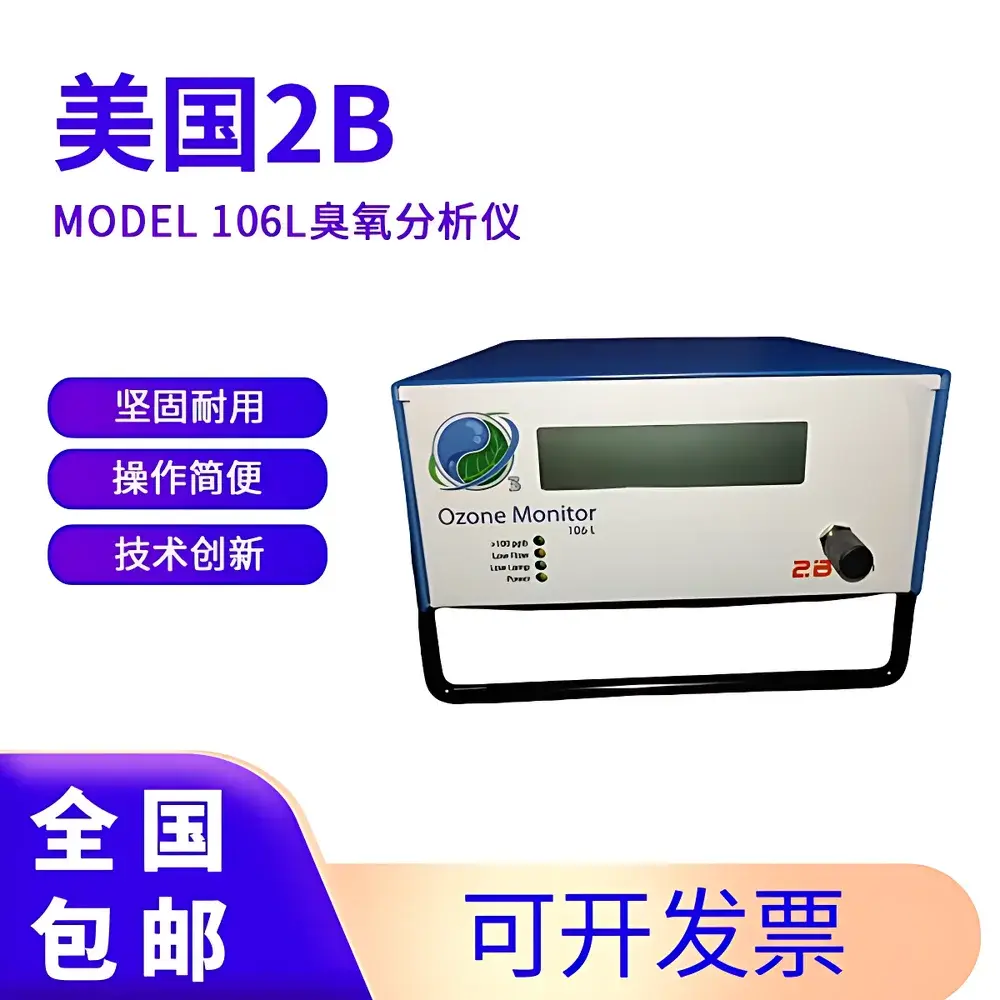
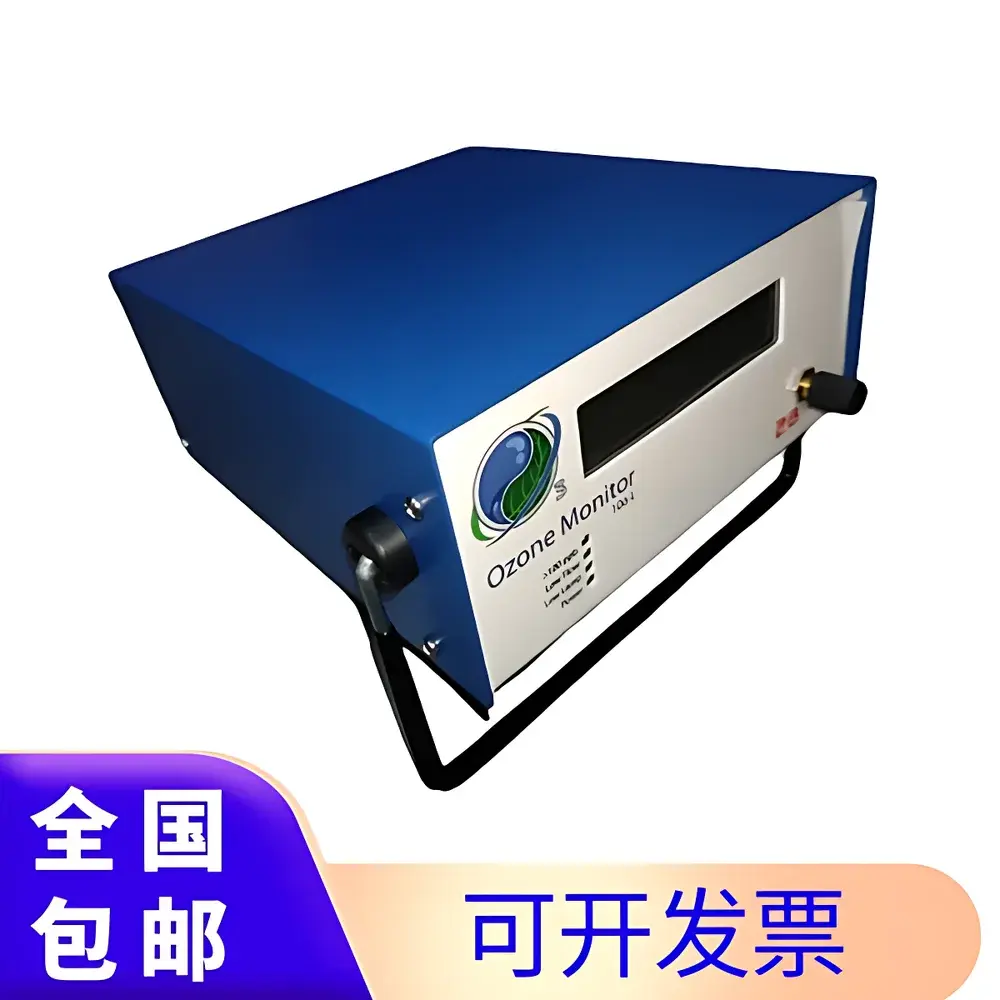
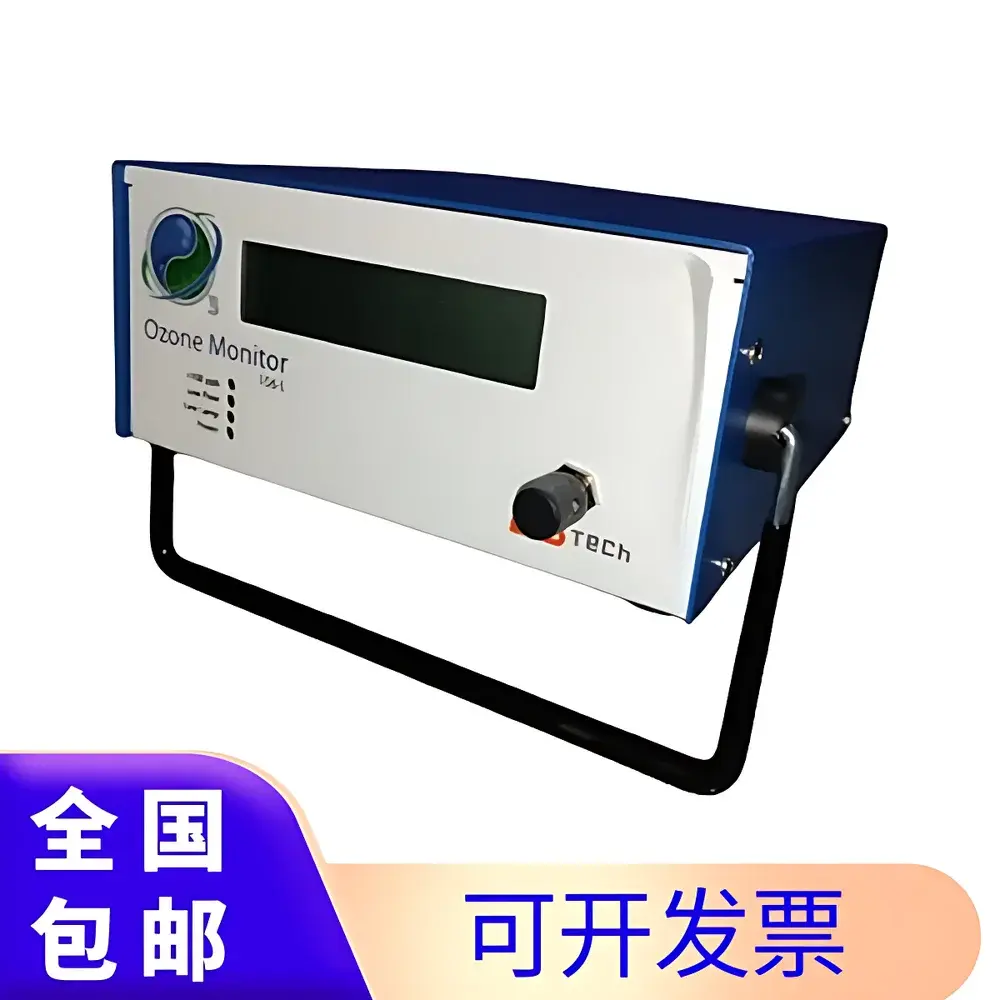
2B Technologies Model 106L Portable UV Absorption Ozone Analyzer
| Brand | 2B Technologies |
|---|---|
| Origin | USA |
| Model | Model 106L |
| Instrument Type | Portable |
| Measurement Range | 1.5 ppbv – 100 ppmv |
| Limit of Detection | 1.5 ppbv |
| Response Time | 10 s |
| Zero Drift | ±1 ppbv (24 h) |
| Resolution | 1.5 ppbv |
| Accuracy | ±1.5 ppbv or ±2% of reading |
| Sampling Flow Rate | ~1 L/min |
| Data Storage Capacity | 12,288 points |
| Power Supply | 12 V DC or 100–240 V AC, 4.2 W |
| Dimensions | 9.5 × 21.0 × 21.6 cm |
| Weight | 2.1 kg |
Overview
The 2B Technologies Model 106L is a portable, laboratory-grade ozone analyzer engineered for high-fidelity atmospheric and industrial ozone monitoring using dual-beam ultraviolet (UV) absorption photometry at 254 nm. Based on the well-established Beer–Lambert law, the instrument measures ozone concentration by quantifying the attenuation of UV light passing through a precisely controlled optical path—ensuring traceable, NIST-compatible performance without reliance on chemical scrubbers or ozone generators. Its compact architecture integrates all critical optoelectronic components—including mercury-vapor UV lamp, photodiodes, and temperature-stabilized optics—directly onto a single printed circuit board, minimizing thermal drift and mechanical misalignment. Designed for field-deployable reliability, the Model 106L delivers sub-part-per-trillion sensitivity in ambient air while maintaining full linearity across eight decades of dynamic range (1.5 ppbv to 100 ppmv), making it suitable for both tropospheric chemistry campaigns and process control in ozone-intensive industries.
Key Features
- Dual-beam UV absorption design with real-time reference channel compensation for lamp intensity decay and window fouling
- Dew-Line™ humidity correction technology utilizing Nafion® membrane tubing to reduce water vapor interference from >100 ppb to <5 ppb—critical for accurate measurements in humid environments (e.g., wastewater facilities, coastal monitoring)
- Integrated environmental compensation for temperature, pressure, and altitude—correcting for up to 14% error per 1000 m elevation gain
- Onboard data logging (12,288 points) with user-selectable averaging intervals: 10 s, 1 min, 5 min, or 1 hr
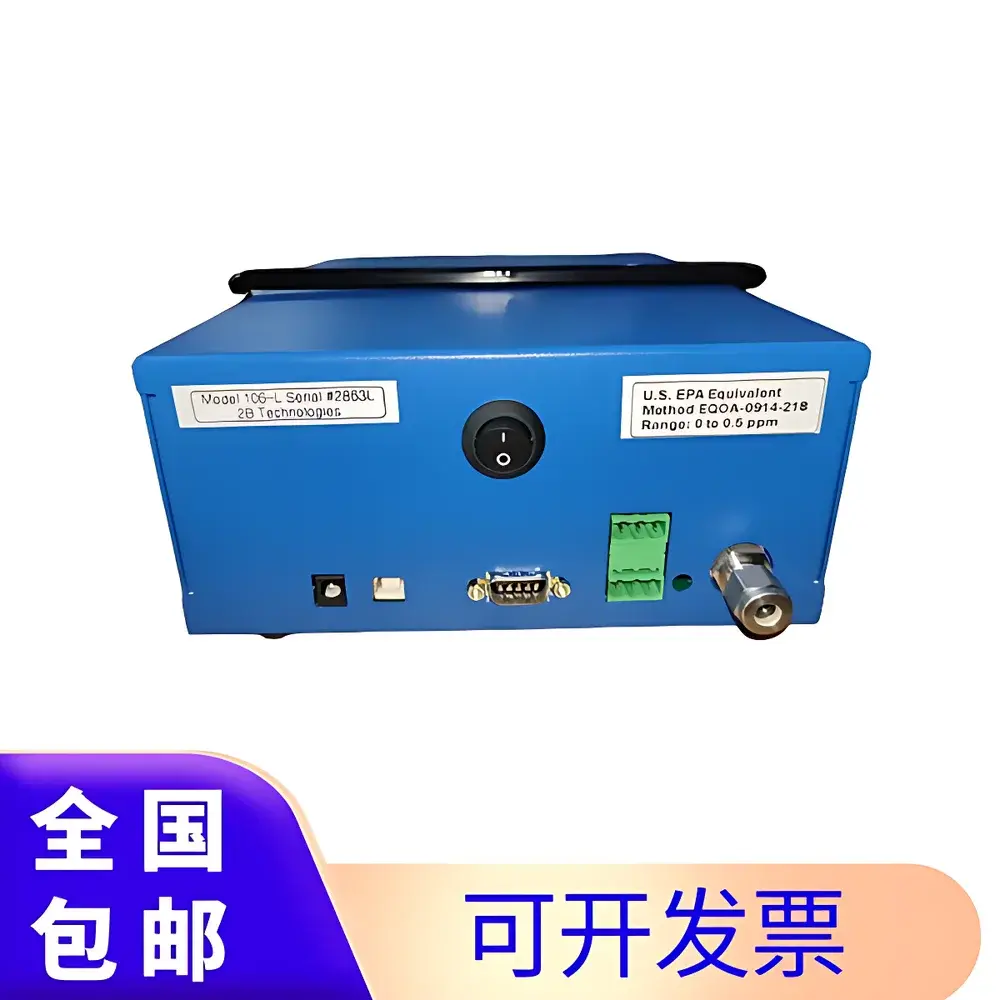
- Multiple analog and digital outputs: 0–2.5 V, 4–20 mA (configurable range), USB, and RS-232 for seamless integration into SCADA, DAQ, or OEM systems
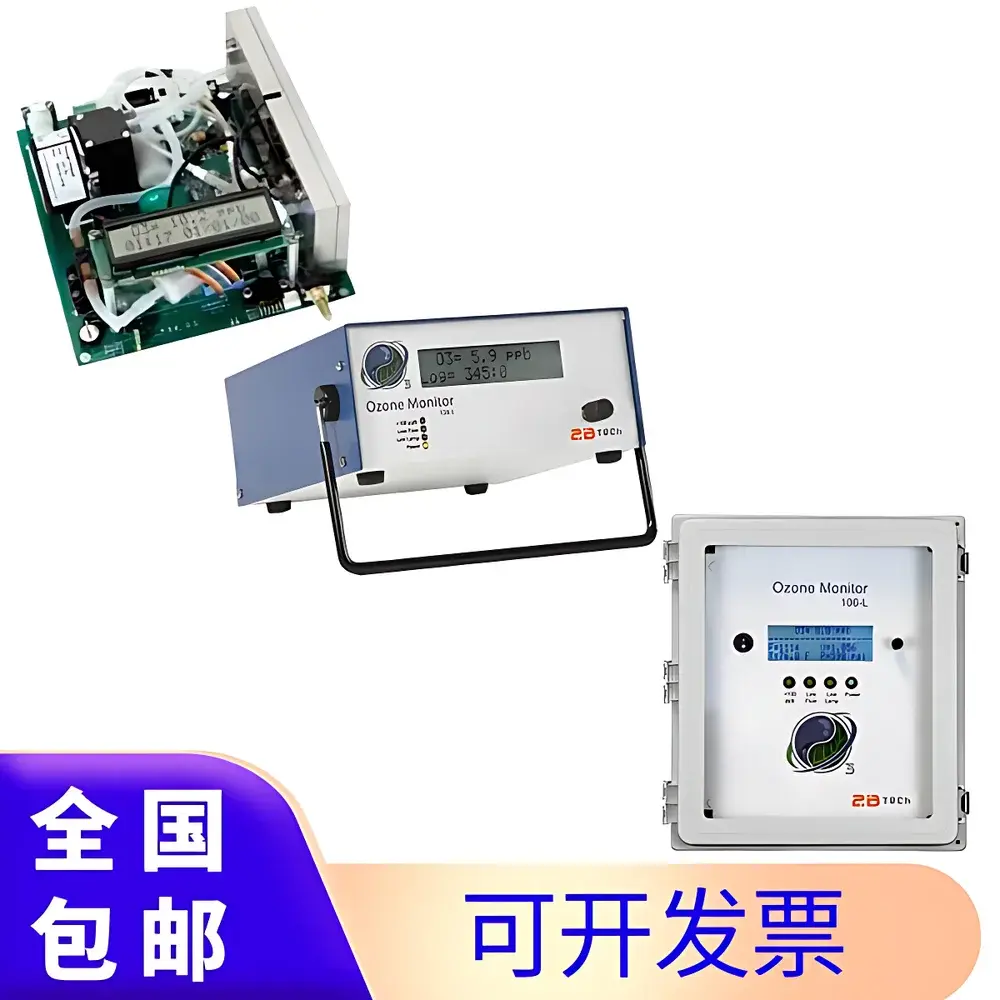
- OEM-ready form factor: available in bare-board configuration for embedded instrumentation and custom enclosure integration
- Low-power operation (4.2 W) compatible with 12 V DC vehicle power systems—validated for mobile atmospheric profiling and UAV-mounted deployments
Sample Compatibility & Compliance
The Model 106L accepts ambient air, compressed gas streams, and ozonated water off-gas without sample conditioning—provided inlet particulate filtration (0.5 µm PTFE filter recommended) and optional catalytic scrubber for NOx interference mitigation are deployed where required. It complies with EPA Reference Method EQOA-01 for ambient ozone monitoring and meets ISO 13964:2021 specifications for UV photometric ozone analyzers. While not certified as a Class I Div 1 device, its robust enclosure (IP54-rated when housed in standard desktop or wall-mount chassis) supports deployment in non-hazardous industrial zones. All firmware and calibration logs support audit-ready timestamping, enabling alignment with GLP and GMP documentation requirements; optional time-synchronized data export facilitates FDA 21 CFR Part 11-compliant recordkeeping when paired with validated third-party software platforms.
Software & Data Management
The analyzer operates autonomously with embedded firmware supporting local display, alarm thresholds (high/low setpoints, filter change alerts, calibration due notifications), and non-volatile memory retention during power loss. Data export is supported via USB mass storage mode (CSV format) or real-time streaming over RS-232/USB virtual COM port. 2B Technologies provides free, open-source Python and MATLAB drivers, along with the proprietary EnviroLog software for visualization, batch calibration validation, and QA/QC flagging (e.g., zero/span drift trending, humidity-corrected residual analysis). Raw absorbance values, corrected ozone concentrations, environmental metadata (T, P, RH), and diagnostic codes are logged simultaneously—enabling post-acquisition reprocessing with updated correction algorithms without hardware modification.
Applications
- Ambient air quality networks (EPA PAMS, EMEP, GAW stations) requiring regulatory-grade ozone data at rural, urban, and background sites
- Mobile platforms: vehicle-mounted atmospheric chemistry studies, drone-based vertical profiling, and shipborne marine boundary layer investigations
- Industrial process monitoring: ozone generator output verification in municipal water treatment plants, pharmaceutical cleanroom sterilization validation, and pulp bleaching control in paper mills
- Research laboratories studying ozone kinetics, VOC oxidation pathways, and heterogeneous surface reactions under controlled humidity and temperature conditions
- OEM integration into multi-gas analyzers, portable environmental monitors, and smart sensor nodes for IoT-based air quality infrastructure
FAQ
What measurement principle does the Model 106L use?
It employs dual-beam UV absorption photometry at 254 nm, following the Beer–Lambert law to quantify ozone concentration based on differential optical density between sample and reference beams.
Is humidity correction mandatory for accurate readings?
Yes—uncorrected water vapor absorbs significantly at 254 nm. The Dew-Line™ system reduces this interference to <5 ppbv, ensuring compliance with EPA and ISO accuracy requirements across 0–95% RH.
Can the Model 106L be used for continuous emissions monitoring (CEM)?
While not EPA-certified for stack CEM applications, it is widely deployed for ozone generator outlet monitoring and sidestream process control where traceability to NIST standards and documented uncertainty budgets are maintained.
Does it require periodic calibration with ozone transfer standards?
Yes—recommended every 3–6 months using a NIST-traceable ozone calibrator (e.g., 2B Technologies Model 306 or equivalent) to verify zero and span stability per ISO 13964 Annex B protocols.
Is the bare-board OEM version functionally identical to the housed unit?
Yes—the core optical engine, electronics, and firmware are identical; only mechanical packaging, display, and power supply options differ between configurations.
Related Products







