
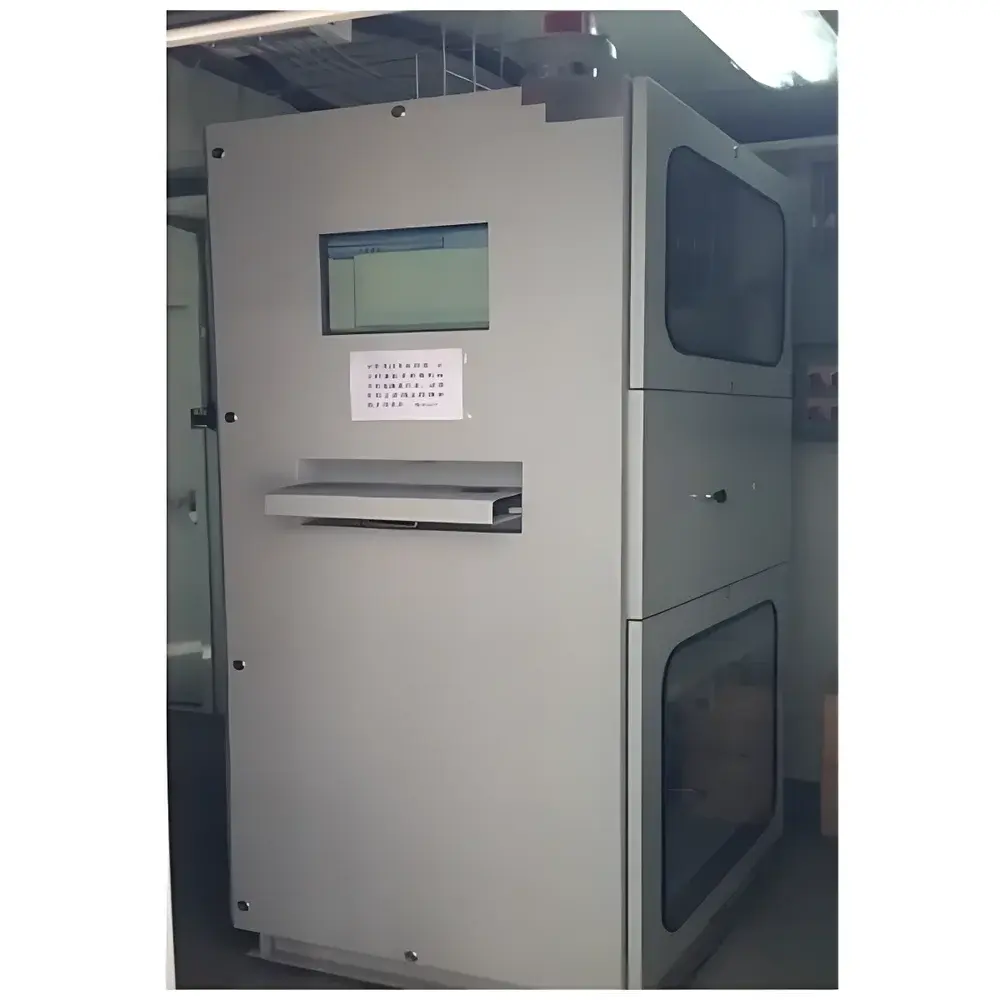
Thermo Fisher TVC-5800 Continuous Emissions Monitoring System for Methane, Non-Methane Hydrocarbons (NMHC), and Speciated VOCs
| Brand | Thermo Fisher |
|---|---|
| Origin | Taiwan |
| Manufacturer Type | Authorized Distributor |
| Product Category | Domestic (China-sourced) |
| Model | TVC-5800 |
| Detection Principle | Gas Chromatography (GC) with Flame Ionization Detection (FID) |
| Instrument Type | Online Continuous Analyzer |
| Typical Configuration | Multi-component Speciated VOC Analyzer |
| Measurement Range | 0–50 ppm / 500 ppm / 5,000 ppm / 5% / 50% (as CH₄) |
| Resolution | 0.05 ppm |
| Accuracy | ±1% of Full Scale or ±0.1 ppm (whichever is tighter) |
| Response Time | ≤60 seconds (T₉₀) |
Overview
The Thermo Fisher TVC-5800 is a certified online continuous emissions monitoring system (CEMS) engineered for regulatory-compliant, real-time quantification of total hydrocarbons (THC), methane (CH₄), non-methane hydrocarbons (NMHC), and up to 90 individual volatile organic compounds (VOCs) — including benzene, toluene, xylenes (o-, m-, p-), ethylbenzene, styrene, cumene, and high-reactivity VOCs (HRVOCs) per U.S. Photochemical Assessment Monitoring Stations (PAMS) and Chinese HJ 1012–2018 requirements. Built upon dual-column gas chromatography coupled with flame ionization detection (GC-FID), the system delivers trace-level sensitivity and compound-specific resolution under industrial stack conditions. Its thermal management architecture supports hot-wet sampling — maintaining sample integrity across temperatures up to 220 °C — eliminating condensation-induced bias and preserving thermally labile species. Designed for integration into EPA Method 25A, EN 12619, and China’s HJ 1013–2018 compliant monitoring networks, the TVC-5800 meets Tier 2 performance specifications for continuous emission monitoring in regulated industrial sectors.
Key Features
- Thermal-stable hot-wet sampling train: electrically heated probe (up to 200 °C) and stainless-steel heated transfer line (80–150 °C), minimizing adsorption losses and phase change artifacts
- Multi-range, auto-ranging FID detector with 0.05 ppm resolution and dual accuracy specification (±1% FS or ±0.1 ppm)
- Modular GC column configuration: parallel capillary columns for simultaneous CH₄ isolation (molecular sieve), NMHC separation (polydimethylsiloxane), and speciated VOC profiling (customizable PLOT or DB-VRX columns)
- Integrated particulate and heavy organics filtration: dual-stage high-temp filtration (0.1 µm, 99.995% efficiency) upstream of the analyzer, compatible with dust loadings ≤10 g/m³
- Explosion-proof certified enclosure: “p” pressurized Ex p IIC T4 cabinet (GB 3836.1–2000 / IEC 60079-1) rated for Zone 1 hazardous areas; includes purge control, gas alarm interlock panel, and HVAC with HEPA filtration
- Full-system calibration traceability: automated zero/span validation using certified standard gases; compliance with HJ 75–2017 and ISO 14064-3 calibration chain requirements
Sample Compatibility & Compliance
The TVC-5800 accepts raw, uncooled flue gas streams from combustion sources, thermal oxidizers, chemical reactors, and coating lines — with inlet temperature tolerance up to 220 °C and particulate loading ≤10 g/m³. It complies with national and international regulatory frameworks including China’s HJ 1012–2018 (VOCs CEMS technical specification), HJ 1013–2018 (methane/NMHC monitoring), and GB/T 3836 series for explosion protection. The system satisfies data quality objectives (DQOs) required under China’s “Three-Year Action Plan for VOCs Pollution Control” and supports audit-ready reporting aligned with GLP principles. All calibration events, maintenance logs, and diagnostic flags are timestamped and stored with immutable metadata — enabling 21 CFR Part 11–compliant electronic records when integrated with validated LIMS or DCS platforms.
Software & Data Management
Embedded firmware provides real-time chromatogram visualization, retention time locking, peak integration with baseline correction, and automated compound identification via spectral library matching (NIST-compatible). Data output conforms to Modbus TCP, OPC UA, and analog 4–20 mA protocols for seamless integration into plant-wide SCADA or environmental information systems (EIS). The system supports scheduled remote diagnostics, firmware updates over secure TLS channels, and configurable alarm thresholds with event-triggered email/SMS notifications. Audit trails record all user actions, method changes, and calibration interventions — supporting GMP/GLP documentation standards and facilitating third-party verification during environmental audits.
Applications
- Petrochemical refineries: monitoring flare stack emissions, catalytic cracker off-gas, and solvent recovery units
- Semiconductor and PCB manufacturing: tracking abatement efficiency of RTO/RCO systems handling photoresist strippers and cleaning solvents
- Pharmaceutical synthesis facilities: verifying destruction efficiency of thermal oxidizers treating chlorinated and aromatic VOC streams
- Coating and printing operations: quantifying benzene/toluene/xylene (BTX) release during drying ovens and ink formulation lines
- Automotive OEM paint shops: measuring NMHC slip across multi-stage spray booths and bake ovens
- Third-party environmental testing laboratories: providing reference-grade speciated VOC data for compliance verification and source apportionment studies
FAQ
What VOC compounds can the TVC-5800 quantify?
The system is configured to measure methane, NMHC, THC, benzene, toluene, ethylbenzene, xylenes (ortho-, meta-, para-), styrene, cumene, and up to 90 additional PAMS-listed or customer-defined HRVOCs — subject to column selection and method validation.
Is the system suitable for high-dust exhaust streams?
Yes. The heated probe and dual-stage 0.1 µm filtration system enable stable operation at particulate concentrations up to 10 g/m³ without clogging or signal drift.
How does the hot-wet sampling prevent measurement bias?
By maintaining sample temperature above the dew point and VOC condensation thresholds (typically 50–260 °C), the system avoids aqueous dissolution, wall adsorption, and thermal decomposition — ensuring quantitative recovery of polar and semi-volatile species.
Can the TVC-5800 operate in Zone 1 explosive atmospheres?
Yes. The fully integrated Ex p IIC T4 pressurized cabinet meets GB 3836.1–2000 and IEC 60079-1, permitting installation adjacent to VOC abatement equipment without intrinsically safe barriers.
What calibration standards and frequency are required?
Certified methane, propane, and multi-component VOC span gases traceable to NIM (China) or NIST are used. Daily zero/span checks are recommended; full multi-point calibration every 7–30 days depending on regulatory tier and process stability.







