
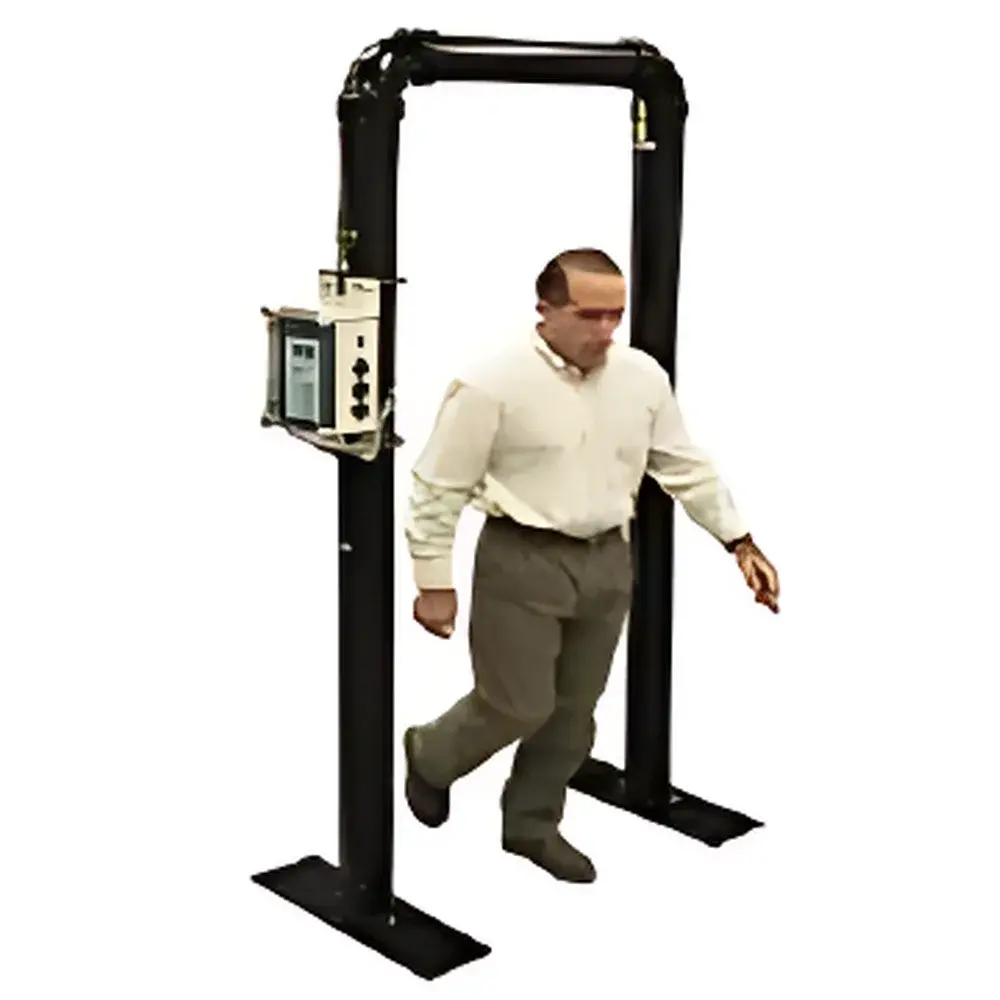
Thermo Fisher Scientific Radiation Measurement and Safety Instruments
| Origin | USA |
|---|---|
| Manufacturer Type | Authorized Distributor |
| Origin Category | Imported |
| Model | Custom Configuration Available |
| Pricing | Upon Request |
| Instrument Type | Radiation Survey Meter / Dose Rate Meter |
Overview
Thermo Fisher Scientific Radiation Measurement and Safety Instruments comprise a comprehensive portfolio of field-deployable, laboratory-validated systems engineered for accurate detection, identification, quantification, and monitoring of ionizing radiation across alpha, beta, gamma, and neutron emissions. These instruments operate on well-established physical principles—including gas-filled detector response (e.g., GM tubes, ionization chambers), scintillation spectroscopy (NaI(Tl), LaBr3, CeBr3), and high-purity germanium (HPGe) or cadmium zinc telluride (CZT) semiconductor-based gamma spectrometry—enabling reliable dose rate assessment, nuclide-specific identification, and activity concentration determination in real time. Designed for compliance with international radiation protection frameworks, the systems support ALARA (As Low As Reasonably Achievable) implementation, regulatory reporting, and emergency response protocols in nuclear facilities, medical radiology departments, environmental remediation sites, border security checkpoints, and research laboratories.
Key Features
- Multi-detector architecture supporting simultaneous dose rate measurement and spectral analysis—ideal for rapid screening and confirmatory identification
- Ruggedized, IP65-rated enclosures with extended battery life (up to 24 hours continuous operation) for field deployment in extreme ambient conditions
- Real-time energy-compensated dose rate calculation compliant with IEC 60846-1:2014 and ANSI N42.22 standards
- Integrated GPS geotagging and Bluetooth/Wi-Fi connectivity for synchronized location-aware data logging
- Auto-calibration routines traceable to NIST-certified reference sources; onboard verification using 137Cs and 241Am check sources
- Configurable alarm thresholds with audible, visual, and haptic alerts for instantaneous notification of elevated radiation fields
Sample Compatibility & Compliance
The instrument suite accommodates diverse measurement scenarios—from direct personal dosimetry (using TLD/OSL badge readers and electronic personal dosimeters) to large-area environmental surveys (via vehicle-mounted or drone-integrated probe arrays). All systems meet or exceed requirements defined in ISO 4037 (X- and gamma-reference radiation fields), IEC 62327 (hand-held instruments), and ANSI N42.33 (radiation detection instrumentation for homeland security). For regulated environments, optional 21 CFR Part 11-compliant audit trails, electronic signatures, and role-based access control are available through integrated software modules. Systems are routinely validated per ASTM E2892-22 (Standard Guide for Performance Testing of Radiation Detection Instruments) and support GLP/GMP documentation workflows.
Software & Data Management
Thermo Fisher’s proprietary RadEye™ and RadAssist™ software platforms provide end-to-end data lifecycle management—from acquisition and spectral deconvolution to report generation and long-term archival. Spectral analysis leverages library-matched peak identification (including nuclides from the IAEA NuDat 3.0 database) and full-spectrum unfolding algorithms for mixed-field characterization. Data exports comply with ANSI N42.42 XML schema, enabling interoperability with national radiation monitoring networks (e.g., EPA RadNet, EURDEP). Cloud-enabled synchronization allows secure remote access to instrument status, live telemetry, and historical trend analytics via web dashboard or mobile application—facilitating centralized oversight across multi-site operations.
Applications
- Environmental monitoring: baseline surveys, post-incident contamination mapping, and long-term radioecological studies around nuclear power plants or legacy waste sites
- Health physics: occupational dose tracking, area monitoring in radiotherapy suites, and radioactive material handling compliance verification
- Border and customs security: non-intrusive inspection of cargo containers, vehicles, and scrap metal shipments for orphan sources or illicit materials
- Emergency response: rapid reconnaissance during radiological dispersal device (RDD) events or nuclear facility incidents
- Decommissioning & waste management: characterization of low-level radioactive waste drums, soil sampling validation, and clearance measurements per IAEA RS-G-1.7
- Academic and government research: gamma-ray astronomy calibration, cosmic ray flux studies, and radionuclide transport modeling validation
FAQ
What types of radiation can these instruments detect?
They detect alpha, beta, gamma, X-ray, and thermal/fast neutron radiation—depending on detector configuration (e.g., ZnS(Ag)/plastic scintillator for alpha/beta; He-3 tubes for neutrons; HPGe for high-resolution gamma spectroscopy).
Are these instruments suitable for use in explosive atmospheres?
Selected models (e.g., RadEye G-10EX) are ATEX/IECEx certified for Zone 1 hazardous locations; intrinsic safety compliance must be verified per specific model number and regional directive.
Do the systems support regulatory reporting formats required by the NRC or EPA?
Yes—RadAssist software includes preconfigured templates aligned with NRC Form 5 and EPA Form R reporting structures, with automated metadata tagging and digital signature capability.
Can spectral data be exported for third-party analysis?
All raw spectra are stored in standard .cnf and .spc formats; ASCII-exported peak lists and full-energy spectra are compatible with Genie 2000, GammaVision, and custom Python/Matlab processing pipelines.
Is on-site training and ISO/IEC 17025 method validation support available?
Thermo Fisher offers accredited training programs and method validation services—including uncertainty budgeting, detection limit verification, and inter-laboratory comparison participation—per ISO/IEC 17025:2017 clause 7.2.2.
Related Products







