
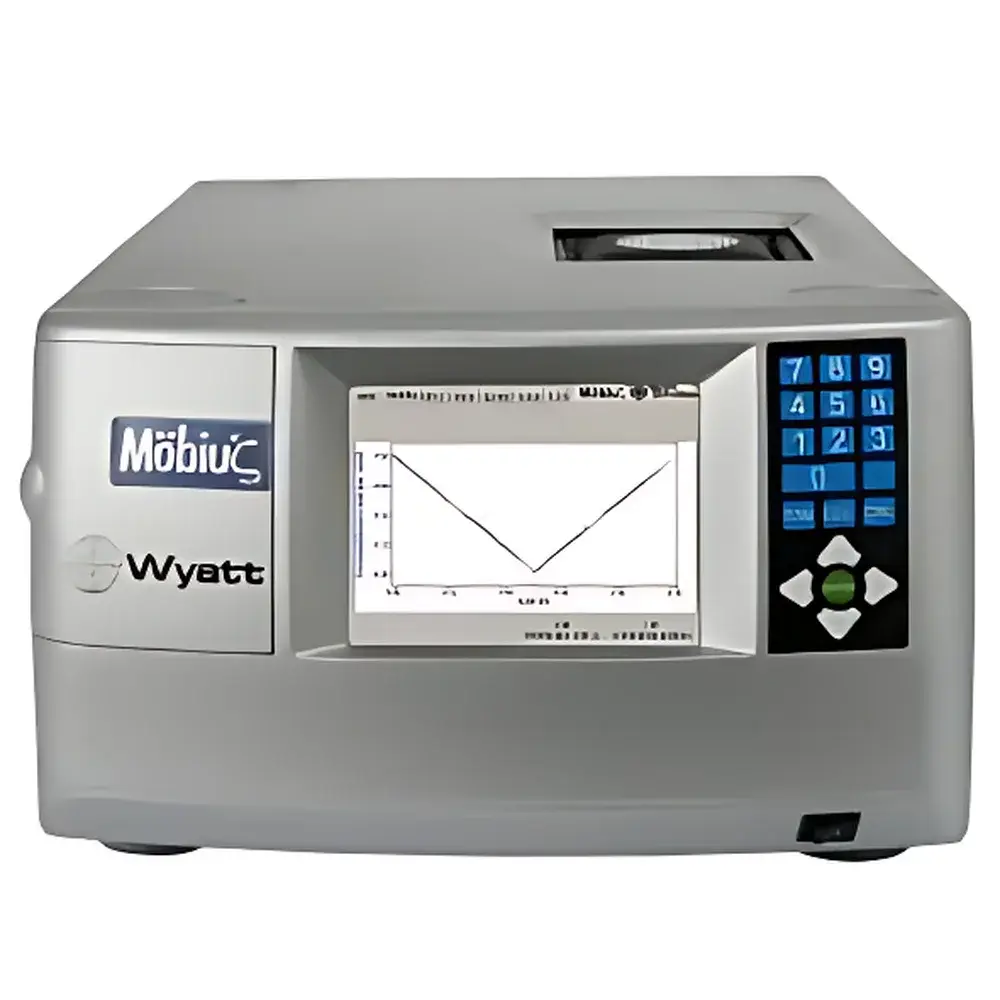
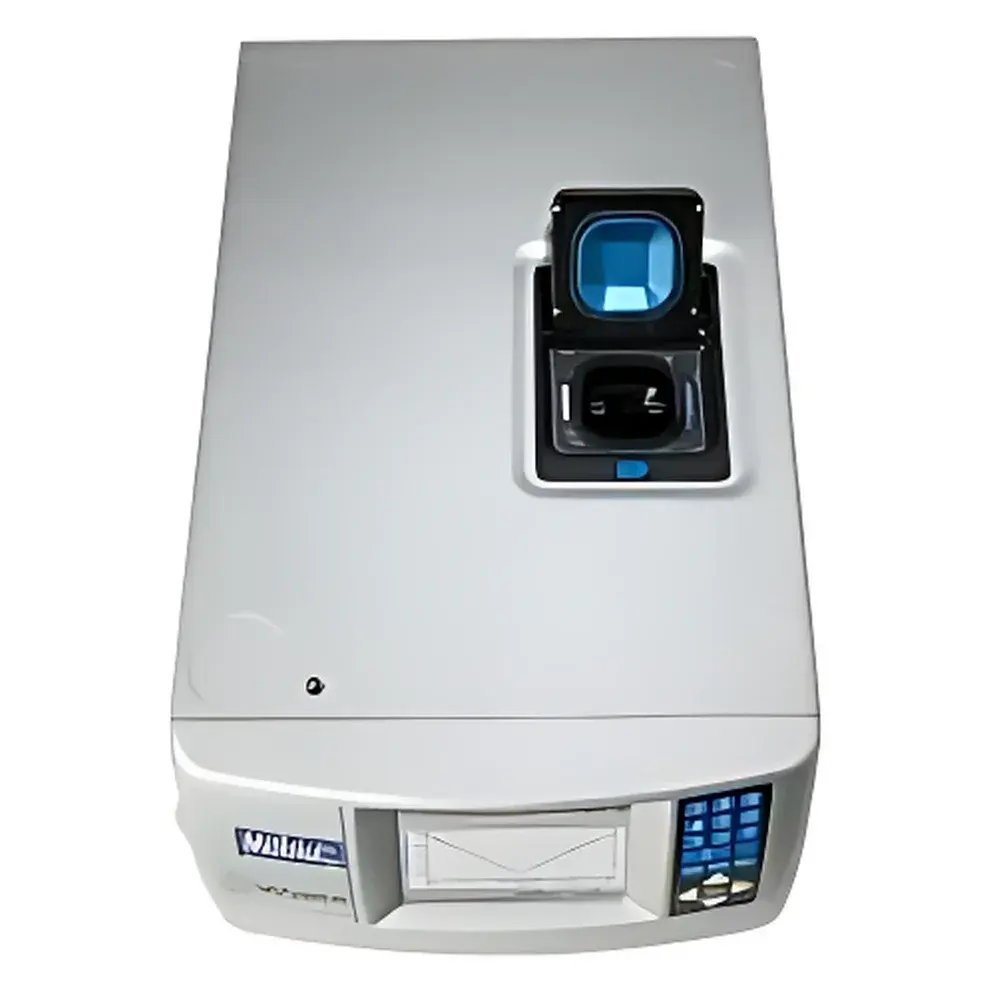
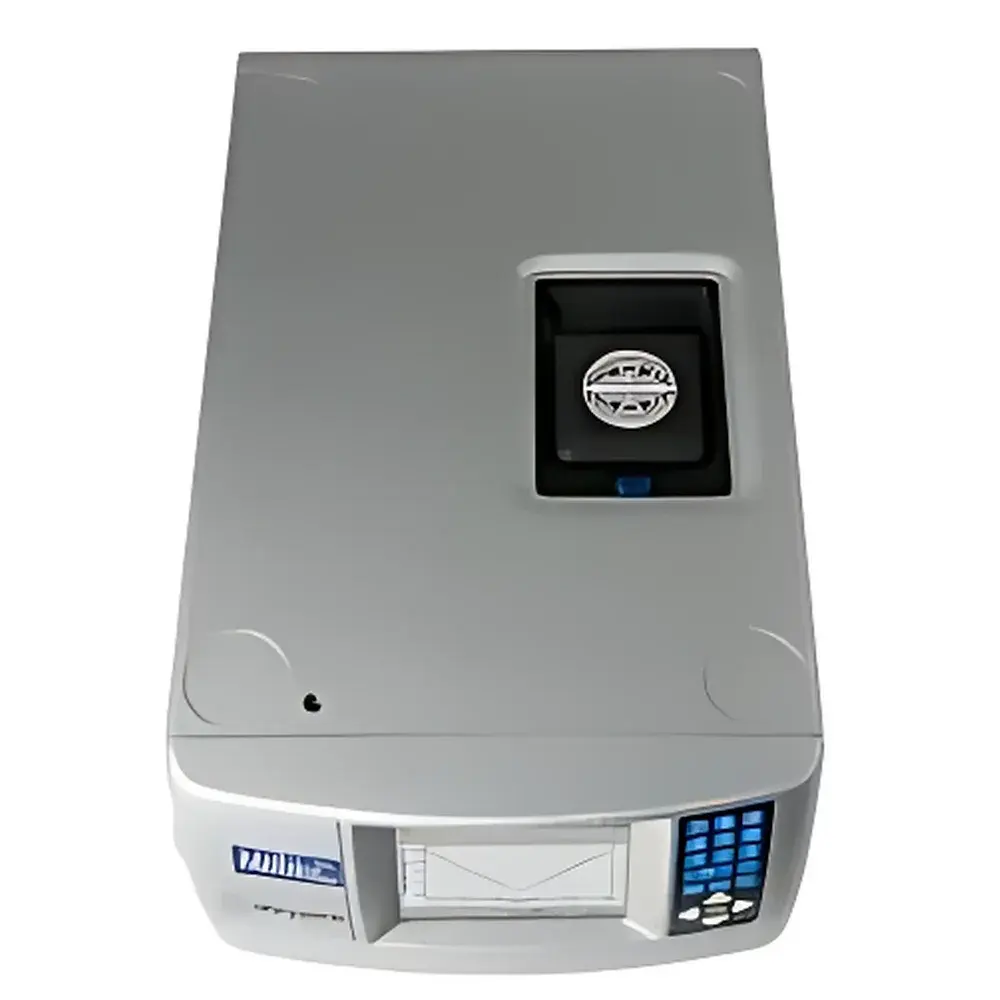
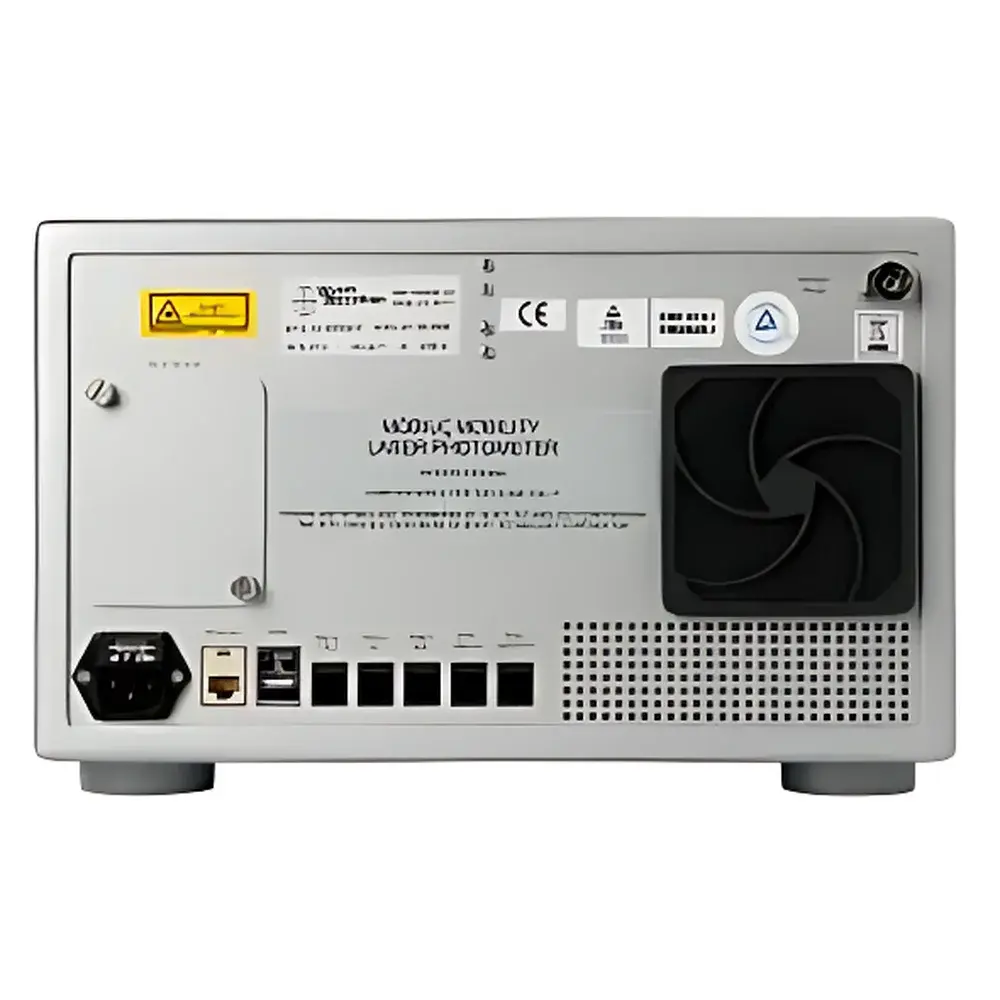
Wyatt Technology MÖBIUζ™ Zeta Potential Analyzer and Molecular Electrophoretic Mobility Instrument
| Brand | Wyatt Technology |
|---|---|
| Origin | USA |
| Manufacturer | Wyatt Technology Corporation |
| Type | Imported |
| Model | MÖBIUζ™ |
| Pricing | Available Upon Request |
Overview
The Wyatt Technology MÖBIUζ™ is a high-precision, benchtop zeta potential analyzer engineered for the quantitative determination of electrophoretic mobility, hydrodynamic size (via QELS), zeta potential, and derived molecular weight of macromolecules and nanoparticles in liquid suspension. It operates on the principle of laser Doppler microelectrophoresis, where charged particles undergo controlled migration under an applied electric field, and their velocity is measured via frequency-shifted scattered light from a stabilized 532 nm DPSS laser (50 mW output). The instrument integrates phase-analysis light scattering (PALS) for enhanced sensitivity at low mobility and low-concentration regimes, enabling robust characterization of fragile biomacromolecules, synthetic polymers, liposomes, and colloidal dispersions without structural perturbation.
Key Features
- Ultra-low voltage electrophoresis: Electric field applied across a 1.6 mm electrode gap with <3 V total potential—minimizing Joule heating, electrochemical degradation, and conformational stress on sensitive biological samples.
- High-sensitivity optical detection: 50 mW solid-state DPSS laser with >10,000 h lifetime and RMS intensity stability <0.5% over 8 hours—ensuring signal consistency across long-term or multi-sample campaigns.
- Multi-detector array architecture: Up to 30 independent detection readheads operate simultaneously, capturing angularly resolved scattering data for rapid, high-reproducibility mobility distribution analysis.
- Flexible cell compatibility: Fully supports both reusable PEEK flow cells and disposable capillary cells—chemically inert toward aqueous buffers, organic solvents (e.g., THF, DMF, chloroform), and aggressive pH environments (pH 1–13).
- Broad thermal control range: Integrated Peltier temperature module enables precise sample conditioning from 4 °C to 70 °C—critical for studying temperature-dependent aggregation, unfolding, or micellization behavior.
- Integrated QELS capability: Simultaneous quasi-elastic light scattering (QELS) measurement yields hydrodynamic radius (Rh) alongside electrophoretic mobility—enabling direct correlation between size, surface charge, and colloidal stability.
Sample Compatibility & Compliance
The MÖBIUζ™ accommodates sample volumes as low as 15 µL per measurement, making it suitable for precious or low-yield biologics (e.g., monoclonal antibodies, AAV vectors, mRNA-LNPs). Its electrode design and low-voltage operation comply with ISO 13099-2:2012 (Colloidal systems — Methods for zeta-potential determination — Part 2: Optical methods) and ASTM D7825-19 (Standard Test Method for Zeta Potential of Nanoparticles in Aqueous Media). Data acquisition and reporting support audit trails, electronic signatures, and metadata tagging in accordance with FDA 21 CFR Part 11 and GLP/GMP documentation requirements when used with Wyatt’s ASTRA software suite.
Software & Data Management
Controlled via Wyatt’s proprietary ASTRA 8 software, the MÖBIUζ™ delivers real-time visualization of mobility distributions, zeta potential histograms, and Rh profiles on its integrated full-color LCD interface and external workstation. All raw interferograms, cross-correlation functions, and mobility spectra are stored in vendor-neutral HDF5 format. Batch processing, statistical comparison across conditions (e.g., pH, ionic strength, temperature ramps), and export to LIMS-compatible CSV or PDF reports are natively supported. Software modules include automated baseline correction, Smoluchowski/Hückel model selection with dielectric constant compensation, and Debye–Hückel/extended DH fitting for accurate zeta potential derivation in multivalent electrolyte systems.
Applications
- Stability assessment of protein therapeutics under formulation stress (e.g., pH shift, excipient screening)
- Zeta potential mapping of lipid nanoparticles (LNPs) across PEGylation density gradients
- Charge reversal point determination for polyelectrolyte complexation studies
- Colloidal stability prediction via DLVO theory parameterization
- Batch-to-batch comparability testing of viral vectors and exosomes
- Surface modification validation of silica, gold, or polymeric nanocarriers
FAQ
What is the minimum detectable particle size for zeta potential measurement on the MÖBIUζ™?
The system reliably measures electrophoretic mobility for particles and macromolecules with hydrodynamic diameters ranging from 0.3 nm (e.g., small peptides, oligonucleotides) to 1000 nm (e.g., large protein aggregates, liposomes).
Can the MÖBIUζ™ analyze samples in non-aqueous media?
Yes—both PEEK and disposable capillary cells are chemically compatible with common organic solvents including acetone, ethanol, DMSO, THF, and chloroform, provided appropriate solvent refractive index and viscosity parameters are entered into ASTRA.
Is temperature ramping supported during a single measurement sequence?
The instrument supports programmable temperature step sequences (e.g., 25 → 37 → 45 °C), with full equilibration monitoring and automatic data segmentation per setpoint.
How does the multi-readhead array improve measurement reproducibility?
By acquiring scattering signals from up to 30 spatially distinct angles concurrently, the system mitigates orientation bias, reduces statistical noise in mobility distribution reconstruction, and shortens total acquisition time by >60% versus single-detector instruments.
Does the MÖBIUζ™ require external calibration standards?
No—system alignment and laser power calibration are performed automatically during startup; mobility scale is traceably referenced to the known electrophoretic mobility of standard latex nanoparticles (NIST SRM 1980) or internal reference scatterers.



