
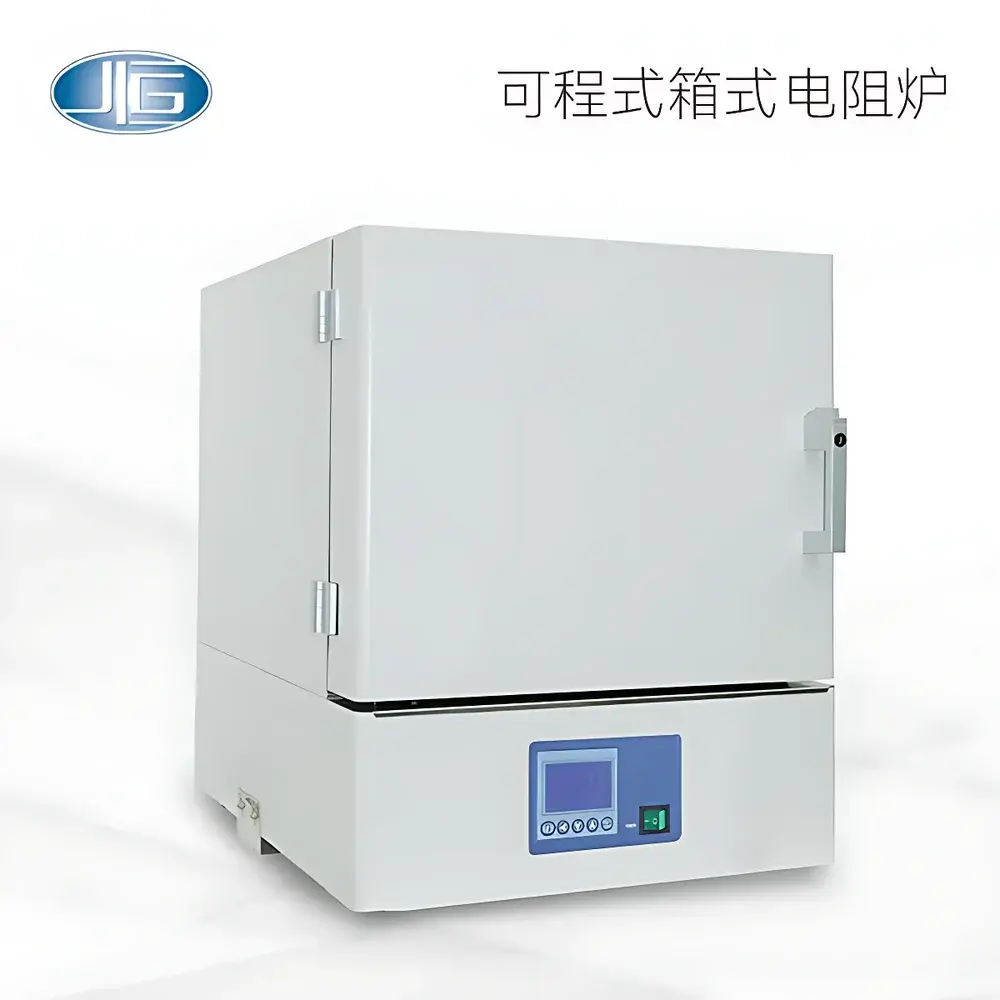
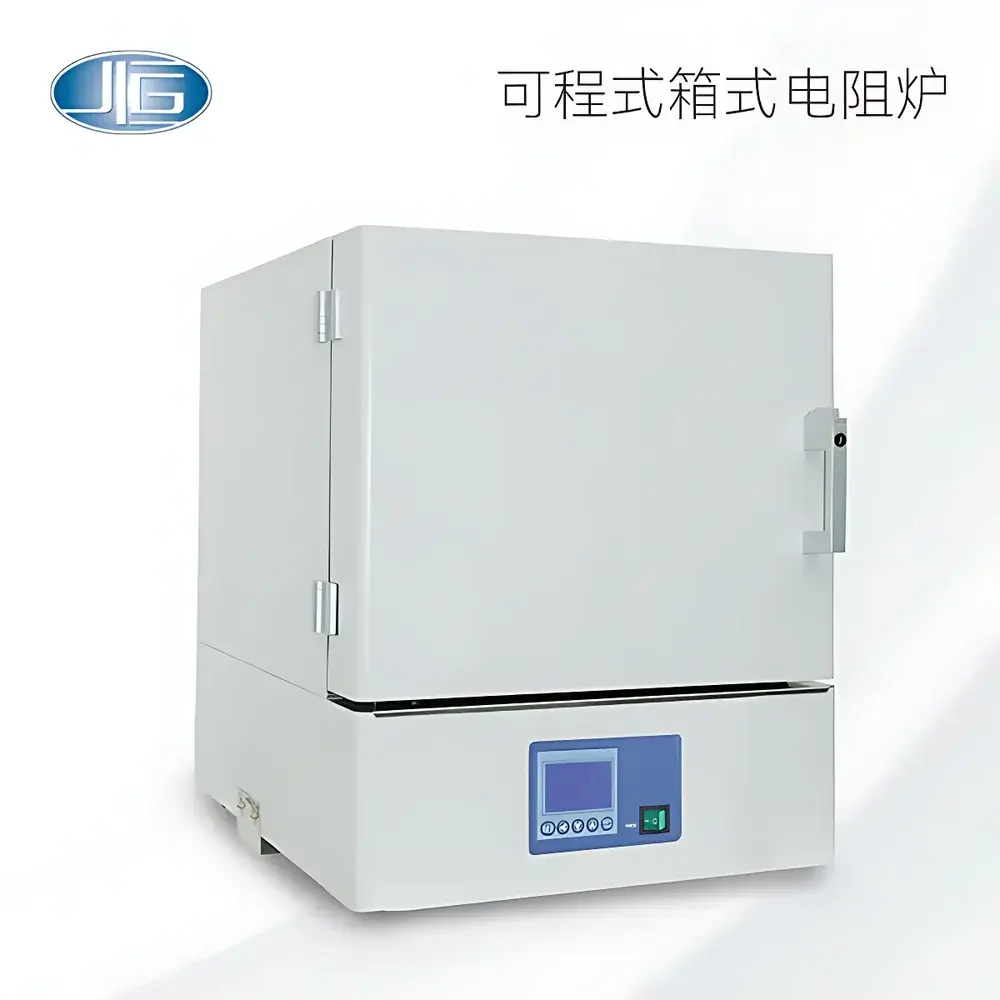
YiHeng BSX2-5-12TP Programmable Box-Type Muffle Furnace
| Brand | YiHeng |
|---|---|
| Origin | Shanghai, China |
| Manufacturer Type | Direct Manufacturer |
| Country of Origin | China |
| Model | BSX2-5-12TP |
| Instrument Type | Box Furnace |
| Max Temperature | 1200 °C |
| Temperature Control Accuracy | ±1 °C |
| Rated Power | 3000 W |
| Heating Rate (to max temp) | ≤45 °C/min |
| Heating Rate (300–1000 °C) | ≥5 °C/min |
| Heating Element | Fe-Cr-Al Alloy Resistance Wire |
| Internal Chamber Dimensions | 200 × 300 × 120 mm |
Overview
The YiHeng BSX2-5-12TP is a benchtop programmable box-type muffle furnace engineered for precision thermal processing in academic research laboratories, quality control environments, and materials development facilities. It operates on resistive heating principles using high-stability Fe-Cr-Al alloy wire elements embedded within a lightweight, low-thermal-mass ceramic fiber insulation matrix. This architecture enables rapid thermal response, energy-efficient operation, and exceptional temperature uniformity across the 200 × 300 × 120 mm working chamber. Designed to meet ISO 9001-compliant manufacturing standards, the furnace supports repeatable heat treatment protocols up to 1200 °C with ±1 °C control accuracy—critical for applications including ashing, calcination, sintering, and pre-treatment of ceramic, metallurgical, and geological samples.
Key Features
- High-efficiency ceramic fiber insulation: Low-density alumina-silica fiber lining reduces thermal inertia, enabling ≤45 °C/min ramp rates to maximum temperature while minimizing standby power loss.
- Dual-wall construction with active air cooling: Outer casing incorporates an integrated axial fan system that maintains external surface temperatures near ambient (<50 °C at 1200 °C internal), eliminating burn hazards and reducing lab HVAC load.
- 7-segment, 63-step programmable controller: Supports nested multi-stage profiles with independent ramp rate, soak time (0–5999 min per step), and target temperature settings; memory retains up to 7 user-defined programs.
- Microprocessor-based PID temperature regulation: Real-time feedback from a calibrated K-type thermocouple ensures stable setpoint maintenance and automatic correction for thermal drift.
- Comprehensive safety interlock system: Includes over-temperature cut-off (hardware-independent), door position sensing, heater open-circuit detection, thermocouple break alarm, EEPROM error monitoring, and audible/visual fault indication per IEC 61000-6-2 EMC guidelines.
Sample Compatibility & Compliance
The BSX2-5-12TP accommodates standard crucibles (alumina, quartz, stainless steel) and sample boats up to 100 mm in height. Its muffle design isolates samples from direct contact with heating elements and combustion byproducts, ensuring contamination-free thermal treatment compliant with ASTM E1112 (standard practice for laboratory furnace calibration) and ISO/IEC 17025 requirements for accredited testing labs. The furnace’s thermal stability profile meets GLP documentation prerequisites for method validation, and its programmable logic supports audit-ready traceability when paired with optional RS485/Modbus RTU interface modules (sold separately).
Software & Data Management
While the unit operates autonomously via its front-panel interface, optional communication modules enable integration into centralized lab data systems. When configured with Modbus RTU protocol support, the furnace exports real-time temperature, program stage status, and alarm logs to LIMS or SCADA platforms. All program parameters—including ramp rates, dwell times, and temperature setpoints—are stored in non-volatile memory with write-protection against accidental overwrite. The controller firmware complies with FDA 21 CFR Part 11 requirements for electronic records when used with validated third-party data acquisition software, supporting full audit trail generation and user access controls.
Applications
- Ash content determination per AOAC 942.05 and EPA Method 3050B for environmental soil and sludge analysis.
- Thermal gravimetric pre-conditioning of catalysts, battery electrode materials, and metal-organic frameworks prior to BET surface area measurement.
- Controlled oxidation annealing of thin-film semiconductor substrates in microelectronics R&D.
- Pre-firing of dental porcelain and bioceramic prosthetics under ISO 6872:2015 specifications.
- Residue ignition in pharmaceutical excipient purity testing (USP <281>).
FAQ
What is the maximum recommended continuous operating temperature?
The furnace is rated for continuous operation at 1200 °C; however, sustained use above 1150 °C may reduce heating element service life. For optimal longevity, routine operation below 1100 °C is advised.
Does the controller support ramp-soak-hold profiles with variable heating rates?
Yes—the 7-group × 9-step programming architecture allows independent ramp rate assignment per segment (e.g., 10 °C/min to 600 °C, then 3 °C/min to 950 °C, followed by 2-hour soak).
Is the furnace compatible with inert or reducing atmospheres?
No—the standard configuration is air-atmosphere only. Optional quartz tube inserts and gas inlet/outlet ports are available as accessories for controlled-atmosphere operation.
How is temperature uniformity verified across the chamber?
Per ASTM E220, uniformity is characterized during factory calibration using a 3-point (center + corners) thermocouple mapping procedure at 800 °C and 1100 °C; typical deviation is ±3 °C within the central 70% volume.
Can the unit be integrated into a LabVIEW or Python-based automation framework?
Yes—via RS485 Modbus RTU interface (optional module), enabling bidirectional command execution and telemetry streaming using standard industrial communication libraries.



