
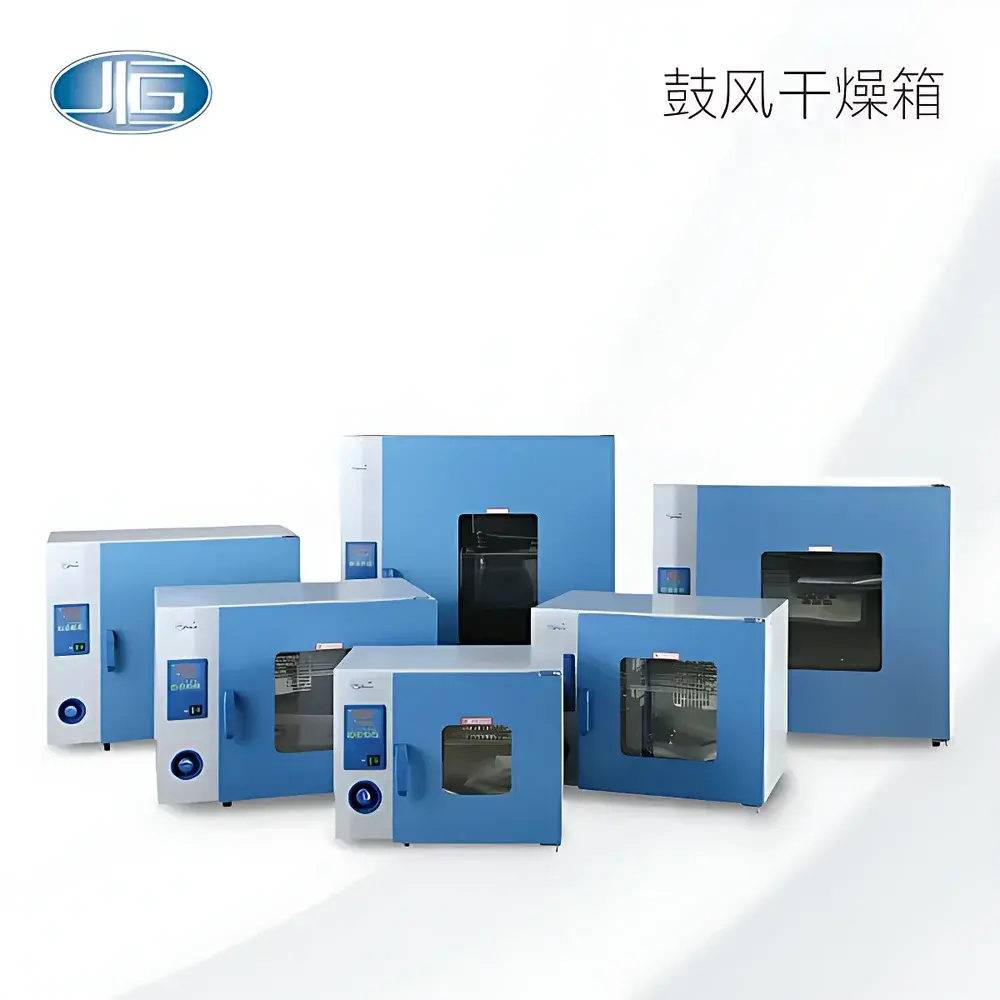
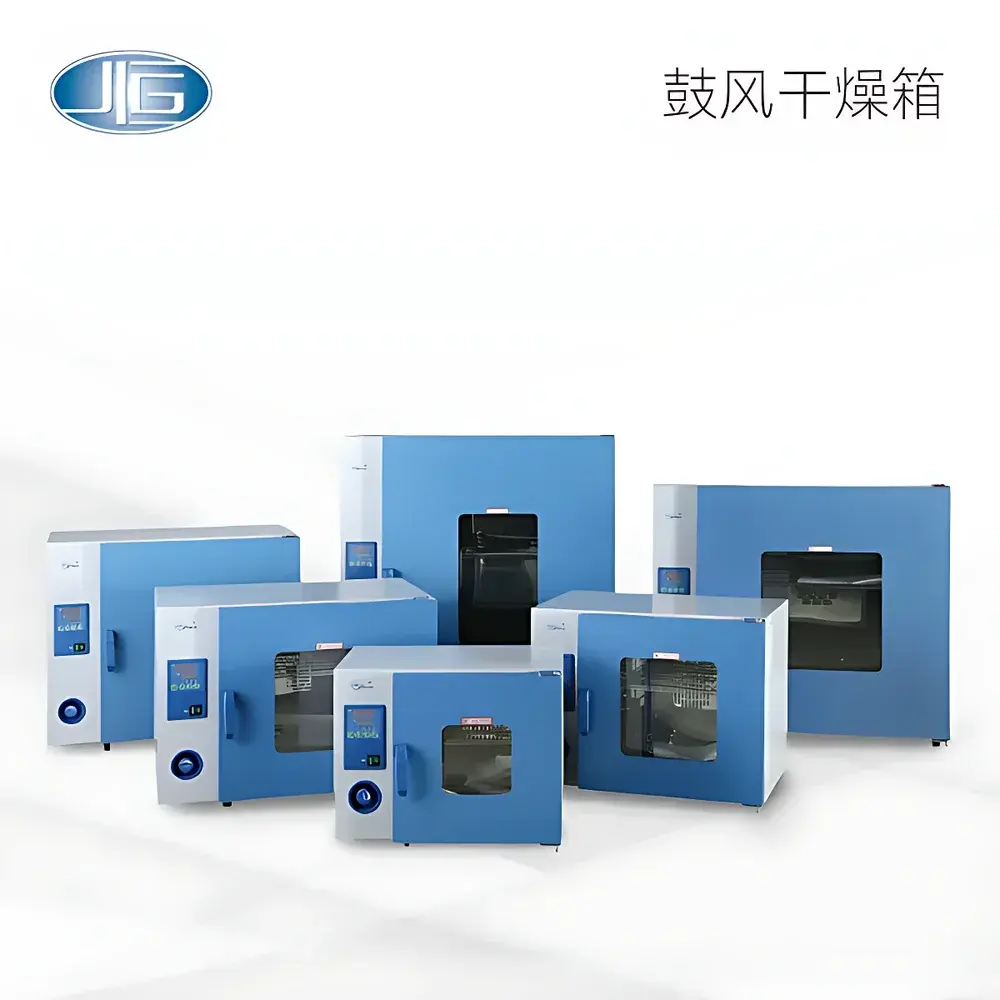
YiHeng 9000 Series Forced-Air Drying Oven with Multi-Stage Programmable Controller
| Brand | YiHeng |
|---|---|
| Origin | Shanghai, China |
| Manufacturer Type | Direct Manufacturer |
| Country of Origin | China |
| Model | 9000 Series Forced-Air Drying Oven |
| Instrument Type | General-Purpose Laboratory Drying Oven |
| Temperature Range | RT+10°C to 200°C / RT+10°C to 250°C |
| Temperature Fluctuation | ±0.1°C |
| Operating Ambient Temperature | +5°C to +40°C |
| Inner Chamber Material | Mirror-Finish Stainless Steel (AISI 304) |
| Heating Method | Forced-Air Convection via High-Temperature Fan |
| Temperature Uniformity | ±3% at 100°C |
| Control System | Microprocessor-Based P.I.D. Temperature Controller with Multi-Stage Programming, Digital Display, and Timer Function |
| Safety Features | Independent Over-Temperature Cut-Off Protection |
| Optional Accessories | RS485 Communication Interface, Thermal Printer Module |
Overview
The YiHeng 9000 Series Forced-Air Drying Oven is an industrial-grade, microprocessor-controlled laboratory drying system engineered for precision thermal processing in research laboratories, quality control environments, and production support facilities. Designed around a robust forced-convection architecture, the oven employs a high-efficiency centrifugal blower capable of continuous operation at elevated temperatures, ensuring uniform heat distribution across the working chamber. Its measurement principle relies on closed-loop P.I.D. (Proportional–Integral–Derivative) temperature regulation, where real-time thermistor feedback continuously adjusts heater duty cycle to maintain setpoint stability within ±0.1°C fluctuation. The chamber operates within two standard temperature ranges—RT+10°C to 200°C and RT+10°C to 250°C—making it suitable for routine drying, pre-conditioning of samples, polymer curing, moisture loss analysis per ASTM D229, wax melting, and low-temperature sterilization protocols compliant with ISO 11137 Annex B.
Key Features
- Mirror-finish AISI 304 stainless steel inner chamber, fabricated using TIG (tungsten inert gas) welding for corrosion resistance and long-term dimensional stability under thermal cycling;
- Microprocessor-based P.I.D. temperature controller with multi-stage programmable capability—users can define up to 8 segments (time/temperature ramps and holds) for complex thermal profiles;
- Independent mechanical over-temperature safety cut-off circuit, physically isolated from the main control board, meeting IEC 61010-1 Class II requirements for lab equipment safety;
- Adjustable air inlet and exhaust dampers accessible from the front control panel, enabling fine-tuning of chamber atmosphere exchange rate for volatile or solvent-laden samples;
- High-temperature silicone door gasket rated for continuous use up to 250°C, providing reliable sealing and minimizing thermal leakage;
- Front-panel timer function with auto-shutdown, supporting unattended operation for durations up to 99 hours and 59 minutes;
- Thermally insulated double-wall construction with mineral wool insulation (≥50 mm thickness), reducing external surface temperature rise and improving energy efficiency.
Sample Compatibility & Compliance
The 9000 Series accommodates a broad range of sample types—including powders, granules, films, metal coupons, ceramic substrates, and biological specimens—without risk of cross-contamination, thanks to its seamless, non-porous stainless steel interior. It complies with key international standards for laboratory ovens: EN 61010-1 (Safety Requirements for Electrical Equipment), ISO 17025:2017 (General Requirements for the Competence of Testing and Calibration Laboratories), and supports GLP/GMP documentation workflows when paired with optional RS485 data logging. While not certified for medical device sterilization (e.g., ISO 13485), it meets validation prerequisites for drying steps in pharmaceutical manufacturing per USP and supports IQ/OQ documentation packages upon request.
Software & Data Management
The oven supports optional RS485 serial communication (Modbus RTU protocol) for integration into centralized lab management systems. When connected to a host PC via USB-to-RS485 adapter, users can remotely monitor real-time temperature, download historical profile logs (timestamped, with 1-second resolution), and export CSV-formatted datasets for audit trail generation. An optional thermal printer module provides hard-copy output of temperature/time curves and alarm events—critical for FDA 21 CFR Part 11-compliant environments where electronic signatures and record retention are mandated. All parameter changes and alarm triggers are automatically timestamped and stored in non-volatile memory for traceability.
Applications
- Moisture content determination in food, pharmaceuticals, and soil samples (aligned with AOAC 950.46 and ASTM D4457);
- Drying of filter papers, crucibles, and glassware prior to gravimetric analysis;
- Curing of adhesives, coatings, and composite prepregs under controlled thermal ramping;
- Pre-baking of PCB assemblies and electronic components to eliminate latent moisture before soldering;
- Accelerated aging studies for polymers and packaging materials per ISO 188 and ASTM D573;
- Low-temperature deactivation of enzymes or microbial cultures where steam autoclaving is unsuitable.
FAQ
What is the maximum allowable load volume without compromising temperature uniformity?
Temperature uniformity specification (±3% at 100°C) is validated with ≤70% chamber volume occupied. For critical applications requiring tighter uniformity, loading should be limited to 50% and distributed evenly across multiple shelves.
Can the oven be validated for IQ/OQ/PQ according to GMP guidelines?
Yes—the unit’s stable thermal performance, digital audit trail capability (with optional printer or RS485), and independent safety cutoff enable full qualification. Validation templates and sensor placement guidance are available upon request.
Is the RS485 interface compatible with LabVIEW or SCADA platforms?
Yes—Modbus RTU implementation allows native integration with LabVIEW (via NI-VISA), Siemens WinCC, Ignition SCADA, and most OPC-UA-enabled systems using standard Modbus drivers.
Does the controller support ramp-and-soak programming for ASTM D3418 transitions?
Yes—multi-segment programming supports linear ramps (°C/min), dwell periods, and step changes, fully configurable to replicate ASTM D3418 thermal transition protocols for polymer characterization.
What maintenance intervals are recommended for optimal calibration stability?
Annual verification with NIST-traceable reference thermometer is advised. Blower motor bearings require inspection every 24 months; door gasket replacement is recommended after 3 years of continuous operation at ≥200°C.



