
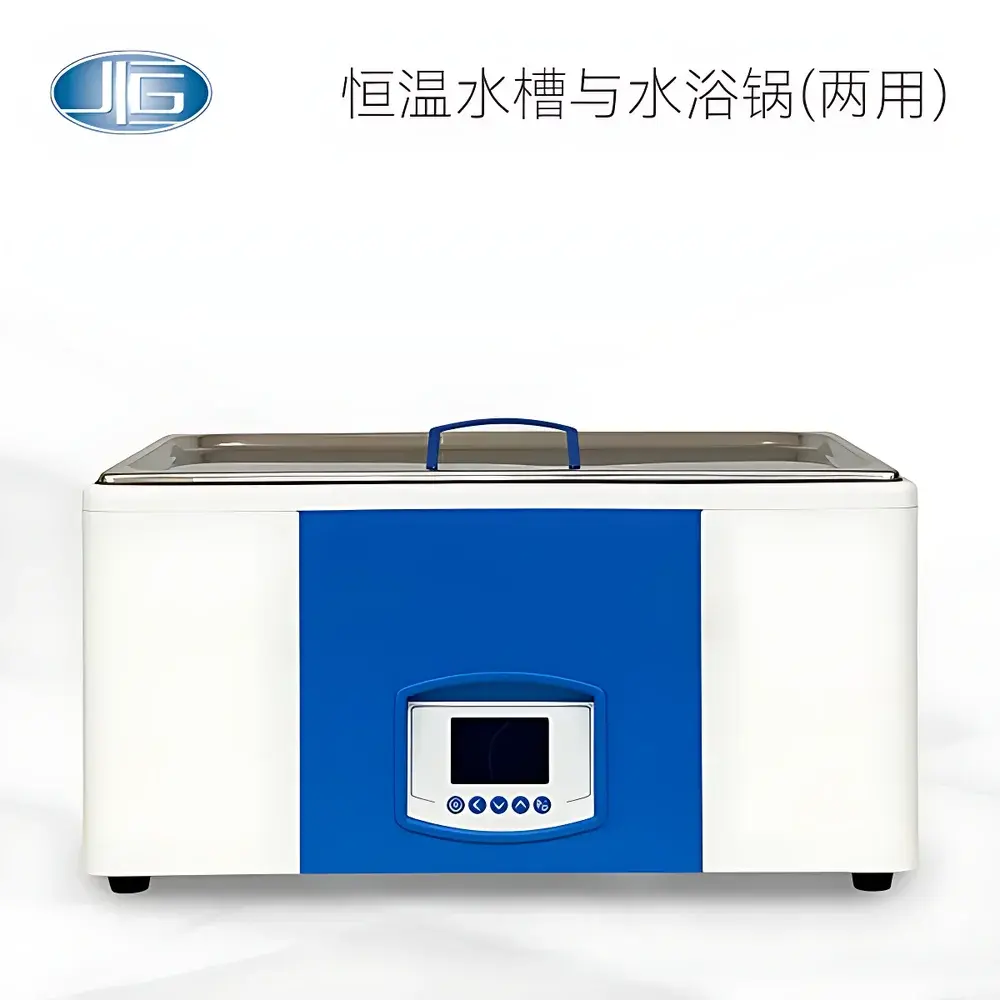
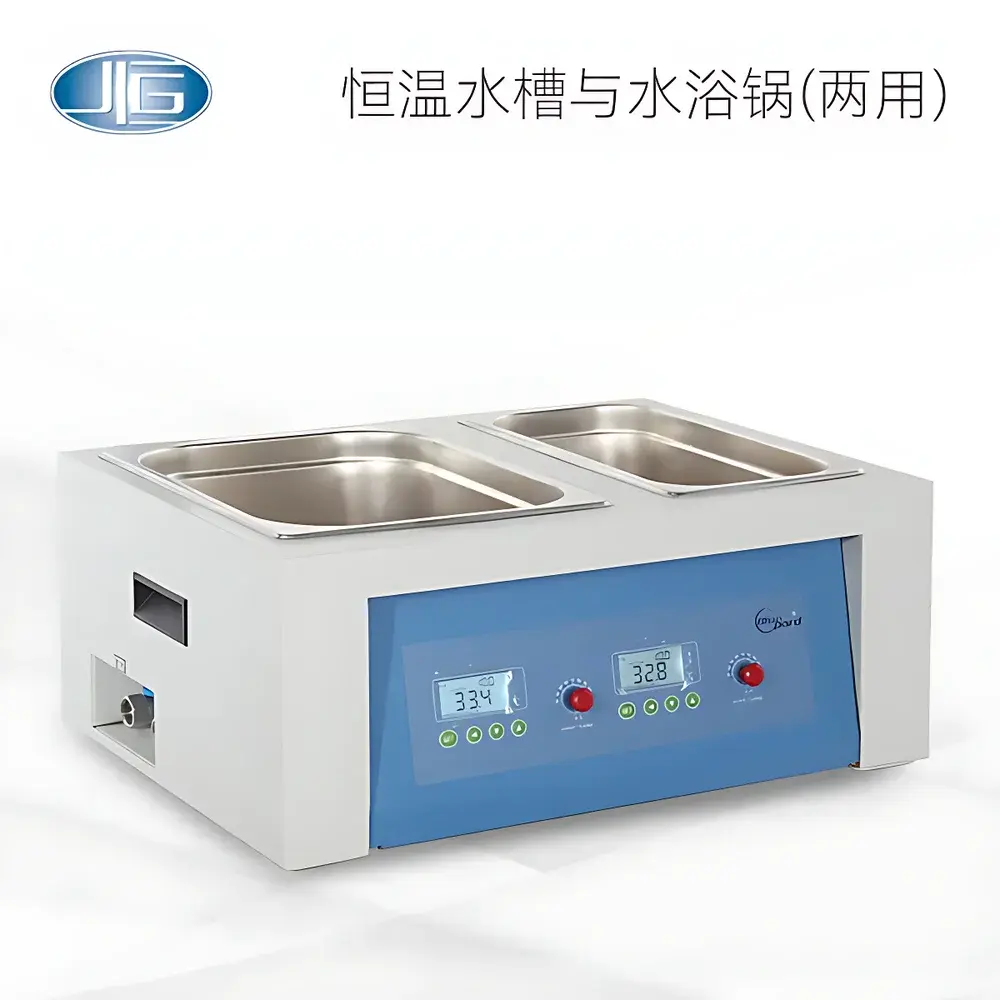
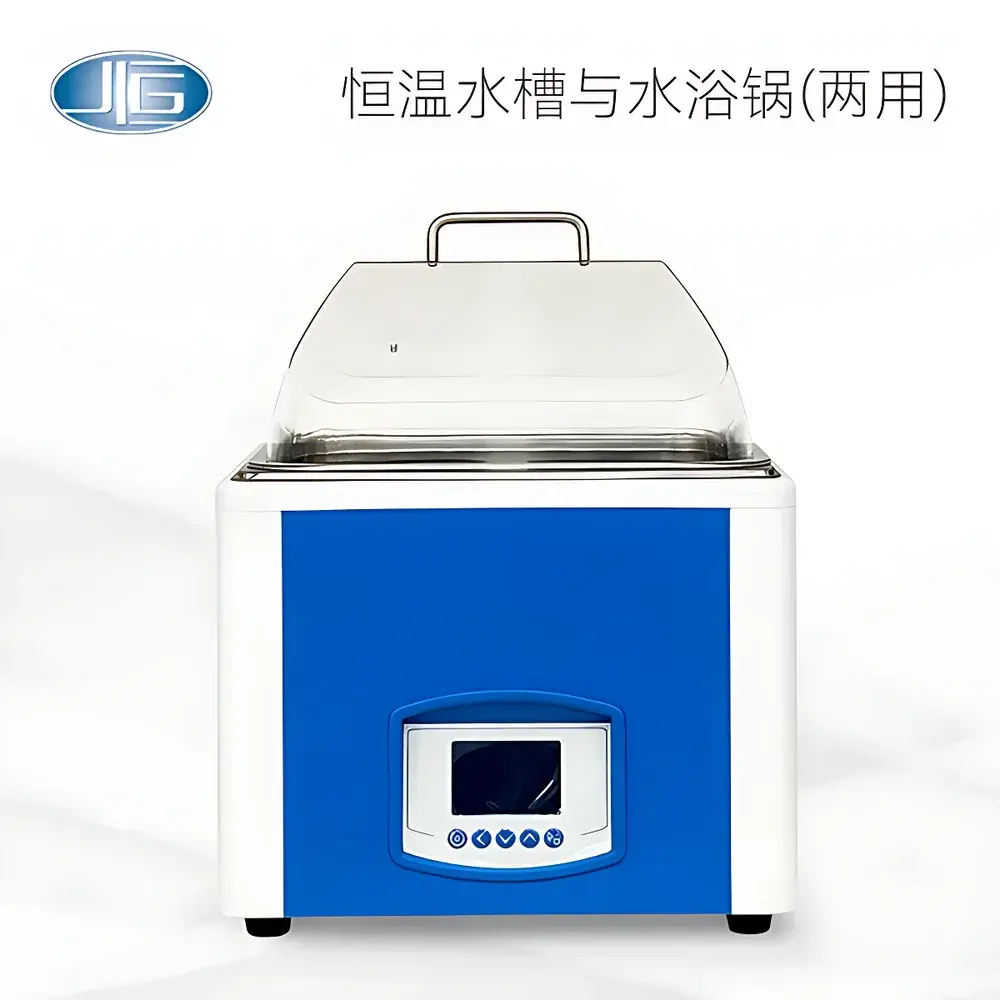
Yiheng BWS Series Dual-Function Water Bath & Immersion Circulator
| Brand | Yiheng |
|---|---|
| Origin | Shanghai, China |
| Manufacturer Type | Direct Manufacturer |
| Product Category | Domestic |
| Model | BWS Series |
| Instrument Type | Water Bath / Oil Bath |
| Circulation | None |
| Temperature Control | Heating-Only |
| Bath Volume | Model-Dependent |
| Temperature Range | RT+5°C to 99°C |
| Temperature Stability | ±0.3°C |
| Input Power | As per Datasheet |
| Voltage | AC 220 V, 50 Hz |
Overview
The Yiheng BWS Series Dual-Function Water Bath & Immersion Circulator is an engineered solution for precise, stable thermal control in routine laboratory applications requiring immersion-based heating. Designed around a robust convection-heating principle—where heat is transferred uniformly via direct contact between the heated stainless steel bath medium (water or compatible oils) and immersed vessels—the system delivers consistent thermal environments without active fluid circulation. Its dual-role architecture integrates the functional profiles of both a standard water bath and a compact immersion heater unit, enabling flexible use across beaker-based reactions, sample equilibration, enzyme incubation, dissolution testing, and low-temperature stability studies. The device operates within a validated temperature envelope of RT+5°C to 99°C, with a certified stability of ±0.3°C under steady-state conditions—a performance level aligned with ISO/IEC 17025–compliant calibration practices for non-circulating thermal platforms.
Key Features
- Integrated dual-function design: functions as both a water bath and an immersion heating station, eliminating the need for separate dedicated units.
- One-piece deep-drawn 304 stainless steel inner tank ensures corrosion resistance, structural integrity, and ease of cleaning—critical for GLP-compliant lab hygiene protocols.
- Backlit LCD interface displays real-time temperature, setpoint, timer status, and operational mode simultaneously; intuitive menu navigation supports rapid parameter entry and recall.
- Programmable timer function enables unattended operation for defined durations (e.g., 1 min to 99 h 59 min); optional multi-segment temperature ramping controller available for advanced thermal profiling.
- Removable stainless steel wire mesh shelf shields heating elements and PT100 sensor from physical contact, reducing risk of damage during vessel placement or retrieval.
- Adjustable aperture plate accommodates a range of container diameters—from 10 mm test tubes to 250 mL beakers—without requiring accessory swaps.
- Flat, seamless stainless steel lid minimizes condensation accumulation; optional peaked lid variant reduces vapor loss and prevents droplet ingress into open samples—an essential safeguard for moisture-sensitive assays.
- Optional tube holder bracket allows secure vertical positioning of multiple glass or plastic test tubes during incubation or melting-point determination.
Sample Compatibility & Compliance
The BWS Series accommodates standard laboratory glassware including borosilicate beakers, Erlenmeyer flasks, volumetric cylinders, and capped vials up to 300 mm in height. Compatibility extends to silicone-coated or PTFE-lined containers for oil-bath operation up to 99°C. All wetted parts comply with USP Class VI biocompatibility requirements for short-term contact applications. The unit meets IEC 61010-1:2010 safety standards for electrical equipment used in laboratory environments and incorporates dual independent thermal protection: a primary PID-controlled heating circuit and a hardware-based overtemperature cutoff (set at 105°C). It supports audit-ready documentation per FDA 21 CFR Part 11 when paired with optional data logging software and user-accessible calibration certificates traceable to NIM (National Institute of Metrology, China).
Software & Data Management
While the base model operates via standalone front-panel controls, optional RS-485 or USB interfaces enable integration with third-party LIMS or ELN systems. The optional Yiheng LabLink™ software provides real-time temperature logging, alarm event timestamping, and exportable CSV reports compliant with ISO 15197:2013 data integrity guidelines. Calibration verification logs—including date, operator ID, reference standard ID, and deviation values—are retained for ≥12 months, satisfying internal QA record retention policies and external accreditation audits (e.g., CNAS, A2LA).
Applications
- Pharmaceutical QC: dissolution media pre-equilibration (USP ), gelatin capsule softening tests, and extractive stability assessments.
- Clinical labs: serum sample thawing, reagent warming prior to immunoassay setup, and hemolysis control studies.
- Materials science: polymer melt conditioning, viscosity benchmarking of low-shear fluids, and solvent evaporation rate standardization.
- Academic research: enzyme kinetics experiments requiring isothermal reaction vessels, microbial growth pre-incubation, and DNA hybridization buffer conditioning.
- Food & beverage testing: fat extraction preheating (AOAC 991.36), starch gelatinization trials, and sensory panel sample temperature standardization.
FAQ
Does the BWS Series support external temperature probe input for sample-specific monitoring?
Yes—models equipped with the optional PT100 external probe port allow direct measurement of vessel wall or sample core temperature, decoupling bath setpoint from actual sample thermal state.
Can this unit be used with silicone oil or glycerol as heating media?
Yes, provided the selected oil has a flash point >120°C and viscosity ≤500 cSt at operating temperature; maximum recommended oil depth is 80% of tank capacity.
Is the ±0.3°C stability specification verified under load or no-load conditions?
The specification reflects loaded conditions: measured using a calibrated 100 Ω platinum RTD immersed centrally in 2 L deionized water at 37°C, with a 100 mL beaker containing 50 mL water placed on the mesh shelf.
What maintenance intervals are recommended for long-term reliability?
Daily visual inspection of water level and cleanliness; quarterly descaling with 5% citric acid solution if used with tap water; annual verification of thermal cut-off response time and sensor linearity per ISO/IEC 17025 Annex A.3.



