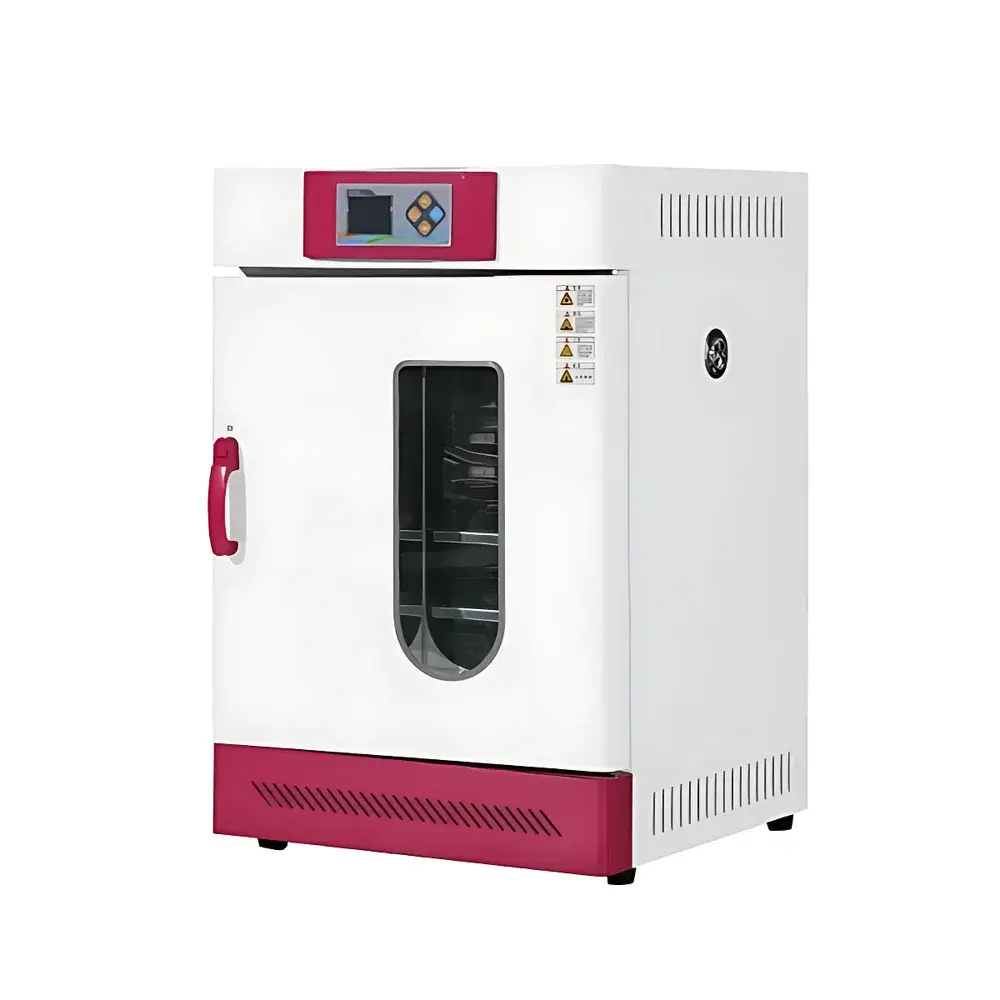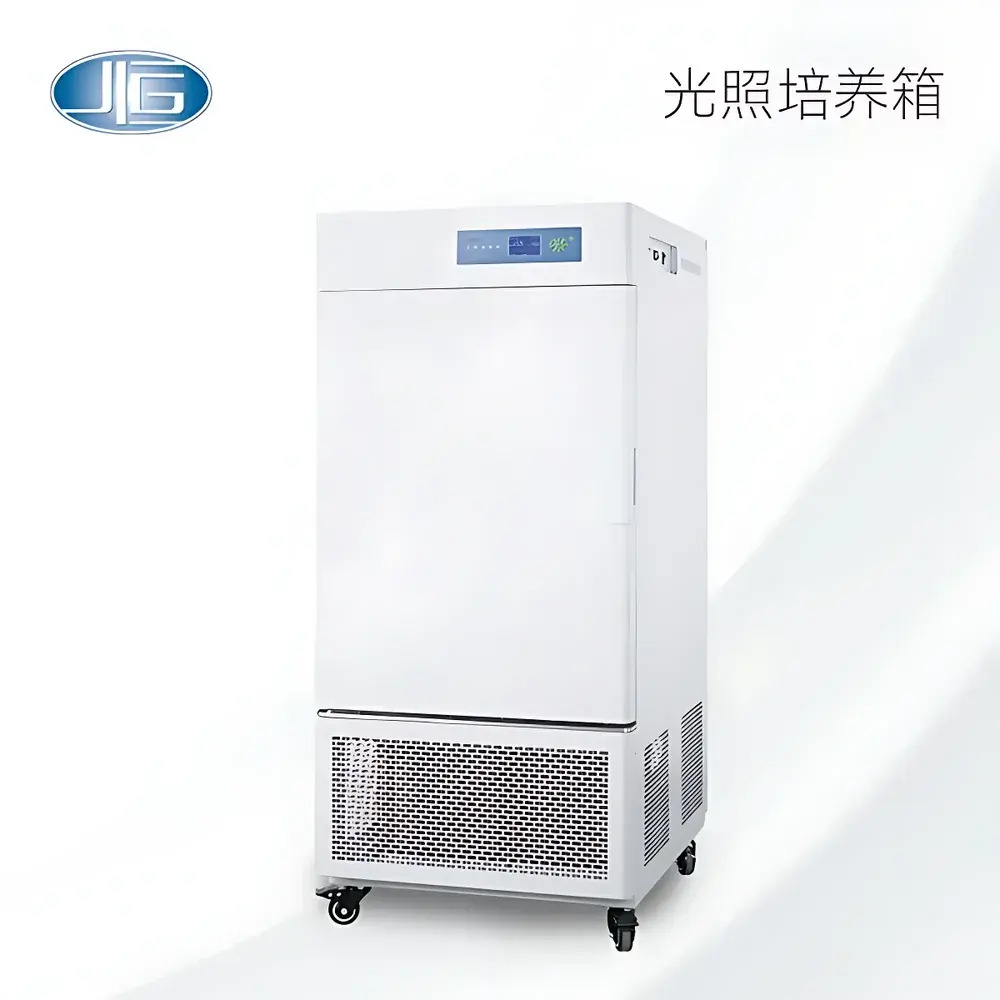
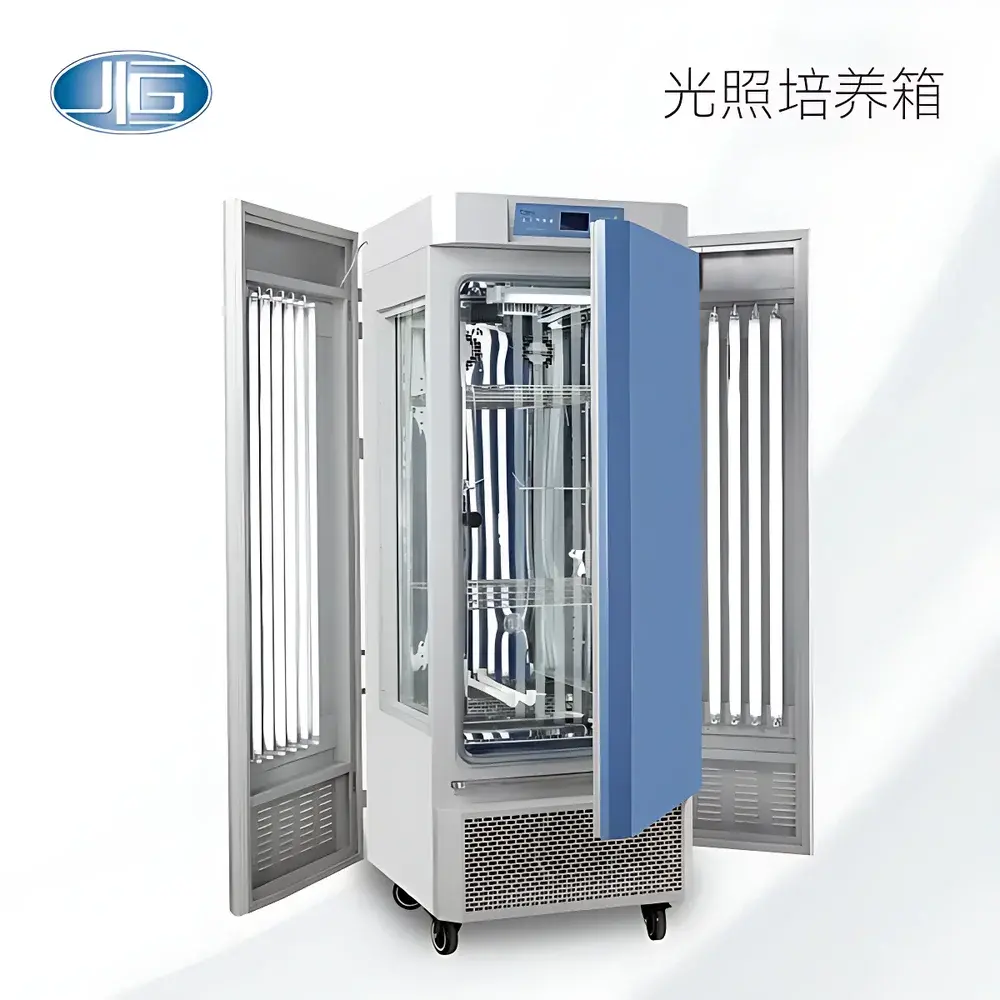
YiHeng MGC Series LED-Illuminated Plant Growth Chamber
| Brand | YiHeng |
|---|---|
| Origin | Shanghai, China |
| Manufacturer Type | Direct Manufacturer |
| Product Line | MGC Series |
| Illumination Configuration | Triple-Sided LED Lighting |
| Temperature Range (with light) | 10–50 °C |
| Temperature Range (dark) | 0–50 °C |
| Temperature Uniformity | ±1 °C |
| Humidity Range | 50–90 % RH |
| Light Source | High-Efficiency White LED Arrays |
| Control System | Microprocessor-Based Programmable Controller |
| Programmable Cycles | Up to 30 Programs (Optional), Each with Duration 1–99 Hours |
| Safety Features | Independent Over-Temperature Cut-Off Alarm |
| Communication Interface | RS485 Port (Optional) |
| Optional Add-ons | CO₂ Inlet Port + IR-Based CO₂ Controller (Imported Sensor) |
| Interior Material | Mirror-Finish Stainless Steel with Radius-Corner Transition |
| Shelving | Adjustable and Removable Stainless Steel Racks |
| Refrigeration System | Imported Compressor with Eco-Friendly Refrigerant (R134a or Equivalent) |
Overview
The YiHeng MGC Series LED-Illuminated Plant Growth Chamber is a precision-engineered environmental simulation system designed for reproducible, long-term cultivation of photosynthetic organisms under tightly controlled climatic parameters. Built upon the Couette-flow principle of thermal management and solid-state photobiological illumination architecture, it enables stable, uniform regulation of temperature, relative humidity, and spectral irradiance—critical for standardized plant phenotyping, seed germination assays, tissue culture maintenance, entomological rearing, and small-mammal acclimation studies. Unlike conventional incubators, the MGC series integrates triple-sided LED lighting to minimize shadowing and ensure spatial homogeneity of photon flux density across the growth volume. Its microprocessor-based control system executes multi-stage diurnal cycles—including dynamic transitions between day/night temperature and humidity setpoints—mimicking natural environmental rhythms essential for circadian biology and developmental physiology research.
Key Features
- Triple-sided high-output white LED illumination system delivering uniform photosynthetically active radiation (PAR) distribution without hotspots or directional bias.
- Microprocessor-controlled environmental regulation with real-time monitoring of temperature (±0.5 °C resolution), humidity (±3 % RH accuracy), and programmable light intensity profiles (via optional calibration).
- Mirror-finish 304 stainless steel interior chamber with radius-corner transition design—ensuring seamless cleaning, corrosion resistance, and compliance with GLP-compliant facility hygiene protocols.
- Imported hermetic compressor paired with low-global-warming-potential (GWP) refrigerant (R134a-equivalent), engineered for continuous 24/7 operation with <2.8 kW·h/day energy consumption at 25 °C/60 % RH nominal load.
- Dual-mode temperature control logic: independent setpoint ranges for illuminated (10–50 °C) and dark-phase (0–50 °C) operation, accommodating both photoperiod-sensitive and thermosensitive biological models.
- Independent over-temperature safety cutoff circuit—mechanically isolated from main controller—to guarantee fail-safe termination in case of sensor drift or thermal runaway.
- Modular rack system with tool-free, height-adjustable stainless steel shelves supporting up to 15 kg per level; compatible with standard Petri dishes, Magenta boxes, growth trays, and insect rearing containers.
Sample Compatibility & Compliance
The MGC chamber accommodates diverse biological sample formats including agar plates, liquid culture flasks (up to 2 L), hydroponic trays, potted seedlings (up to 30 cm height), and ventilated arthropod cages. Its internal geometry supports ISO 14644-1 Class 8 cleanroom-compatible workflows when operated with HEPA-filtered air recirculation (optional retrofit). The unit conforms to IEC 61000-6-3 (EMC emissions), IEC 61010-1 (safety for laboratory equipment), and meets structural requirements referenced in ASTM E1823–22 (Standard Terminology Relating to Environmental Testing). While not certified for clinical GMP environments, its audit-ready data logging architecture aligns with FDA 21 CFR Part 11 expectations when used with validated RS485-to-PC software solutions.
Software & Data Management
The embedded controller logs timestamped temperature, humidity, and illumination status at user-defined intervals (1–60 min). When connected via RS485 to a host PC running YiHeng’s optional LabLink™ software (Windows 10/11 compatible), users gain access to real-time remote monitoring, exportable CSV datasets, graphical trend overlays, and configurable alarm notifications (email/SMS via gateway). All logged data include operator ID fields, digital signatures, and immutable audit trails—supporting ALCOA+ principles (Attributable, Legible, Contemporaneous, Original, Accurate, Complete, Consistent, Enduring, Available). Firmware updates are performed via secure USB key with SHA-256 checksum verification.
Applications
- Standardized seed germination testing per ISTA Rules and OECD Seed Health Testing Guidelines.
- Arabidopsis thaliana and rice mutant phenotyping under defined photoperiods (e.g., 16h light / 8h dark at 22 °C / 18 °C).
- In vitro propagation of orchid protocorms requiring precise 60–70 % RH and 25 µmol·m⁻²·s⁻¹ PAR.
- Drosophila melanogaster developmental staging under temperature-shift regimens (e.g., 18 °C → 29 °C over 48 h).
- Pre-acclimation of biocontrol agents (e.g., Trichogramma wasps) prior to field release.
- Long-term stability studies of microbial consortia in synthetic root exudate media.
FAQ
What is the maximum achievable light intensity (PPFD) inside the chamber?
Maximum photosynthetic photon flux density (PPFD) is model-dependent and requires photometric validation using an ISO 17025-accredited spectroradiometer; typical configurations deliver 150–400 µmol·m⁻²·s⁻¹ at shelf level.
Is CO₂ control compatible with all MGC models?
CO₂ integration is available as a factory-installed option on MGC-250L and larger variants; retrofitting to smaller units is not supported due to chamber volume constraints and sensor calibration limits.
Can the chamber operate unattended for extended periods (e.g., >72 hours)?
Yes—validated for continuous operation up to 30 days with scheduled maintenance intervals; compressor duty cycle remains below 65 % under nominal 25 °C/60 % RH conditions.
Does the system support custom light spectra (e.g., red/blue ratio tuning)?
Standard configuration uses broad-spectrum white LEDs; narrowband spectral customization (e.g., 660 nm + 450 nm peak) requires OEM-level firmware and hardware revision—not available through standard distribution channels.
How is humidity generated and maintained?
Humidity is achieved via ultrasonic humidification combined with PID-controlled steam injection and condensation recovery; no external water supply is required beyond initial reservoir fill (capacity: 3.2 L).