
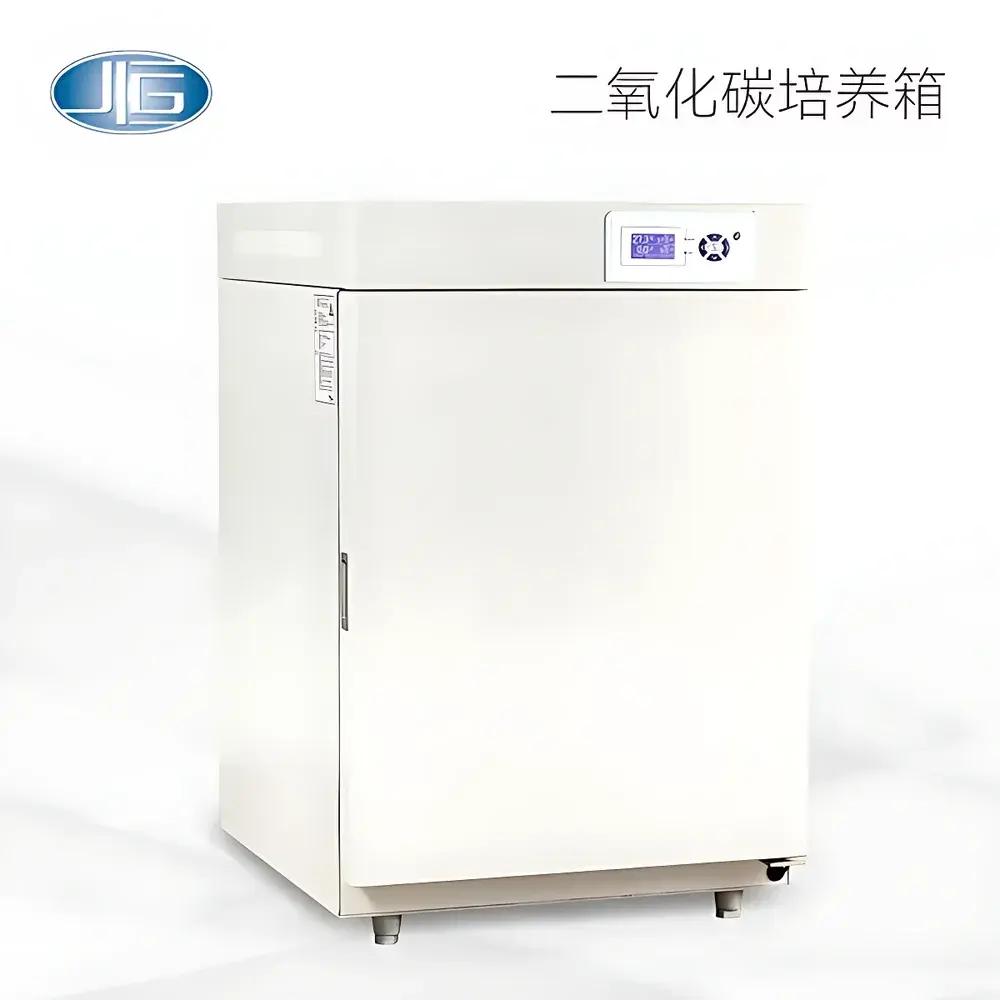
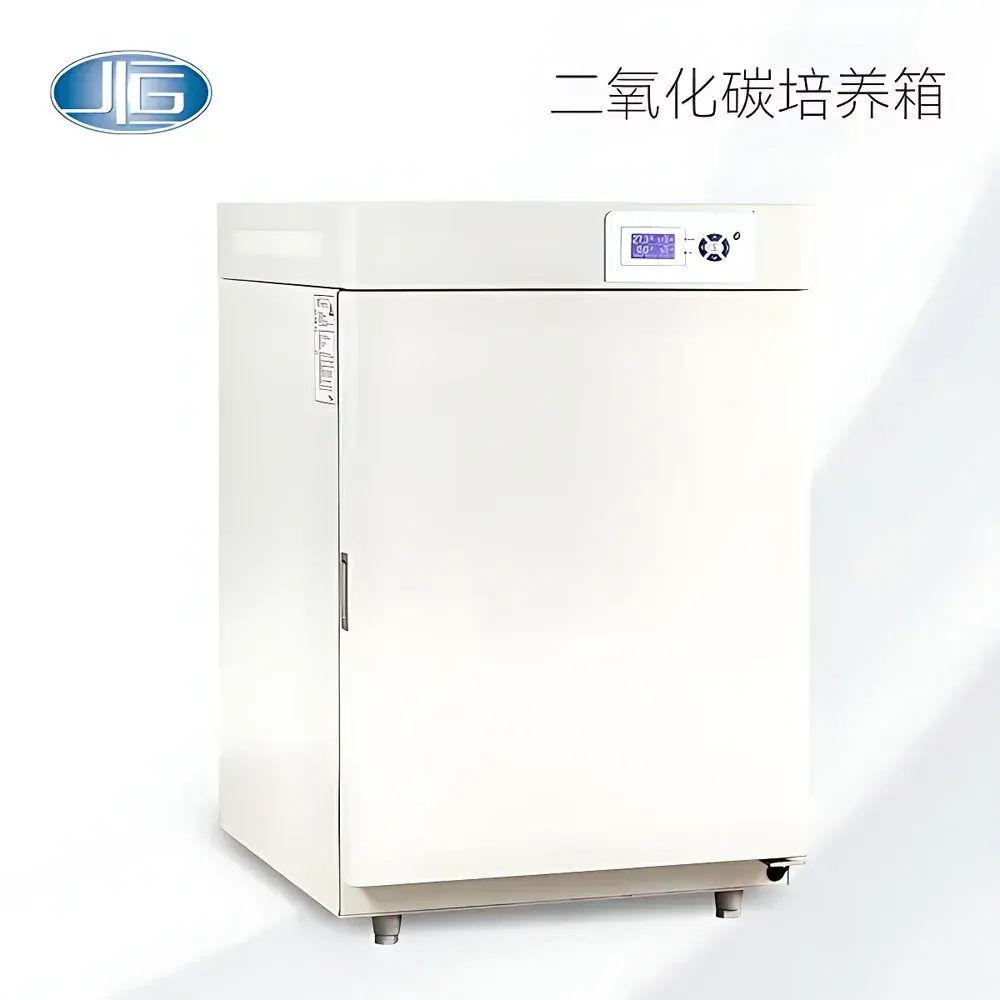
Yiheng BPN Series Infrared CO₂ Incubator (UV Sterilization)
| Brand | Yiheng |
|---|---|
| Origin | Shanghai, China |
| Manufacturer Type | Direct Manufacturer |
| Region of Origin | Domestic (China) |
| Model Variants | BPN-50CH(UV), BPN-150CW(UV) |
| Instrument Type | Air-Jacketed CO₂ Incubator |
| CO₂ Detection Method | Infrared (IR) Sensor |
| Temperature Control Range & Accuracy | RT+5°C to 55°C |
| CO₂ Concentration Control Range & Accuracy | 0–20% (v/v) |
| Chamber Capacity | 50 L – 150 L |
| External Dimensions | See Manufacturer Datasheet |
Overview
The Yiheng BPN Series Infrared CO₂ Incubator is an air-jacketed, microprocessor-controlled environmental chamber engineered for reliable, long-term cell culture under physiologically relevant conditions. It maintains precise regulation of temperature, CO₂ concentration, and relative humidity—critical parameters for mammalian cell proliferation, hybridoma expansion, stem cell maintenance, and primary tissue culture. Unlike thermal conductivity (TC) sensors, the integrated non-dispersive infrared (NDIR) CO₂ sensor provides rapid, drift-free, humidity-independent measurement with high long-term stability—eliminating routine recalibration and minimizing concentration deviation during frequent door openings. The incubator’s air-jacketed thermal architecture ensures uniform temperature distribution across the chamber volume while reducing recovery time after access events. Designed in accordance with ISO 13485-aligned manufacturing practices and validated for GLP-compliant laboratory environments, the BPN series supports reproducible, auditable cell culture workflows in academic research labs, biopharma QC facilities, and contract development organizations.
Key Features
- Air-jacketed thermal insulation system with independent heating circuits for chamber wall and door—ensuring stable temperature uniformity (±0.3°C) and fast recovery (<10 min to ±0.5°C after 60-sec door opening).
- NDIR-based CO₂ sensing technology with real-time feedback control, delivering CO₂ concentration accuracy of ±0.1% within 0–20% range and response time <60 seconds.
- UV germicidal irradiation system (254 nm) mounted at rear top interior surface, programmable for timed sterilization cycles to decontaminate circulating air and humidification water vapor.
- Heated inner glass door with dedicated PID-controlled heating circuit—prevents condensation formation and mitigates risk of microbial ingress via door seal interfaces.
- Automatically modulated internal circulation fan: speed dynamically adjusted based on thermal load and setpoint stability to maintain optimal laminar airflow (~0.1–0.3 m/s) without inducing media evaporation or shear stress on adherent monolayers.
- HEPA-grade microbial filter (≥99.99% efficiency at 0.3 µm) installed inline on CO₂ supply inlet—certified per ISO 14644-1 Class 5 requirements for sterile gas delivery.
- Electropolished stainless-steel interior (AISI 304), radius-rounded corners, removable adjustable shelves, and seamless welds—facilitating cleaning validation and residue-free decontamination.
Sample Compatibility & Compliance
The BPN series accommodates standard SBS-format multiwell plates (6–96-well), T-flasks (T25–T225), Petri dishes, roller bottles, and custom culture vessels up to 150 mm diameter. Internal chamber geometry supports simultaneous use of multiple vessel types without airflow obstruction. All models comply with IEC 61010-1:2010 safety standards for laboratory equipment and meet electromagnetic compatibility (EMC) requirements per EN 61326-1. The UV sterilization cycle and microbial filtration are compatible with USP environmental control recommendations for aseptic processing support. While not FDA 510(k)-cleared as a medical device, the system is routinely deployed in GMP-aligned cell banking and process development laboratories where documented operational qualification (OQ) and performance qualification (PQ) protocols are implemented.
Software & Data Management
Equipped with a backlit LCD interface featuring intuitive menu navigation, real-time parameter display (temperature, CO₂%, RH%, elapsed time), and event logging (door open/close, alarm triggers, UV activation). Optional RS-485/Modbus RTU interface enables integration into centralized building management systems (BMS) or LIMS platforms. Logged data—including timestamped CO₂ concentration deviations, temperature excursions, and alarm history—is exportable via USB flash drive in CSV format. Audit trail functionality meets basic ALCOA+ principles (Attributable, Legible, Contemporaneous, Original, Accurate), supporting traceability for internal quality reviews and regulatory inspections.
Applications
- Long-term maintenance of human and animal cell lines (e.g., HEK293, CHO-K1, HeLa, MCF-7) under 5% CO₂ / 37°C / >95% RH conditions.
- Embryonic stem cell (ESC) and induced pluripotent stem cell (iPSC) culture requiring stringent atmospheric consistency and low contamination risk.
- Co-culture experiments involving sensitive primary neurons or organoids where CO₂ gradient stability directly impacts pH-dependent signaling pathways.
- Antibody production workflows using hybridoma cultures dependent on sustained metabolic activity and minimal environmental perturbation.
- Pre-clinical cell therapy manufacturing steps including expansion, cryopreservation recovery, and functional assay preparation.
FAQ
What CO₂ sensor technology does the BPN series use, and why is it preferred over thermal conductivity sensors?
The BPN series employs a factory-calibrated NDIR (non-dispersive infrared) CO₂ sensor. Unlike TC sensors—which exhibit cross-sensitivity to ambient humidity and temperature fluctuations—the NDIR sensor delivers stable, linear output across the full 0–20% range with no drift over 12 months under normal operation.
Is the UV lamp ozone-free, and what is its rated lifetime?
Yes, the 254 nm low-pressure mercury UV-C lamp is ozone-free and rated for ≥5,000 hours of cumulative operation. Lamp status and usage hours are tracked in the system log.
Can the incubator be validated for IQ/OQ/PQ per GMP requirements?
Yes—dimensional drawings, electrical schematics, and factory calibration certificates are provided. The unit supports mapping studies using external thermocouples and CO₂ analyzers; protocol templates for temperature uniformity, CO₂ stability, and recovery testing are available upon request.
Does the system include humidity control, and how is it maintained?
Relative humidity is passively maintained via a stainless-steel water reservoir (capacity: 2.5 L) located at the base of the chamber. Humidity levels typically reach >95% RH at 37°C; optional external humidification modules are available for applications requiring active RH control.
What safety certifications apply to this model?
Complies with IEC 61010-1:2010 (Safety Requirements for Electrical Equipment for Measurement, Control, and Laboratory Use) and EN 61326-1:2013 (EMC for Laboratory Equipment). CE marking is affixed per EU Directive 2014/30/EU (EMC) and 2014/35/EU (LVD).



