
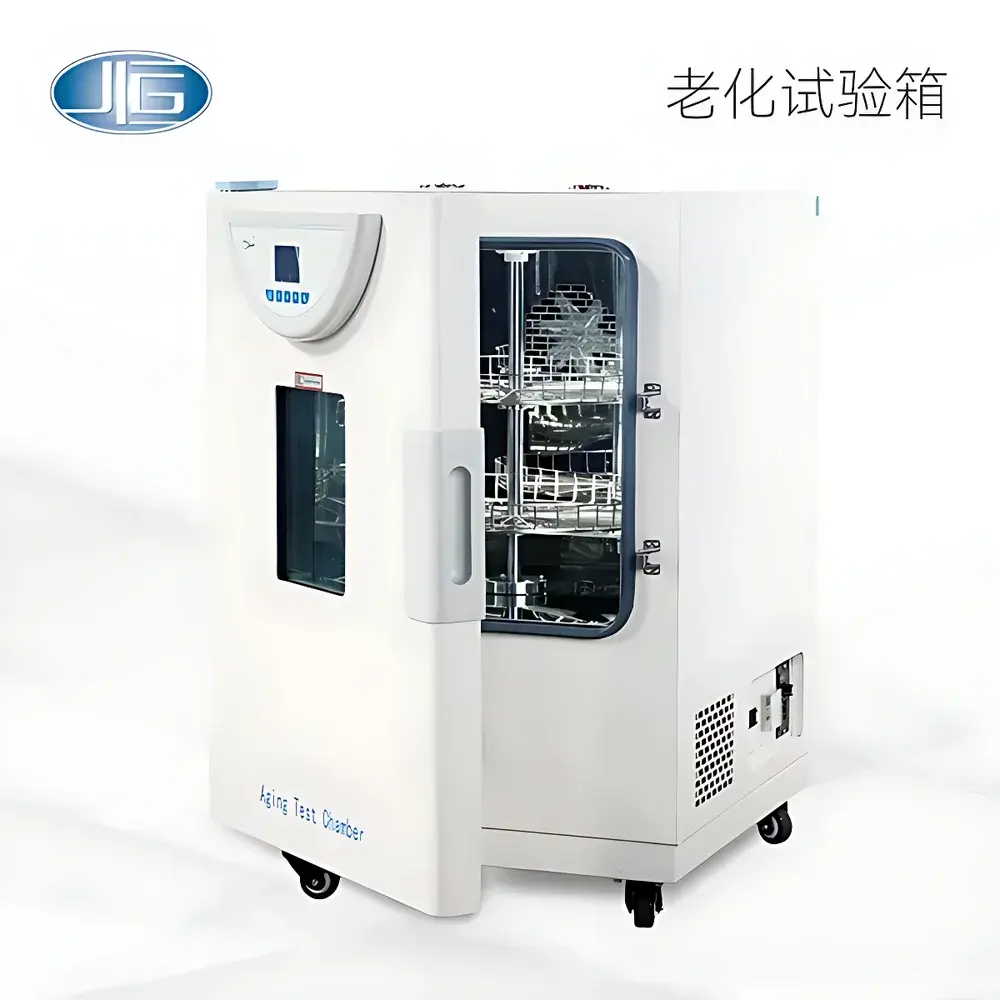
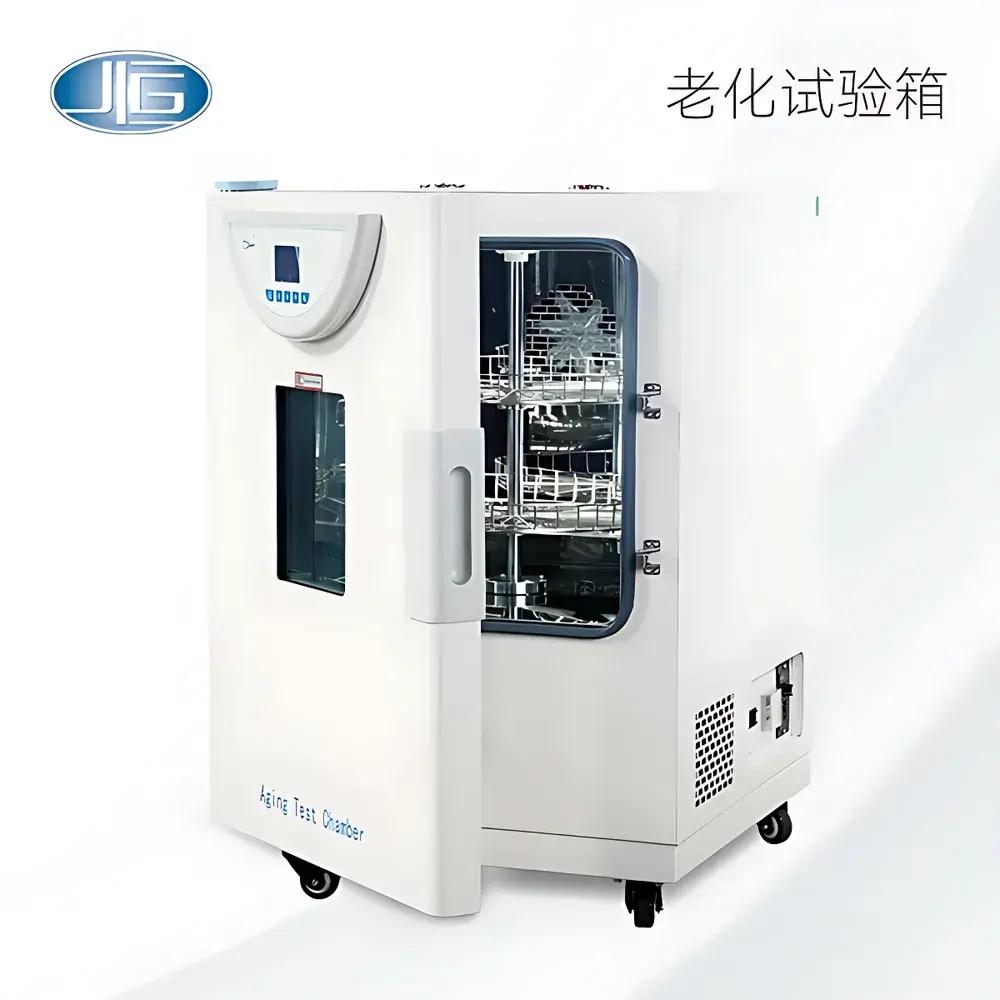
Yiheng BHO Series Programmable High-Temperature Aging Test Chamber
| Brand | Yiheng |
|---|---|
| Origin | Shanghai, China |
| Manufacturer Type | Direct Manufacturer |
| Product Category | Domestic |
| Model | BHO Series |
| Price Range | USD 2,200 – 3,350 (FOB Shanghai) |
| Max Operating Temperature | 200–300 °C |
| Temperature Range | RT + 20 to 250 °C |
| Temperature Uniformity | ±1 % of setpoint (at 100 °C, empty chamber) |
| Temperature Fluctuation | ±0.5 °C |
| Air Exchange Rate | 0–200 cycles/hour |
| Internal Chamber Dimensions (W×H×D) | 450×450×450 mm or 600×600×600 mm |
Overview
The Yiheng BHO Series Programmable High-Temperature Aging Test Chamber is an engineered environmental test system designed for accelerated thermal aging evaluation of materials, components, and finished products under controlled, repeatable conditions. Based on forced-air convection heating and programmable thermal profiling, the chamber complies with core principles defined in ASTM D573, ISO 188, and IEC 60068-2-2 for heat aging tests. It supports standardized aging protocols used in quality assurance labs, R&D departments, and manufacturing QC facilities—particularly for polymers, elastomers, adhesives, coatings, and electronic encapsulants where long-term thermal stability must be assessed within compressed timeframes. The chamber’s robust architecture ensures stable temperature maintenance across the full operational range (RT + 20 °C to 250 °C), with calibrated uniformity and minimal fluctuation critical for data reproducibility in comparative aging studies.
Key Features
- Intuitive 7-inch TFT-LCD touchscreen interface with multi-parameter real-time display and menu-driven navigation—enabling rapid setup without operator training overhead.
- Polished stainless-steel interior chamber with seamless quarter-radius corners and removable adjustable shelving—designed for easy cleaning, corrosion resistance, and compliance with ISO 14644-1 cleanliness requirements in controlled lab environments.
- Integrated low-speed rotating turntable (0.5–2 rpm, optional) ensuring homogeneous thermal exposure across all sample positions—minimizing positional bias and improving inter-sample consistency per ASTM D3045 guidelines.
- Multi-segment programmable controller supporting up to 7 user-defined programs, each comprising 9 steps (63 total steps), with independent settings for target temperature, dwell time (0–5999 minutes), ramp rate, and air exchange frequency.
- Self-diagnostic system with on-screen fault codes (e.g., sensor open-circuit, heater overcurrent, fan failure)—reducing troubleshooting time and supporting preventive maintenance logs required under GLP-compliant operations.
- Dual-stage overtemperature protection: independent mechanical high-limit thermostat plus digital PID-based alarm activation—meeting IEC 61000-6-2 immunity and EN 61010-1 safety standards.
Sample Compatibility & Compliance
The BHO chamber accommodates standard industry sample formats—including ASTM D573 test slabs (12.7 × 12.7 × 2 mm), ISO 188 dumbbell specimens, PCB assemblies, wire insulation spools, and small molded components—within its two standard internal volumes (450³ mm or 600³ mm). Its adjustable airflow and precise air exchange control (0–200 cycles/hour) allow simulation of both static and ventilated aging environments as specified in UL 746B, MIL-STD-810H Method 502.5, and GB/T 2423.2. All models are CE-marked and manufactured under ISO 9001-certified processes. Calibration certificates traceable to NIM (National Institute of Metrology, China) are available upon request; chamber validation documentation supports IQ/OQ protocols for regulated industries.
Software & Data Management
While the embedded controller provides standalone operation, optional RS-485 Modbus RTU or USB host interface enables integration with LabVIEW, MATLAB, or custom SCADA systems. Data logging (temperature, time, program step, alarm status) can be exported directly to USB flash drives in CSV format for traceability and audit readiness. When paired with Yiheng’s optional PC software (v3.2+), users gain access to real-time graphing, automated report generation (PDF/Excel), and 21 CFR Part 11-compliant audit trails—including user login history, parameter change logs, and electronic signature support for GMP-regulated environments.
Applications
- Accelerated aging of rubber compounds and silicone elastomers per ASTM D1418 and ISO 1431-1.
- Thermal degradation analysis of thermoplastic resins (PP, PE, ABS) and engineering plastics (PA6, PBT) under oxidative conditions.
- Stability testing of conformal coatings, potting compounds, and solder mask materials used in automotive electronics.
- Pre-qualification screening of lithium-ion battery separator films and cathode binder systems prior to cell-level cycling.
- Validation of shelf-life predictions for medical device packaging materials per ISO 11607-1.
- Material qualification for aerospace components under MIL-STD-883 Method 1008.3 (High Temperature Storage).
FAQ
What is the maximum allowable load volume for accurate temperature uniformity?
For guaranteed ±1% uniformity across the working zone, the recommended maximum sample volume is 1/3 of the chamber’s internal capacity—e.g., ≤40.5 L for the 450³ mm model.
Does the chamber support nitrogen purging or inert atmosphere operation?
Standard configuration does not include gas inlet/outlet ports; however, customized versions with dual-gas purge capability (N₂ or dry air) and pressure regulation are available under OEM specification.
Can the controller store historical run data internally without external storage?
Yes—the embedded controller retains the last 10 completed program logs (including start/stop timestamps, setpoints, and deviation alerts) in non-volatile memory.
Is third-party calibration and certification available for regulatory submissions?
Yes—Yiheng partners with accredited metrology labs (CNAS-certified) to provide on-site calibration reports with uncertainty budgets aligned with ISO/IEC 17025 requirements.
How is air exchange rate measured and verified?
Air exchange is calculated volumetrically using calibrated anemometer readings at multiple points across the chamber’s exhaust duct, referenced to internal volume—verified during factory performance qualification per ISO 16750-4 Annex A.



