
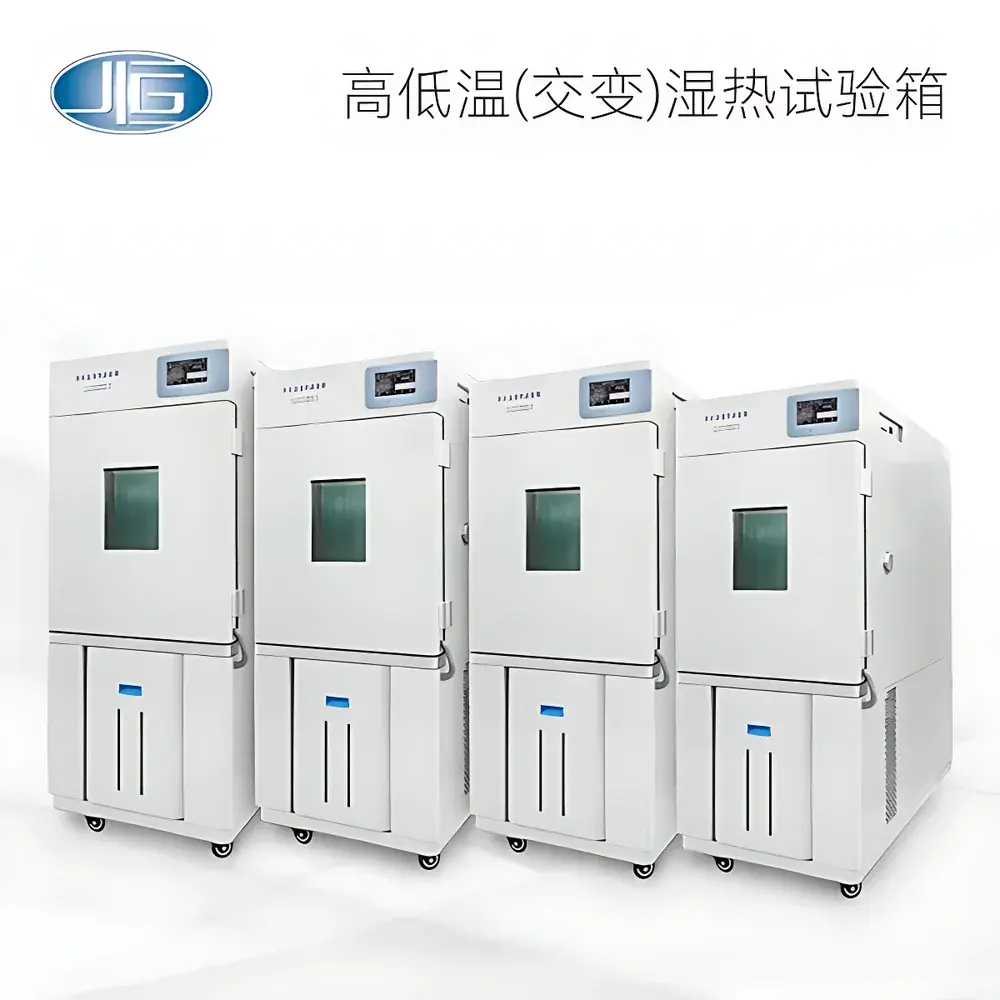
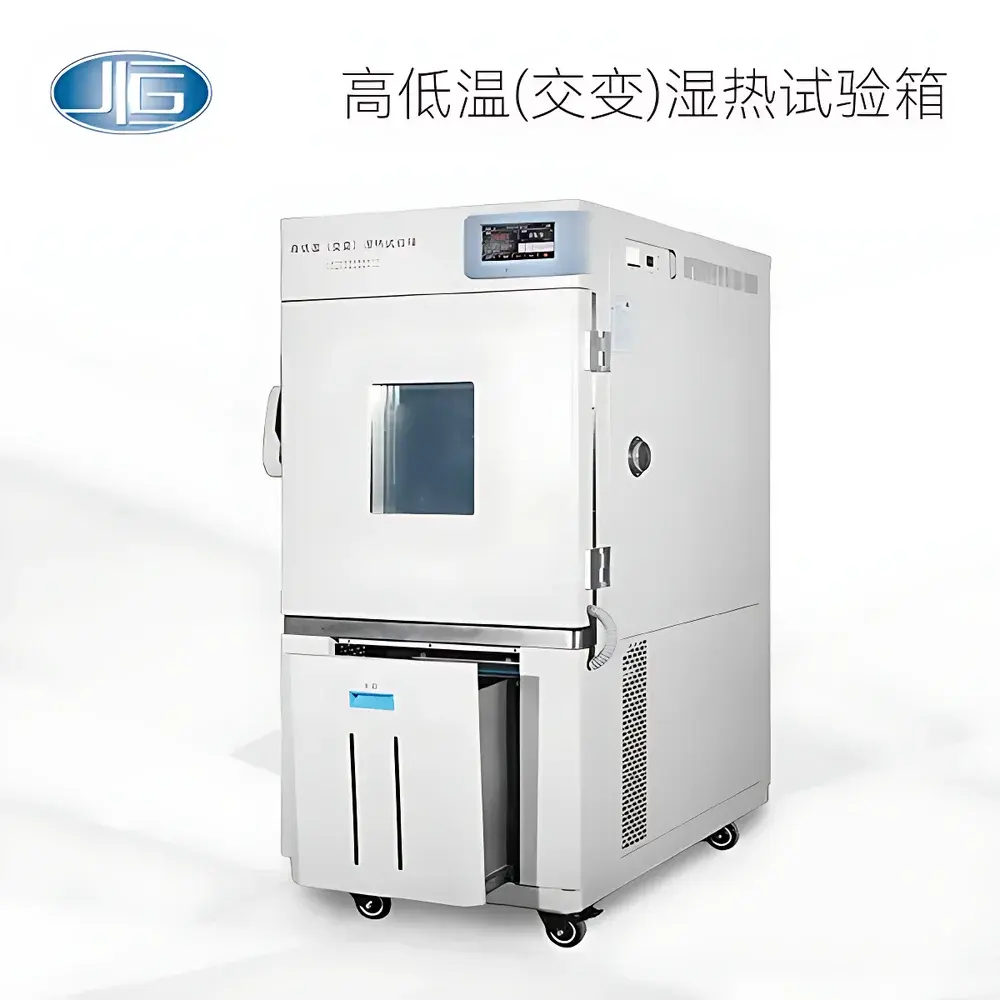
YiHeng BPHJS-H Series High-Low Temperature Alternating Humidity Environmental Test Chamber
| Brand | YiHeng |
|---|---|
| Origin | Jiangsu, China |
| Manufacturer Type | Direct Manufacturer |
| Country of Origin | China |
| Model | BPHJS-H Series |
| Price Range | USD 5,000 – 25,000 (FOB) |
| Refrigerant | R134a |
| Inner Chamber Material | AISI 304 Mirror-Finish Stainless Steel |
| Temperature Range | −70 °C to +180 °C |
| Humidity Range | 20 % RH to 98 % RH |
| Control Accuracy | ±0.5 °C / ±2.5 % RH |
| Uniformity | ±1.5 °C / ±3 % RH |
| Programmable Stages | 120 programs × 99 segments each |
| Max Cycles | 999 |
| Segment Duration | Up to 999 h 59 min 59 s |
| Interface | 7″ Color TFT Touchscreen (Standard), RS-232/RS-485, USB (SD card), Optional 485 Printer Output |
Overview
The YiHeng BPHJS-H Series High-Low Temperature Alternating Humidity Environmental Test Chamber is engineered for precise, repeatable simulation of dynamic climatic stress conditions in compliance with international environmental testing standards—including IEC 60068-2-1 (cold), IEC 60068-2-2 (dry heat), IEC 60068-2-30 (damp heat, cyclic), and MIL-STD-810G Method 502.5. Utilizing a dual-refrigeration cascade system with R134a refrigerant and a high-efficiency air-circulation architecture, the chamber delivers stable thermal-hygrometric profiles across wide operational ranges. Its core function is to subject electronic components, automotive modules, aerospace materials, pharmaceutical packaging, and polymer-based devices to controlled, programmable temperature–humidity cycling—enabling accelerated aging, failure mode analysis, and qualification verification under real-world environmental variability.
Key Features
- Intelligent multi-segment programmable controller with 7-inch full-color TFT touchscreen interface; supports both English and Chinese language modes and real-time graphical display of temperature/humidity curves.
- Fuzzy logic PID control algorithm ensures minimal deviation (±0.5 °C / ±2.5 % RH) and rapid recovery after door opening or load change.
- AISI 304 mirror-finish stainless steel interior with radius-rounded corners and removable adjustable shelves for ease of cleaning and contamination control—critical for ISO 17025-accredited laboratories.
- Dual independent safety systems: hardware-based over-temperature cutoff with audible/visual alarm, plus software-monitored fault detection for compressor overheating, fan failure, low-water condition, and current overload.
- Front-accessible pull-out water reservoir with level indicator simplifies maintenance and eliminates spill risk during refilling.
- Left-side test port options (Ø25 mm or Ø50 mm) with silicone gasket and brass plug accommodate sensor feedthroughs, thermocouple routing, or real-time external monitoring without compromising chamber integrity.
- Energy-optimized design featuring high-torque EC centrifugal fans and optimized duct geometry ensures uniform chamber distribution (±1.5 °C / ±3 % RH) per IEC 60068-3-5.
Sample Compatibility & Compliance
The BPHJS-H accommodates samples up to 500 L working volume (model-dependent) and supports standard test specimens per IPC-TM-650, JEDEC JESD22-A104, and ASTM D4332. Its internal dimensions, airflow pattern, and sensor placement are validated against ISO/IEC 17025 calibration traceability requirements. The chamber meets CE marking directives (2014/30/EU EMC, 2014/35/EU LVD), RoHS 2011/65/EU, and complies with environmental stewardship protocols including REACH Annex XVII. Optional validation packages include IQ/OQ documentation aligned with GMP Annex 15 and FDA 21 CFR Part 11 data integrity provisions when paired with certified control software.
Software & Data Management
Standard RS-232 and RS-485 interfaces enable integration into centralized lab management systems. Optional PC-based control software supports simultaneous monitoring and scheduling of up to 30 units, with time-stamped data logging at user-defined intervals (1 s to 60 min). Export formats include CSV, Excel (.xlsx), and Word (.docx); trend plots support linear regression, delta-T analysis, and pass/fail threshold overlay. All logged parameters—including setpoints, actual values, alarm events, and system status—are stored with immutable timestamps and operator ID tagging, satisfying GLP audit trail requirements. USB SD-card slot allows offline data archival and secure transfer without network dependency.
Applications
- Electronics reliability testing: solder joint fatigue, conformal coating adhesion, PCB delamination under thermal-hygric cycling.
- Automotive component validation: ECU housing warpage, connector contact resistance drift, battery module swelling behavior.
- Pharmaceutical stability studies: primary packaging permeability, blister foil integrity, lyophilized product reconstitution kinetics.
- Polymer and composite material characterization: coefficient of thermal expansion (CTE), moisture absorption kinetics, glass transition hysteresis.
- Aerospace non-destructive evaluation: adhesive bond durability, radar-absorbing material (RAM) performance degradation.
- Quality assurance for industrial sensors: calibration drift assessment under extended environmental exposure.
FAQ
What is the maximum allowable sample mass for thermal inertia compensation?
The chamber’s control system automatically adjusts ramp rates based on thermal load; however, for optimal uniformity and response time, total sample mass should not exceed 30 % of chamber internal volume (e.g., ≤15 kg for a 500 L unit).
Does the system support remote firmware updates?
Yes—via secure FTP upload through the RS-485 interface using authenticated credentials; update logs are retained in the audit trail.
Can humidity be maintained below 20 % RH?
No—minimum specified humidity range is 20 % RH due to condensation control constraints in the humidification system; desiccant-based dry chambers are recommended for sub-20 % RH applications.
Is third-party calibration certification available?
Yes—NIST-traceable calibration certificates (per ISO/IEC 17025) can be provided upon request, covering PT100 sensors, humidity transducers, and controller output verification.
How is water quality managed for long-term operation?
Deionized or distilled water is required to prevent mineral buildup in the steam generator; optional integrated water purification module (WPM-1) is available for continuous inline treatment.



