
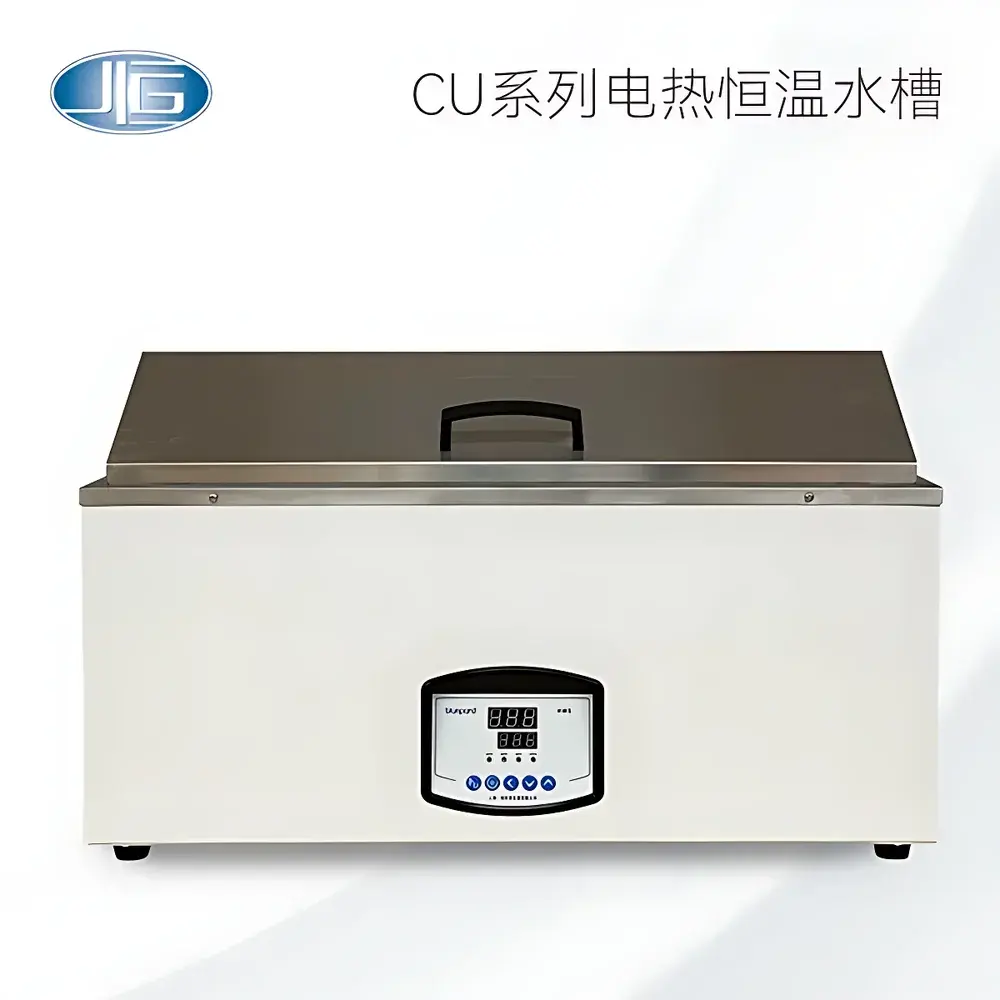
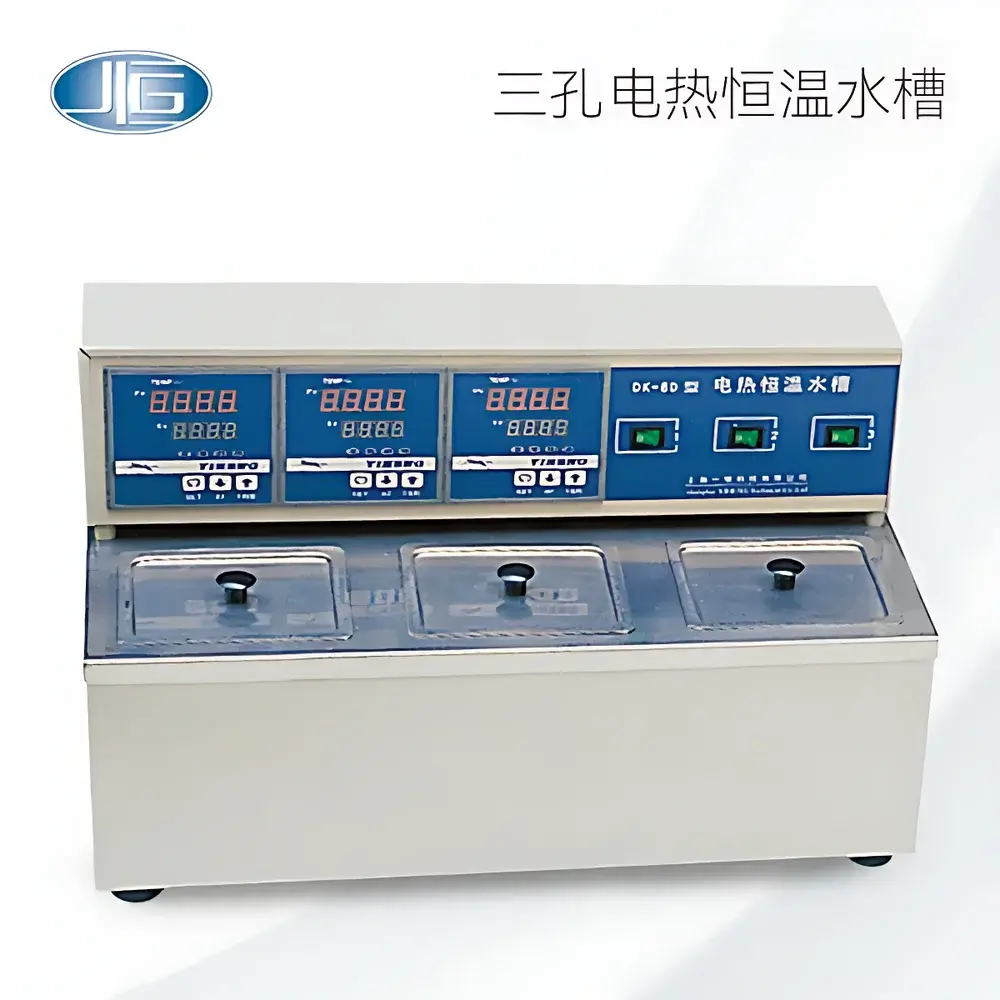
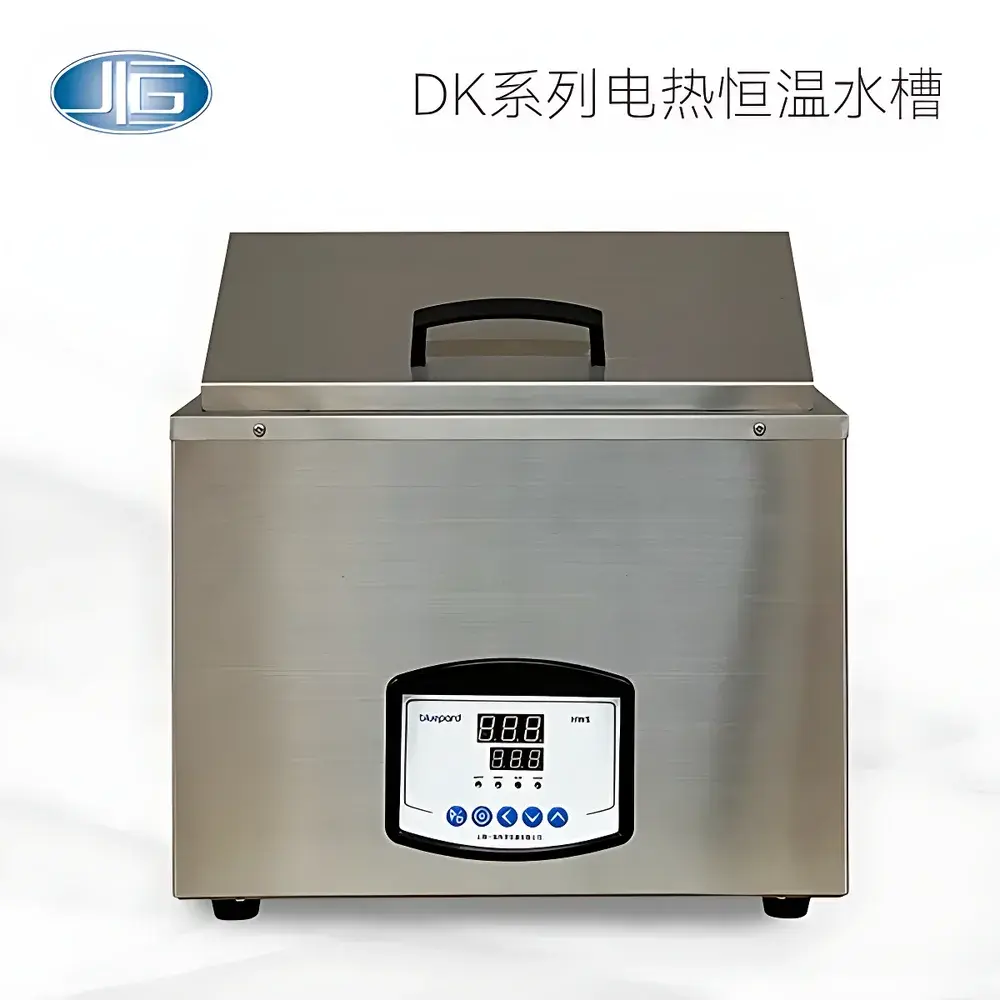
Yiheng CU/DK/DKB/TS Series Triple-Channel Circulating Water Bath
| Brand | Yiheng |
|---|---|
| Origin | Shanghai, China |
| Manufacturer Type | Direct Manufacturer |
| Product Category | Domestic |
| Model Series | CU/DK/DKB/TS |
| Instrument Type | Constant-Temperature Circulating Bath |
| Circulation Mode | Internal Circulation Only |
| Temperature Control | Heating-Only |
| Bath Volume | Model-Dependent |
| Temperature Range | Model-Dependent |
| Temperature Stability | Model-Dependent |
| Temperature Resolution | 0.1 °C |
| Input Power | Model-Dependent |
| Power Supply | AC 220 V, 50 Hz |
| Optional Feature | Multi-Stage Programmable Controller |
Overview
The Yiheng CU/DK/DKB/TS Series Triple-Channel Circulating Water Bath is an engineered solution for laboratories requiring simultaneous, independent temperature control across three distinct sample zones. Designed around a robust stainless-steel construction and precision microprocessor-based thermal regulation, this bath operates on the principle of resistive heating combined with forced internal circulation to maintain uniform thermal distribution within each chamber. Unlike single-bath systems, its triple-channel architecture enables parallel processing of multiple samples—each at user-defined setpoints—without cross-contamination or thermal interference. This configuration supports reproducible incubation, enzymatic reactions, calibration standard equilibration, and stability testing under controlled thermal conditions. The system complies with fundamental laboratory safety and operational expectations for Class I electrical equipment (IEC 61010-1) and is constructed to meet general GLP-aligned infrastructure requirements for traceable temperature control in non-GMP research environments.
Key Features
- Triple independent water chambers with individual digital PID temperature controllers, enabling concurrent operation at different setpoints (e.g., 25 °C, 37 °C, and 60 °C).
- High-grade 304 stainless-steel inner tank and lid—resistant to corrosion, non-reactive with aqueous media, and compliant with ISO 8573-1 cleanliness standards for lab-grade surfaces.
- Digital LED display with 0.1 °C resolution and ±0.3 °C typical accuracy at nominal operating points (20–99 °C), verified per ASTM E1137/E1137M calibration protocols.
- Over-temperature protection circuitry with audible and visual alarm activation—automatically de-energizes heating elements when deviation exceeds preset threshold (typically +3 °C above setpoint).
- Internal recirculation pump with adjustable flow rate (0–3 L/min range, model-dependent), ensuring homogeneous temperature distribution and minimizing axial thermal gradients (<0.2 °C variation across bath depth).
- Programmable timer function (0–999 minutes) for automated start/stop cycles; optional multi-stage controller supports up to 30 segments with ramp/soak profiles and real-time clock scheduling.
Sample Compatibility & Compliance
The triple-channel design accommodates standard laboratory glassware including beakers (up to 1000 mL per well), test tubes, cuvettes, and immersion probes—provided external dimensions fit within chamber clearances (typical max depth: 180 mm). Each channel is sealed from adjacent units via insulated partitions, preventing fluid mixing and enabling use of differing media (e.g., water in Channel A, glycerol-water mix in Channel B). While not certified for USP or FDA 21 CFR Part 11 compliance out-of-the-box, audit-ready data logging (via optional RS485 interface and PC software) supports retrospective review of temperature history, operator actions, and alarm events—aligning with basic ALCOA+ data integrity principles for academic and industrial R&D labs.
Software & Data Management
The optional programmable controller integrates a menu-driven interface supporting ISO/IEC 17025-aligned operational logging: timestamped setpoint changes, ramp rates (°C/min), soak durations, and fault codes are stored internally (≥10,000 event capacity). When connected to Yiheng’s proprietary LabLink software (Windows-compatible), users export CSV-formatted thermal logs, generate PDF reports with digital signatures, and configure email alerts for critical alarms. Raw data files include embedded metadata (instrument ID, firmware version, calibration date), facilitating traceability during internal QA audits or method validation documentation.
Applications
- Parallel enzyme kinetics assays requiring differential incubation temperatures.
- Reference standard equilibration for viscometers, densitometers, and refractometers.
- Stability testing of pharmaceutical formulations per ICH Q1A(R2) guidelines (short-term accelerated conditions).
- Cell culture pre-warming of reagents, buffers, and flasks prior to aseptic handling.
- Calibration verification of contact thermometers and RTD probes using fixed-point reference baths.
- Controlled solubility studies across temperature gradients without cross-sample interference.
FAQ
Is external circulation (outlet/inlet ports) supported?
No—this series provides internal recirculation only. For external loop applications (e.g., jacketed reactors), consider Yiheng’s CH Series chillers or TC Series thermostatic circulators.
Can the three channels operate at vastly different temperatures simultaneously?
Yes—each channel has fully independent control; however, sustained operation with >40 °C inter-channel delta may reduce long-term stability in the highest-set channel due to conductive heat transfer through shared chassis walls.
What calibration documentation is provided?
Each unit ships with a factory calibration certificate (traceable to NIM, China) covering temperature accuracy at 37 °C and 60 °C. On-site recalibration services are available through authorized Yiheng service centers.
Is the bath compatible with organic solvents?
Not recommended—stainless steel resists water and mild aqueous solutions, but prolonged exposure to acetone, chloroform, or ethanol may degrade seals and sensor housings. Use only with water or approved water-glycol mixtures.
Does the timer function retain settings after power loss?
Yes—the microcontroller retains programmed values in non-volatile memory; however, active timing resets upon interruption and must be manually restarted.



