
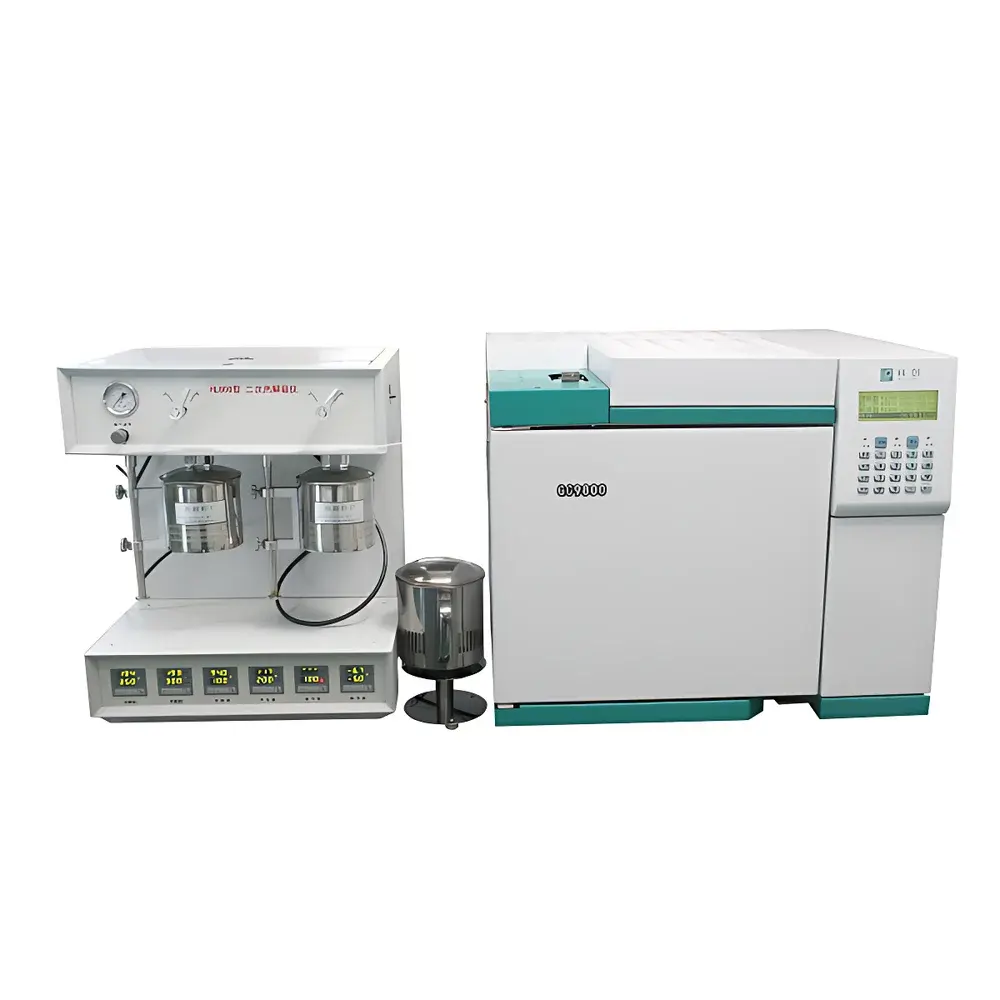
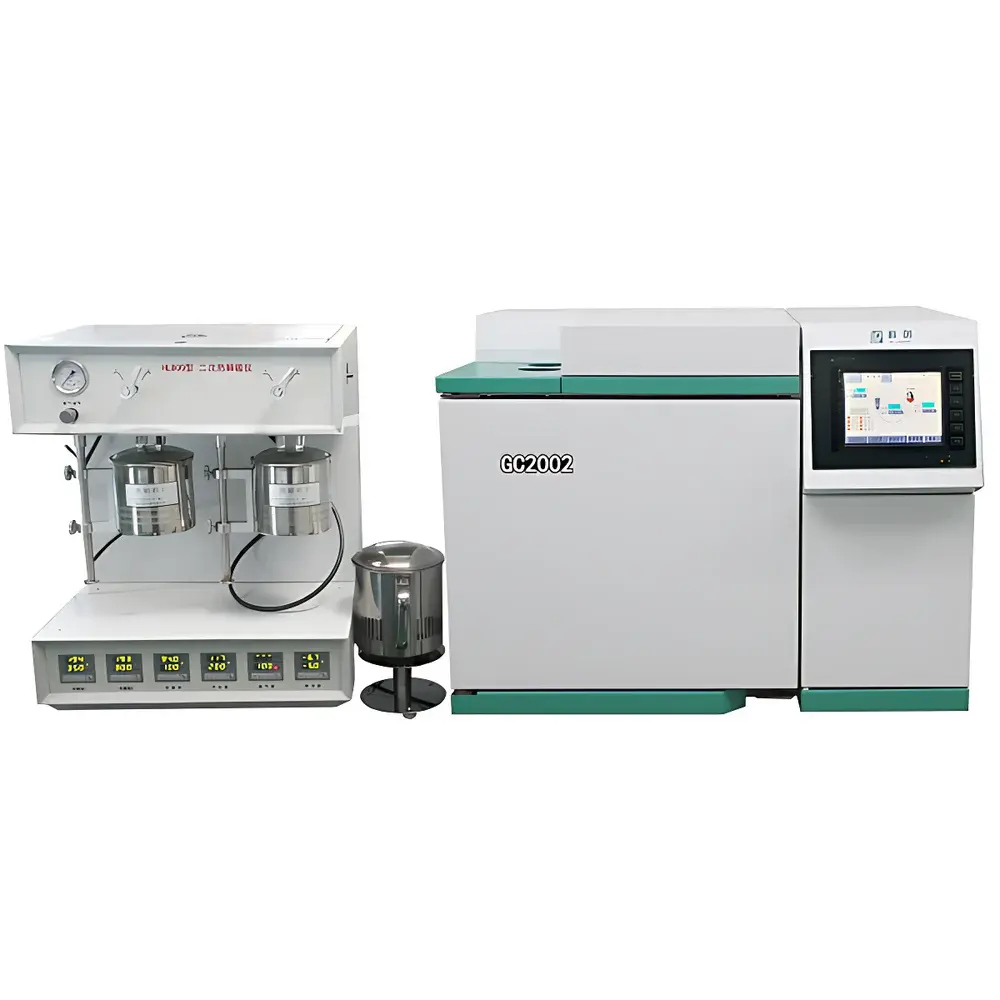
SciTec Environmental TVOC Analyzer GC9800+HL-800 Dual-Stage Thermal Desorption Gas Chromatograph
| Brand | SciTec |
|---|---|
| Origin | Shanghai, China |
| Manufacturer Type | Direct Manufacturer |
| Product Origin | Domestic (China) |
| Model | GC9800 + HL-800 Dual-Stage Thermal Desorber |
| Detection Principle | Gas Chromatography (GC) |
| Instrument Type | Benchtop Laboratory System |
| Configuration | TVOC Analysis System |
| Detection Range | 0–1000 ppm |
| Resolution | 0.1 ppm |
| Accuracy | ±5% of reading |
| Response Time | <60 s |
Overview
The SciTec Environmental TVOC Analyzer GC9800+HL-800 is a fully integrated benchtop gas chromatographic system engineered for precise, standardized quantification of Total Volatile Organic Compounds (TVOC) in ambient air and indoor environmental samples. It operates on the principle of dual-stage thermal desorption coupled with capillary gas chromatography and flame ionization detection (FID), conforming to ISO 16000-6, ASTM D6367, and GB/T 18883–2022 methodologies. The system thermally desorbs analytes pre-concentrated on U-shaped or modified activated carbon sorbent tubes—specifically optimized for benzene, toluene, ethylbenzene, xylenes (BTEX), and C6–C16 aliphatic/aromatic VOCs—then separates and detects them with high chromatographic resolution and reproducibility. Its architecture supports both active sampling (via calibrated mass flow controller) and passive sampling tube analysis, enabling compliance-grade reporting for indoor air quality (IAQ) assessments, occupational hygiene monitoring, and regulatory verification in building commissioning and renovation projects.
Key Features
- Dual-stage thermal desorption (HL-800) with independent temperature control for primary desorption (up to 400 °C), secondary cold trap focusing (−30 °C to 400 °C), and transfer line heating (100–150 °C) to eliminate condensation and ensure quantitative transfer.
- Optimized U-shaped sorbent tubes with calibrated backpressure (5–10 kPa at 0.5 L/min) for consistent sampling efficiency and reduced channeling artifacts.
- Proprietary modified activated carbon tubes for enhanced benzene retention and sharp, symmetrical peak shape—critical for low-level benzene quantification per ISO 16000-6 Annex B.
- Benchtop GC9800 host equipped with split/splitless injector, programmable oven (ambient to 400 °C), and FID with linear dynamic range >10⁷ and noise <1.5 pA.
- Pre-installed method packages for TVOC (C6–C16), BTEX, and formaldehyde (with derivatization option), aligned with Chinese National Standard GB/T 18883–2022 and EU Indoor Air Quality Guidelines.
- Modular compatibility: supports retrofitting of legacy SciTec GC systems (e.g., GC9000A) to current TVOC analytical requirements via hardware upgrade kits and firmware updates.
Sample Compatibility & Compliance
The system accepts standard 6-mm OD stainless steel or quartz sorbent tubes (including 3-stage beds: Tenax TA + Carbopack B + Carbopack X), as well as SciTec’s proprietary U-tube and benzene-optimized carbon tubes. It accommodates both whole-air sampling (via calibrated pump and flow meter) and canister-based sample introduction with optional enrichment interface. All operational parameters—including desorption flow rates, cryo-focusing dwell times, and GC ramp profiles—are configurable to meet ISO 16000-6 validation criteria for precision (RSD 85% for target VOCs), and method detection limits (MDLs ≤0.5 µg/m³ for benzene). Data output complies with GLP documentation standards and supports audit-ready electronic records when paired with validated chromatography data systems.
Software & Data Management
Chromatographic acquisition and processing are managed via SciTec ChromaLink v4.x software, compliant with FDA 21 CFR Part 11 requirements for electronic signatures, audit trails, and user access controls. The software provides automated peak integration using retention time locking (RTL), library matching against NIST/EPA VOC spectral libraries, and customizable report templates for TVOC summation (as defined by ISO 16000-6: sum of all identified peaks eluting between n-hexane and n-hexadecane, excluding interfering compounds). Raw data (.cdf), method files (.mth), and audit logs are stored in encrypted, timestamped folders with version history and operator attribution—ensuring full traceability for third-party accreditation (e.g., CNAS, UKAS) and regulatory submissions.
Applications
- Indoor air quality assessment in residential, commercial, and healthcare facilities per GB/T 18883–2022 and WHO IAQ guidelines.
- Regulatory testing of solvent-based coatings, adhesives, and sealants for residual BTEX content (GB 18581–2020, GB 18583–2008).
- Occupational exposure monitoring in printing, painting, and chemical manufacturing environments (OELV verification).
- Building material emissions testing (e.g., carpets, particleboard, insulation) using small-scale emission chambers (ISO 16000-9).
- Validation of HVAC filtration efficiency and air purification device performance under controlled challenge conditions.
- Research applications in atmospheric chemistry, VOC source apportionment, and sensor calibration traceability.
FAQ
Does this system comply with ISO 16000-6 for TVOC measurement?
Yes—the GC9800+HL-800 configuration, including U-tube sampling, dual-stage desorption, and specified GC temperature program, satisfies all instrumental and procedural requirements outlined in ISO 16000-6:2011.
Can I use non-SciTec sorbent tubes with this instrument?
Standard 6-mm OD tubes meeting ASTM D6196 specifications are compatible; however, optimal performance (especially for benzene) requires SciTec’s modified carbon tubes due to their validated breakthrough volumes and peak symmetry.
Is method validation support available?
SciTec provides application notes, system suitability test protocols, and IQ/OQ documentation templates aligned with ISO/IEC 17025 for laboratory accreditation.
What maintenance intervals are recommended for the thermal desorber?
We recommend quarterly inspection of valve seals and trap integrity, annual calibration of flow controllers and temperature sensors, and routine cleaning of the cold trap and transfer lines after every 200 runs.
Can the system be upgraded to include PID or MS detection?
The GC9800 platform supports detector interchangeability; installation of a photoionization detector (PID) or single-quadrupole mass spectrometer (MS) requires mechanical interface adaptation and software licensing—available as factory-installed options.







