
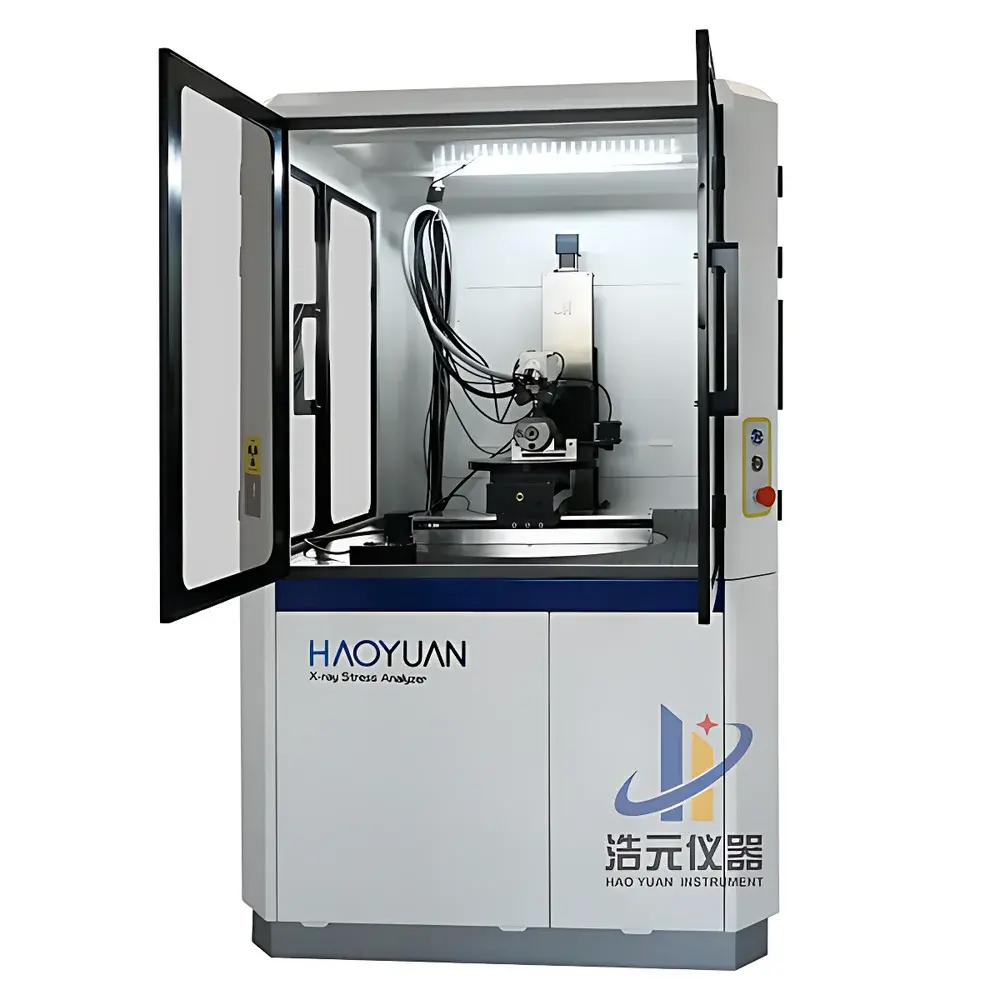
Haoyuan DS-21L High-Power X-Ray Stress Analyzer
| Brand | Haoyuan |
|---|---|
| Origin | Liaoning, China |
| Manufacturer Type | Direct Manufacturer |
| Origin Category | Domestic (China) |
| Model | DS-21L |
| X-ray Tube Power | 3000 W |
| 2θ Angular Range | 105°–170° (continuously adjustable) |
| ψ Angular Range | −57° to +57° |
| Available Anode Target Materials | Cr, Cu, Mn, Ti, Co, V, Fe |
| Minimum Focal Spot Size | 0.1 mm |
| Detector Configuration | Dual Linear Semiconductor Array Detectors |
| Individual Detector 2θ Coverage | 35° |
| Detector Linear Count Rate | >10⁹ CPS |
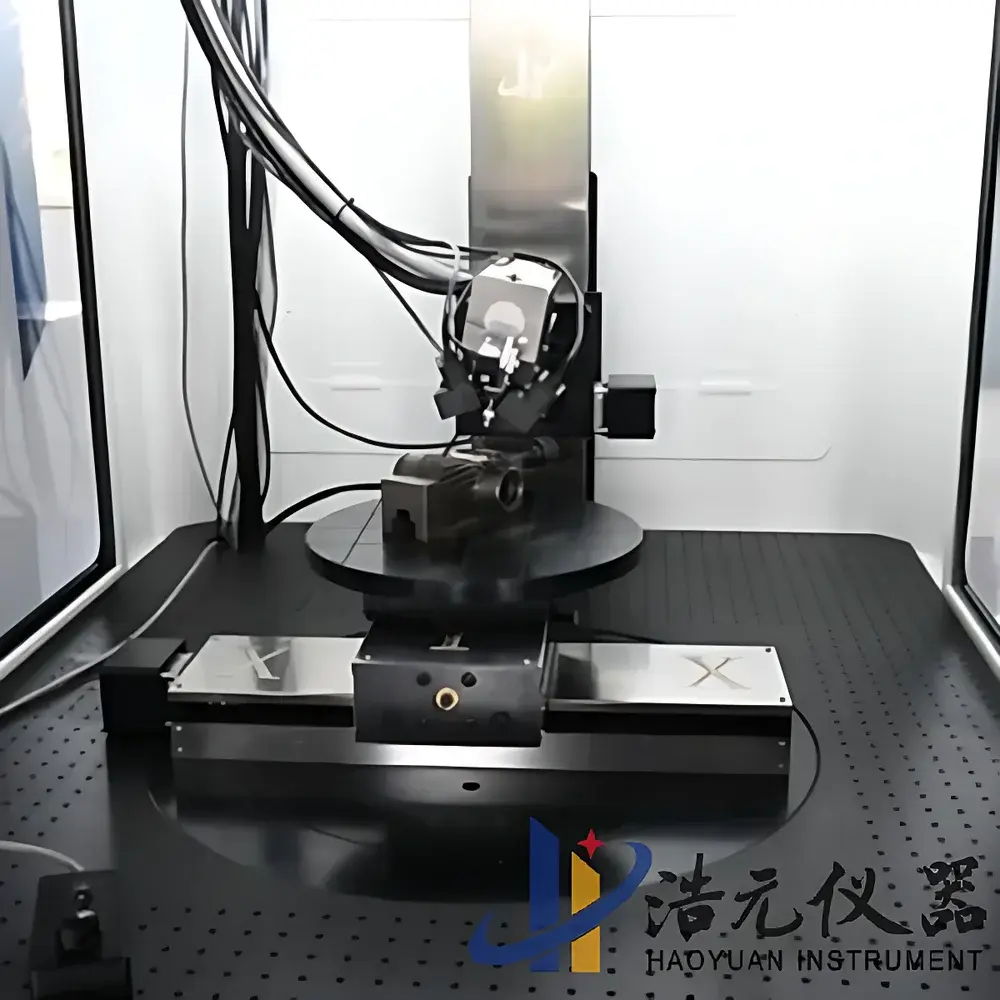
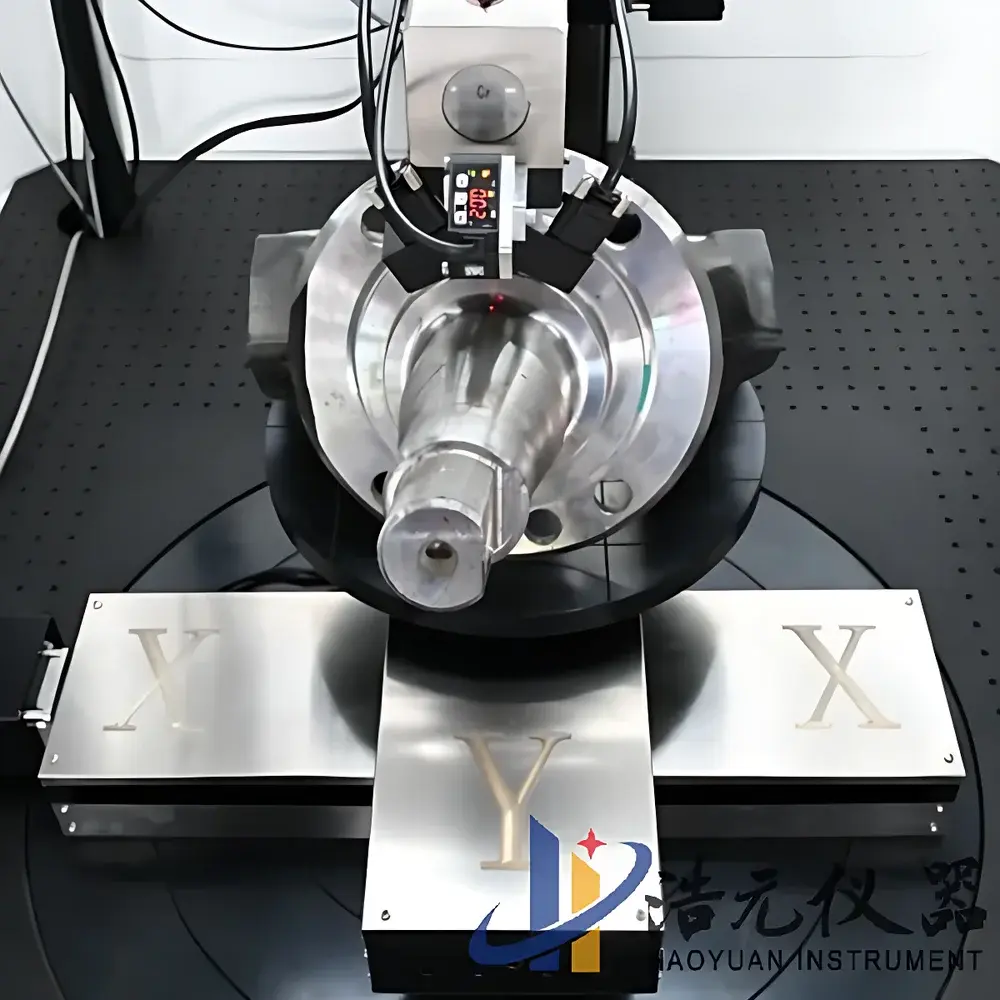
| Positioning System | Integrated Laser Displacement Sensor + Motorized Z-axis (600 mm travel) + Manual/Automatic XYZΦ Sample Stage (X: 300 mm, Y: 200 mm, Φ: 0–360°) |
| Measurement Methods | Sin²ψ (both side-inclination and co-inclination modes) |
| Residual Stress Repeatability (Fe powder reference) | < ±5 MPa (n = 5) |
| Radiation Shielding | Fully Enclosed Lead-Glass Enclosure Compliant with ANSI N43.2 |
| Standards Compliance | ASTM E915-2010, EN 15305:2008, GB/T 7704–2016 |
| Optional Target Materials | Cr, Mn, Cu, Co, Fe, V |
Overview
The Haoyuan DS-21L High-Power X-Ray Stress Analyzer is an engineered solution for quantitative, non-destructive residual stress evaluation in metallic and selected non-metallic engineering components. Based on the sin²ψ method of X-ray diffraction (XRD), the system determines both normal (σ₁, σ₂) and shear (τ₁₂) stress components through precise angular scanning of lattice plane interplanar spacing (d-spacing) shifts under controlled sample orientation. Its 3 kW metal-ceramic X-ray tube delivers high photon flux—critical for low-diffracting alloys such as nickel-based superalloys and titanium grades—while maintaining thermal stability via closed-loop water cooling. The instrument supports both side-inclination and co-inclination geometries, enabling full tensor characterization without geometric assumptions. Designed for dual-use environments, it operates reliably in laboratory settings and production-floor conditions, meeting stringent requirements for repeatability, radiation safety, and long-term operational robustness.
Key Features
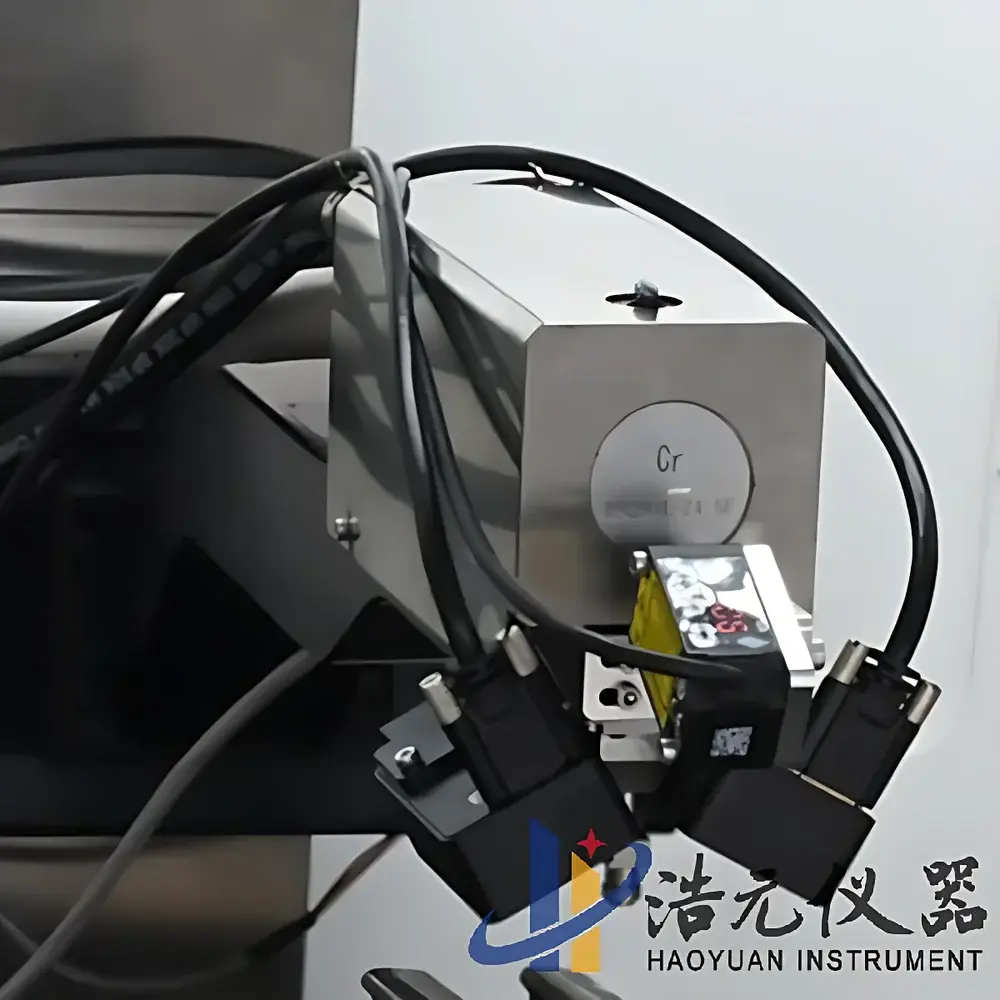
- 3 kW high-power metal-ceramic X-ray tube with rapid, tool-free anode replacement and integrated water cooling for sustained duty-cycle operation
- Dual linear semiconductor array detectors, each covering 35° in 2θ, delivering >10⁹ counts per second (CPS) linear response—eliminating pulse pile-up and count-rate saturation during high-flux measurements
- Sub-millimeter spatial resolution: minimum beam spot size of 0.1 mm enables micro-zone residual stress mapping on localized features or heat-affected zones
- Full six-degree-of-freedom positioning: motorized Z-axis (600 mm travel), manual/automated X/Y translation (300 mm × 200 mm), and continuous Φ rotation (0–360°) for principal stress direction determination and automated stress field mapping
- Laser displacement sensor for real-time diffraction surface height verification and rapid sample alignment—reducing setup time and operator dependency
- Comprehensive angular control: ψ tilt range of −57° to +57°; 2θ scan range of 105°–170°, continuously adjustable for optimal peak separation and background suppression
- Multi-target anode compatibility (Cr, Cu, Mn, Ti, Co, V, Fe) allows selection of optimal Kα wavelength to maximize diffraction intensity and minimize absorption for diverse material systems
Sample Compatibility & Compliance
The DS-21L accommodates a broad spectrum of industrial materials—including ferrous and non-ferrous metals, weldments, castings, forgings, additive-manufactured parts, and coated substrates—for both residual stress and retained austenite quantification. Its mechanical design permits direct measurement of components up to 600 mm in height and accommodates irregular geometries via programmable stage motion. Radiation safety is ensured by a fully enclosed lead-glass enclosure (standard dimensions: 0.9 × 1.4 × 1.6 m), certified to ANSI N43.2 requirements. All measurement protocols adhere to internationally recognized standards: ASTM E915-2010 (Standard Test Method for Verifying the Alignment of X-Ray Diffraction Instrumentation for Residual Stress Measurement), EN 15305:2008 (Non-destructive testing — Test method for residual stress analysis by X-ray diffraction), and GB/T 7704–2016 (Chinese national standard for X-ray diffraction residual stress testing). The system architecture supports GLP/GMP-aligned documentation workflows, including audit-trail-enabled parameter logging and raw data retention.
Software & Data Management
The proprietary stress analysis software implements a complete stress tensor calculation engine based on the generalized sin²ψ formulation—without assuming zero shear stress a priori. It supports dual fitting methodologies: linear regression for conventional stress slope analysis and elliptical fitting for enhanced accuracy in anisotropic or plastically deformed materials. Peak profile modeling includes Gaussian, Lorentzian, Pearson VII, and parabolic functions, allowing rigorous deconvolution of overlapping reflections and instrumental broadening effects. Output parameters include principal normal stresses (σ₁, σ₂), shear stress (τ₁₂), stress error estimates, d₀ lattice spacing, integrated intensity, full width at half maximum (FWHM), and crystallite size via Scherrer analysis. All raw diffraction patterns, calibration files, and measurement metadata are stored in vendor-neutral HDF5 format. Software export options include CSV, XML, and PDF reports compliant with ISO/IEC 17025 documentation requirements.
Applications
- Residual stress validation in aerospace turbine blades, landing gear, and airframe components post-machining, shot peening, or laser shock peening
- Process qualification and in-line monitoring of additive manufacturing builds—detecting build-induced stress gradients and distortion precursors
- Weld integrity assessment across pipeline girth welds, pressure vessel seams, and nuclear component joints
- Heat treatment optimization through mapping of stress relaxation kinetics in annealed or tempered steels
- Retained austenite quantification in case-hardened gears, bearings, and tool steels—correlating phase fraction with fatigue life and wear resistance
- Microstructural stress analysis in thin films, coatings, and multi-layered structures using micro-beam configuration
FAQ
What X-ray diffraction geometry does the DS-21L support?
The system supports both side-inclination and co-inclination (sin²ψ) geometries, switchable manually per measurement requirement.
Can the DS-21L measure shear stress components?
Yes—it calculates the full 2D stress tensor (σₓ, σᵧ, τₓᵧ) using elliptical peak fitting and non-assumptive stress equations.
Is the system compliant with FDA 21 CFR Part 11 for regulated environments?
While not pre-certified, the software architecture supports electronic signatures, audit trails, and secure user access controls—enabling implementation of Part 11-compliant workflows upon site-specific validation.
What is the typical measurement repeatability for steel reference samples?
Using certified unstressed iron powder, the system achieves residual stress standard deviation ≤ ±5 MPa over five repeated measurements.
How is radiation safety ensured during operation?
A fully interlocked, lead-glass enclosure meets ANSI N43.2 shielding requirements, with door-interrupt safety circuits and real-time dose rate monitoring.




