
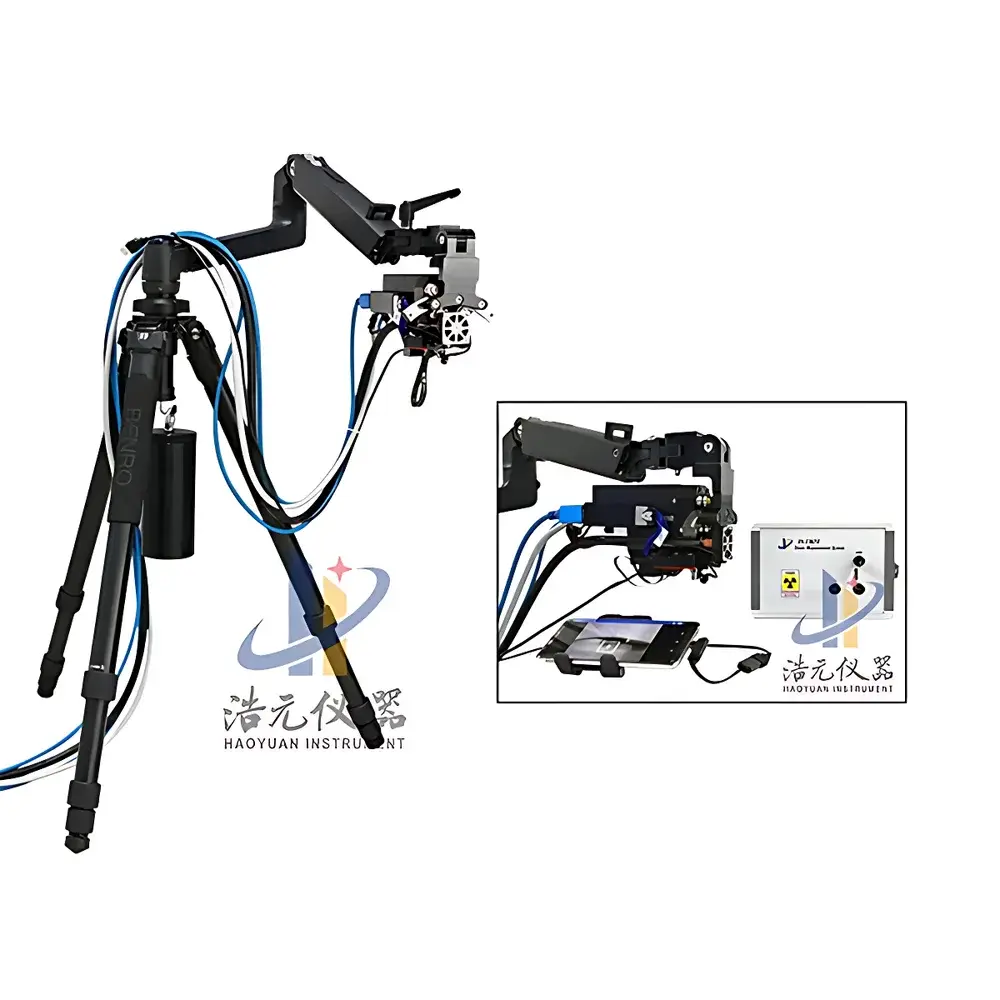
Haoyuan DS-23MINI Portable X-Ray Residual Stress Analyzer
| Brand | Haoyuan |
|---|---|
| Origin | Liaoning, China |
| Manufacturer Type | Manufacturer |
| Origin Category | Domestic |
| Model | DS-23MINI |
| X-ray Tube Power | 50 W |
| 2θ Angular Range | 140°–170° (continuously adjustable) |
| ψ Angular Range | −35° to +35° |
| Target Materials | Cr, Cu, Mn, Ti, Co, V, Fe |
| Detector | Dual semiconductor linear array (256 × 256 pixels), linear count rate > 10⁹ cps |
| Stress Measurement Repeatability (Fe powder) | < ±5 MPa (n = 5) |
| Compliance | ASTM E915-2010, EN 15305-2008, GB/T 7704-2017 |
Overview
The Haoyuan DS-23MINI Portable X-Ray Residual Stress Analyzer is an engineered solution for in-situ, non-destructive residual stress evaluation of metallic components in field and production environments. Based on the fundamental principles of Bragg diffraction and lattice strain measurement, the system quantifies residual stress by analyzing angular shifts in diffraction peaks induced by elastic lattice deformation. It supports two standardized measurement methodologies: the sin²ψ method for full-stress tensor determination (including both normal and shear components) and the cosα method for rapid single-point assessment under fixed geometry. Designed specifically for accessibility on large-scale industrial parts—including welded structures, turbine blades, rail tracks, and aerospace forgings—the DS-23MINI integrates a compact 50 W microfocus X-ray source, dual high-dynamic-range semiconductor detectors, and motorized multi-axis goniometry within a total mass of just 4.5 kg.
Key Features
- Ultra-portable architecture: Entire system—including X-ray tube, detector assembly, goniometer, tripod, and control electronics—fits inside a single transport case (500 × 400 × 200 mm) and weighs only 4.5 kg.
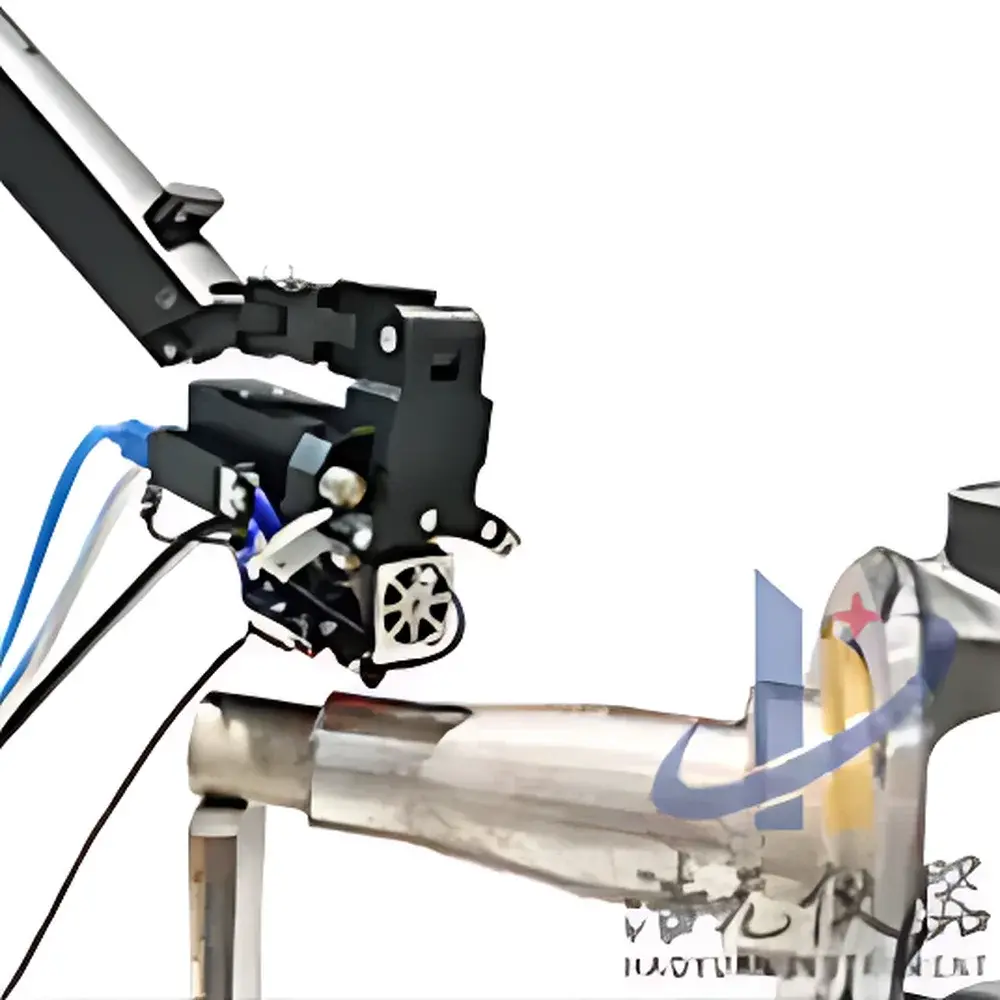
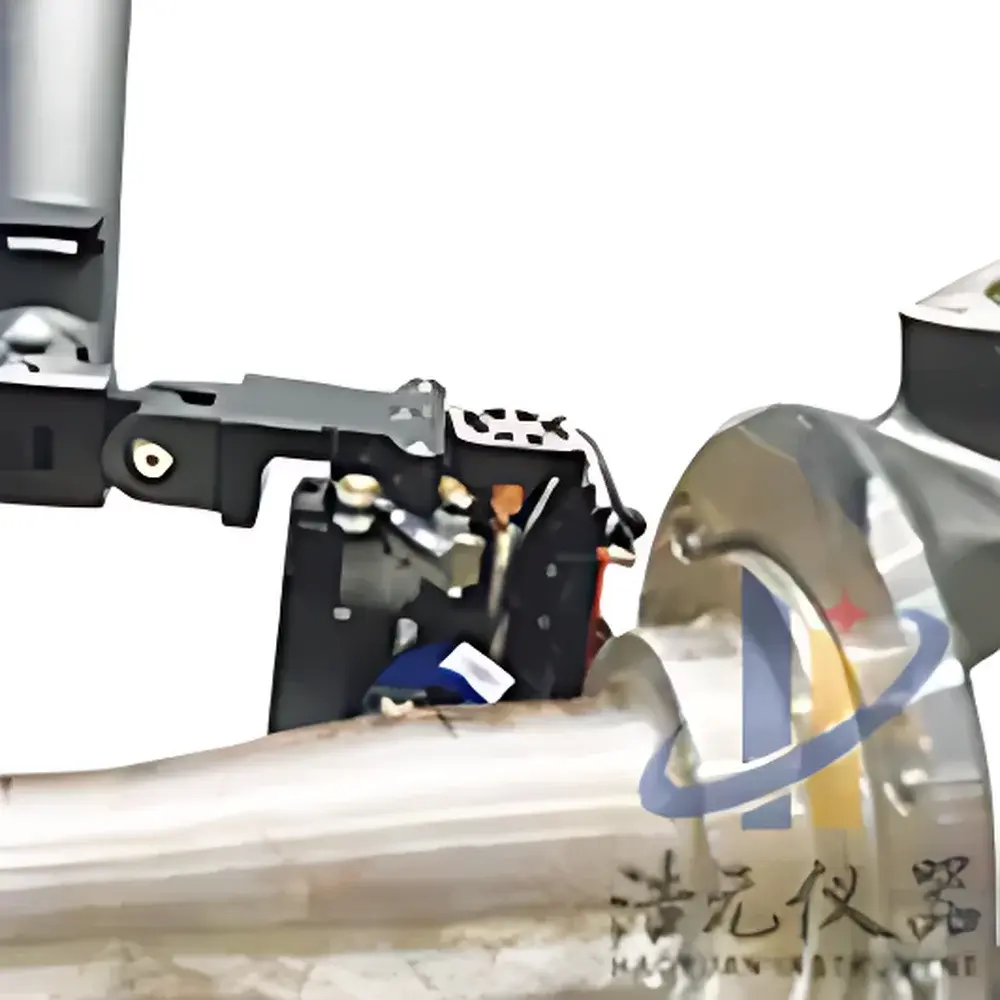
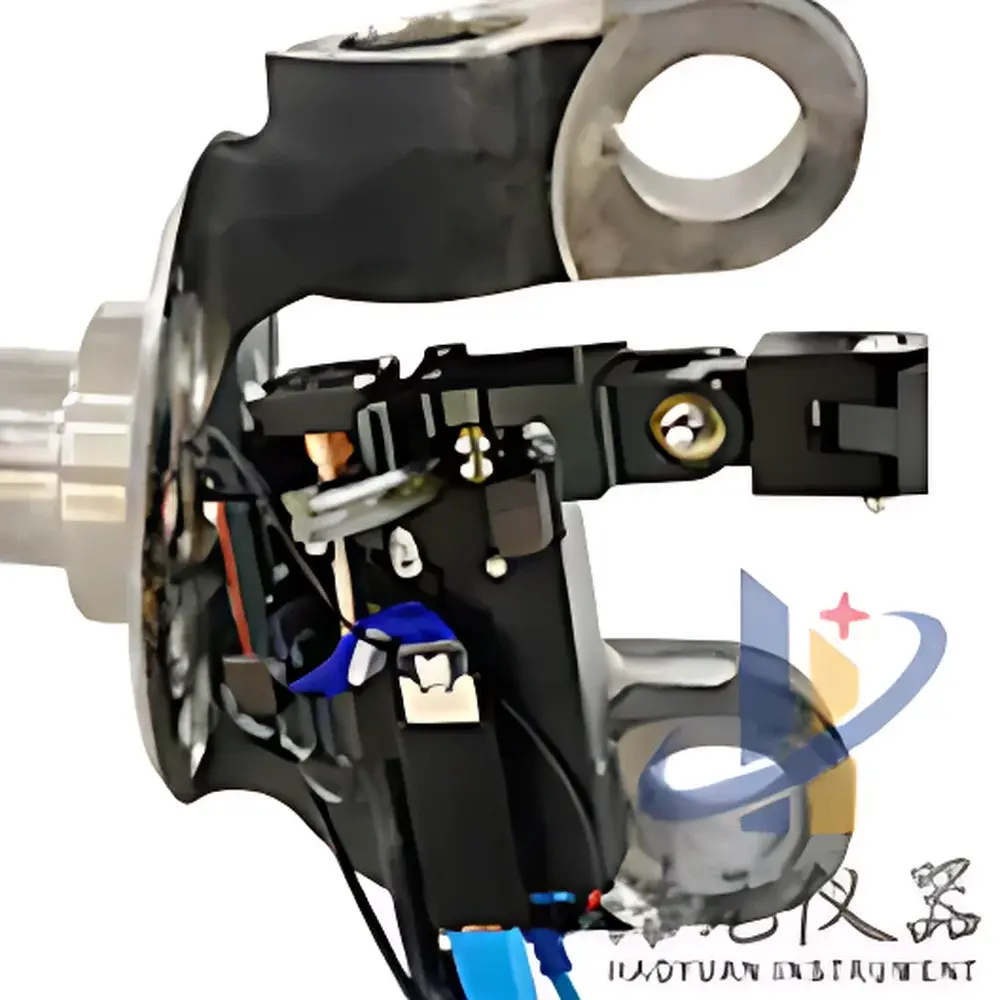
- Full spatial accessibility: The measurement head enables 360° rotation about the tripod vertical axis, 360° arm swivel, ±180° Y-axis tilt, and +270° X-axis articulation; combined with telescoping tripod height adjustment, it achieves complete positional coverage on oversized components.
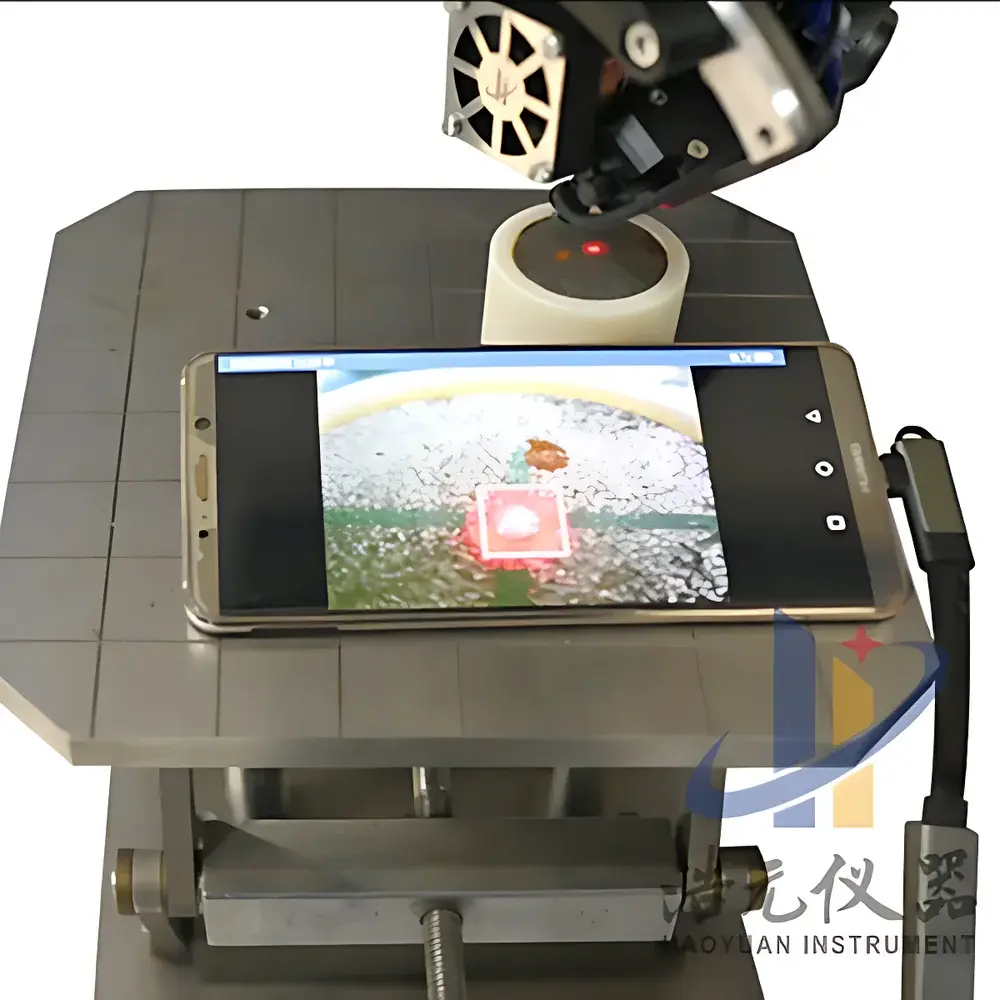
- Infrared-assisted alignment: Integrated IR dot projector enables real-time visual verification of focal distance via companion mobile app (iOS/Android); alignment confirmation occurs when the dot falls within a dynamic on-screen bounding box.
- Dual-detector sin²ψ capability: Two synchronized 256 × 256 pixel semiconductor line-array detectors provide simultaneous acquisition across >20° 2θ range per detector, enabling robust peak centroiding with linear count rates exceeding 10⁹ cps—eliminating pulse pile-up and saturation artifacts.
- Multi-target flexibility: Interchangeable anode targets (Cr, Cu, Mn, Ti, Co, V, Fe) allow optimization of diffraction intensity and penetration depth based on material composition and thickness.
- High reproducibility: Certified repeatability of < ±5 MPa (standard deviation over five consecutive measurements on stress-free iron powder), compliant with ASTM E915-2010 precision requirements.
Sample Compatibility & Compliance
The DS-23MINI is optimized for polycrystalline metallic alloys—including steels, aluminum, titanium, nickel-based superalloys, and cast irons—where measurable diffraction peaks are obtainable within its 140°–170° 2θ range. Surface preparation requirements follow ISO 21942 and ASTM E915 guidelines: localized grinding or electropolishing to remove deformed layers while preserving bulk lattice integrity. The instrument satisfies regulatory and quality assurance frameworks including ASTM E915-2010 (Standard Test Method for Verifying the Alignment of X-Ray Diffraction Instrumentation for Residual Stress Measurement), EN 15305-2008 (Non-destructive testing — Test method for residual stress analysis by X-ray diffraction), and GB/T 7704-2017 (Chinese national standard for X-ray diffraction residual stress analysis). All measurement protocols support GLP-compliant audit trails when used with validated software configurations.
Software & Data Management
The proprietary stress analysis software provides dual fitting algorithms—linear and elliptical—based on the complete stress tensor equation that explicitly accounts for shear stress components without assuming τxy = 0. Peak profile modeling includes Gaussian, Lorentzian, Pearson VII, and parabolic functions to accommodate varying crystallite size and microstrain effects. Output parameters include principal normal stresses (σ₁, σ₂, σ₃), shear stress components (τxy, τyz, τxz), full-width-at-half-maximum (FWHM), integral breadth, peak intensity, and lattice parameter deviation. Raw diffraction patterns, processed data tables, and annotated reports are exportable in CSV, PDF, and XML formats. Software versioning, user access controls, and electronic signature support align with FDA 21 CFR Part 11 requirements for regulated environments when deployed with appropriate validation documentation.
Applications
- Weld residual stress mapping across heat-affected zones (HAZ) and fusion lines in pipeline, shipbuilding, and structural steel fabrication.
- In-process verification of shot peening, laser shock peening, and roller burnishing treatments on aerospace landing gear and turbine disks.
- Quality assurance of additive manufactured (AM) metal parts—detecting build-direction anisotropy and post-build distortion-induced stress gradients.
- Field inspection of railway wheel rims, axle journals, and rail welds prior to service deployment.
- Validation of thermal stress relief cycles in large castings and forgings where furnace-based measurement is impractical.
- Research-grade lattice strain analysis in metallurgical laboratories requiring portable, high-fidelity diffraction geometry.
FAQ
What X-ray safety certifications does the DS-23MINI hold?
The system complies with IEC 61010-1 for electrical safety and incorporates interlocked shielding, dose-rate monitoring, and automatic beam shutdown during misalignment—meeting Class I radiation equipment requirements per national regulatory authorities.
Can the DS-23MINI measure residual stress in coated or plated components?
Yes—provided the coating thickness is ≤10 µm and the substrate exhibits strong diffraction signals; Cr or Co targets are recommended for thin-layer analysis to enhance surface sensitivity.
Is remote operation supported?
The mobile app enables full remote initiation, real-time detector preview, and result preview; however, final report generation and advanced fitting require connection to the host PC running the certified analysis software.
How is calibration traceability maintained?
Each unit ships with NIST-traceable reference powder (Fe or Si) and documented calibration certificate; periodic verification follows ASTM E915 Annex A3 procedures using certified stress-free standards.
Does the system support automated grid scanning?
No—grid mapping requires manual repositioning; however, the coordinate registration function logs position metadata (ψ, 2θ, XYZ offset) for post-acquisition spatial correlation in third-party GIS or CAD platforms.



