
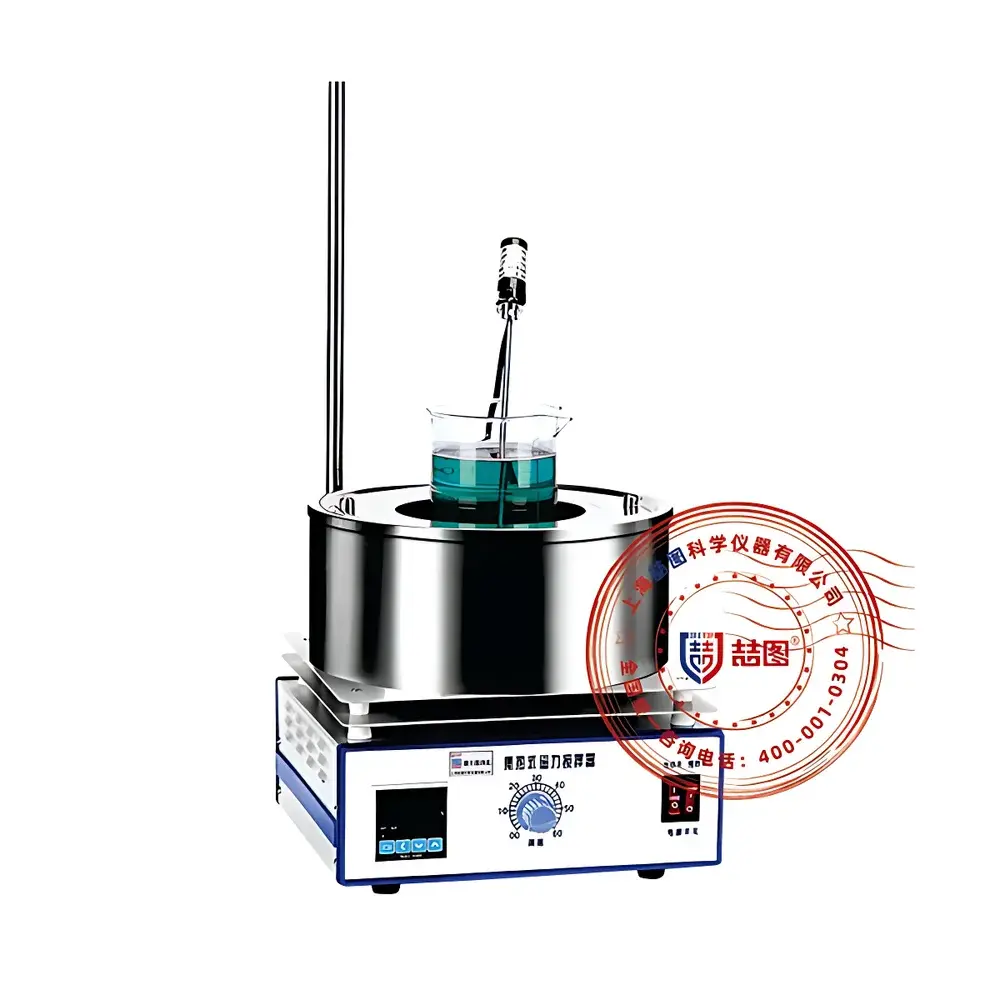
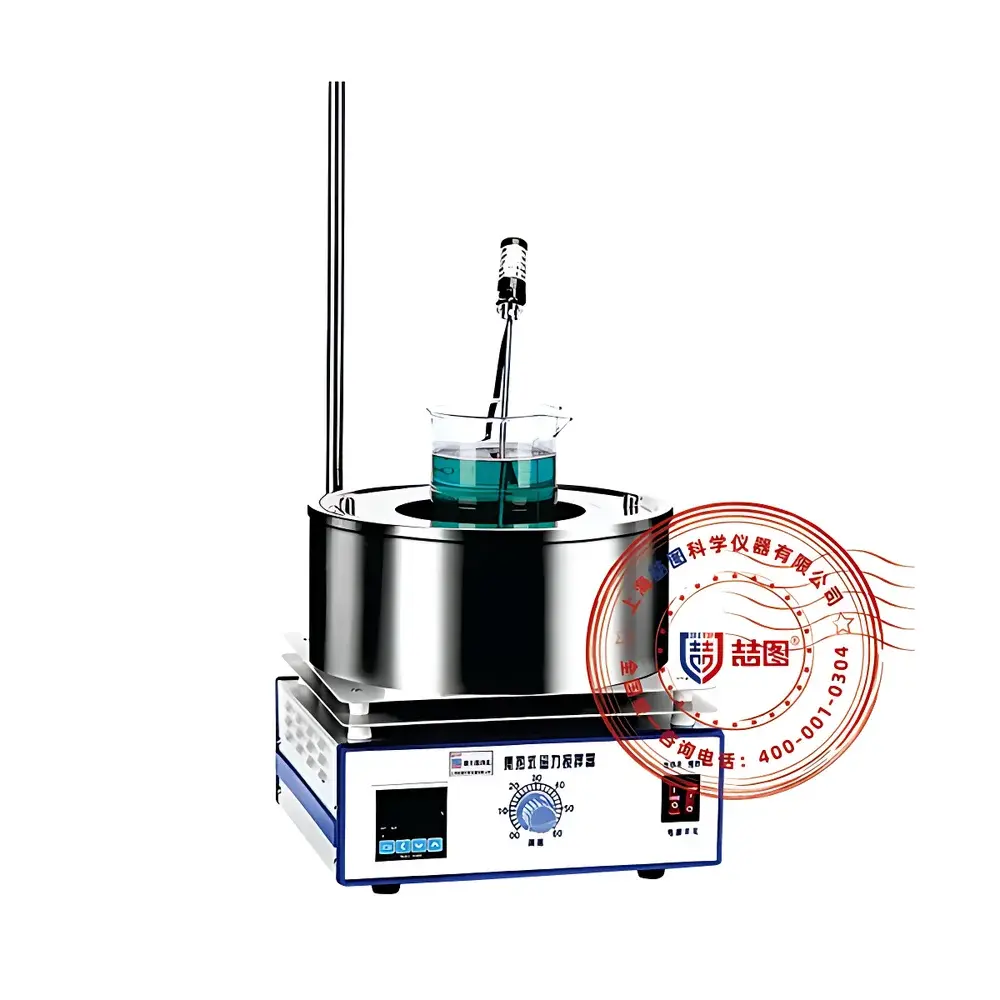
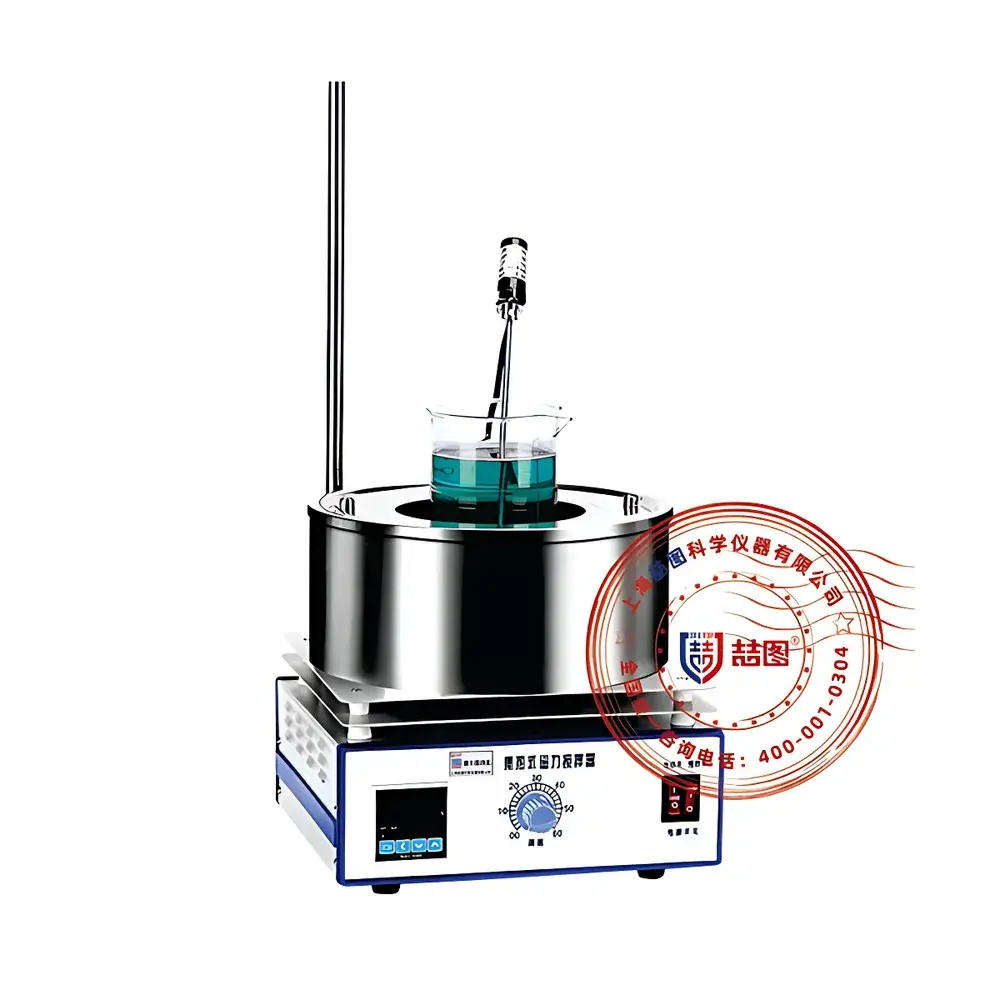
DRETOP JOH-10-300 Integrated Hotplate Magnetic Stirrer
| Brand | DRETOP |
|---|---|
| Origin | Shanghai, China |
| Model | JOH-10-300 |
| Maximum Stirring Volume | 10 L |
| Speed Range | 0–2400 rpm |
| Temperature Control Range | RT+5°C to 400°C (water bath ≤100°C |
| Temperature Stability | ±0.5°C |
| Temperature Accuracy | ±0.1°C |
| Heating Power | 1200 W |
| Bath Dimensions | Φ300 × 200 mm |
| Nominal Bath Capacity | 14 L |
| Sensor Configuration | Standard External PT100 (optional internal) |
| Compatible Media | Silicone oil, mineral oil, water |
Overview
The DRETOP JOH-10-300 Integrated Hotplate Magnetic Stirrer is an engineered solution for simultaneous precise temperature control and homogeneous magnetic agitation in laboratory environments. It operates on the principle of electromagnetic induction: a rotating magnetic field generated beneath a thermally conductive ceramic or aluminum hotplate drives a PTFE-coated magnetic stir bar immersed in the sample vessel. Heat is transferred via conduction through the bath medium—typically silicone oil or mineral oil for high-temperature applications—and regulated by a PID-controlled resistive heating element embedded within the plate. Designed for reproducible thermal and mechanical input, this instrument supports critical workflows where reaction kinetics, solubility studies, dissolution testing, or catalyst activation require stable thermal gradients and uniform mixing without mechanical shaft penetration. Its all-in-one architecture eliminates the need for separate hotplates and stirrers, reducing footprint, inter-device calibration drift, and contamination risk—particularly advantageous in GLP-compliant synthesis labs, QC testing suites, and academic research settings.
Key Features
- Microprocessor-based PID temperature controller with dual digital display: real-time bath temperature and user-setpoint shown simultaneously on a backlit LCD screen
- 0–2400 rpm continuous speed adjustment via rotary encoder or keypad input; LED speed indication ensures traceable parameter setting
- Ceramic-coated aluminum heating surface with optimized thermal mass distribution for rapid heating (≤15 min to 300°C in oil) and minimal radial temperature deviation (<±1.2°C across Φ300 mm surface)
- Stainless steel inner bath chamber and electrostatically painted exterior housing provide long-term corrosion resistance against organic solvents, acids, and high-boiling-point oils
- Integrated safety logic includes over-temperature cut-off (user-definable alarm threshold), power-failure memory retention, and automatic restart with last-used parameters upon recovery
- PT100 temperature sensor supplied externally as standard; optional flush-mounted internal probe available for direct medium monitoring per ASTM E2251 requirements
Sample Compatibility & Compliance
The JOH-10-300 accommodates vessels up to 10 L volume—including round-bottom flasks, beakers, and jacketed reactors—with compatibility confirmed for glass, borosilicate, and certain high-temp polymer containers. Its 14 L nominal bath capacity enables stable immersion of large-diameter vessels while maintaining uniform heat transfer in silicone oil (up to 400°C) or water (up to 100°C). The system conforms to IEC 61010-1:2010 for electrical safety in laboratory equipment and incorporates design elements aligned with ISO/IEC 17025 documentation expectations—such as non-volatile parameter storage and timestamped operational logs when paired with optional data export modules. While not inherently 21 CFR Part 11 compliant, audit-ready configurations are achievable via external validated software integration for regulated pharmaceutical or clinical trial support.
Software & Data Management
Standalone operation requires no PC connection; however, analog voltage outputs (0–5 V DC) for temperature and speed signals are provided for third-party DAQ integration. Optional RS-485 Modbus RTU interface enables remote parameter setting, real-time data streaming, and event logging into LIMS or ELN platforms. Firmware supports configurable sampling intervals (1–60 s), min/max value capture, and CSV-formatted export via USB host port—facilitating retrospective analysis per FDA guidance on electronic records integrity. All stored settings persist through power cycles without battery backup dependency.
Applications
- Controlled-temperature synthesis of metal-organic frameworks (MOFs) and coordination polymers requiring extended reflux under inert atmosphere
- Dissolution profile testing of solid oral dosage forms per USP , using calibrated oil baths at 37°C ±0.5°C
- Preparation of nanoparticle colloids via hot-injection methods demanding precise ramp rates and shear stability
- Enzyme kinetic assays requiring simultaneous thermal equilibration and gentle agitation to prevent denaturation
- Standardization of viscosity reference fluids across temperature gradients (e.g., ISO 2555 compliance verification)
- Environmental extraction protocols (e.g., EPA Method 3540C) involving Soxhlet-assisted solvent heating and mixing
FAQ
What is the maximum recommended operating temperature when using water as the bath medium?
Water may be used only up to 100°C at atmospheric pressure; prolonged operation above 95°C increases boil-over risk and reduces thermal stability.
Can the JOH-10-300 be used under nitrogen or argon purge conditions?
Yes—provided the vessel is appropriately sealed and the stir bar remains magnetically coupled; ensure purge gas flow does not induce surface turbulence that disrupts thermal layering.
Is calibration certificate included with shipment?
A factory-as-tested report documenting temperature accuracy (±0.1°C at 100°C) and speed linearity (±2% full scale) is supplied; NIST-traceable calibration services are available upon request.
How is overheating protection implemented?
Independent bimetallic thermal cutoff interrupts power if surface temperature exceeds 420°C, regardless of controller status—meeting Class III fault tolerance per IEC 61010.
What stir bar dimensions are optimal for 10 L vessel agitation?
A 60 mm × 15 mm elliptical PTFE-coated stir bar with ≥35 N·cm torque rating is recommended for full-volume homogenization without vortexing or splashing.



